Yokohama, Sunday April 7th, 2019

The last stop on our 2019 stadium tour brought us to Yokohama Stadium, the home of the Yokohama DeNA BayStars. Unlike the previous stops on the tour, the weather was much more agreeable, with a hint of spring in the air.


1. Getting to the game

The cherry blossoms were in full bloom in Tokyo. (Photo credit: Jeff Hayes)

We did not go straight from our hotel in Tokyo to the stadium. After walking through Tokyo (admiring the cherry blossoms), we headed out in search the Seibu Lions team store in the Ikebukuro section of Tokyo. We took the Marunouchi line from Tokyo Station to Ikebukuro station, a journey of about 20 minutes. After a few false starts, we found the Seibu Department Store. The Lions team store was located on the 8th floor. The team store was surprisingly small, but my brother was able to get a Lions jersey.

From the Ikebukuro station, we took the Fukutoshin line to the Nihon-Odori station, with the trip taking about 50 minutes. From the station, it was a short walk (about 400 meters) to Yokohama Stadium.


2. Yokohama Stadium

It was a beautiful afternoon at Yokohama Stadium, as the DeNA BayStars took on the Tokyo Yomiuri Giants. We arrived about an hour before the 13:00 start, which gave us time to explore the surroundings. Unlike most Japanese ball parks, there wasn’t much to see outside the park, so after a cursory look outside we entered the ballpark.

Quite intentionally, the BayStars team store was located just beyond the gate. Of course, we perused the store, purchasing apparel and a yearbook (completely in Japanese). Prices here were higher than other team stores. For example a Giant cap sold for nearly 10,000 yen (about $100 USD). Not yet possessing a Giants cap, I was tempted, but ultimately passed on the opportunity.

The information on the ticket was barely discernible, so we heeded advice given early on to show our tickets to team employees until they showed us our seats. We sat on the left field side, beyond third base in the lower level. Even an hour before the game, the stadium was packed (which we found to be true just about everywhere in Japan).

The view from our seats. (Photo credit: Jeff Hayes)

Just before of the start of the game, there was an audible murmur in the crowd, as a young man walked out to the mound to throw out to the first pitch. The crowd clearly knew who he was, though we didn’t have a clue. The young man was a member of a J-Pop band, whose name escapes me.
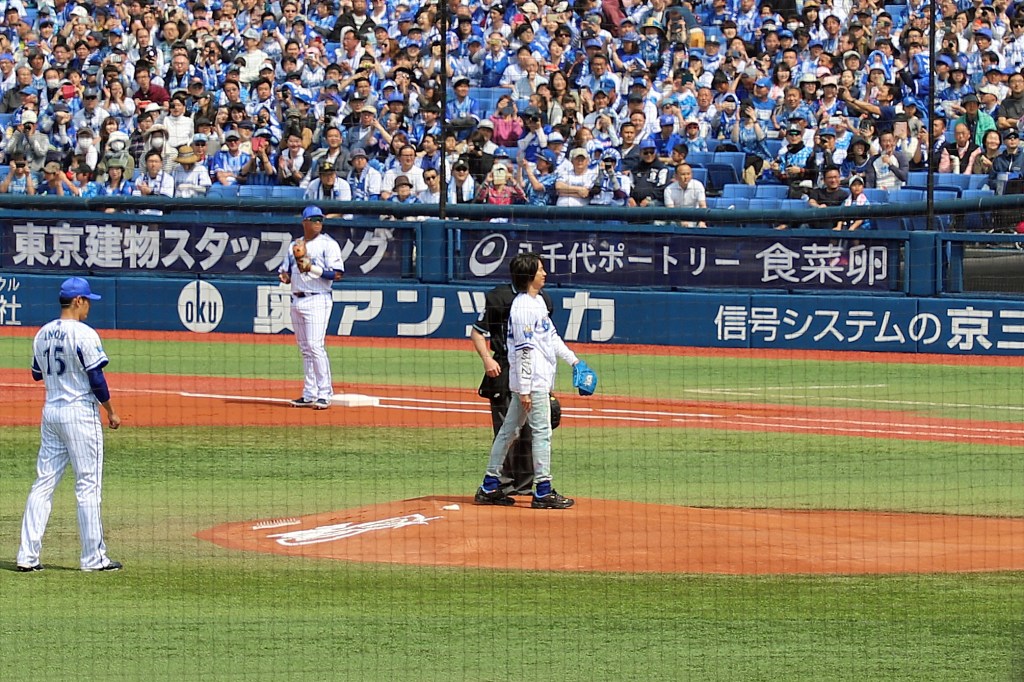
A celebrity throwing out the first pitch. We later learned he was a member of a J-Pop band. (Photo credit: Jeff Hayes)

The lineups were announced before the start of the game. Quite unexpectedly, the lineup announcements were in English, which was a first at an NPB game. In fact, the announcements sounded as though they were being made in an American ballpark. The English continued for each at bat, a nice touch for a foreign baseball fan. Unlike the other ballgames we saw in Japan, there were many foreign fans in attendance. Our entire row was comprised of Americans, except for the Giants fans sitting next to us.

Very MLB like scoreboard in Yokohama.

The visiting Giants had a large cheering section in left field (as is customary in Japan). The section sang a different song for each player. Being the third time we’d seen the Giants, we actually recognized the batters by the fight song chanted by the fans.
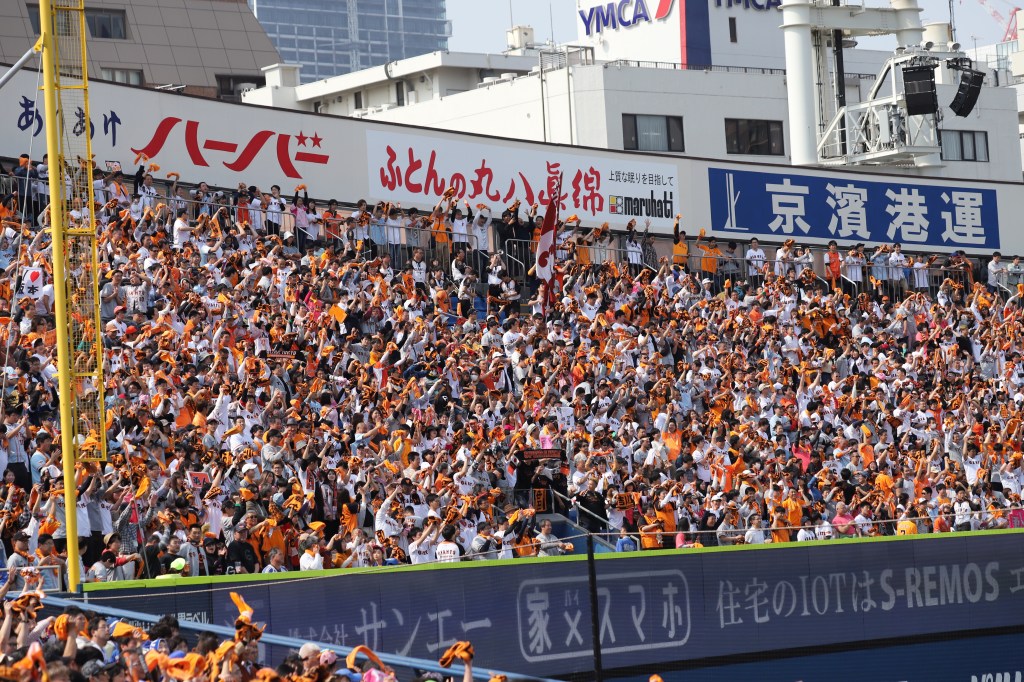
The Giants fans cheered loudly when the Giants were at bat, from the 1st inning through the 9th. (Photo credit: Jeff Hayes)

Not to be outdone, the remainder of the stadium chanted for the BayStars in the bottom of the 1st inning. Having been to eight NPB games, it still amazes me that the fans have the stamina to maintain the cheering the entire game (want to hear the chanting? Check it out here.) The fans, the warm weather, and the ballpark made this my favorite stop on our NPB baseball tour (though my brother would disagree).

The BayStars fans cheering for their team. (Photo credit: Jeff Hayes)

The game itself was fairly one-sided, with the BayStars taking an early lead and holding on for a 5-1 victory. Rather than stretch during the middle of the 7th inning, the Japanese have another tradition we’ve seen at every ballpark so far. Fans inflated balloons and released them when instructed. The resulting display is quite colorful, and view a montage of balloon tradition is available here.

Like most other ball games in Japan, we saw some foreign players, though none of names were familiar. Seemingly, most of the foreign players were fireballers, with fastballs over 95 mph (a skill homegrown pitchers did not appear to possess on a consistent basis).
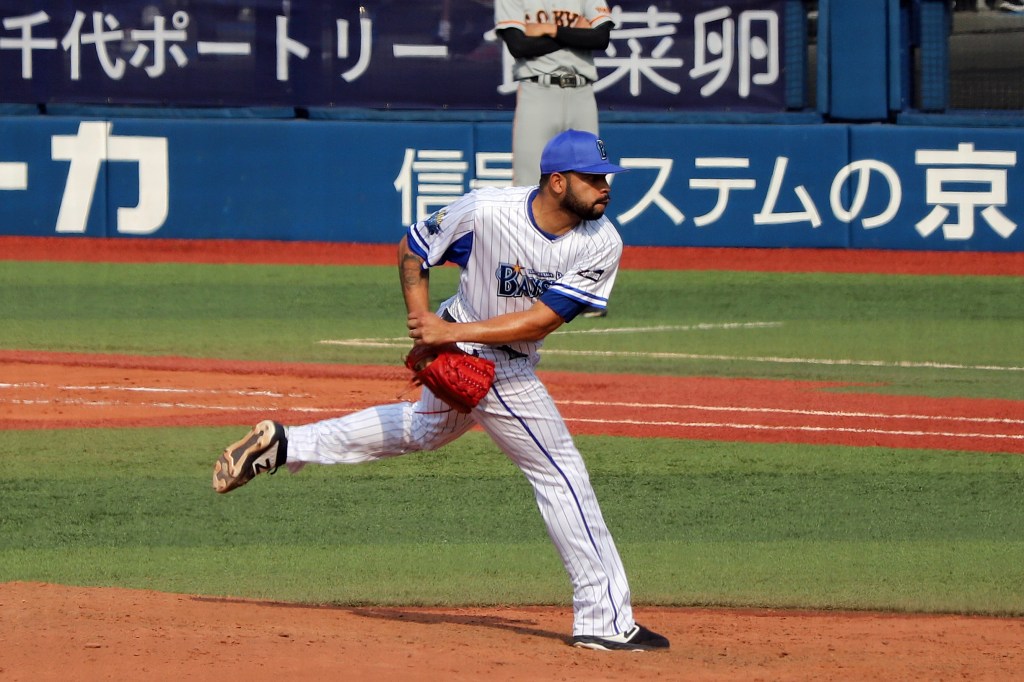
DeNA BayStars left hander Edwin Escobar. Escobar had brief stints with the Red Sox and Diamondbacks. (Photo credit: Jeff Hayes)

The game time was a reasonable two hours and 45 minutes, the shortest game we saw on this trip. Typically, NPB games last between three and three and one-half hours. However, unlike the US, nobody in Japan seems to mind. For the Japanese, baseball is more than a game; it’s an event.

The pageantry of NPB baseball. (Photo credit; Jeff Hayes)

Seeing baseball games in Japan: Part 4: Being a baseball fan in a Foreign Land

During our visits to Japan, we experienced a culture to which we had no direct connection. Even though the culture was different, there were many touchstones from home. Below are some of the customs about which we learned traveling in Japan.


1. The Language Barrier

Traveling to a land where you neither read or speak the language can be daunting. However, we found that in urban areas that there is enough English present to put you at ease. Virtually all signage has English as well as Japanese, so navigating your way is relatively easy.

Traveling outside of the major urban areas could present more of a challenge when it comes to communicating with locals. For example, we found that Fukushima and Sendai had much less of an English presence than Tokyo or Osaka. These cities offered us our real first taste of being in Japan. Still, in these areas, there were still some reminders of home.

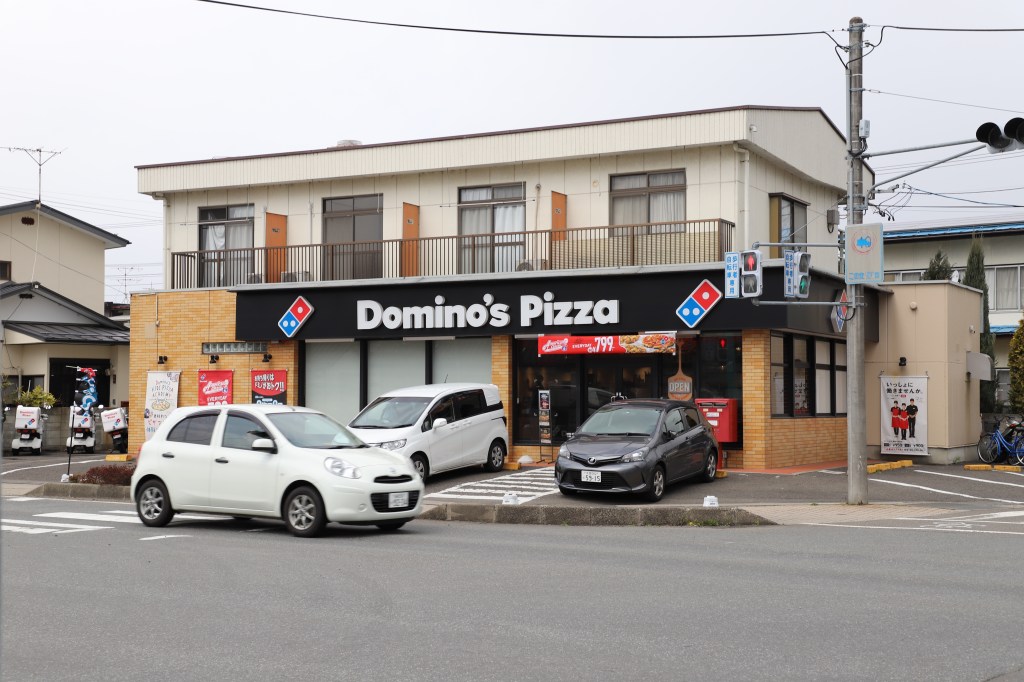
Domino’s Pizza in Fukushima, Japan (Photo credit: Jeff Hayes)

If you plan to travel outside of the more urban areas of Japan, it might be a good idea to load Google Translate (or something similar) on your phone. To be safe, I loaded a version of Translate with a static dictionary, in the event we found ourselves outside of good cell reception.


2. Walking on the left side

The Japanese drive on the left side of the road, and they, for the most part, walk on the left side of the sidewalk, and the left side of stairs. The only large scale exception to this rule we saw was in Osaka, where it seemed customary to walk on the right. Of course, not everyone does this. In Tokyo, this custom seemed less rigid, with people walking on each side (much like you might find in Manhattan). Overall, to be considerate, try to walk on the left side.


2. Interacting with locals

As a rule, it seems as though the Japanese shy away from dealing with foreigners. In urban areas, this not quite as evident as in more suburban or rural areas. In fact, we had a young Japanese woman ask if we needed help purchasing train tickets at Tokyo Station. By contrast, I offered to help an elderly couple in Tokyo carrying boxes that were clearly too large for them. They politely declined and went about their way.

Don’t be insulted if a seat next to you on a train remains empty, even during peak travel times. It’s just their way.

4. Tipping


In Japan, there is no tipping. Unlike everywhere else we have been, the Japanese see tipping as rude or an insult, as though you were paying them extra to do their jobs well. This includes restaurant servers, hotel employees and cab drivers.


5. Eating on the Run in Japan

While most places we’ve been have convenience stores in abundance, there are ubiquitous in Japan. In virtually every urban area we’ve visited, there are 7-11 stores. Just like in the US, you can grab a quick snack or drink. Unlike the US, however, you can actually get a small meal at the 7-11, and even eat it there. In fact, we saw as many people eating at 7-11s as more traditional fast food restaurants.

The 7-11 stores are far from the only convenience stores in Japan. On seemingly every block stood a Family Mart or a Lawsons. These stores have plenty of snacks and drinks too, and some are even located near or within hotels in Tokyo. In addition, there are vending machines almost everywhere, offering drinks and water. If you travels keep you busy, convenience stores and vending machines will keep you fueled until you time for a meal.

Seeing Baseball Games in Japan – Part 3: Going to the games

Going to a baseball game in Japan is much like going to a game in the US. However, being in a place where we could not speak or read the language did pose some issues not experienced here. Below are a few of the things we learned going to Japanese baseball games.


1. Getting to the ballpark

While the specific directions of how to get to the park are contained in the review of each park, there are a few common themes. First, review the route to the game, including the specific train lines that get you to the park. Sounds simple, but planning could save you some stress later on. Plan to leave early, in the event you miss your train. Many Japanese ball parks open two hours early, and have things to do and see around the park itself.

Baseball parks in Japan are located close to train stations (we’ve noticed very little in the way of parking for cars at the games). We’ve found that most are within walking distance (generally a kilometer or less). If that distance seems excessive, you can probably get a taxi to the game and back.


2. Entering the ballpark

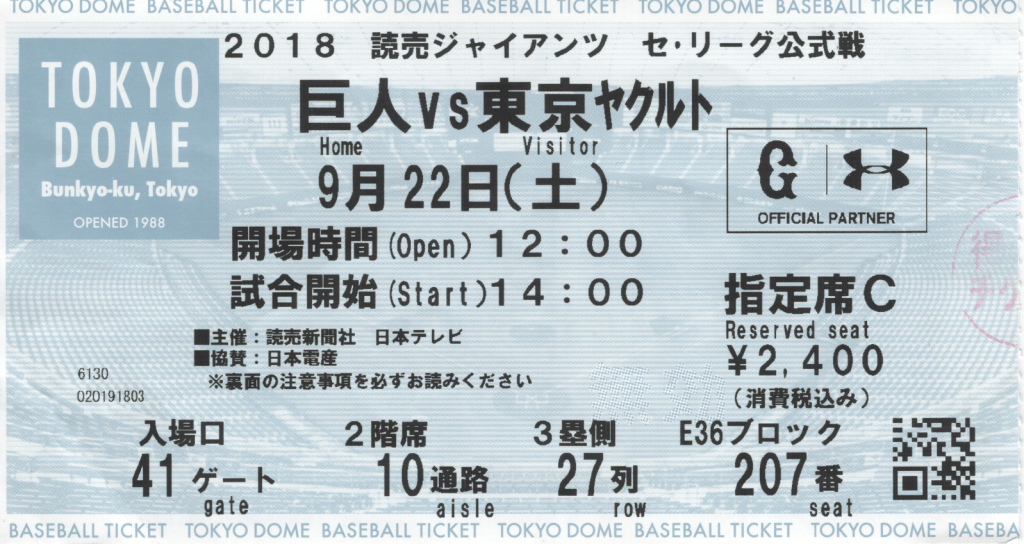
After you arrive, survey the landscape to identify your gate for entry. The tickets we’ve had vary with respect to readability. Some are fairly easy to decipher

Ticket from the TokyoDome, September 22, 2018

The above ticket was for a Giants game against the Tokyo Yakult Swallows at the TokyoDome on September 22nd, 2018. Note that much of the vital information (gate, row, seat) have English next to them, making navigation fairly easy.

Ticket for Miyagi Park in Sendai, Japan, Thursday, April 4, 2019

However, most of the tickets we received looked more like the ticket above. The gate number, row and seat are decipherable, but not easily as the ticket for Tokyo. If you are unsure which gate to enter, simply ask. In the case of the above. I handed the ticket to a security guard, who pointed me to the correct gate. Once inside, keep handing your ticket to staff members until they bring you to your seat. (FYI; there is no tipping in Japan)

Unlike American ballparks, the Japanese stadium setup usually restricts you to the section in which your seat is located (with the TokyoDome being an exception). This hampered our ability to get as many pictures as we would have liked.


3. Food

One of the major differences between American and Japanese ballparks is the cuisine. As you might expect, the menu is dominated by Japanese fare (though some parks did offer hot dogs). My palate is not very sophisticated or varied, so I shied always from much of what was available. However, bento boxes were popular, containing vegetables, rice and fish.

Ordering can be a challenge, given the language barrier. In Tokyo, there was enough recognition of English to allow for rudimentary conversations regarding ordering food. Elsewhere, we’ve seen most ballparks offer a picture book of the selections. Often pointing to the book and indicating the desired quantity with fingers accomplished the task. The vendors are typically very helpful, and I didn’t face a situation where I couldn’t get what I wanted from the concession stand.

Drinks can also be obtained at the concession stand. We discovered there is no diet soda (as we know it) in Japan, but zero calorie soda is available. We mostly drank water, which is a must when traveling through Japan in the warm season.

We didn’t see too many vendors selling food in the crowd, but there were people delivering drinks. Dubbed beer girls, there were dozens of young women hawking alcohol, wearing brightly colored shirts and carrying packs on their backs.


4. Souvenirs

Like ballparks in America, each of the ballparks we visited had a team store. Most of the team stores had a selection of apparel you might find in a team store in the US, as well as programs, yearbooks and baseball cards. In addition, the stores had items that appeared to be more popular in Japan than back home. These items included pom poms, dolls and noise makers shaped like cones (which the crowds put to good use during the games).

DeNA BayStars team store in Yokohama Stadium. (Photo credit; Jeff Hayes)

However, for the avid baseball fan, the team stores often seemed to lack a greater variety of hats, jerseys and pictures. My brother Jeff found that larger teams stores were often found outside of the ballparks. For example, there are two team stores in Sapporo (home of the the Hokkaido Nippon Ham Fighters). The team store for the Sendai Rakuten Golden Eagles is down the road from their ballpark, and the team store for the Seibu Lions is on the 8th floor of the Seibu Store in the Ikebukuro section of Tokyo. If you seek a larger selection of team items, especially hats and jersey, you should Google the location of the official team stores.