Hiroshima, Monday, September 24th, 2018

The third stop on our 2018 Japanese baseball tour took us to Hiroshima. Our main purpose was to see the Carp in action at Mazda Zoom Zoom Stadium. However, the trip itinerary also included a visit the the Atomic Peace Dome and Peace Memorial Park. Having seen the plane that delivered the first atomic weapon, it seemed appropriate to see the remains of the destruction it helped create.

1. Getting to Hiroshima

From our base of operations in Kyoto, we walked from the hotel across the street to the Kyoto Station. We took the Tokaido-Sanyo Shinkansen to Hiroshima Station, covering the 350 km distance in about one hour and 45 minutes (including six stops). Morning sunshine in Kyoto faded behind cloudiness as we traveled southwest.
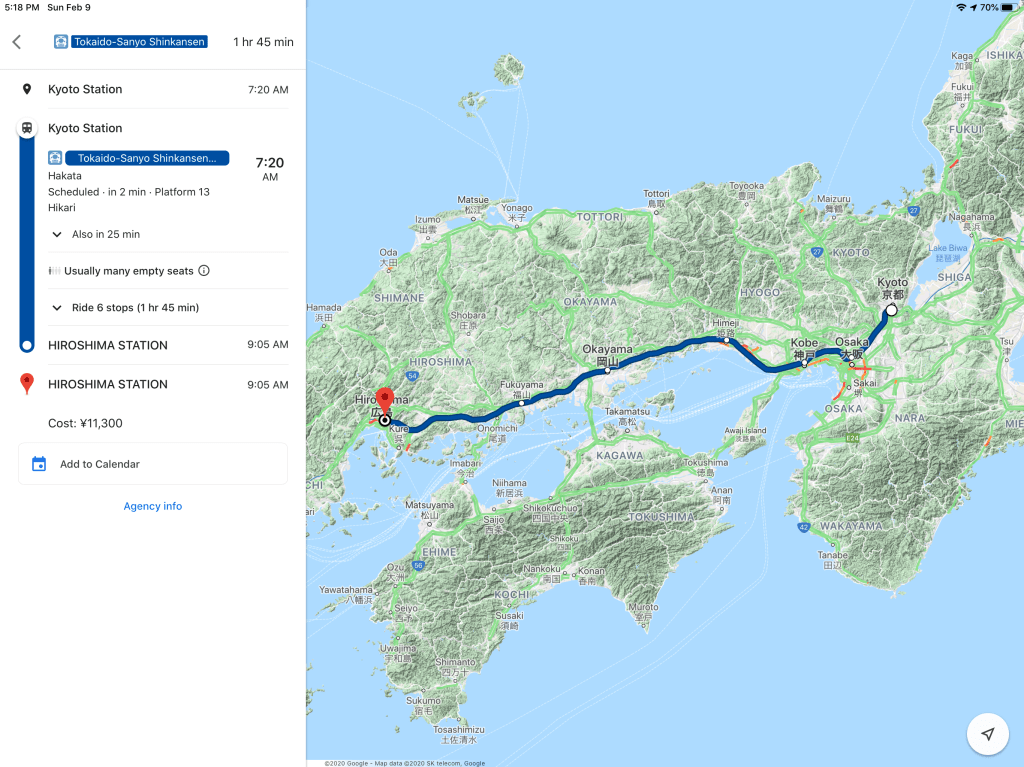
The Kyoto-Hiroshima trip depicted in Google Maps.

The trek covered mainly rural areas, with cities interspersed with the rice paddies and mountains to the north. We noticed many solar farms along the way, but given the weather so far on the trip, I’m not sure useful they were this week.

As we approached Hiroshima Station, we passed close to Mazda Zoom Zoom Stadium. Even though we arrived in Hiroshima more than three hours before the 1330 game start time, there were fans already lining up to enter the ballpark. Most NPB ballparks open their gates about two hours before game time, meaning fans were willing to wait an hour or more in line to get inside. We didn’t know why at the time, but we would find out later.

2. Hiroshima and the Atomic Peace Dome

After arriving at Hiroshima Station, we took the Hiroshima Streetcar to the Peace Memorial Park. Though we paid cash for the trip, you can purchase a one day pass (which might be a nice souvenir), or use the Suica card you bought earlier in your trip.
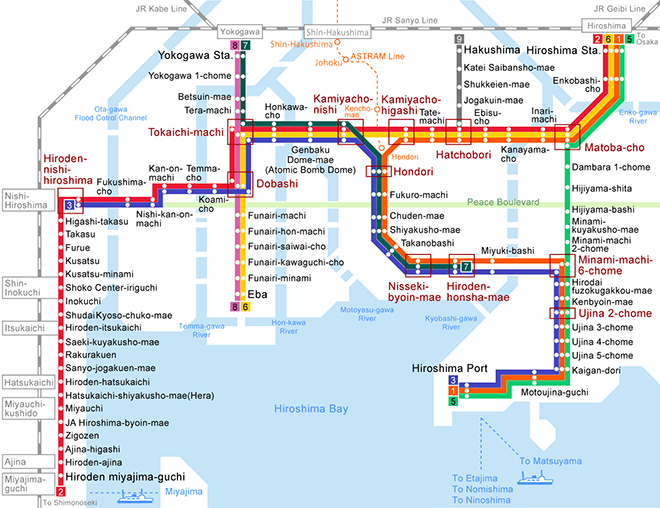
A map of the Hiroshima Streetcar stops. In addition to getting you where
you’d like to go, it afforded a great way to view Hiroshima.

The streetcar stop for the Peace Memorial Park is less than 10 minutes from Hiroshima Station. Upon exiting the streetcar, the Atomic Peace Dome is immediately visible. A somber reminder of the first use of an atomic weapon, the overcast conditions seemed a fitting dreary backdrop. The Dome is the only remaining structure remaining from that day, as it was directly beneath the air blast.
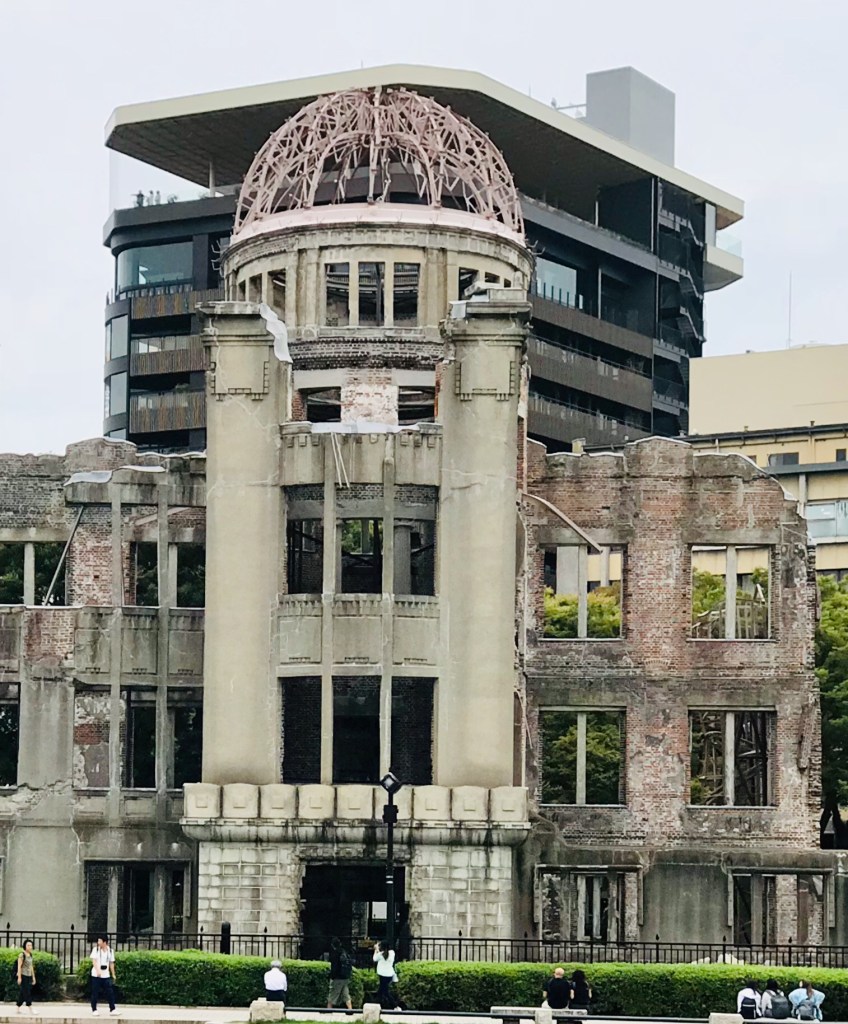
The Atomic Peace Dome. A UNESCO Heritage site, this vantage point superimposes the Dome on the modern Hiroshima in the background.

Upon closer inspection, even the rubble from the blast was left in place. As might be expected, the Atomic Peace Dome drew significant interest, even on this cloudy and humid afternoon. Being in the presence of the Dome was a sobering experience, conjuring images of unimaginable destruction and chaos.

The Atomic Peace Dome is the focal point of the Peace Memorial Park, which stretches along the banks of the Motoyasu River. South of the Atomic Peace Dome is the Peace Memorial Museum. Time was a limiting factor when visiting the museum, which has a Japanese section on one side, and an English section on the other. Among the photographs in the museum is a picture from 1947, in which Hiroshima still lies in ruins. The image shows Emperor Hirohito addressing the citizenry, with the Dome in the background. This is reportedly the first time the Emperor had addressed the nation in person.
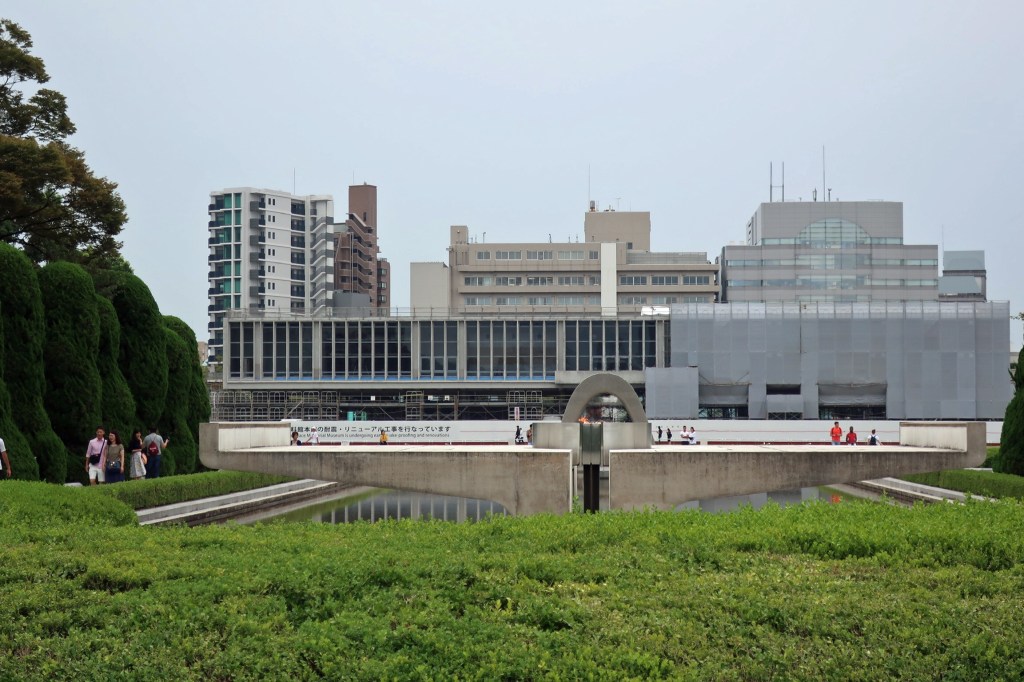
The Peace Museum from a distance. The Atomic Peace Dome is to the left in this picture. (Photo credit: Jeff Hayes)

2. Getting to Mazda Zoom-Zoom Stadium

With game time fast approaching, we headed toward Mazda Zoom-Zoom Stadium for the 1330 game start. From the Peace Memorial Park, we caught the streetcar back toward Hiroshima Stadium. The streetcar stop was about 1.3 km from the stadium. Walking through a suburban area following the streetcar ride, we followed a long asphalt walkway toward the stadium. Clouds were lowering and thickening, with rain threatening at any moment.

Along the walkway, we noticed groups of people sitting or standing, watching TVs broadcasting the pre game activities. Though it seemed a bit odd, especially with rain approaching, we didn’t think much of it at the time.
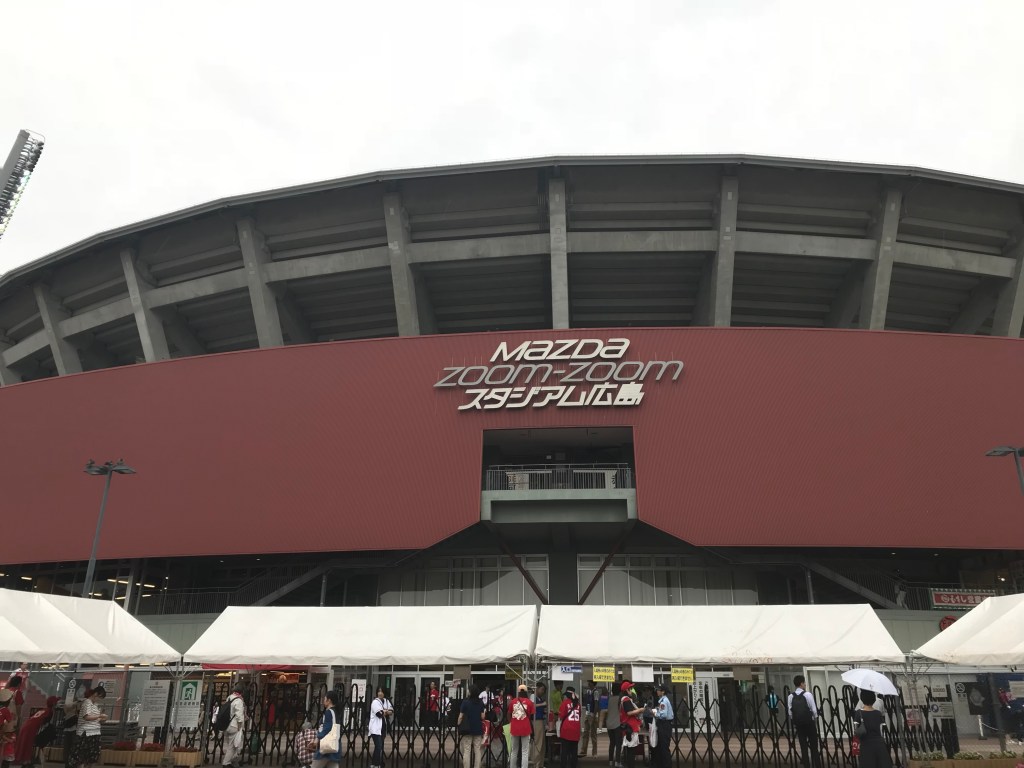
Mazda Zoom-Zoom Stadium in Hiroshima

A quick walk around the stadium showed nothing remarkable, though there were food and souvenir stands around the park. Much like other NPB tickets, the seating information was difficult to decipher. Typically, we can at least glean the gate number from the ticket, but in this case, we were stumped concerning where to enter the ballpark. Eventually we tracked down a staff member, who graciously showed us where to enter.
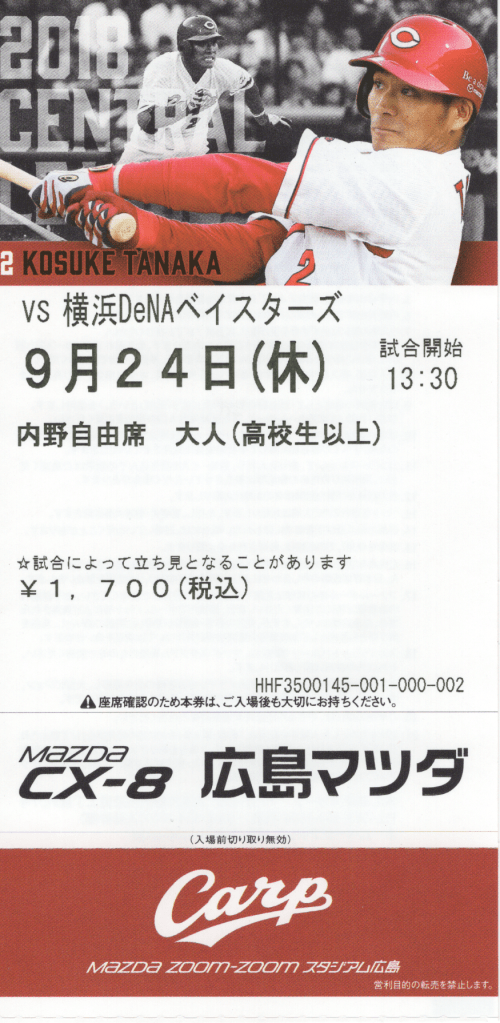
My Hiroshima Carp ticket. Almost all of the vital information is in Japanese.

Our tickets were general admission, which meant we would have to view the game from wherever we could. Soon after arriving, we realized why there were lines to enter the stadium three hours before game time. The general admission seating was long gone. To watch the game, we would need to stand. Unfortunately for us, all of the railing around the ballpark was ringed with fans, sometimes four or five deep. It became clear that our view of the game would be tenuous at best.

The Hiroshima Toyo Carp have perhaps the most enthusiastic fans in the NPB. The team often sells out the entire season (70 home games) just hours after tickets go on sale, so this is definitely a tough ticket to secure. Since it didn’t seem to matter from where we saw the game, we sought out the Carp Team Store. The store was comparatively small, when compared to other team stores we’ve seen. There was not much of interest to us, so I purchased a Carp cap and a program.

Following the trip to the store, we walked around the stadium. The game as a sellout, of course, and we didn’t see many empty seats, even with rain on the way. One thing that struck me about the park was its resemblance to the Great American Ballpark in Cincinnati OH. Of course, the Carp modeled their uniforms after the Reds, so I suppose it shouldn’t be surprising the stadium would have a familiar feel. In any event, we got as close to the railing as we could to see the start of the game.
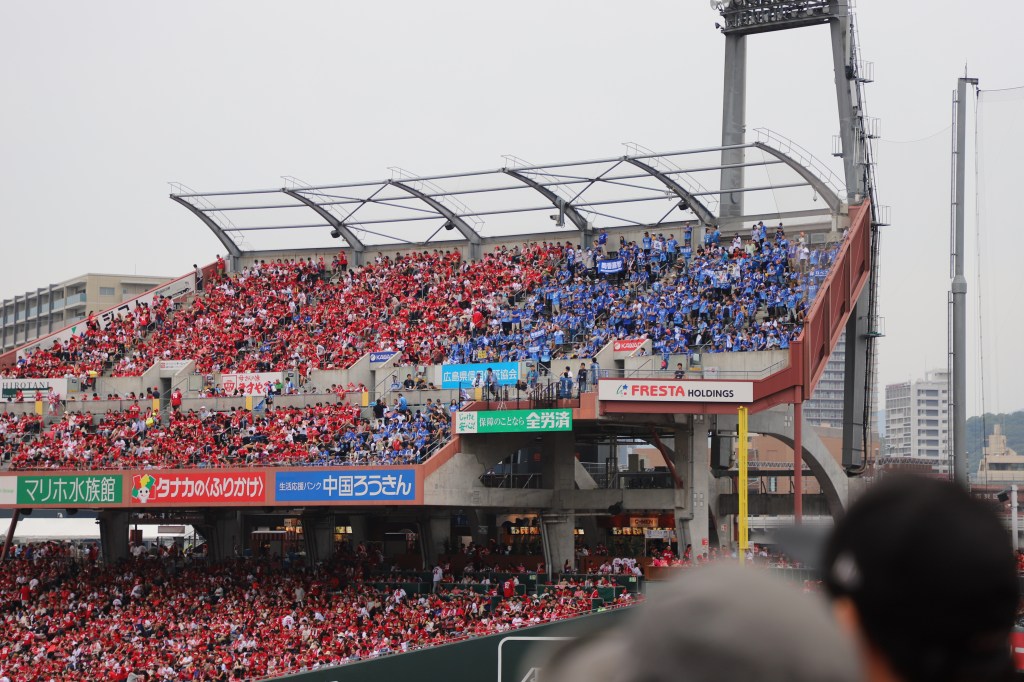
DeNA BayStars fans in the upper deck in right field at Mazda Zoom-Zoom Stadium. (Photo credit: Jeff Hayes)

The Carp’s opponent this afternoon was the Yokohoma DeNA BayStars. A light rain starting falling as the game started, and the afternoon was becoming murkier by the moment. Since we could not get close to the rail to see much of the action, we decided to circle the field, popping in occasionally to watch the action.

Following our trip around the park, the rain began to fall more steadily. Conditions were becoming less conducive to watching a game, especially since we did not have seats. Having seen the stadium, we decided to leave before conditions became worse. Heading back to Hiroshima Station, we saw fans in the rain, huddling around TVs along the asphalt walkway we took coming to the park. The devotion of the Carp fans was impressive, to say the least.
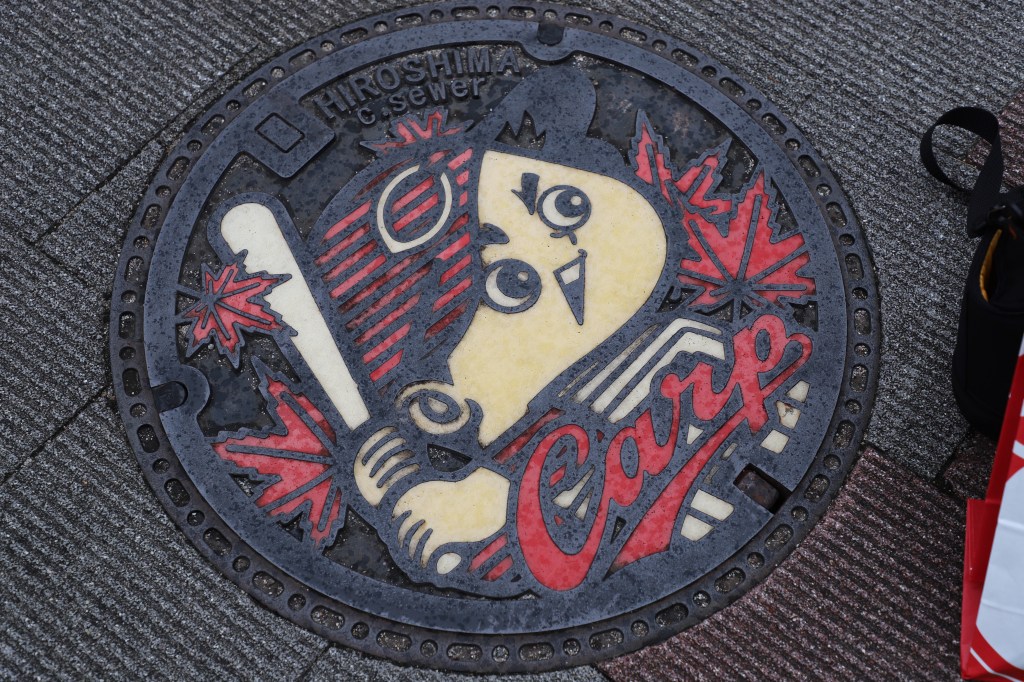
A manhole cover seen on the asphalt walkway back to Hiroshima Station. (Photo credit: Jeff Hayes)

With the weather taking a turn for the worse, we cut short our visit to Hiroshima, and caught the next Shinkansen for Kyoto. Arriving in Kyoto after dark, we decided to visit the Kyoto Tower. Located across the street from Kyoto Station, we had seen it during the day, and thought it might afford a nice view of Kyoto at night.

Kyoto Tower is located in a commercial building, along with shops and restaurants. A quick elevator ride took us to the observation deck. The deck was crowded, which limited the amount of time we could spend in any one location. The view of the city lights was impressive, though low clouds may have obscured some of the lights from nearby cities.
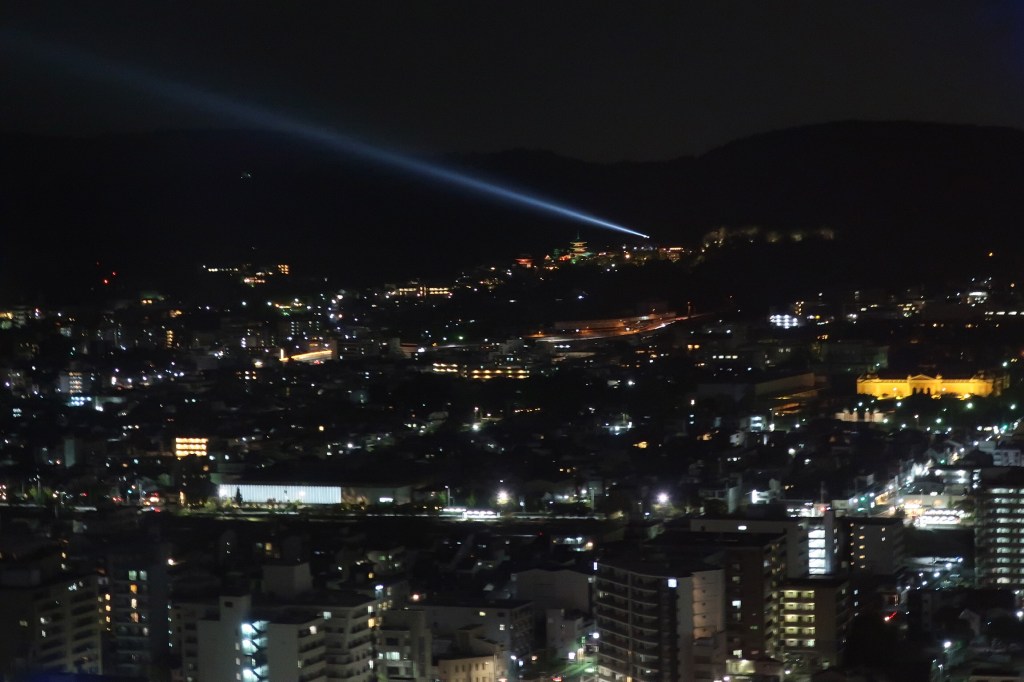
Kyoto at night, from the Kyoto Tower. Even with the clouds, the mountains are visible to the west. (Photo: Jeff Hayes)

Following the visit to the tower, we headed back to the hotel, exhausted from a long but fun day in Hiroshima.

Kyoto/Osaka, Tuesday September 25th, 2018

1. Kyoto

We started the day in Kyoto, the ancient capital of Japan, where we had been stationed during this portion of our baseball tour. Having arrived at the tail end of the monsoon season, the weather was generally warm and humid, with periodic sunshine and showers. These conditions made being outside tricky, but we braved the elements to explore Kyoto during the morning hours.

We utilized local mass transit in Kyoto, as the area was too expansive to walk, given the weather conditions. The concierge at the hotel provided us with bus passes for the day at greatly reduced prices. Should you find yourself in Kyoto, check with the hotel staff to purchase a day pass.

Along the banks of the Kamo River in Kyoto. (Photo credit: Jeff Hayes).

Our first stop was the western edge of Kyoto. Nestled between the foothills of the Hira Mountains and the Kamo River, the view was spectacular, even if the weather did not cooperate. The area was very popular with tourists, and the walkways and the restaurants were jammed on this cloudy and humid morning. We walked toward the foothills, reaching the Arashiyama Bamboo Grove toward late morning.

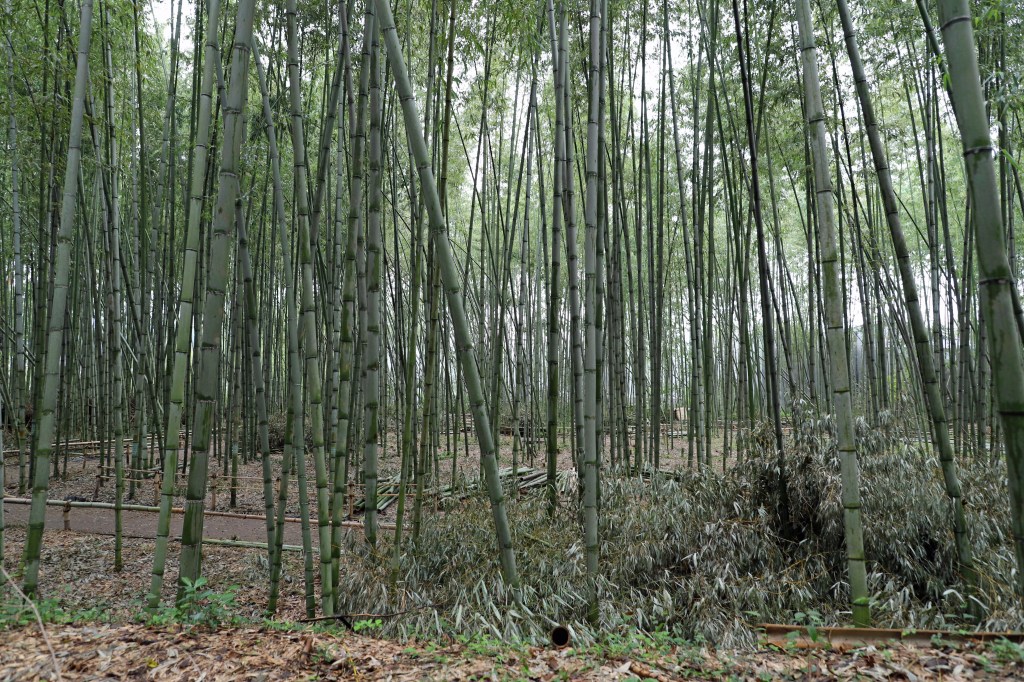
The fabled Bamboo Forest of Kyoto. If it wasn’t for the throngs walking through, it would be a very peaceful place. (Photo credit: Jeff Hayes).

In quieter times, I envision this place being peaceful, almost spiritual. However, on this day, the masses of people moving through the grove made it less so, though the walk was still worth the visit. At the end of the grove, there was an opportunity to visit some of the local wildlife.

A path in the mountains leads to the Monkey Park Iwatayama. The snow monkeys are located above the grove, about a 20 minute climb into the mountains. Unfortunately, I was unable to make the climb, missing out on an opportunity to feed and walk with the monkeys in the cloud shrouded peaks above. If you are interested in visiting the monkeys and taking in the views of Kyoto (should the weather allow it), you can learn more here.

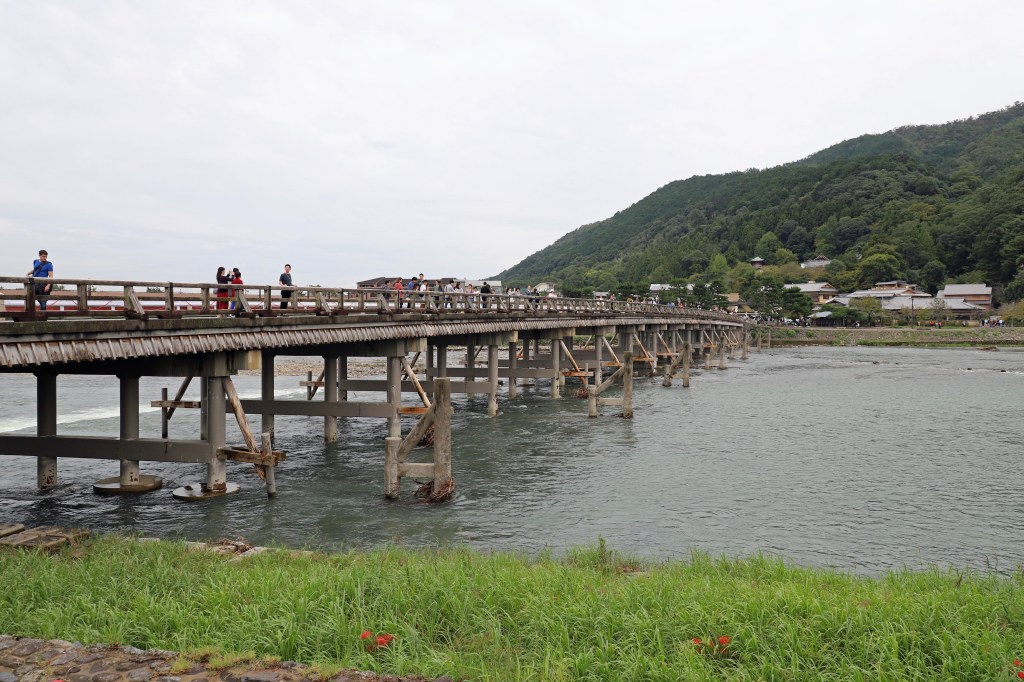
Togetsu-kyō Bridge in Kyoto. (Photo credit: Jeff Hayes)

Following our visit to the bamboo forest, we backtracked across the Kamo River on the Togetsu-kyō Bridge. Wandering along the river was peaceful, especially in between waves of tourists. Sitting along the river offered wonderful views of the mountains, though the higher peaks were obscured in clouds. It isn’t difficult to understand why the Japanese see this place as a cultural or moral center. Kyoto harkens back in time, and is often viewed as the Japan the way it once was.

We ate lunch at a local restaurant just off the beaten path, on the edge of the foothills. In addition to a wide variety of Japanese dishes, the restaurant also offered Italian cuisine. We’ve seen this in our travels across Japan. Perhaps the Japanese view Italian dishes as a “safe” alternative to Japanese dishes for tourists, or maybe they just like Italian food. Either way, having a limited and decidedly non-adventurous palette, I opted for the ravioli, which was surprisingly good.

One of many temples we saw in Kyoto, complete with women dressed in geisha garb. However, we discovered that being dressed like a geisha does not make her a geisha. (Photo credit: Melissa Willis).

After lunch, we wandered through the Arashiyama section of Kyoto. Despite the many cultural touchstones of Kyoto, I found my attention was riveted by the natural beauty of this place. Having crossed the bridge back into a more city like setting, we saw geishas in training, as well as a number of temples. In between temples, there were many, many places to buy souvenirs and take pictures. Having spent much of the early afternoon exploring, we caught the bus back to the hotel to rest before the game in Osaka that evening.

Even though there are many cultural sites to see in Kyoto, my memories are filled with images like this. Plus, there are snow monkeys up there!

2. Getting to Osaka

Following a short rest at the hotel, we started out for Osaka to catch a a game at the Kyocera Dome between the visiting Fukuoka SoftBank Hawks and the Orix Buffaloes. We took the Tokaido-Sanyo bullet train from Kyoto Station to Osaka Station, a trip of about 30 minutes. Upon arriving at Osaka Station, we boarded the Osaka Loop Line (using our Suica card) for the 20 minute ride to Taisho Station. From there, we walked about 700 meters to the stadium.

Google Maps showing the Osaka Loop Line. After arriving at Taisho Station, we walked to the stadium.

3. Kyocera Dome

Arriving not much more than an hour before game time, we walked to the Kyocera Dome box office to purchase tickets for the game. At virtually every other NPB ballpark, this might be a risky strategy. Most teams draw very well, with few day of game tickets available. However, the Buffaloes don’t draw well, and to our surprise, there were very good seats available.

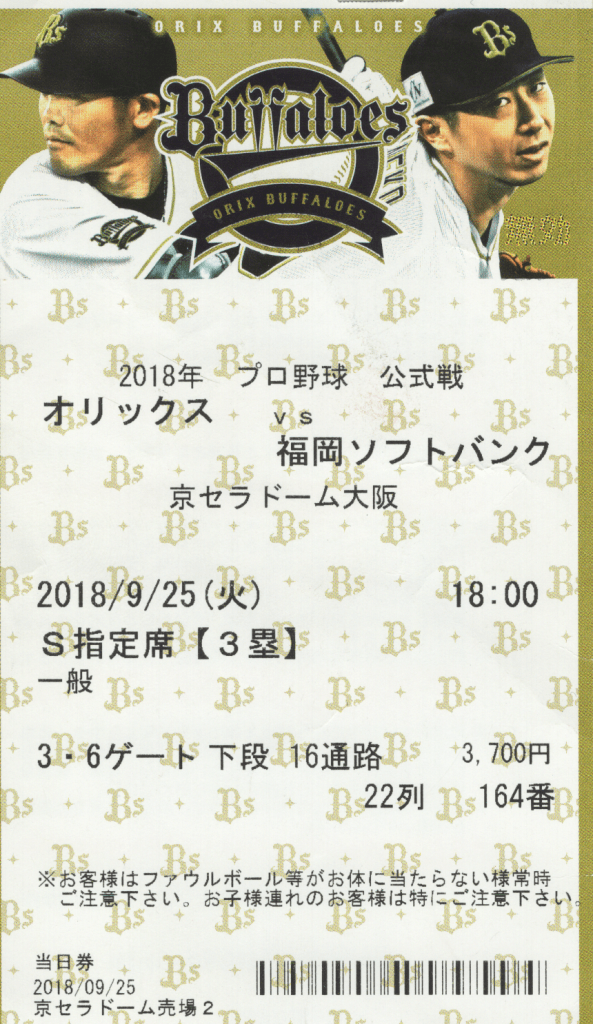
The information on this ticket is more difficult to decipher than most NPB tickets. We needed assistance finding our seats.

Fortunately for us, the box office staff understood enough English help us purchase the tickets. The ticket was more difficult to read than most, with no English and little obvious information containing the location of our seats. We followed some advice given earlier in the trip, and continued to hand our tickets to staff members until we were shown to our seats.

Since we had some time before the first pitch, we visited the team store. Unlike most team stores near or within the ballpark, the store had a large selection of souvenirs and apparel. After paying for the game tickets with cash, I didn’t realize that I had little money left when I attempted to pay for a Buffaloes cap (which was FAR more expensive than I originally thought).

In search of funds, I found an ATM in the stadium. As I had expected, my card was declined, since it was NOT a Japanese issued card. My brother came to my aid, but in my haste, I laid out near $100 USD for a cap that should have cost closer to $30 USD. This was my first mistake with Japanese currency (which was abetted by my misreading of the label). From that point on, I made sure to have enough cash on hand to solve most minor problems.

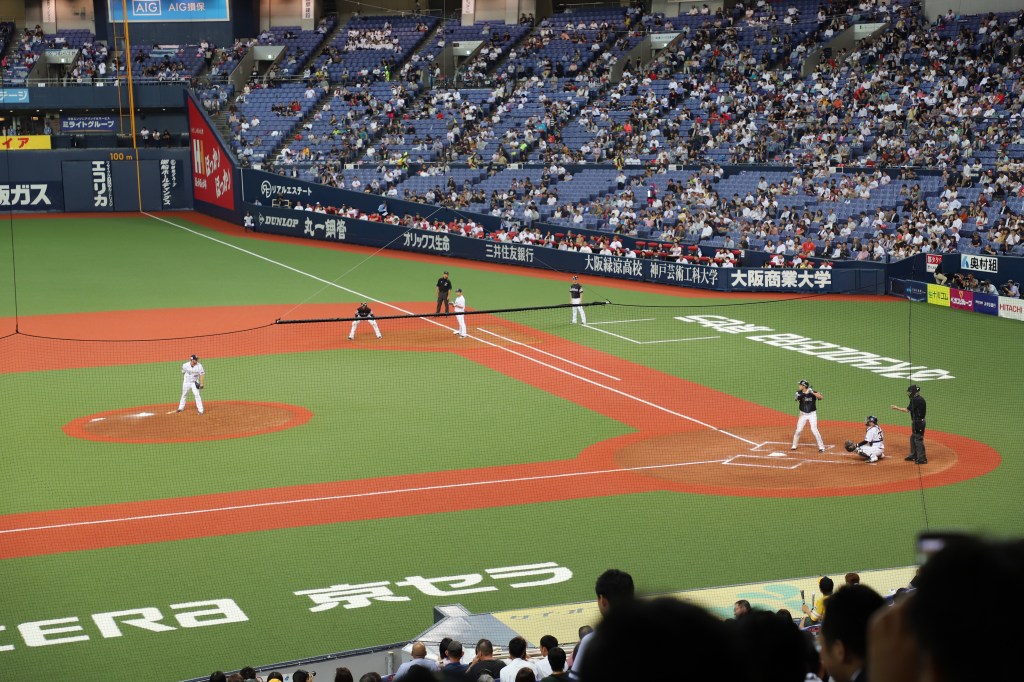
The view from our seats. (Photo credit: Jeff Hayes).

Returning to our seats shortly before the first pitch, we got the feel for the ballpark. The Kyocera Dome is a large indoor stadium, that seemed even larger with a sparse crowd. The park was reminiscent of Tropicana Field in St Petersburg, FL, in that it felt dim and empty. The Orix Buffaloes do not draw well, and that was evident in the stadium that night. As is typical, there was a sizable contingent for the visiting team in attendance, and there were times when the visiting team’s fans out cheered the home team’s fans.

The roof of the Kyocera Dome. Its appearance was eerily reminiscent of the bottom of an alien ship. (Photo credit: Jeff Hayes)

The Kyocera Dome also has a unique roof. The roof looks like the underbelly of an alien ship, casting a presence over the entire field. Against the backdrop of the huge roof, the thin crowd made the park seem nearly empty. The visiting Hawks scores early and often against the hapless Buffaloes, to the delight of the Hawks’ faithful in the left field stands. Though the Buffaloes did scores some runs late, the Hawks held on for an 8-5 victory.

The fairly sterile environment, lack of fan support, and the poor team on the field made this stop the least enjoyable on our Japanese tour. While we may visit Osaka again, it is highly doubtful that the Kyocera Dome will be on the agenda.

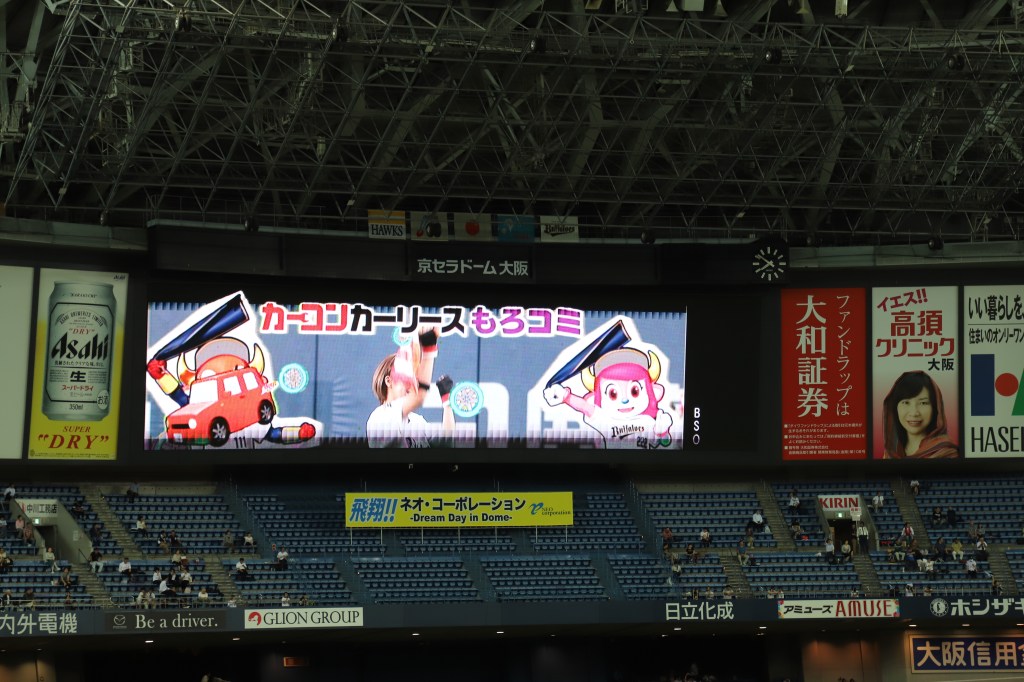
The colorful scoreboard was more entertaining than the game at times. Note the scattering of fans in the left and centerfield seats. (Photo credit: Jeff Hayes).

North Carolina, June 15th and 16th, 2019

The first mini road trip on the 2019 baseball season in the United States took place on the weekend of June 15th/16th 2019. My brother came down to Maryland the night before, and our trip began after 900 am Saturday morning. Google mapped out a 250 mile trip in a little more than four hours, placing us at the hotel outside Durham, NC in the early afternoon. Following lunch in VA about halfway through the trip, we stopped at Target store to purchase a clamp for my GoPro Hero 7 Black camera.

We found the clamp quickly, but waited for what seemed like an infinity on line to buy it. Lines simply weren’t moving, and nobody in the store appeared to know why. There were whispers of problems with the registers, and we were informed by management that Target’s online presence was also offline. Not wanting to waste any more time waiting, we left the store. Google informed us there was another Target nearby, so we headed there. Before we could get to the door, someone told us that the store was closed, due to register problems. We read later than Target’s entire system was down nationwide for nearly two hours, just as we tried to buy a part.

We found the part at an adjacent Best Buy, and we were on our way. The delay placed us nearly an hour behind, and we didn’t reach the hotel until nearly 400 pm. Luckily, the weather was wonderful, warm with relatively low humidity. Not being a fan of heat or humidity, my worst fears of what we might encounter in NC in mid June went unfounded.

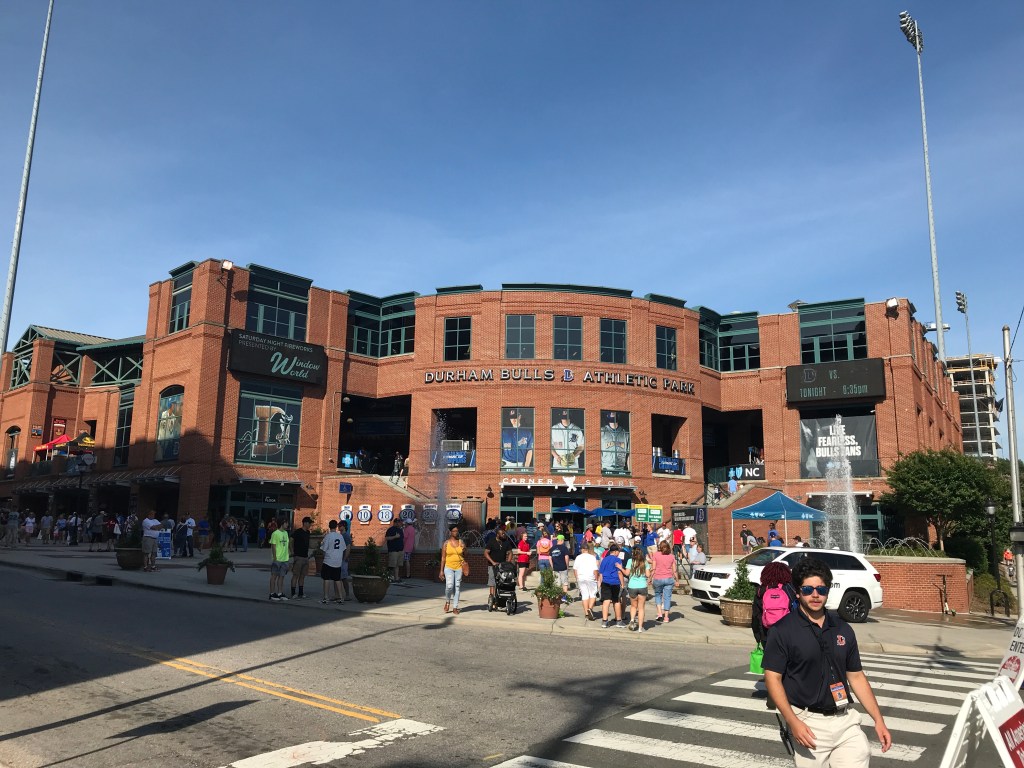
Durham Bulls Athletic Park, home plate entrance, June 15th 2019. (Photo credit: Jeff Hayes)

The stadium was about 15 minutes from the hotel, ensconced in downtown Durham. Like most urban ballparks, there was parking offsite, and we found a garage that was reasonably priced. Typically, we are wary of parking in multiple level garages, which can result in a VERY long wait at the end of the game. Since we had some time before the gates opened, we explored the environs adjacent to the ballpark. As is the case with urban parks, the area was filled with shops, bars and restaurants, and it seemed as though this location was in the process of renovation.

Before going into the park, we looked through the team store. On the wall next to the store were plaques of retired Bulls numbers. Of course, not being a Bulls fan, we did not recognize the numbers and the significance behind them. However, there WAS a number we did recognize. Any fan of the movie Bull Durham would know this number instantly.

Photo credit: Jeff Hayes

Once inside the team store, there were MANY references to the movie (not surprisingly), with Crash Davis and Nuke Laloosh jerseys for sale. To be sure, I expected some nod to the movie, but this was more than I anticipated. However, I’m sure that the merchandise with these names sell very well here, as fans take home a little piece of the movie.

We entered the ballpark at the home plate gate, and conducted our typical pre game tour of the stadium. While this is NOT the same stadium from the movie, Durham Bulls Athletic Park is a beautiful park. Even though this wasn’t the park from the movie, there WAS a familiar site in left field.

The snorting bull in left field at Durham Bulls Athletic Park in Durham NC. According to Wikipedia, this is NOT the bull from the movie Bull Durham (Photo credit: Jeff Hayes)

In Durham Bulls Athletic Park, the snorting bull is located in left field; in Bull Durham, the bull was in right field. There were no other obvious nods to the past, but this park didn’t need them. It stands on its own as a great minor league experience.

Typically, we select seats for baseball games in a particular manner. The preferred location is in the lower level between home plate and third or first base. These seats are best for taking pictures, and depending on the stadium, the best view of the field. If these seats are not available, we prefer to be higher, as close to home plate as possible. This usually occurs at major league parks with strong fan bases.

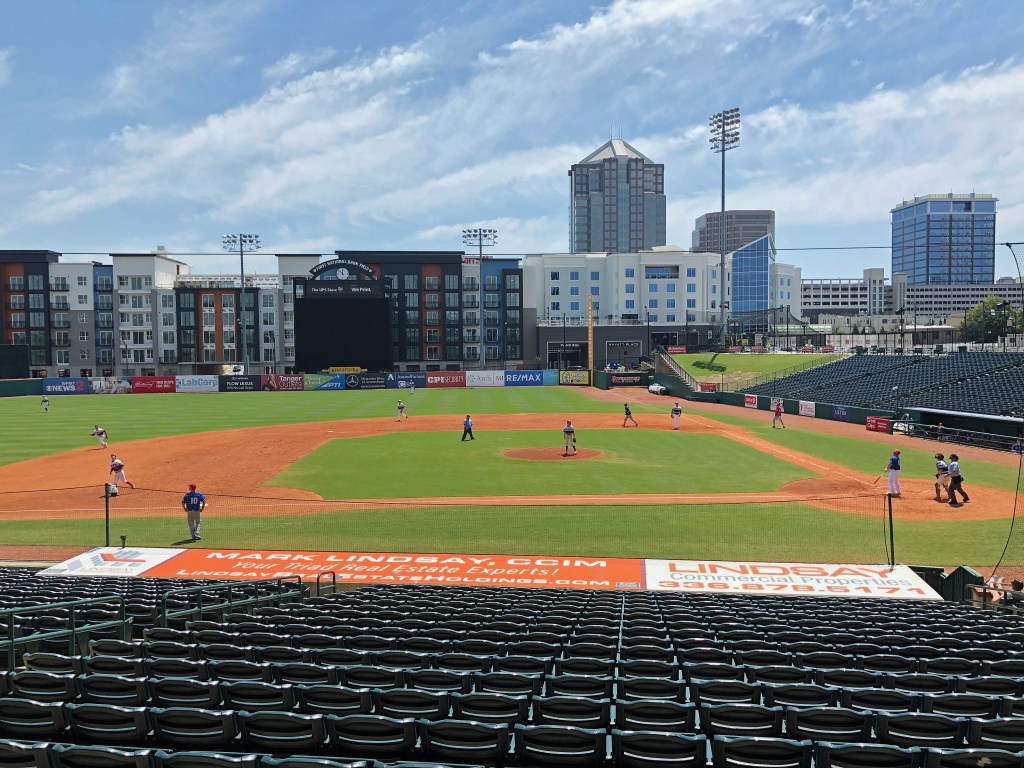
For this park, we chose seats in the lower level, right behind home plate. Because of the netting, these seats are worse for taking pictures, but here, it offered an amazing view of a beautiful ballpark. Like many urban ballparks we have visited, there were condominiums in left center field. If I worked in the area, I’d certainly have to investigate the feasibility of living in one of these homes.

The view from our seats at Durham Bulls Athletic Park, June 15th, 2019. Though the net did not afford the best picture taking, the seats DID give us the best view of the park (Photo credit: Jeff Hayes)

While we knew the Bulls’ opponent for this game would be the Scranton Wilkes-Barre RailRiders (the AAA affiliate of the New York Yankees), what we didn’t know is that there would be two major leaguers on rehab assignments tonight. Both Aaron Judge and Giancarlo Stanton were in the lineup, batting first and second, respectively. Based on the buzz from the crowd, they were fully aware these players would be here. Of course, the two players were fully cognizant of the attention they would garner, and made sure they were in view of the crowd at every opportunity.

In fact, Judge signed autographs near the on deck circle before each at bat. Normally, even at the minor league level, this behavior is either strongly discouraged or outright forbidden. Given the situation, it seemed as though the Bulls’ management was content to look the other way, especially since it did not interfere with play. Each hitter had four at bats, with Judge DHing and Stanton in left field. Though neither player had a hit tonight, most fans didn’t seem to mind. Their mere presence was enough to make the fans’ night.

Aaron Judge (foreground) and Giancarlo Stanton (background) posing before hitting in the top of the 1st inning. Think these guys knew they were being photographed and videoed??? (Photo credit: Jeff Hayes)

The RailRiders had a couple of other major leaguers in the lineup, as well as a few players that have been rising through the Yankees minor league system. My brother lives near Arm&Hammer Park, home of the Yankees AA team in Trenton, NJ, and he saw a few of these players there recently. We did not recognize many of the players in the Bulls lineup (the Durham Bulls are the AAA affiliate of the Tampa Bay Rays) . The game itself was a tight affair, with the RailRiders starter Raynel Espinal allowing one runs in six innings of work.

A snippet of Aaron Judge’s at bat in the third inning.

The Bulls starter, Jake Croneworth, pitched the first inning, followed by four reliever. The quintet blanked the RailRiders on just two hits. The Bulls tacked on a run in the 7th, winning the game 2-0.

Photo credit: Jeff Hayes

After the game, we headed back to the hotel, ending a long day of travel and baseball.


Sunday, June 16th

Our next stop on the abbreviated road trip was High Point, NC, home of the High Point Rockers. The Rockers are the newest franchise in the Atlantic League of Professional Baseball. High Point is about an hour from Durham, and since the game didn’t start until 205 pm, we had time in the morning to explore the area. Our target was Eno River State Park, located in Durham. Walking paths located adjacent to the parking lot made for easy access to the park. The portion of the park we visited contained the remains of the Cole Mills, along the banks of the river.

One of the buildings near the old Cole Mill.

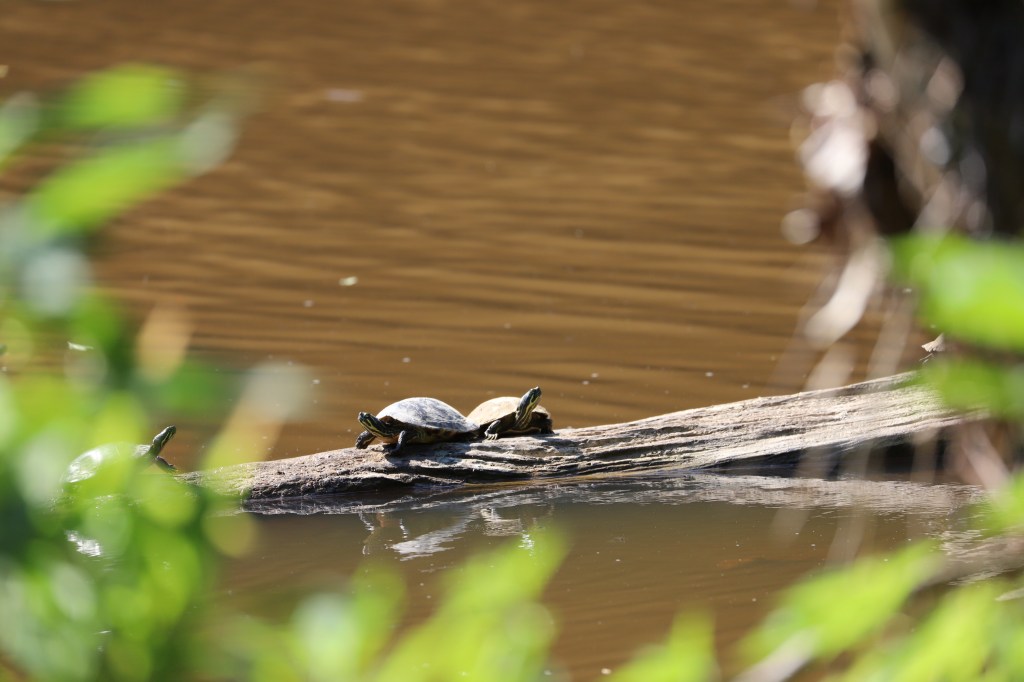
We walked along the river, reaching a waterfall. Beyond the waterfall, the river continued upstream into a field ringed by pine trees. While we didn’t see much in the way of wildlife on our journey, we did find some turtles sunning themselves on fallen tree trunks. These particular turtles were very skittish, plopping into the water whenever we made sounds, or wandered too close to the riverbank. Following several attempts to get better looks at the turtles (during which time all of the remaining turtles jumped into the water), we headed back up the trail, leaving the turtles in peace.

Turtles enjoying the sunshine in Eno River State Park. Shortly after this picture was taken, these two dropped into the water as we got too close. (Photo credit: Jeff Hayes)

Wandering down the path, we enjoyed the warm but dry morning, splashed by wall to wall sunshine. Despite the beautiful weather, there were few others in the park. Before we knew it, we’d spent more than an hour there. After crossing a bridge spanning the river, we headed back toward the parking lot. Before leaving, we made one last visit to the waterfall. The serenity of the waterfall was inviting, and we spent some time there before getting back on the road. If there was more time, we could have spent the morning there. If you are in the area, I highly recommend a visit.

Driving along Interstate 40 toward High Point, we realized we would be passing fairly close to Greensboro. Originally, we attempted to fit Greensboro into the schedule for this weekend, but the Grasshoppers were out of town. Since we were nearby, we decided to make a quick stop to see the stadium. Located in downtown Greensboro, First National Bank Field is the home of the Grasshoppers, the South Atlantic League single A affiliate of the Pittsburgh Pirates.

When we arrived, that portion of Greensboro was very quiet at noon. Even though the Grasshoppers were away, the ballpark was in use, and apparently open to the public. Assuming that to be true, we entered the park to see a game in progress. There were no outward signs of the names of the teams playing, nor what league they were in. Like any other park we’ve visited, we wandered around the ballpark, taking pictures along the way.

First National Bank Field in Greensboro, NC. Just like other ballparks in urban areas we’ve visited, there are condominiums lining the right field fence. The ballpark was beautiful in the day time; it seems as though it is even more attractive at night. (Photo credit: Jeff Hayes)

After spending about 30 minutes at First National Bank Field, we continued on our way to High Point, reaching the stadium about an hour before the scheduled start time. BB&T Point is the home of the High Point Rockers, the newest addition to the Atlantic League of Professional Baseball. The ballpark is located on the edge of downtown High Point, surrounded by commercial property .

BB&T Point, home of the High Point Rockers. (Photo credit: Jeff Hayes)

Parking was a bit confusing, as there did not seem to be a dedicated parking lot at the park. We arrived early enough to park on the street, but even that option came with some question marks. We opted to park in a private lot across the street, and parking was reasonable ($5.00). We walked over to the nearest gate to enter the ballpark not long after arriving, as gates open about an hour before game time.

However, the gates did NOT open on time. With an increasingly restless crowd waiting at the gate, fans were finally allowed to enter less than 30 minutes before first pitch. The late entrance left us little time for our pre-game ballpark tour, but we managed to take pictures before heading to the seats. The obligatory stop at the third base concession stand provided standard ballpark fare. My hot dogs were fried, but ultimately tasty, without the aftertaste common to ballpark dogs.

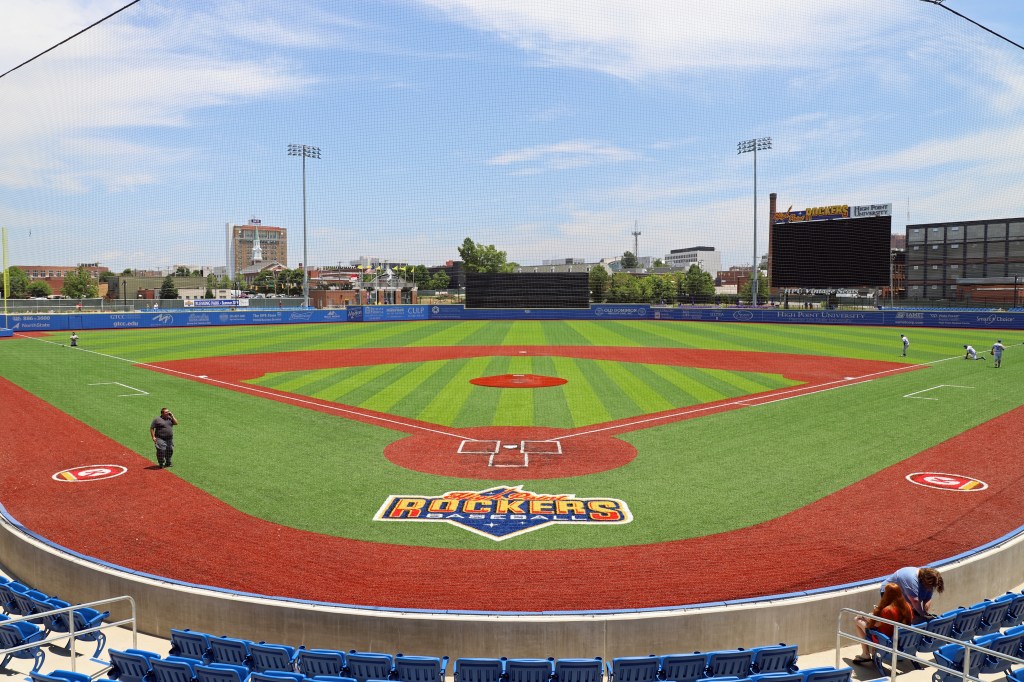
Inside BB&T Point, home of the Rockers. Note the surface is AstroTurf; both the “grass” and “dirt” are turf. (Photo credit: Jeff Hayes)

One of the aspects of the ballpark that caught our attention was the playing surface. Many newer ballparks have some version of turf, but BB&T Point had something we’ve never seen before. Not only was the “grass” made of AstroTurf, so was the “dirt” portion of the field (including the mound and batters boxes). Presumably an attempt to mitigate maintenance costs, the unique field was as attractive as it was interesting. The weather was pleasantly warm for the 205 pm start, as we took our seats in the lower level on the third base side. Much like we’ve seen elsewhere, the Sunday afternoon game was lightly attended, which is odd considering this is the inaugural season for the Rockers.

The Rockers’ opponent this afternoon was the Long Island Ducks. The Ducks have a strong connection to the New York Mets (our favorite squadron). The connection starts with manager Wally Backman, the 2nd baseman for the 1986 world championships, and coach Ed Lynch, a starter for the Mets in the 1980s. The starting lineup for the Ducks featured former Met outfielder Kirk Nieuwenhuis, and former Met farmhand LJ Mazzilli (son of perennial fan favorite Lee Mazzilli).

Rockers pitcher Seth Simmons delivers a pitch during his start against the Long Island Ducks. (Photo credit: Jeff Hayes)

The game was tied 2-2 entering the bottom of the 10th. The Atlantic League, like Minor League Baseball, starts every extra half-inning with the batter who made the last out in the previous inning placed at 2nd base. This rule change was implemented to spur scoring in extra innings, in hopes of shortening games. In this case, the rule change worked, as the runner placed at 2nd base scored on a single, giving the Rockers 3-2 win.

My brother’s picture of the action from centerfield at BB&T Point. (Photo credit: Jeff Hayes)

With a long drive back to Maryland ahead of us, we did not linger at the ballpark long. Overall, the experience was enjoyable; a very good game at an interesting ballpark. If you find yourself in the area, the ballpark is worth the visit, if for no other reason than to see the unique playing surface. However, the sustainability of Atlantic League baseball in High Point may be difficult, even with a brand new ballpark. There are other baseball options within driving distance, and from just one visit, it was tough to determine the level of baseball interest in the area.