St Louis MO, Saturday August 7th 2004

Busch Stadium, St Louis MO. Note the cranes in the background, aiding in the construction of the “new” Busch Stadium. (Photo credit: Jeff Hayes)

1 Newark NJ to St Louis MO

Our first baseball trip of 2004 took us to Missouri, the Show Me state, to see games in St Louis and Kansas City. Since this was planned as a weekend trip, there was insufficient time to drive from NJ to MO, and we chose to fly instead. In order to catch the first pitch in St Louis at 1220 pm CDT, we needed to fly out of Newark NJ early Saturday morning.

A cold front had just passed Newark as our flight to St Louis started, so we experienced short bursts of intense turbulence as we climbed toward 10,000 feet. Once we reached cruising altitude, the turbulence subsided, but not before my stomach informed me that breakfast during the flight was probably not a good idea.

We chose to fly Midwest Airlines, a now defunct airline that featured spacious leather seats and complimentary chocolate chip cookies. Though the cost of the flight was a bit higher than other airlines serving St Louis, the roomy cabin was worth the extra money. Other than the bumpy climb out of Newark, the two hour flight was uneventful, bringing us into St Louis less than two hours before game time. After picking up our rental car, we headed for the stadium.

2. Busch Stadium

Busch Stadium with the Gateway Arch and the buildings of downtown St Louis in the background. (Photo credit: Jeff Hayes)

We arrived at Busch Memorial Stadium less than an hour before the first pitch, leaving us little time to explore the environment around the park. Instead, we headed inside upon arrival, wandering the concourses before heading to our seats. Busch Stadium was one of the cadre of multi purpose stadiums constructed from the mid 1960s into the early 1970s, housing both MLB and NFL teams playing on the then-new AstroTurf.

AstroTurf was developed as an alternative to natural grass playing surfaces, starting with the Astrodome in Houston Texas, since grass could not be grown under the dome. Laid out on a field of concrete (which provided a stable surface), the AstroTurf was an unforgiving inch thick “carpet” which often heated to 130 F during the summer. Eventually, AstroTurf was eschewed in favor of grass surfaces, which is what we found in Busch Stadium early that afternoon.

Busch Stadium shortly before game time. (Photo credit: Jeff Hayes)

Crystal clear skies and rapidly warming temperatures greeted us as we found our seats shortly before the first pitch. Per usual, Busch Stadium was filled to near capacity, as St Louis fans are generally considered to be some of the best in the game. The opponents for the hometown Cardinals this afternoon was the New York Mets. St Louis was enjoying a strong 2004 season, with a commanding 10 1/2 game lead over the second place Houston Astros in the NL Central Division. By contrast, the Mets were battling their way through another sub .500 season, occupying the fourth spot in the NL East.

Starting for the visiting Mets was right hander Kris Benson. Making his first start for the Mets after being traded from the Pittsburgh Pirates, Benson was in the midst of a fairly average season, with a .500 record and an ERA over 4.00. The hometown Cardinals sent right hander Woody Williams to the mound. Williams was an 18 game winner for the Cardinals in 2003, and was still an important piece of the starting rotation for a formidable St Louis team. With the afternoon warming quickly, we were wondering if the ball would carry well at Busch Stadium this afternoon, resulting in an offensive display.
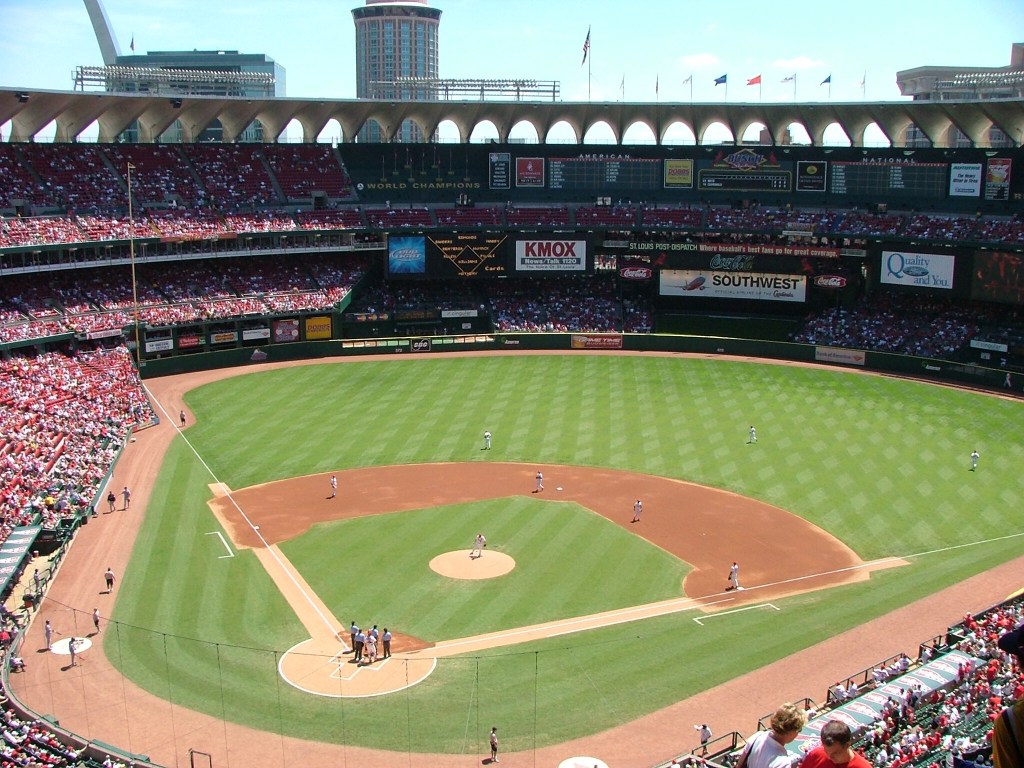
The view from our seats. (Photo credit: Jeff Hayes)

From the very start, the Cardinals fans were a force, with a loud din discernible for much of the game. Being from the Northeast, I would posit that the best fans in baseball were from the part of the USA, but the boisterous St Louis fans were slowly changing my mind. Despite the building heat, starting pitching dominated the early portion of the matinee. Each team scored a single run through six innings, and with both starters showing their best stuff, the game quickly became an old fashioned pitchers duel

As part of their playoff push, the Cardinals had acquired slugger Larry Walker from the Colorado Rockies at the trade deadline on July 31st. Walker’s first at-bat in a St Louis uniform came in the bottom of the 7th as a pinch-hitter. Looking to quench my thirst, I approached a vendor to purchase a soft drink as Walker came to the plate. Both the vendor and I paused the transaction to watch the at-bat. Walker received a standing ovation as he strode to the plate, which was understandable, as the Cardinals fans though they were welcoming a presence that would propel them through the playoff run. However, when Walker struck out, the Cardinals fans gave him another standing ovation, a highly unusual response to a strikeout. In fact, it was so unusual that the vendor pointedly asked me “have you ever seen anything like that?”.
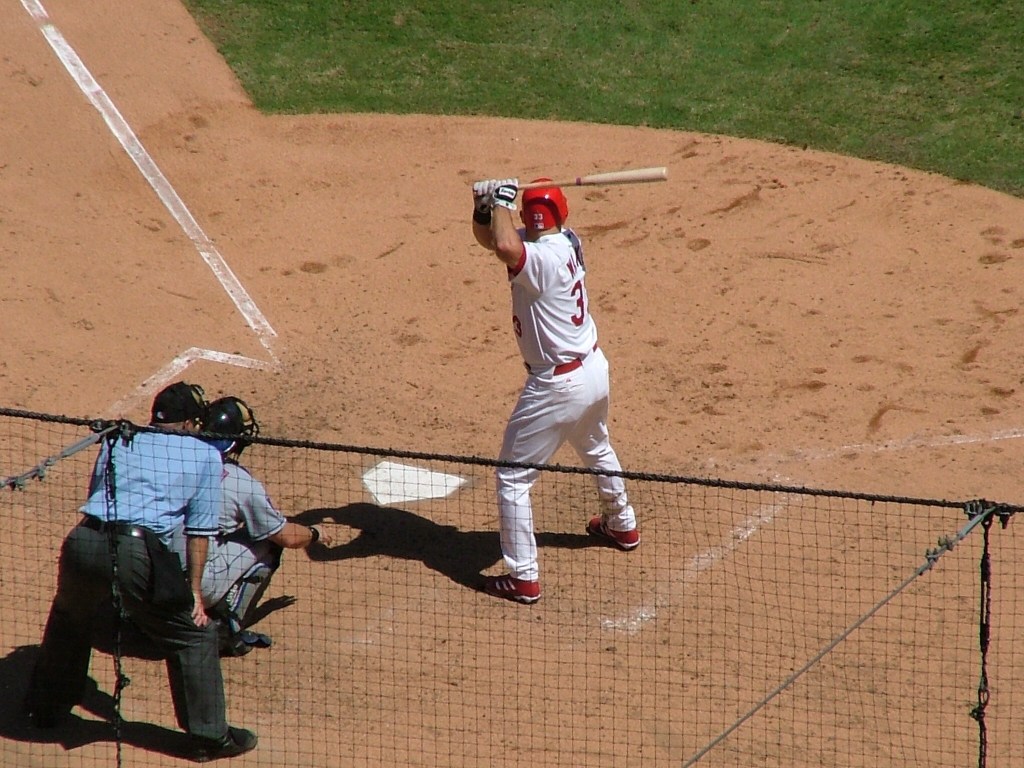
Larry Walker in his first at-bat with the St Louis Cardinals. (Photo credit: Jeff Hayes)

Both starting pitchers exited that game by the end of the seventh inning, leaving the tight contest in the hands of the respective bullpens. Quite unexpectedly, a game that I thought might be one-sided because of the Mets recent struggles had become one of the best games I’d seen in person in years. The score remained tied at 1-1 going into the bottom of the ninth inning, giving the Cardinals one last chance to end the game before extra innings.

Having experienced the devoted and vocal Cardinal fans first hand, I was very surprised to see them execute “the wave” during a critical portion of a tightly contested ballgame. It was almost as though the fans were not fully aware of the game situation, instead becoming lost in the moment of being at the ballpark. The Cardinal pushed across the winning run with two outs in the bottom of the ninth, securing a well-fought 2-1 victory.
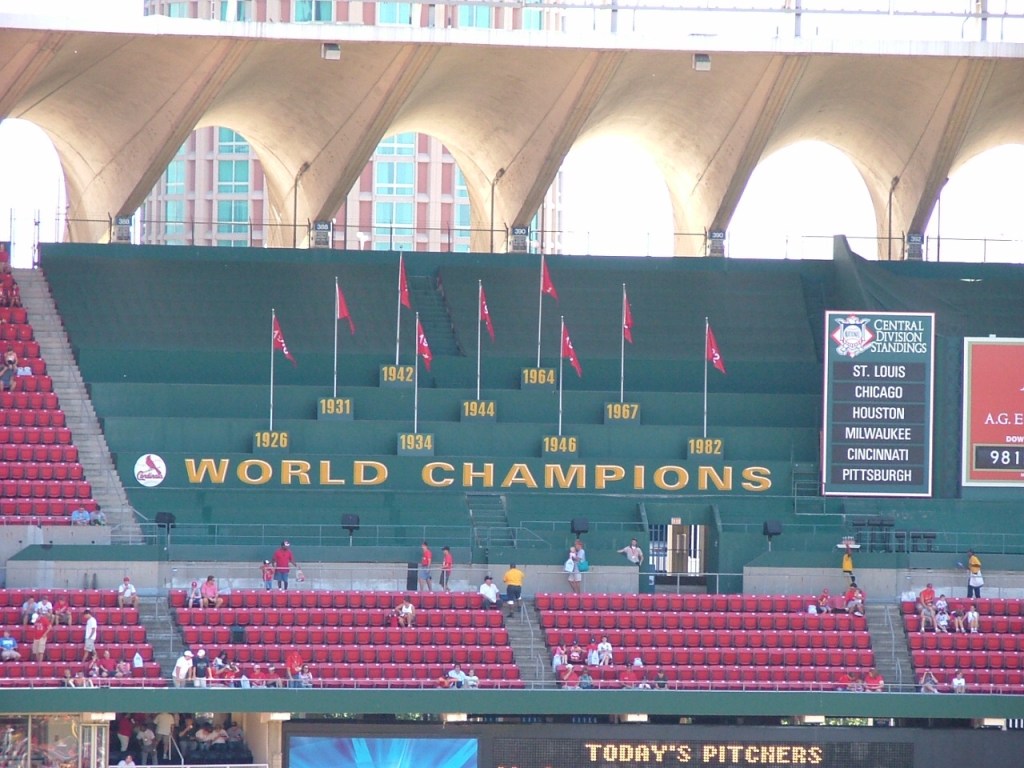
A tribute to the venerable St Louis Cardinals franchise at Busch Memorial Stadium. (Photo credit: Jeff Hayes)

We’d just witnessed one of the best ballgames I’d seen in a long time at the home of an iconic MLB franchise. Though Busch Stadium itself was a typical multi-purpose facility, a product of its time, the crowd made it feel like a great place to see a ballgame (despite their curious wave display in the bottom of the ninth). Having seen the stadium, there was no reason to return until the new ballpark was ready, which was a couple of years away. Still, it WAS fun to see a baseball game in the heartland of America.
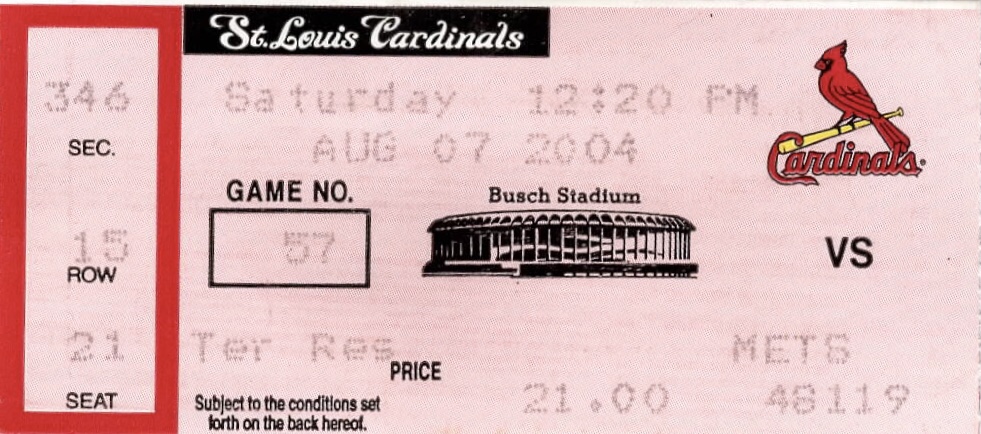
A ticket from the game. (Photo credit: Jeff Hayes)

Our destination after the game was a hotel room in eastern Kansas, before we visited Kaufman Stadium in nearby Kansas City the following afternoon. Before heading out onto Interstate 70 west, we briefly visited the Gateway Arch, the longtime symbol of the opening of the western USA. It was also my first visit to the Mississippi River, an iconic symbol of the heartland of the USA. We would see the river at several points along its journey in the coming years.
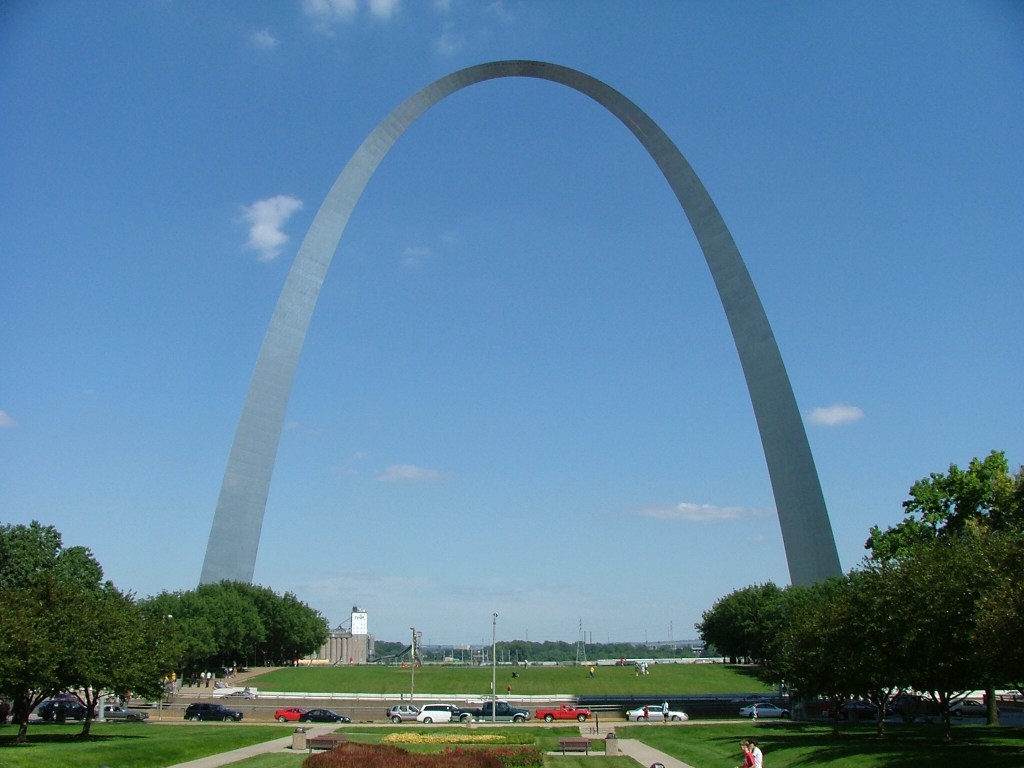
The Gateway Arch in St Louis. (Photo credit: Jeff Hayes)

We didn’t linger long in the Gateway Arch National Park, as we had a 300 mile drive ahead of us. Light traffic heading west on Interstate 70 allowed us to reach the hotel just outside of Kansas City in less than four hours.
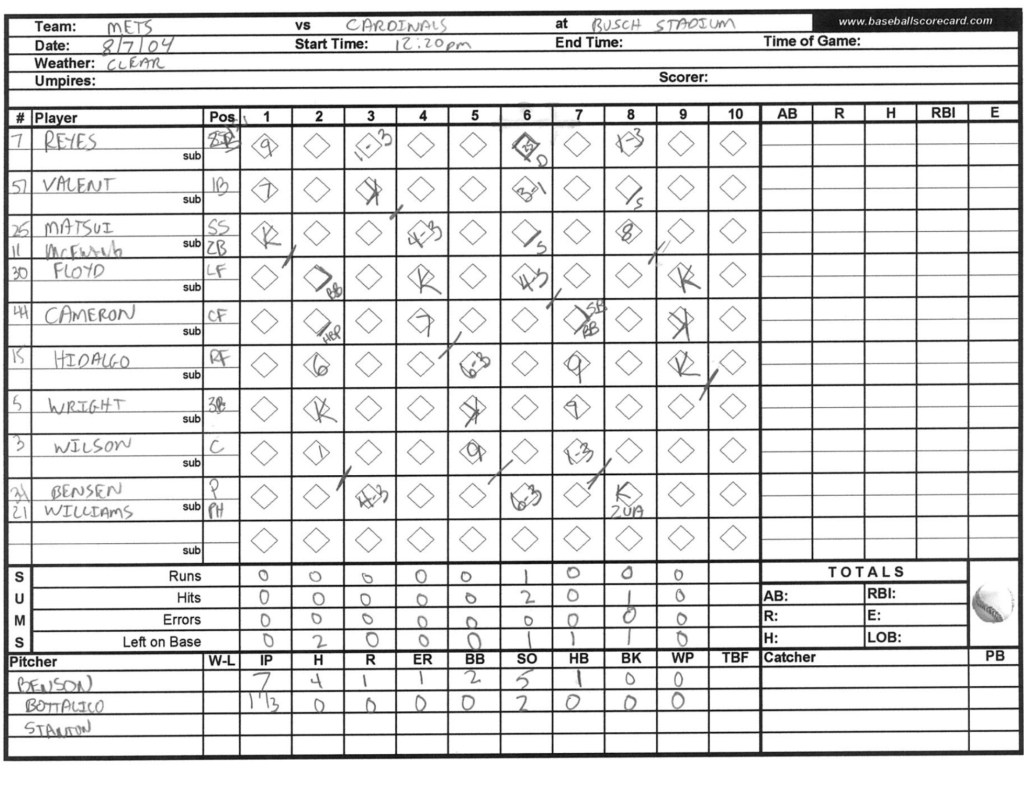
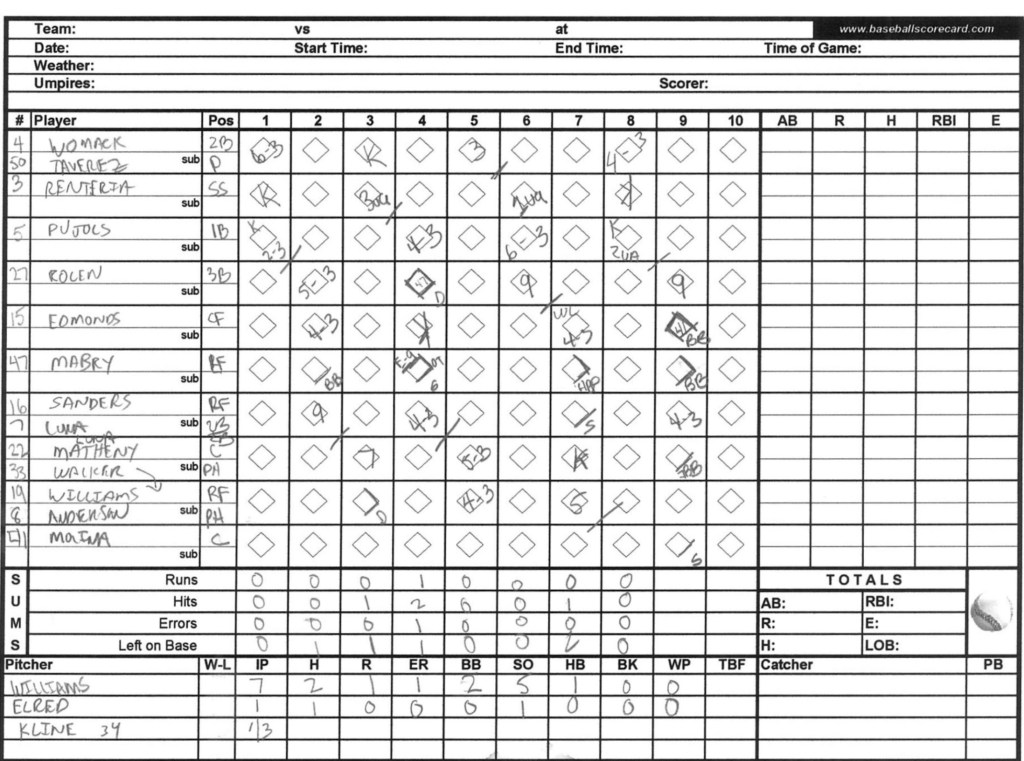
Our scorecard for the game.

Cincinnati, Ohio Sunday September 19th 2004

Great American Ballpark, Cincinnati, OH. (Photo credit: Jeff Hayes)

Wall to wall sunshine awaited us as we ventured from the hotel (following breakfast) and headed toward the Great American Ballpark. With some time before the first pitch of the (scheduled for 115 pm), we found parking near the stadium, and walked the pavilion along the mighty Ohio River.

It was clearly evident that the Ohio River was running very high, swelled by recent heavy rainfall in the area. The normally docile river was roiled by flood waters, swiftly taking sheds, large trees and assorted clutter in its muddied currents downstream. Contrasted by the sunny skies and light winds, the Ohio running out of its banks in full fury made it even more dramatic.

The muddy, swift moving waters of the Ohio River. (Photo credit: Jeff Hayes)

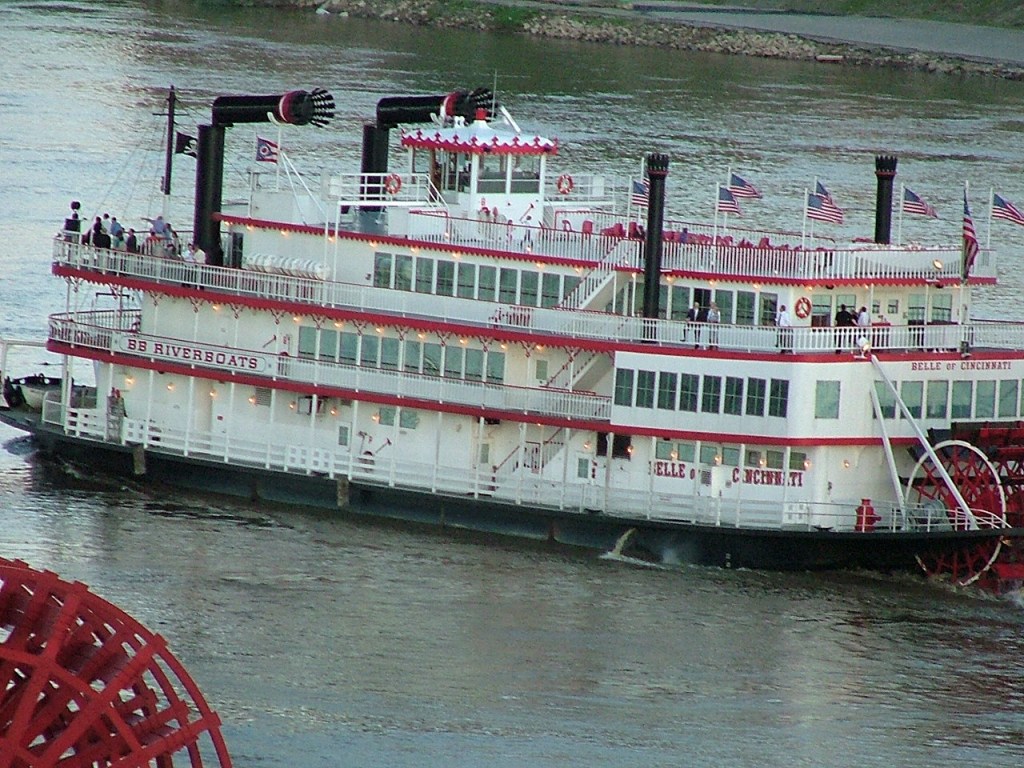
Not surprisingly, the beautiful late summer weather brought a large number of people to the riverfront. Most seemed to be transfixed by the state of the river, while others were simply enjoying the weather and the scenery. Strolling along the pavilion, we were treated to views of northern Kentucky, as well as the paddle wheel boats on the river. Despite the swift currents, people were enjoying the ride, and had I planned more carefully, perhaps I would have been one of those people. Instead, we enjoyed the river from dry land.

Paddle wheel boating cruising the swollen Ohio River. (Photo credit: Jeff Hayes)

1. Great American BallPark

Outside the Great American Ballpark. (Photo credit: Jeff Hayes)

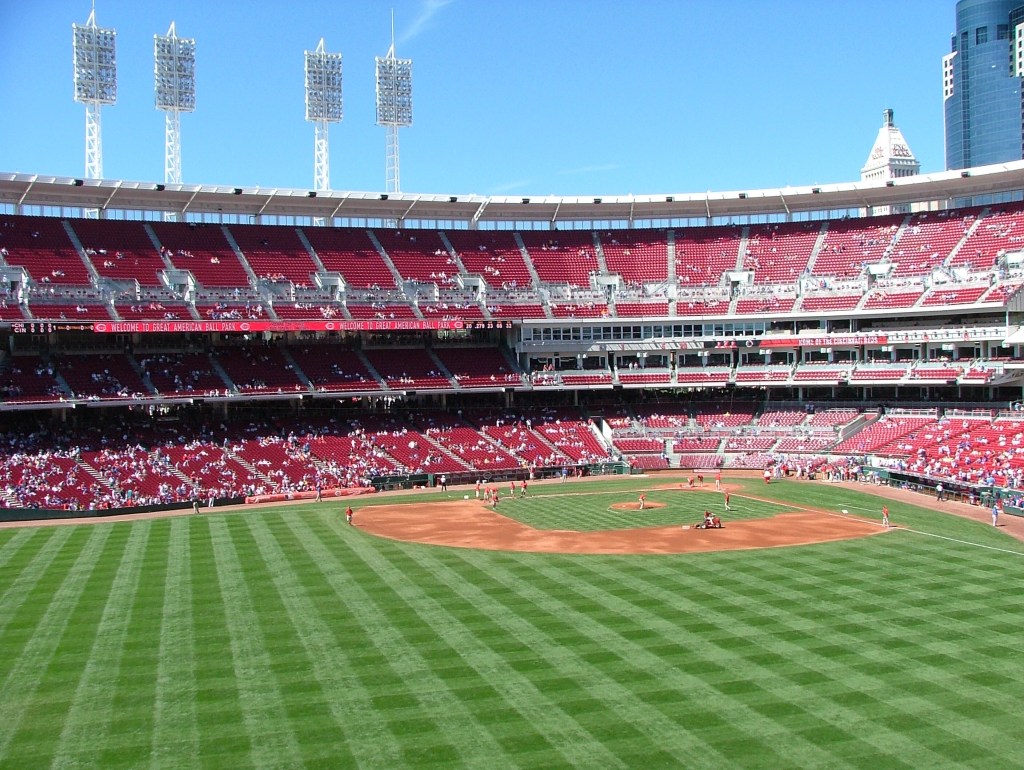
Following our walk along the river, we headed toward the park as the gates were opening. Unlike last night, we left ourselves plenty of time to explore Great American Ballpark. In its second season of service, the ballpark still had a “new” feel to it. More than 42,000 red seats, arranged in three decks spanning from foul line to foul line gave the ballpark a nearly overwhelming “Redness” feel.

Arriving just as the gates opened, there were few fans inside the ballpark. This allowed us to explore the park with little obstruction. While the capacity of Great American Ballpark is a bit larger than its predecessor, Riverfront Stadium, the openness of the new park made it seem much bigger than the older, multi-use colossus.

The view of Great American Ballpark from the centerfield pavilion. Note the taller buildings of Cincinnati towering above the stadium on the right. (Photo credit: Jeff Hayes)

Like most newer ballparks, the concourse encircled the stadium, allowing us to take pictures from all angles. As expected, the main attraction of the park was the view of the Ohio River. From the upper deck behind home plate, we could see the river, as well as the towns and buildings of nearby northern Kentucky. Crystal clear skies and warm late summer temperatures resulted in a beautiful view from the stadium, possibly one of my favorites among MLB ballparks.

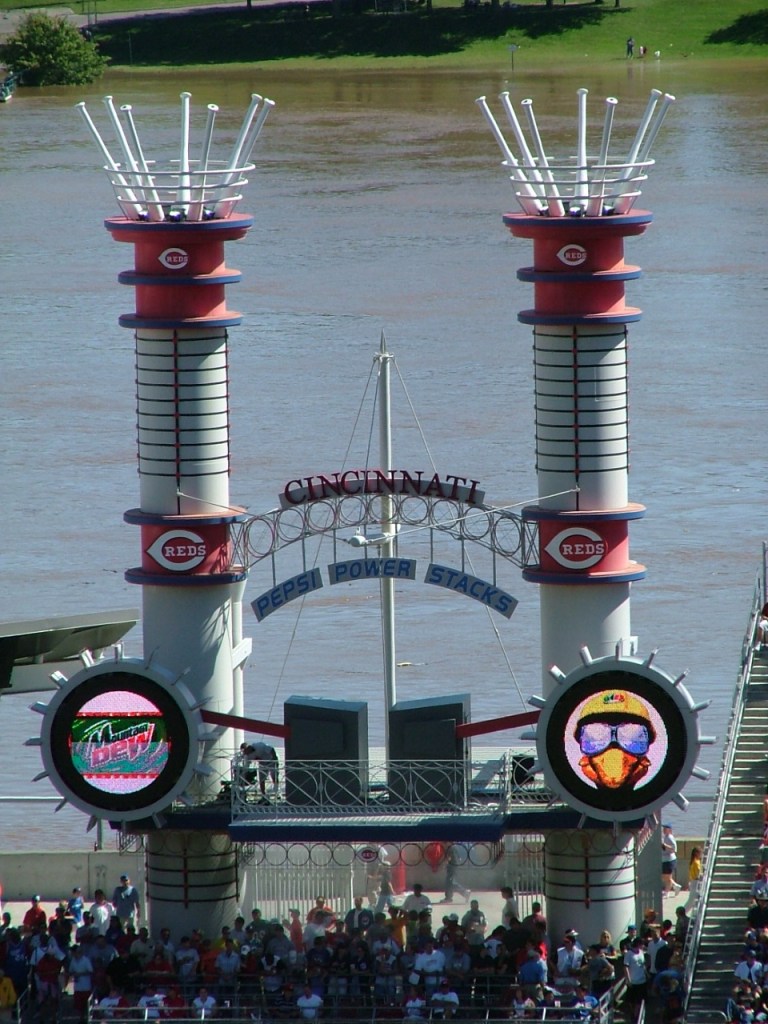
In my opinion, one of the best features of Great American Ballpark is the Smokestacks. Located just to the right of the batter’s eye in centerfield, the Smokestacks were a nod to the history of the Ohio River, when paddle wheel boats were the main mode of transport for people and produce along the length of the river.

The Smokestacks in centerfield at Great American Ballpark. (Photo credit: Jeff Hayes)

After completing our tour of the ballpark, we went in search of a baseball lunch. Though Great American Ballpark offered a wide array of places to eat and drink, we chose to stick with the more conventional concessions. Stocked up with drinks and snacks, we headed for our seats. While Sunday matinees typically attract a smaller crowd than Saturday night affairs, good seats were difficult to obtain for this game. Just like the night before, our seats were further away from the action, though we were at least closer to the plate.

The starting pitchers for the game this afternoon were both former Mets. Chicago sent veteran left hander Glendon Rusch to the hill. Rusch was a Met in 2000-2001, and we saw him shut out the Boston Red Sox in 2001, allowing only infield single to open that contest. Starting for the hometown Reds was right hander Paul Wilson. One of the Generation K starters for the Mets in the mid 1990s, a promising trio that didn’t pan out quite as Mets fans had envisioned, Wilson showed flashes of brilliance with the Mets, but ultimately lost favor with their management and disappeared. After landing in Cincinnati, Wilson’s career experienced something of a renaissance, and 2004 for his best big league campaign.

The view from our seats, which included a spectacular look at the Ohio River. (Photo credit: Jeff Hayes)

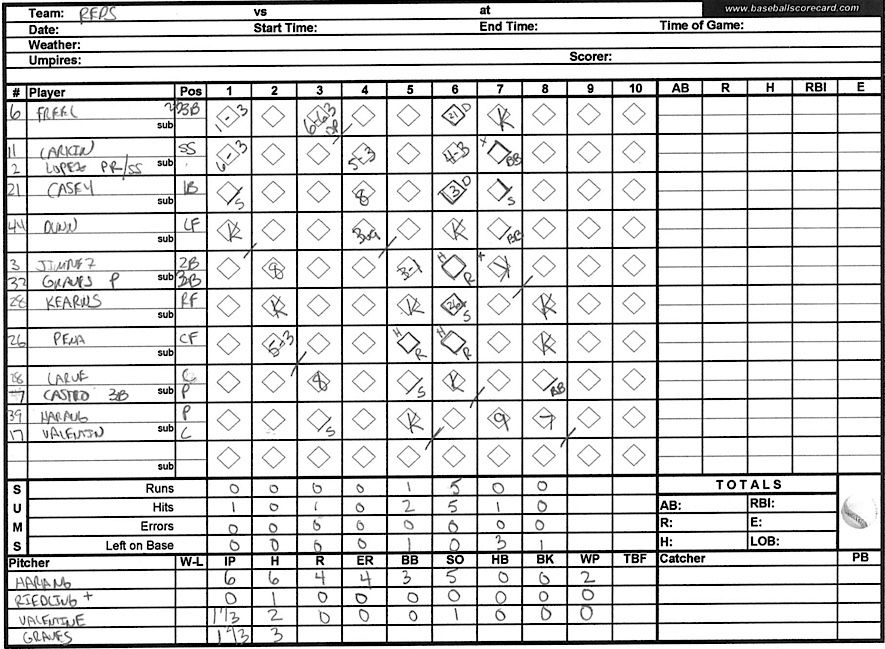
With the Cubs still in contention for a playoff spot, this was a meaningful game for them. In contrast, the Reds were simply playing out the string toward the end of a disappointing season. Surprisingly, both starting pitchers were at the top of their games on this warm afternoon, with a scoreless tie continuing through the first six innings.

The Reds broke the tie in the bottom of the seventh inning with an RBI single by LF Adam Dunn. In the top of the eight inning, the Cubs tied the score with a sacrifice fly. By this time, both starting pitchers had exited the content, allowing one run each, and the outcome of the game was left in the hands of the bullpen. Cincinnati reliever Danny Graves allowed the final run of the game in the top of the ninth, as the Cubs squeaked out a 2-1 victory.

The large but understated scoreboard at Great American Ballpark tells the story. (Photo credit: Jeff Hayes)

We were not leaving the Cincinnati area right after the game, so we took out time leaving Great American Ballpark. Aside from the amazing view of the Ohio River, the newly minted ballpark offered all the amenities found in the “newer” MLB ballparks, except for scoreboard. Most new parks feature the latest video board technology, but the video board at Great American ballpark was surprisingly small, which is not necessarily a bad thing.

Overall, I was impressed with the park, with my opinion dominated by the view over the center field fence. Unlike some of the newer parks we have visited, I did not feel a level of intimacy at Great American Ballpark, though the sample size was admittedly small. Though I was impressed with the environment, I am not sure I was impressed enough to return anytime soon.

My scorecard for the game.

2. Paul Brown Stadium

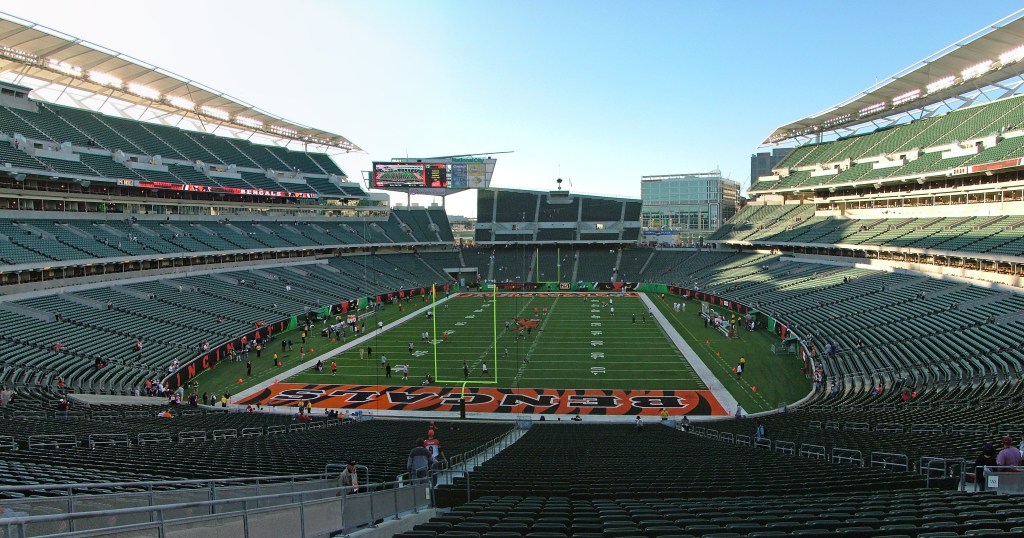
Paul Brown Stadium, home of the Cincinnati Bengals. (Photo credit: Jeff Hayes)

Since direct flights from Cincinnati to Newark, NJ were not available after the baseball game, we decided to stay in the area and fly out Monday morning. With a free night available, we decided to attend an NFL game at Paul Brown Stadium, the home of the Bengals. The stadium is part of a larger complex which includes the Great American Ballpark, so we didn’t even have to move our vehicle from the parking lot.

Not realizing that the Sunday night game was the home opener for the Bengals for the 2004 season, we found securing seats to be difficult. Since pickings were fairly slim, we settled on seats in the lower level of the southern end zone. While hardly ideal for viewing the game action, the seats did allow us to be part of the experience, which was enhanced by the enthusiasm of the crowd.

Because our seats were less than desirable, we didn’t get many good pictures of the action. Instead, we enjoyed the action and environment of the NFL contest.

Cincinnati Ohio, Saturday September 18th, 2004

The Great American Ballpark from the right field line. (Photo credit: Jeff Hayes)

1. New Jersey to Cincinnati

Our second baseball trip of 2004 took us to Cincinnati, Ohio to see the Great American Ballpark, the new home of the Reds. From central New Jersey, the drive to Cincinnati was deemed to too long for a two day visit, so we decided to fly. The flight was just two hours, so flying out of the Newark-Liberty Airport in the early afternoon brought us to Cincinnati a couple of hours before the first pitch, scheduled for 710 pm EDT.

After landing at the airport, we picked up our rental car and headed to the hotel to drop off our bags. Since the Cincinnati airport is actually in Covington, Kentucky, we stayed at a hotel near by, rather than in Cincinnati itself. Following a 15 minute drive, which took us across the Ohio River from Kentucky into Ohio, we arrived at the ballpark. Great American Ballpark is located along the banks of the Ohio River, part of a larger complex which includes Paul Brown Stadium (home of the NFL’s Bengals) and the Heritage Bank Center. Not surprisingly, parking was ample throughout the complex, and after securing parking, we walked up the stadium.

2. Great American Ballpark

The view from our seats. (Photo credit: Jeff Hayes)

Having arrived about an hour or so before game time, we skipped out normal walk around the outside of the stadium and entered the ballpark (as we would have a better opportunity to explore the area the next afternoon). Soon after walking into the stadium from the centerfield gate, we discovered the best feature of the new ballpark (which opened just the year before): the view of the Ohio River.

Located adjacent to the river, the park was constructed to take full advantage of the spectacular view of the river, as well as the structures across the river in Covington and Newport. Since the game time was about 30 minutes before sunset, the encroaching darkness diminished the view to some degree, but we would get a much better look during the afternoon contest the next day.

The opponent for the hometown Reds this evening was the Chicago Cubs. With the St Louis Cardinals running away with the NL Central in 2004, the Cubs were still in contention for the wild card spot, but the Reds were limping toward the end of a disappointing campaign. Starting for the visiting Cubs was future Fall of Famer Greg Maddux. The three-time Cy Young award winner was not quite the pitcher he was just a few years earlier, but was still effective and an important part of the Cubs rotation as they pushed for a playoff spot.

Future Hall of Famer Greg Maddux delivering a pitch at the Great American Ballpark. (Photo credit: Jeff Hayes)

Aaron Harang took the ball for the hometown Reds. For the 6 foot 7 inch right hander, 2004 was his first full year in the Reds rotation. With both pitchers having mediocre seasons (especially Maddux), we were prepared for an offensive display from both teams.

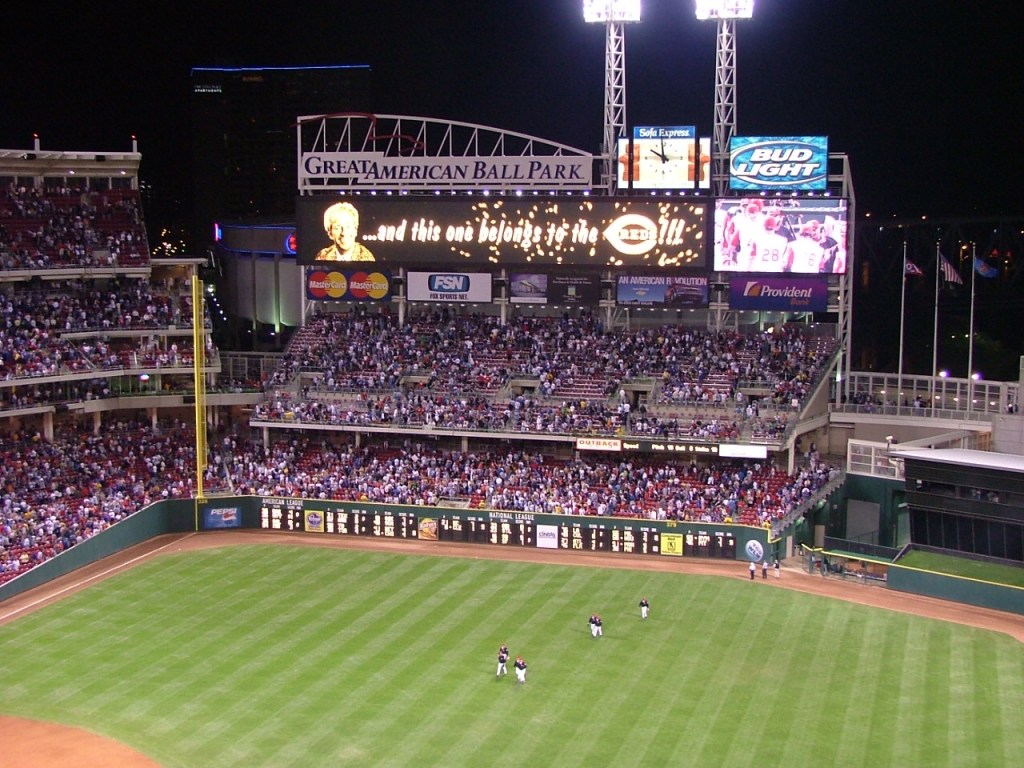
Clear skies, light winds and comfortable temperatures greeted us as afternoon faded into evening. After picking up a baseball dinner, we went in search of our seats. Though the Reds had been out of playoff contention for some time, there was a sizable crowd for the Saturday evening contest. Consequently, our seats for the game were located down the right field line in the middle deck. Further from the action that I would have liked, but the great weather made up for the distance.

Great American Ballpark at night. (Photo credit: Jeff Hayes)

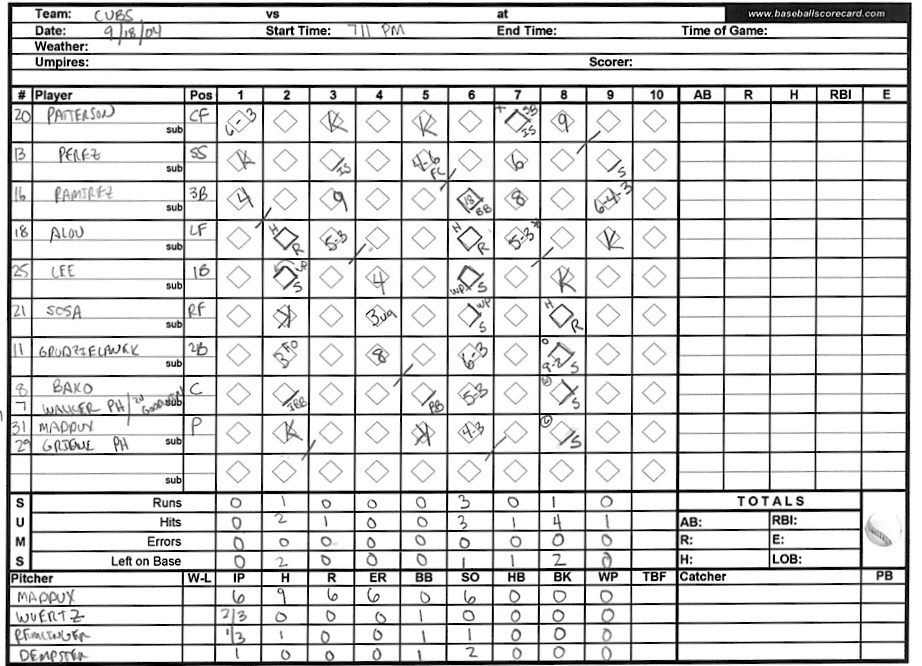
Despite my expectations of an offensively dominated contest, starting pitching dominated the first half of the game, which each team scoring just a single run in the first five innings. However, as often happens in MLB games, both pitchers struggled as they made their way through the lineup for the third time. The Cubs scored three runs in the top half of the sixth inning, including a home run by LF Moises Alou. Not to be outdone, the Red erupted on Greg Maddux in the bottom half of the inning, with C Willy Mo Pena hitting his second home run of the game, giving the Reds a 6-4 lead.

Sammy Sosa batting fifth for the Cubs at the Great American Ballpark. (Photo credit: Jeff Hayes)

A solo home run by the Cubs’ Sammy Sosa in the top of the eighth inning brought Chicago within a run. Not quite the slugger he was in the late 1990s and early 2000s, when he was hitting 60+ home runs a year, Sosa was still a force to be reckoned with, exuding the same enthusiasm for the game as always.

Sosa’s home run ended the scoring, as the Reds bullpen shut down the vaunted Cubs offense to secure a 6-5 Reds victory. Despite the scoring, the game was completed in two hours and 45 minutes. My initial impression of the Great American Ballpark was positive, but we would get a better chance to see the ballpark with the mighty Ohio River as a backdrop during an afternoon contest the next day.

My scorecard for the game.