Yankee Stadium, Bronx NY

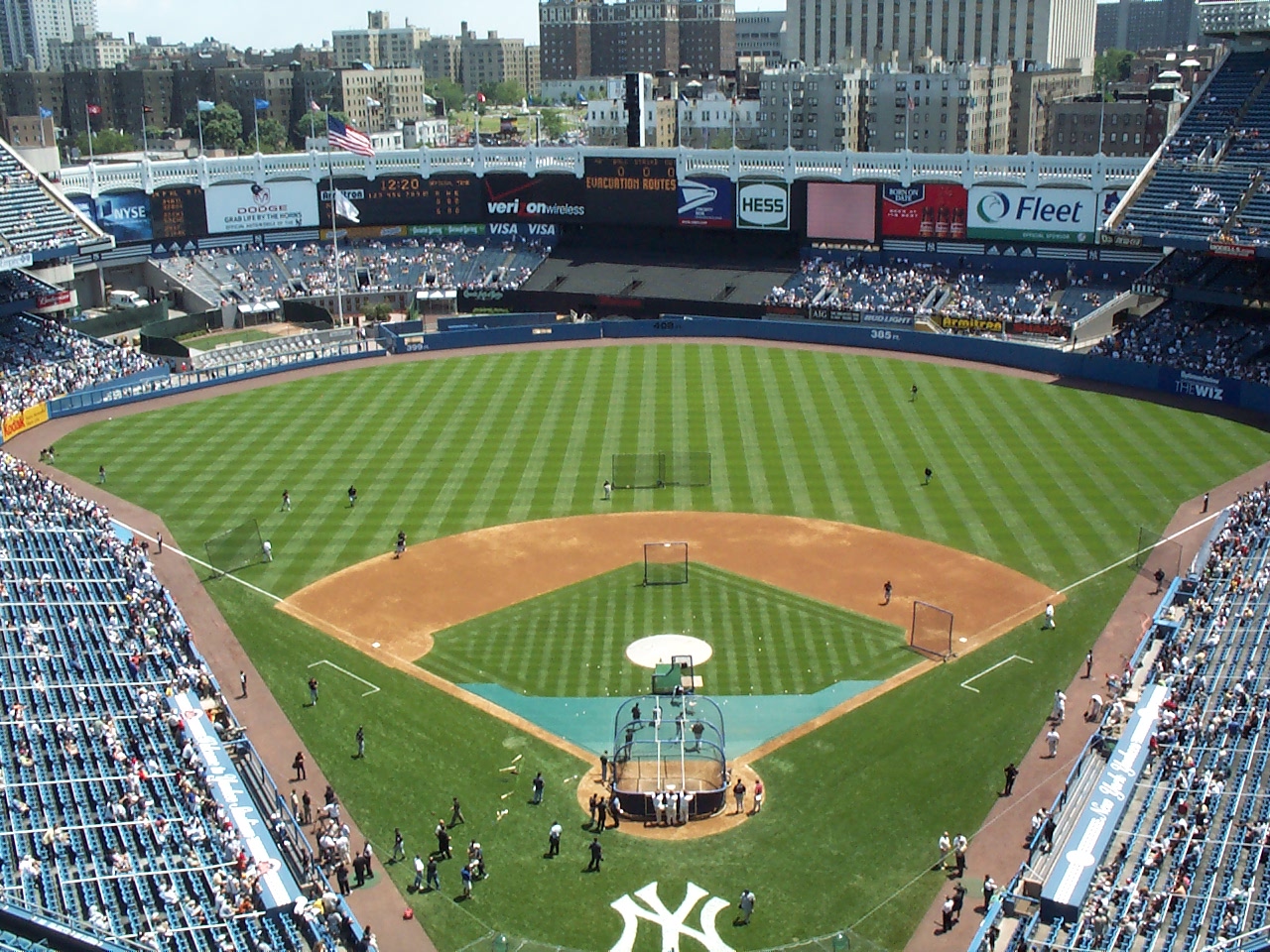
Yankee Stadium from the upper deck behind home plate. (Photo credit: Jeff Hayes)
  • First visit: Saturday September 9th 1995
  • Most recent visit: Saturday September 16 2017

Our first visit to Yankee Stadium took place on September 9th 1995, as the Yankees hosted the Boston Red Sox for a matinee contest. This visit was to the “second” Yankee Stadium, as the original configuration was renovated significantly in 1974 and 1975 (during which time the Yankees played at Shea Stadium, the home of the New York Mets). While still in the same physical location as the original “House That Ruth Built”, the renovations modernized the ballpark. Unfortunately, I did not have the opportunity to visit the “old” Yankee Stadium.

Much like Shea Stadium in Queens, Yankee Stadium, located in the Bronx, is not easy to access coming from central NJ. Driving to the stadium was not deemed an option, as parking was limited and expensive, and exiting the region after the game was a nightmare. Instead, we chose to drive into Manhattan, park at the Javits Center parking lot, and hop on the C subway train to the ballpark (which took about 30 minutes). Without much to see in the immediate vicinity of the park, we entered the ballpark from the gate behind home plate.

The view from our seats at Yankee Stadium in 2004. (Photo credit: Jeff Hayes)

Crossing from the darkness of the tunnel to the light of Yankee Stadium, it was instantly clear that we had entered a baseball cathedral. Seemingly immense in size, many of the landmarks I had seen on TV came within view. By this time, the outfield walls had been brought in considerably, especially in centerfield. Monument Park (an outdoor museum containing plaques and busts of Yankee greats), which was once in the playing field at the stadium, was adjacent to the visiting bullpen beyond the left centerfield wall. Bleachers in left center and right field bracketed the batter’s eye in centerfield. Dubbed the “bleacher creatures”, fans in the right field bleachers at Yankee Stadium had a reputation for occasional vulgar behavior (which rattled opposing right fielders), as well as tossing D batteries at visiting players.

Perhaps the best known landmark in this hallowed ballpark was the white façade stretching atop the bleachers. Made originally of copper (which would occasionally turn green as the copper became exposed to the air), it was scrapped during the renovation in the mid 1970s, replaced by a concrete version which was in place when we visited. Even though we were not Yankees fans by any means, we could help not being overwhelmed by the air of history within this place. It is mind boggling how many Hall of Famers called Yankee Stadium home, and how many championships were won in this park.
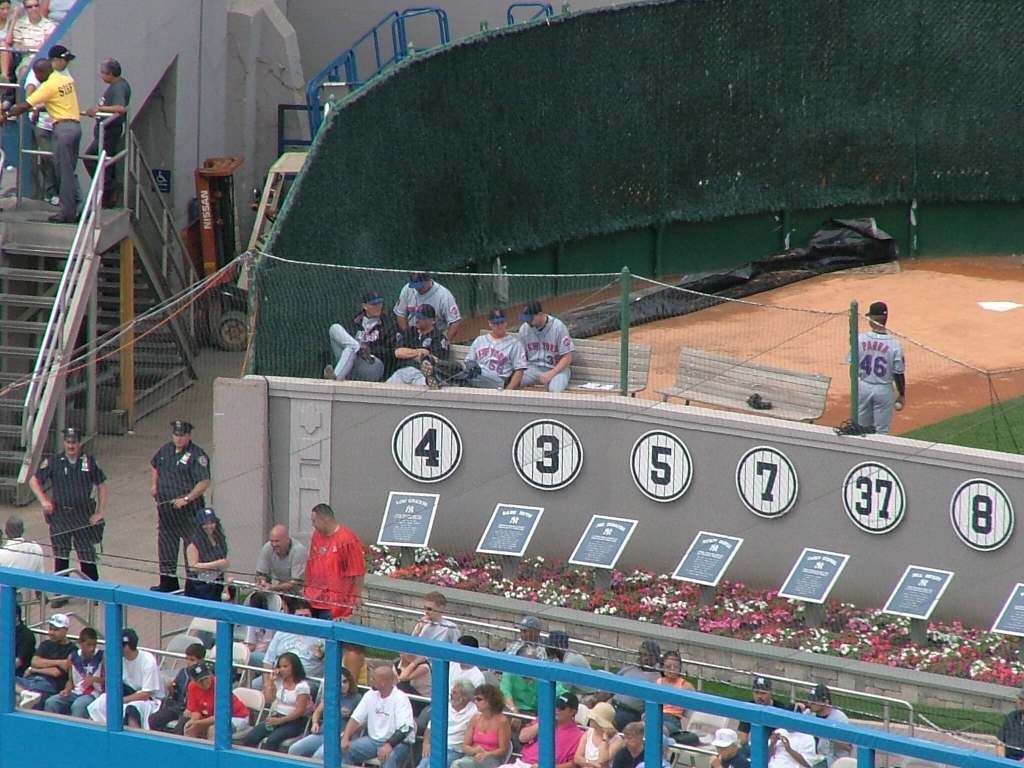
A look at a portion of Monument Park at Yankee Stadium from the right field upper deck seats. (Photo credit: Jeff Hayes)

During 1995, the Yankees were emerging from a decade long slumber during which time they did not appear in the playoffs. As the team improved with rising young stars interspersed with veterans, the attendance at Yankee Stadium rebounded. Because of this, we were often relegated to upper deck seats, particularly when the Red Sox (and later the crosstown Mets) were in town. We were surprised by how steep the seating area was in the upper deck, and there were times when I felt uncomfortable walking up and down the seemingly harrowing concrete stairs. Though it did not happen to us, I could see other battling vertigo when trying to navigate the upper deck at Yankee Stadium.

Luckily for us, we were able to catch a game during the final season of the Yankees captain, Don Mattingly. By this time, a degenerative spinal condition had eroded his once considerable skills, and during this visit to Yankee Stadium, Mattingly played first base and batted seventh. On this day, the Yankees defeated the Red Sox 9-1, with rookie lefthander Andy Pettitte securing the victory with 8 2/3 inning of one run ball. Some of the pieces in place that day would comprise the penultimate dynasty of the 1990s.
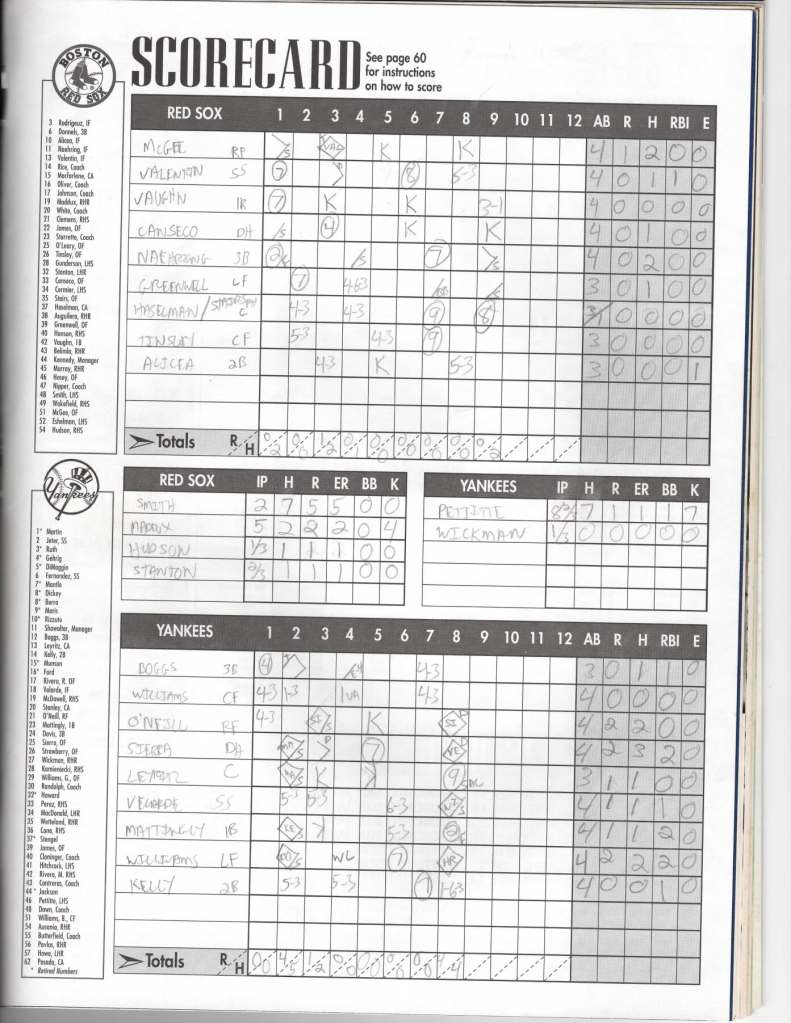
My scorecard for the game.

Visits to Yankee Stadium for the next decade or so were infrequent, usually scheduled when the Yankees hosted the Mets. We DID try to get tickets to the Subway Series in 2000, but not surprisingly tickets were scarce, and at that time, prohibitively expensive from resale vendors. After that time, the Yankees were perpetual contenders, as the Mets slid downhill for a few years. That downturn for the Mets made it somewhat easier to secure tickets at the stadium, though generally in the upper deck. One of my most vivid memories of Yankee Stadium occurred in 2002, when the Mets Roger Cedeno completed a straight steal of home plate (an exceedingly rare baseball event).

Fortunately for us, our upper deck seats (just to the left of home plate) gave us a fantastic view of the action. Taking a large lead off third base, Cedeno made a mad dash for the plate. Not sure of what I was seeing, I asked my brother what he was doing; it was, after all, the first straight steal of home I had seen in person. Though the Mets fortunes against the Yankees were generally disappointing, they did allow us to see Hall of Famers in pinstripes through 2008, including Derek Jeter and Wade Boggs, as well as players on the outside looking in, such as Roger Clemens and Alex Rodriquez. No matter what you may think of the last two players, Yankee Stadium was a great place to see these premiere athletes compete.
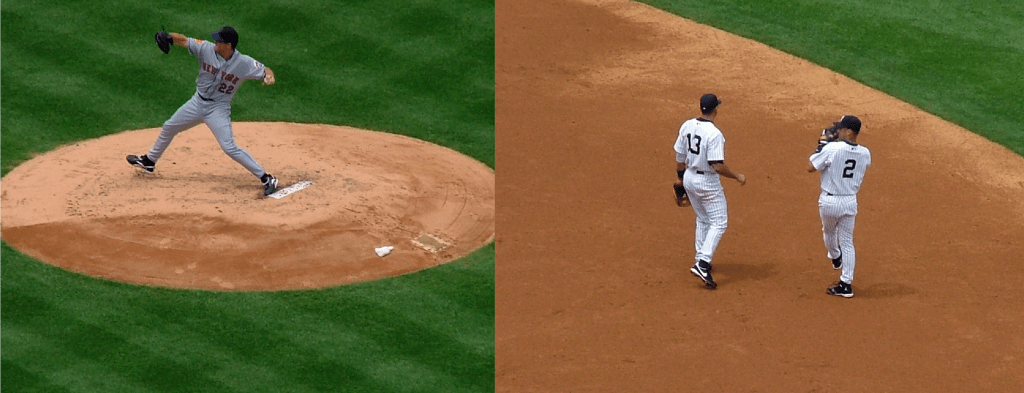
Actions shots of Yankee Stadium during series with the Mets. On the left, Mets left hander Al Leiter delivers a pitch, and on the right, Derek Jeter (2) and Alex Rodriquez (13) interact after a play. (Photo credit: Jeff Hayes)

The “new” Yankee Stadium – September 16, 2017
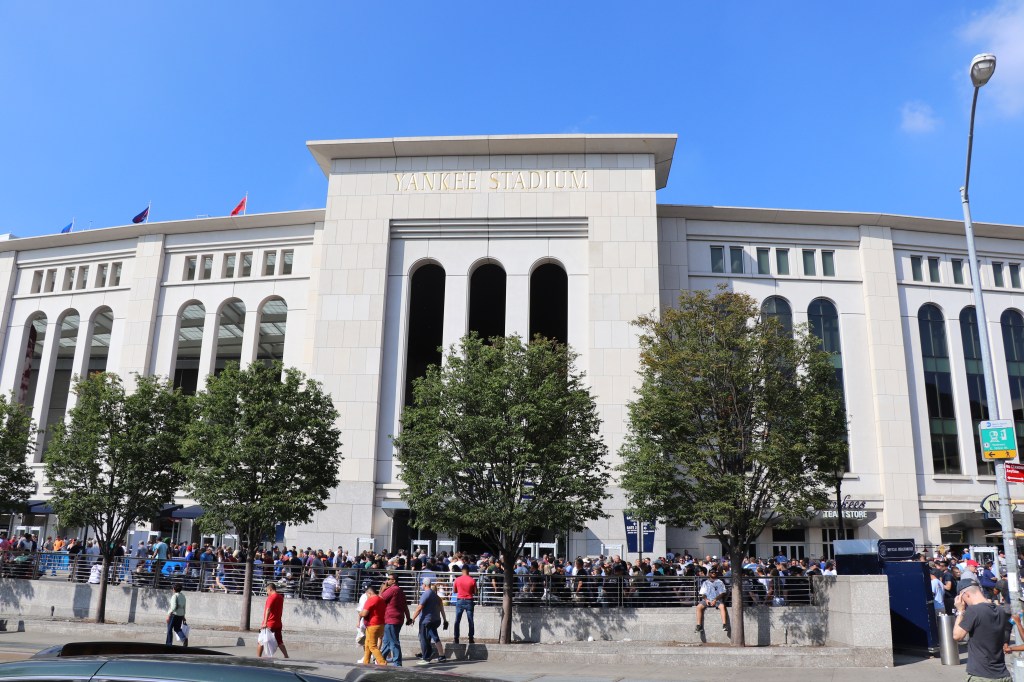
The view of the “new” Yankee Stadium from just behind the home plate entrance. (Photo credit: Jeff Hayes)

Ground was broken for the “new” Yankee Stadium just across the street from the second incarnation of the “old” Yankee Stadium in 2006. Completed in time for the beginning of the 2009 season, the latest version of Yankee Stadium looked and felt like its predecessor. Much of the design was inspired by the original stadium, with Monument Park making the trip to the new park. After demolition of the old ballpark, the space was turned into parkland named Heritage Field.

Rather than transport the façade from the old stadium, new facade was crafted from steel instead of concrete for the new ballpark. The high definition video board in centerfield was the third largest in the world when it debuted, providing nearly twice the area of the video board in the old stadium. With fan comfort in mind, the stadium was laid out like a bowl, which made the seating more accessible, eliminating the nearly vertigo inducing steepness of the upper deck of its predecessor. Approximately 1300 pictures from various sources are scattered throughout the stadium. Dubbed “The Glory of the Yankees Photo Collection”, Yankee players and moments from the teams fabled past were featured in the photos.
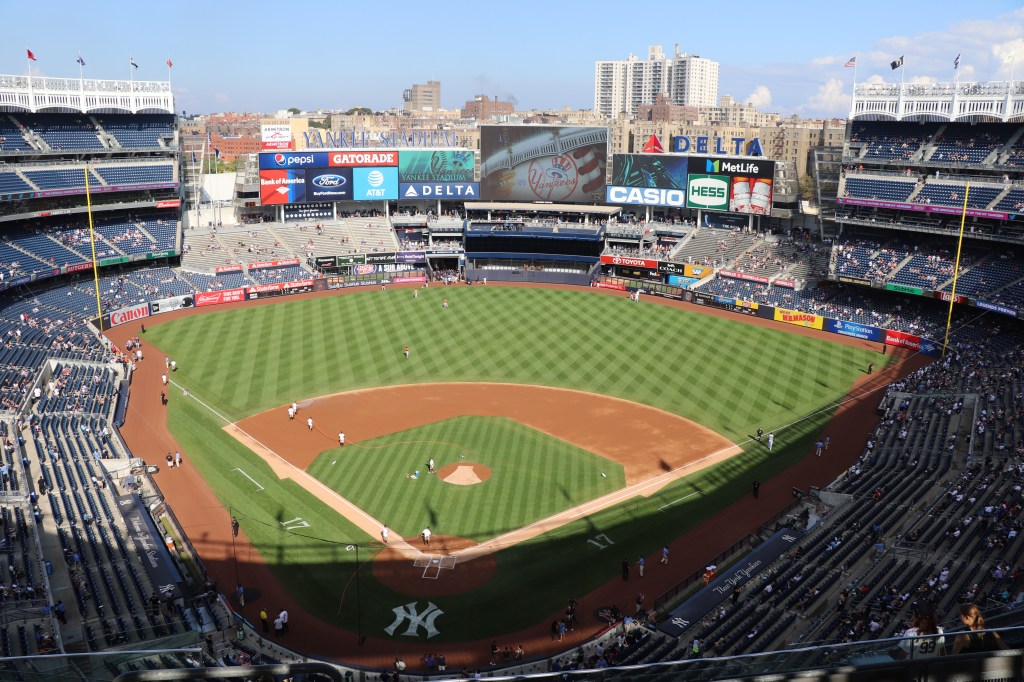
The “new” Yankee Stadium from the upper deck behind home plate. Note the white steel facade adorning the upper deck in left and right field. (Photo credit: Jeff Hayes)

All of the amenities of the new stadium were well done, creating an atmosphere similar to the old ballpark, updated for the 21st century. However, there was one huge step backward (in my opinion) with the new ballpark. In an obvious attempt to generate scoring, the outfield dimensions are smaller than the “old” stadium, giving the park the feel of a “bandbox” (a term denoting a ballpark that favored home runs). While the left and right field lines in the older versions of Yankee Stadium were (relatively) short, the remainder of the park was large enough to deter “cheap” home runs. Having the bleachers extending into left center and right center does enhance the fan experience (placing them closer to the action), but it also seems to invite more home runs. While this is typical of many “newer” MLB parks, in my opinion these changes were implemented chiefly to facilitate home runs.
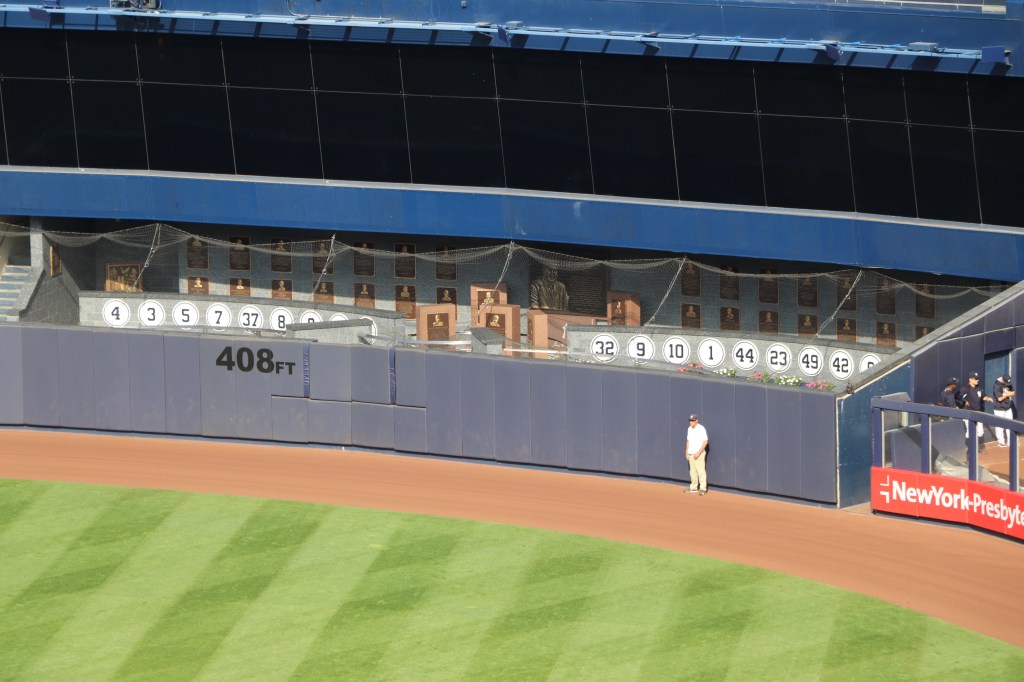
The transported Monument Park in its new home in centerfield. (Photo credit: Jeff Hayes)

During our pre game tour of the new Yankee Stadium, it was clear that the organization delivered a significant upgrade to the old stadium, with this version feeling much cozier (with the capacity right around 50,000). Gone was the history of the old stadium, but the newer facilities afforded a better overall fan experience, including myriad places to eat scattered across the stadium. With the Yankees on their way to yet another playoff berth, there was large crowd in attendance to see the late Saturday afternoon contest against the Baltimore Orioles.

On this clear and seasonably warm afternoon, the hometown Yankees sent left hander Jordan Montgomery to the hill to face the young Orioles lineup. Montgomery, a prized pitching prospect, was finishing a very effective rookie season. Baltimore sent veteran right hander Jeremy Hellickson to the mound to face the potent Yankee offense, which featured right fielder Aaron Judge. Judge was putting the finishing touches on a record setting rookie campaign, which would earn him AL Rookie of the Year honors. Shadows were a factor early in the game, due primarily to the 410 PM start (presumably to accommodate the Fox broadcast).
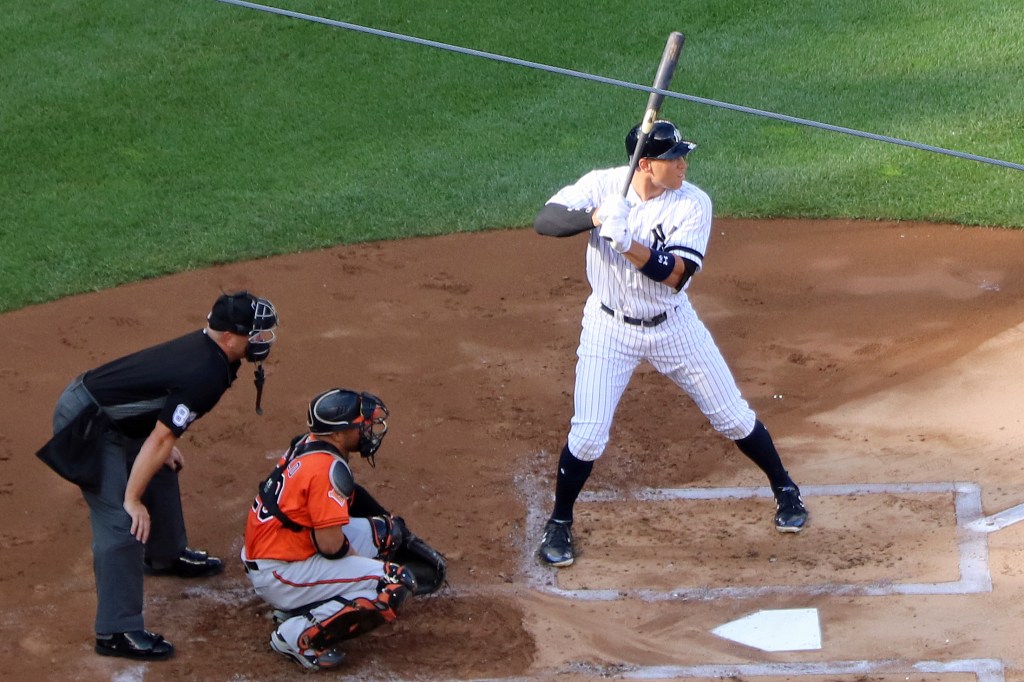
Yankee right fielder Aaron Judge in the batter’s box at Yankee Stadium. (Photo credit: Jeff Hayes)

Once the shadows crept beyond home plate and the pitcher’s mound, New York used the long ball to score seven runs through the first five innings. Meanwhile, Yankee starter Jordan Montgomery consistently mowed down the Baltimore lineup. Montgomery left after six innings’ work, surrendering no runs on just four hits, while striking out six. His counterpart, Orioles starter Jeremey Hellickison, lasted a scant three innings, allowing six runs during his time of the mound. A trio of Baltimore relievers allowed three runs in mop up work, as the Yankees took a commanding 9-0 lead.

Despite the scoring, the pace of the game was comparatively quick, which left us little time to enjoy the atmosphere of the new ballpark. As late afternoon blended into early evening, Yankee Stadium took on a different hue. The ballpark appeared to soften under the lights, revealing that the once swelling crowd had diminished to a smattering of remaining faithful, with the game well in hand for the Bombers.
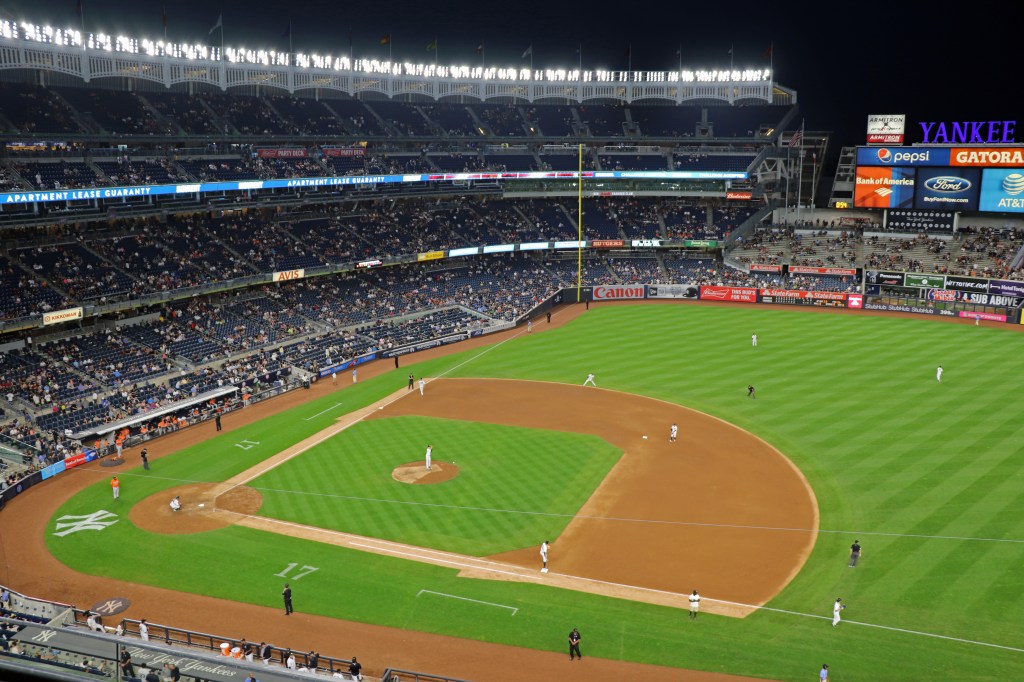
The view from our seats as night fell at Yankee Stadium. After the New Yok offensive outburst, the crowd thinned out considerably in the later innings. (Photo credit: Jeff Hayes)

Entering the ninth inning, Yankee pitching held the young but improving Baltimore lineup in check. However, the Orioles did not go quietly, scoring three runs on a lead off home run by CF Austin Hays, followed by a series of walks, punctuated by a balk that allowed a run. Left hander Chasen Shreve, who had been enjoying a successful 2017 season as a bullpen stalwart, lost his command, giving up four walks before exiting the game. Those that remained for the top of the ninth became frustrated, audibly moaning and screaming after each walk. Finally, Yankee fans were treated a merciful end to the top of the ninth, as New York claimed a 9-3 victory. As quickly the first part of the game passed, the last three innings were that slow, with the ninth inning requiring nearly 30 minutes to complete.

In total, the game time was in excess of three and one-half hours, leaving just a few thousand fans to file out of Yankee Stadium into the streets around it. As we exited, I reflected on the new stadium. Overall, we were impressed by the stadium, (minus the smaller dimensions than its predecessor), as the organization successfully recreated the feel of Yankee Stadium, while updating it to make the ballpark more modern. Being in just about the same location as the old ballpark, it remains difficult to access from central NJ, so even though we enjoyed the atmosphere, I am not sure how often we will visit in the future.
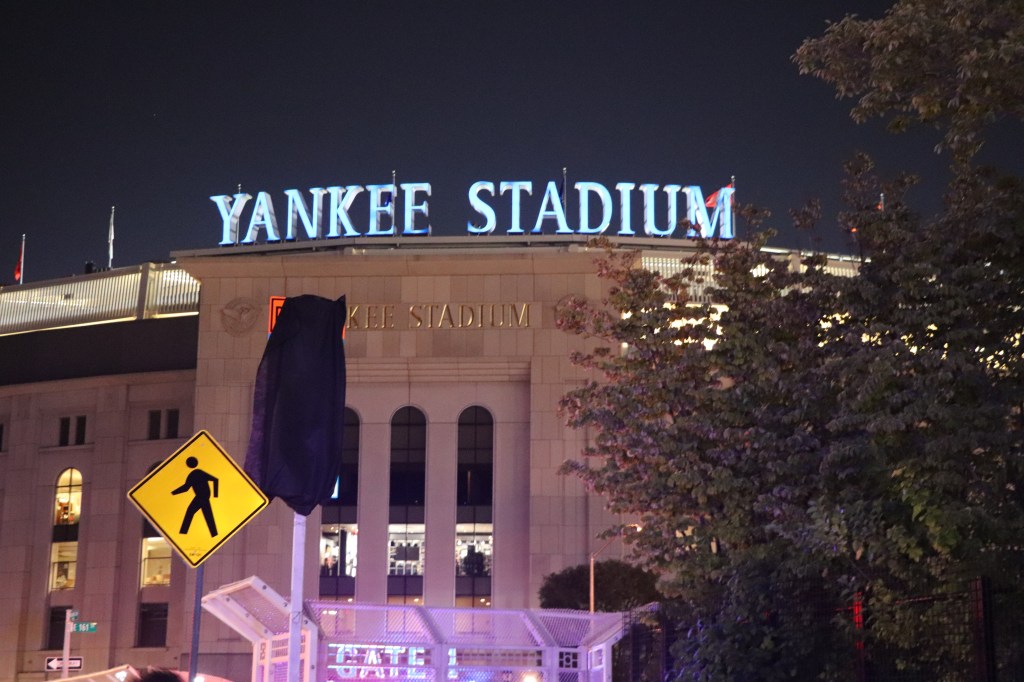
Goodnight from the “new” Yankee Stadium! (Photo credit: Jeff Hayes)

Shea Stadium/Citi Field Queens, New York

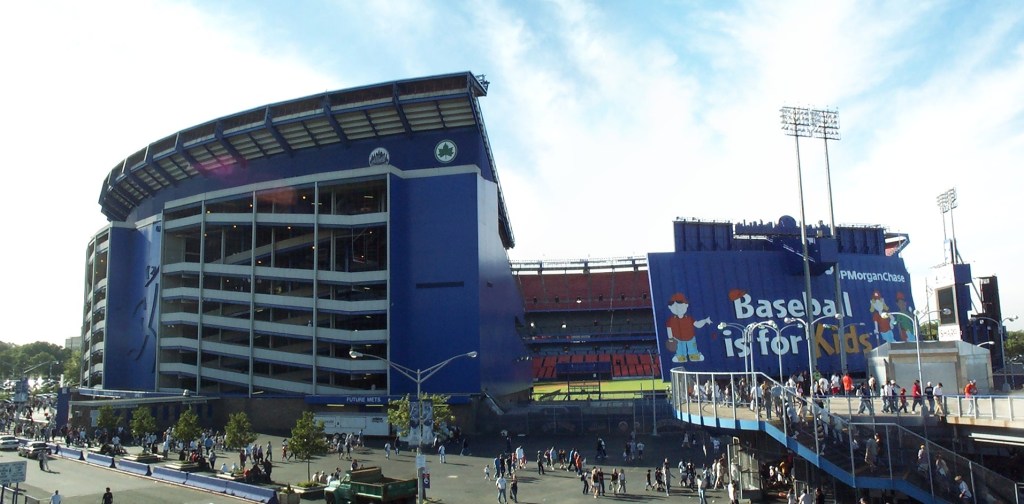
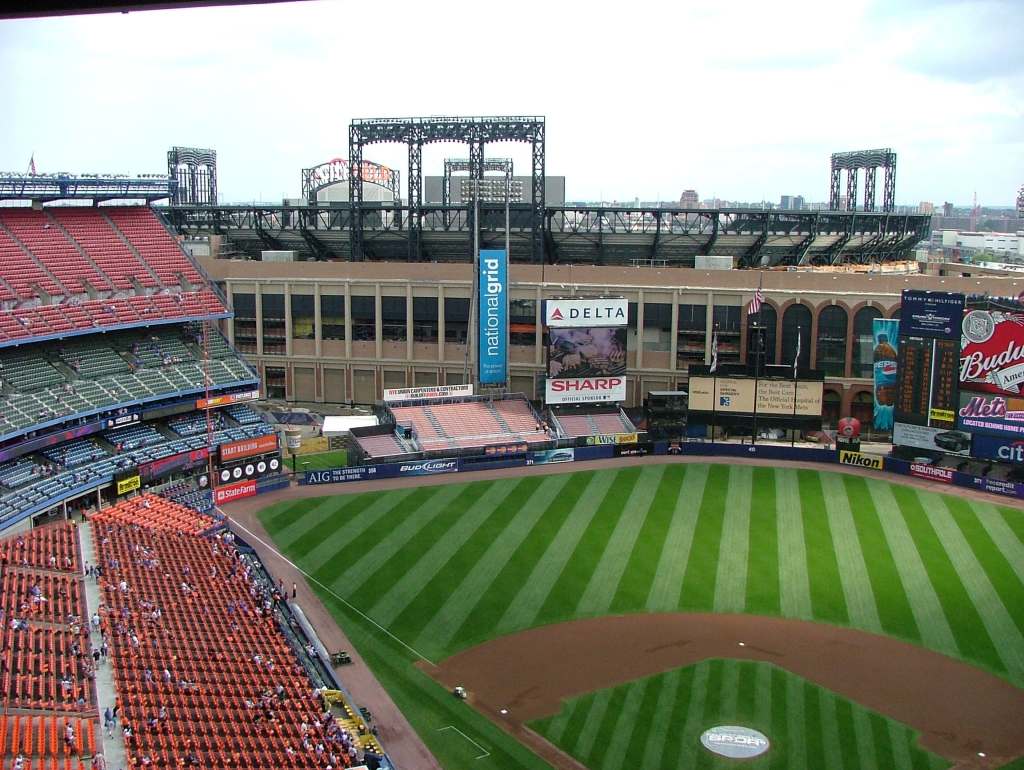
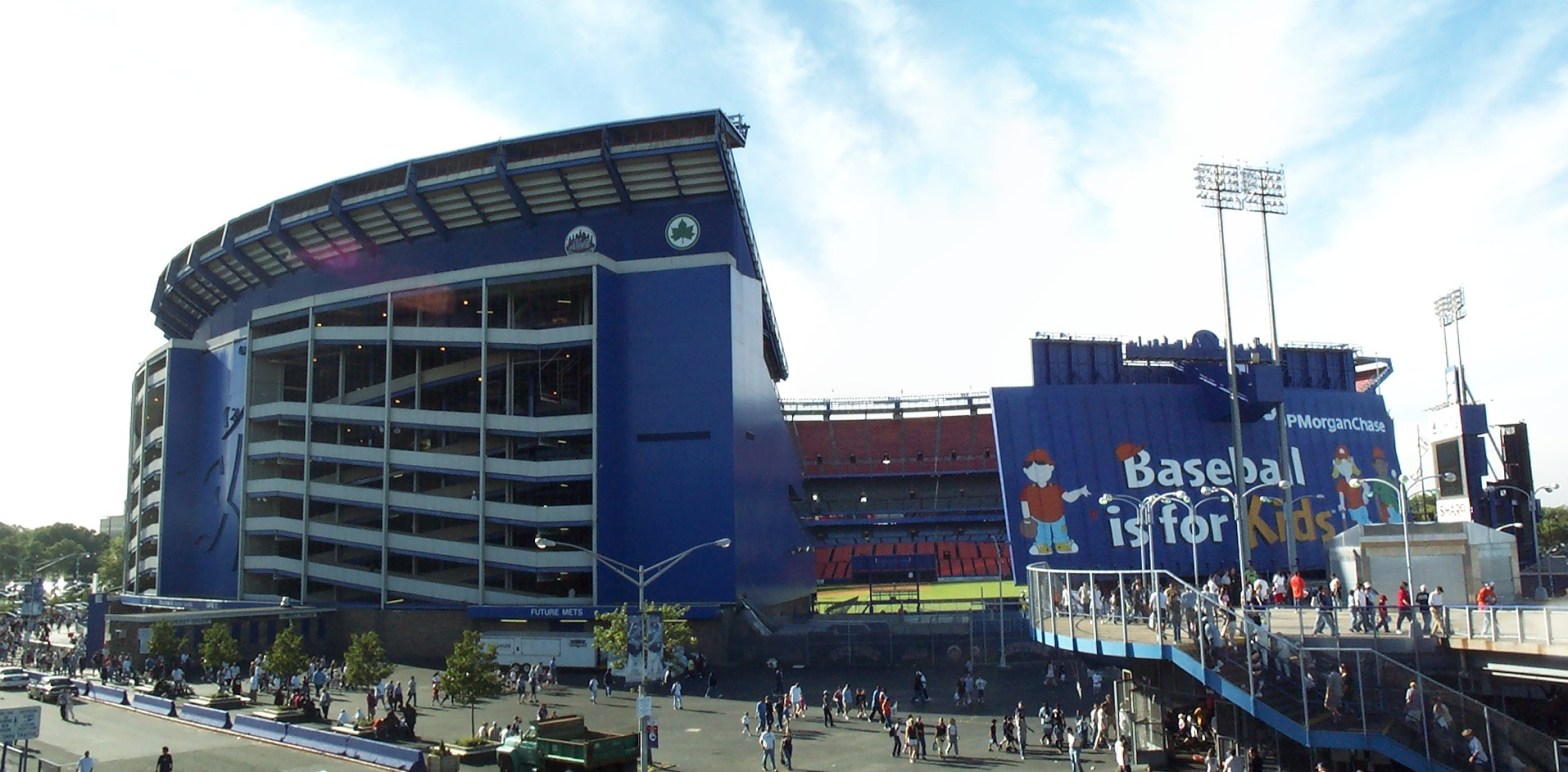
Shea Stadium from the subway platform across Roosevelt Boulevard. (Photo credit: Jeff Hayes)

Shea Stadium (1982-2008)

  • First visit: Sunday August 15th 1982
  • Last visit: Thursday September 25th 2008

For much of my life as a baseball fan, the New York Mets (my favorite squadron) were bad or awful, and 1982 was no exception. Though I was a lifelong Mets fan, I had not been to the venerable Shea Stadium. My MLB baseball experiences to that point had been relegated to Veterans Stadium in Philadelphia PA and Yankee Stadium in the Bronx, NY. Since we did not have access to a car in the early days, we took bus trips to see MLB games, and until 1982, we did not find any bus tours to Shea.

My brother and I decided to change that, and arranged to see the Chicago Cubs against the hometown Mets on August 15, 1982. Not having a car, and with no bus tours available for that game, we concocted what I now recognize as a risky plan to get to Shea Stadium. We took a NJ Transit bus from our hometown on the Jersey Shore to Port Authority in Manhattan. From there, we walked around the corner to catch the Number 7 train to Shea Stadium. Though this doesn’t seem particularly risky, I should add that I was 17 years old, and my brother was 10. Neither of us had ever ridden the subway, so we learned as we went. Of course, even at 17 I did not realize the precariousness that I placed both of us in with the trip. It was until many years later that my brother told me that I told our mother that we were taking a bus tour to Shea, so she had NO idea what we were doing. Mom would have NEVER allowed us to do anything so foolhardy, and I assume that’s why I lied to her.

Shea Stadium from the upper deck behind home plate. (Photo credit: Jeff Hayes)

Upon arrival, I was stunned by the size of Shea Stadium, as it was MUCH larger in person than on TV. We walked around a bit before looking for our seats. Not having a good idea of how the stadium was laid out, we found the correct seats numbers, but after consulting with an usher, we found that we were on the wrong level. Instead of the Loge, we were in the Mezzanine, one level up. We marveled at the fact that were were actually there, after talking about it for so long. By that time, Shea Stadium was 18 years old, and was beginning to show its age. The Mets were still sharing Shea with the New York Jets, and maintaining cleanliness within the stadium itself was a monumental challenge. Despite that, the playing field was in great shape, and we were set to enjoy the game.

Back in those days, Sunday afternoon games typically started at 130 PM, and we were a bit perplexed as to why this game was starting at 100 PM. We discovered that the Cubs and Mets would play a doubleheader that day, with Banner Day occurring in between games. My brother asked if we could stay for both games; from my perspective, we were doing fine, and I said yes without first checking to make sure we could make the necessary connections to get us back home. Though the Mets were stumbling toward the end of yet another dismal season, we thoroughly enjoyed the experience.


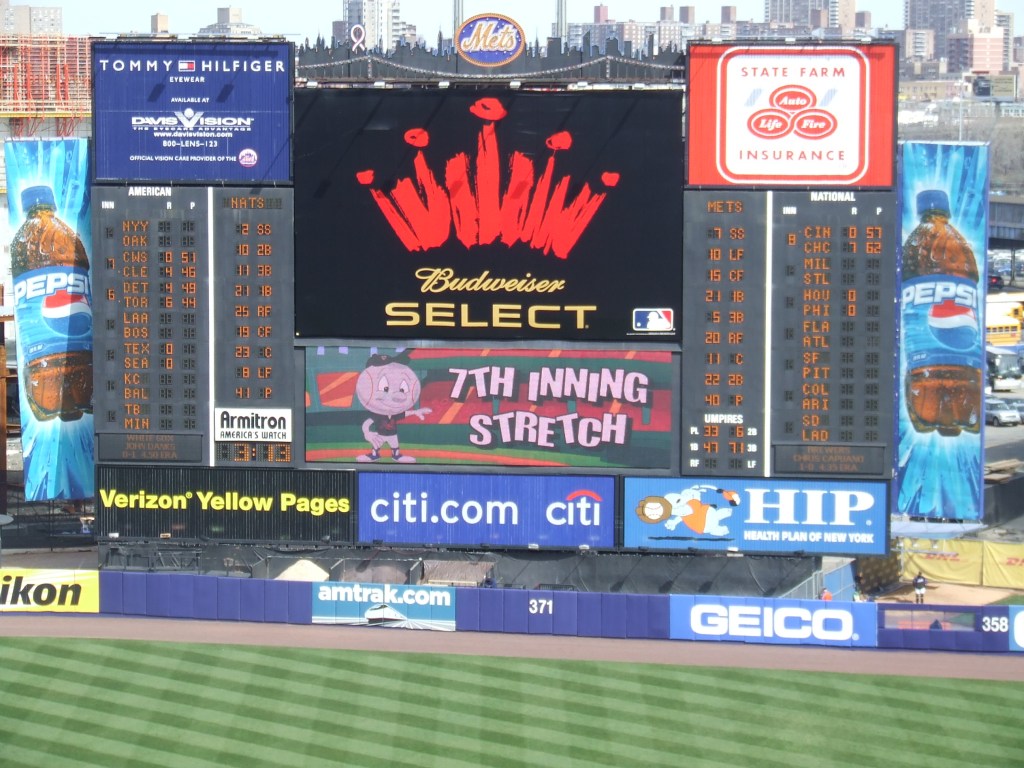
The Shea Stadium scoreboard, complete with the Manhattan skyline on the top. (Photo credit: Jeff Hayes)

Shea Stadium was a multipurpose facility that was built as a home for the New York Mets and New York Jets. Opening in 1964, it underwent MANY changes from that time to our first visit some 18 years later. When we first saw Shea in 1982, it was already looking a bit haggard, and at times unkempt. With a seating capacity of over 56,000, Shea was an open air behemoth. Because of its size, it lacked the intimacy and accessibility of the “newer” parks. When the team was bad (which was often), the place seemed empty, only amplifying the hugeness of the venue. However, Shea Stadium housed our favorite team, and when the Mets were playing well, the place would literally SHAKE, making it feel like home.

At times, when Shea looked more drab and lifeless than usual, I would refer to it as a “toilet” (which the smell would occasionally bear out). But it was OUR toilet! While the ushers were helpful and generally polite, the same could NOT be said of the concession staff. Aramark was the vendor at Shea for many years, and seemingly each and every member of that team was surly and uncooperative. That feeling was verified when we began traveling, finding that the behavior of the vendors at Shea was unique to that park. Conversely, the vendors that hawked the food and beverages through the seating areas were typically more helpful. Hearing the calls of the beer vendors at Shea on TV was one of my first baseball memories (BEER HERE!).

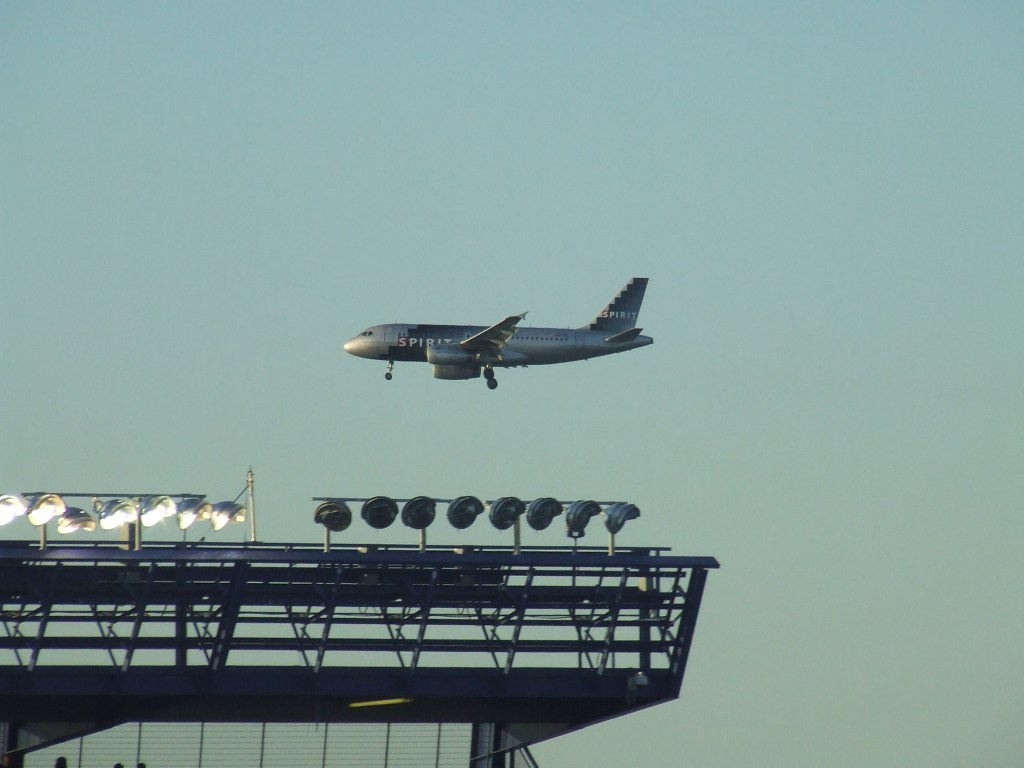
A Spirit Airlines flight passing just beyond the upper deck in left field of Shea Stadium. (Photo credit: Jeff Hayes)

Located a mere three miles from LaGuardia Airport on the shore of Flushing Bay, players and fans alike were subjected to the seemingly unending air traffic during games. As winds turned to the south across western Long Island, the air traffic was routed directly over the stadium. That switch resulted in the roar of departing aircraft every minute or so (at least during the day). When this occurred, it was not unusual for players (especially visitors) to step out of the batter’s box and step off the pitching rubber to let the cacophony subside before resuming play. After a while, at least as a fan, you could begin to filter out the noise, or at least become accustomed to it; that was just a part of the experience.

We did not often go to big games in Mets history. Early on, just getting the Shea was difficult, and when the Mets were good, tickets were either difficult to come by, or we were priced out of the market. However, a few moments do jump out at me. Perhaps one of my very favorite memories was watching Tom Seaver strike out Pete Rose (then playing with the Philadelphia Phillies) to open the 1983 season. Others include seeing Kevin McReynolds hit not one but two walk off grand slam home runs, as well as the Mets winning the last game for us at Shea in 2008, keeping their slim playoff hopes alive. Much of my joy was just seeing the games in a place I grew to love, even though my team was not good very often.

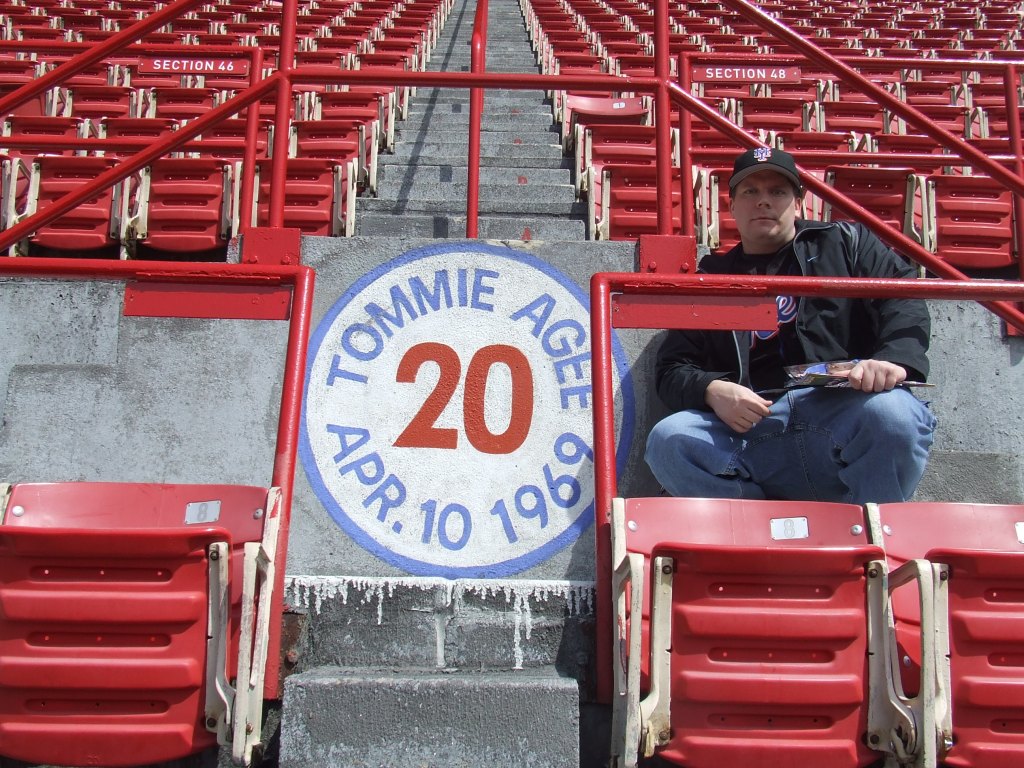
My brother posing next to the spot where Tommie Agee hit what was reputed to be the longest home runs in the history of Shea Stadium. Personally, I believe Dave Kingman hit a few balls further, but most of his titanic blasts landed in the parking lot, and were not measured.

Of course, I could write an endless story when it comes to Shea Stadium. Far from the nicest ballpark we have visited, it grew on us over the years, and by the time it was ready to be replaced, I lamented its loss. Fans were unruly, stadium staff could be unpleasant, early season night games were almost interminably cold, and the team was not very good for much of the time we visited. Even with all of that, it maintains a special place on my heart. It WAS a toilet, but it was OUR toilet. RIP Shea Stadium!

A view of the nearly complete Citi Field behind Shea Stadium. (Photo credit: Jeff Hayes


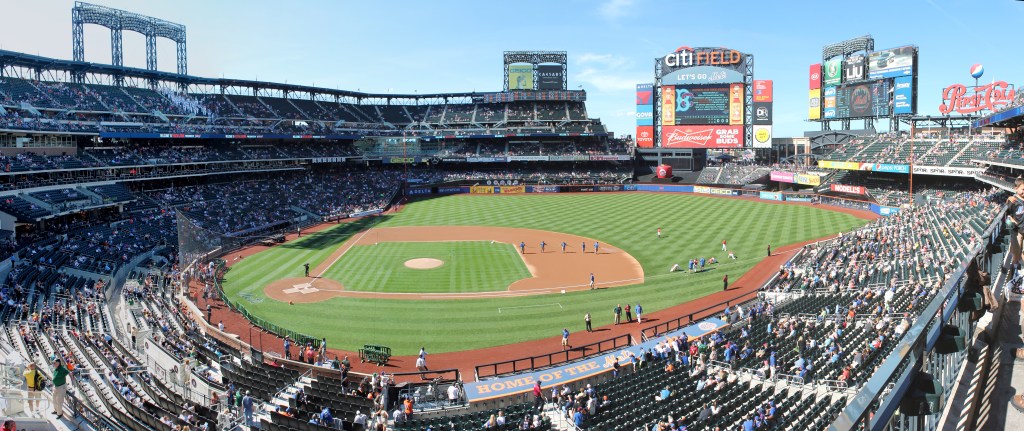
Panorama of Citi Field on Saturday, August 24th 2013. (Photo credit: Jeff Hayes)

Citi Field (2009-2015)

  • First visit: Saturday May 9th 2009
  • Most recent visit: Sunday August 16th 2015

Our first visit to the newly minted Citi Field (built in the parking lot of Shea Stadium) came on Saturday, May 9th 2009, about a month after the doors opened for the first time. While wandering around the ballpark, we noticed that the Mets denoted the locations of the mound, home plate and each of the bases of the recently departed Shea Stadium with plaques in the Citi Field parking lot. Featuring a much nicer exterior than Shea, it seemed as though New York Mets baseball had finally joined the 21st century. Entering the ballpark through the rotunda (which was a replica of the rotunda that adorned Ebbets Field), the Mets Hall of Fame is located to the right of the spiral staircase. A quick visit revealed various displays and exhibits, including a couple of Tom Seaver’s Cy Young Awards, as well as a nod to the 1969 and 1986 World Champions.

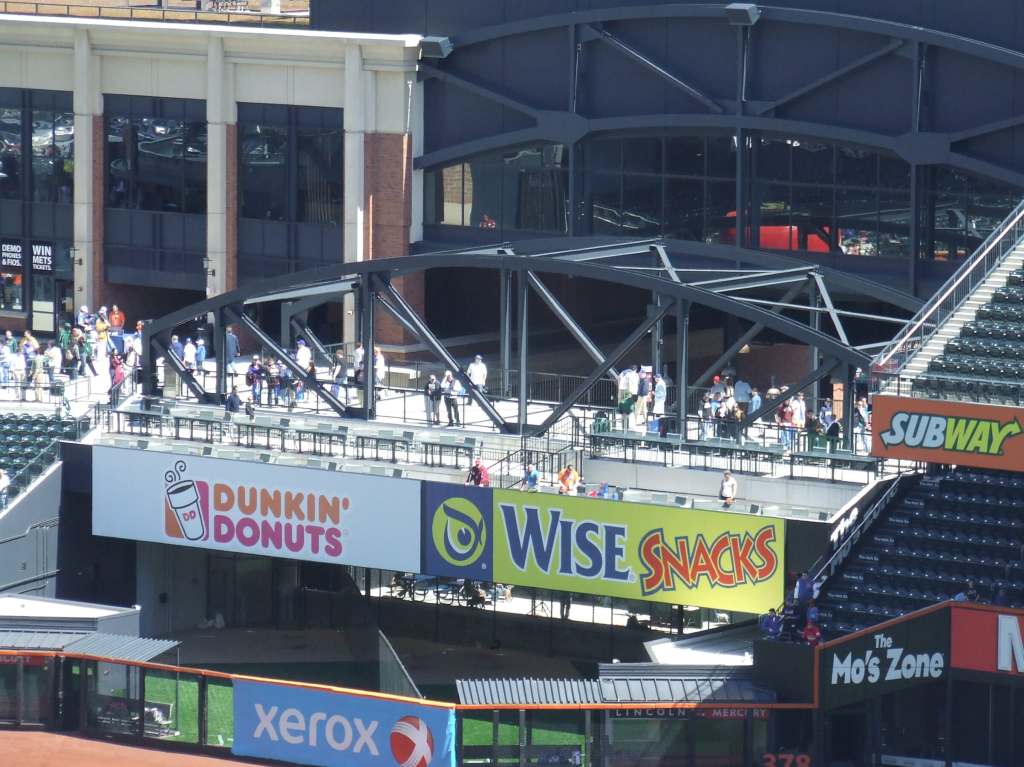
Following our excursion to the Mets Hall, we headed out to explore the new park. Unlike Shea Stadium, the lower concourse of Citi Field encircled the ballpark, allowing us unfettered access to the park. One of the most notable features of the stadium was Shea Bridge, located beyond the center field wall. Named as a tribute to William Shea, the driving force behind the return of National League baseball to New York City, the wrought iron bridge was immediately a fan favorite. Just below the Shea Bridge were the bullpens, with the Mets bullpen covered from the elements. In centerfield there were bleachers, something Shea never had, and above the bleachers was an impressive video board. Obviously designed as a Citi Field centerpiece, the video board was a significant upgrade to the video system located behind the left field wall at Shea Stadium. Completing the circuit along the lower concourse, we crossed behind the left field stands moving toward home plate.

Shea Bridge at Citi Field, located just above the Mets bullpen. (Photo credit: Jeff Hayes)

Rather than follow the trend of the “newer” MLB parks, Citi Field was built with four decks extending from foul line to foul line. Accommodating these decks robbed the ballpark of intimacy, though many of the seats were closer to the field than Shea. In addition, only a portion of center field was open, with the remainder of the park enclosed by seats. To be fair, there isn’t much to see outside of the ballpark, but enclosing the stadium made it feel confined, reminiscent of the multi purpose stadiums of the 1960s and 1970s.

After reaching the rotunda once again, we climbed the staircase to the 300 level, where we had seats just to the left of home plate. Not surprisingly, there was a good crowd for the Saturday matinee, and it appeared as though most of the 42,000 seats were occupied before the first pitch. While waiting for the start of the game, I was surprised to see all of the seats across the park were forest green. While I didn’t expect to find the seats colored by level (as Shea was), it might have been better to have Mets blue for the seat color. It then struck me that there was not a clear indication that Citi Field was the home of the Mets. Citi Field’s size and lack of character was disappointing. Clearly, this was our first glimpse of the Mets new home, but I was NOT impressed.

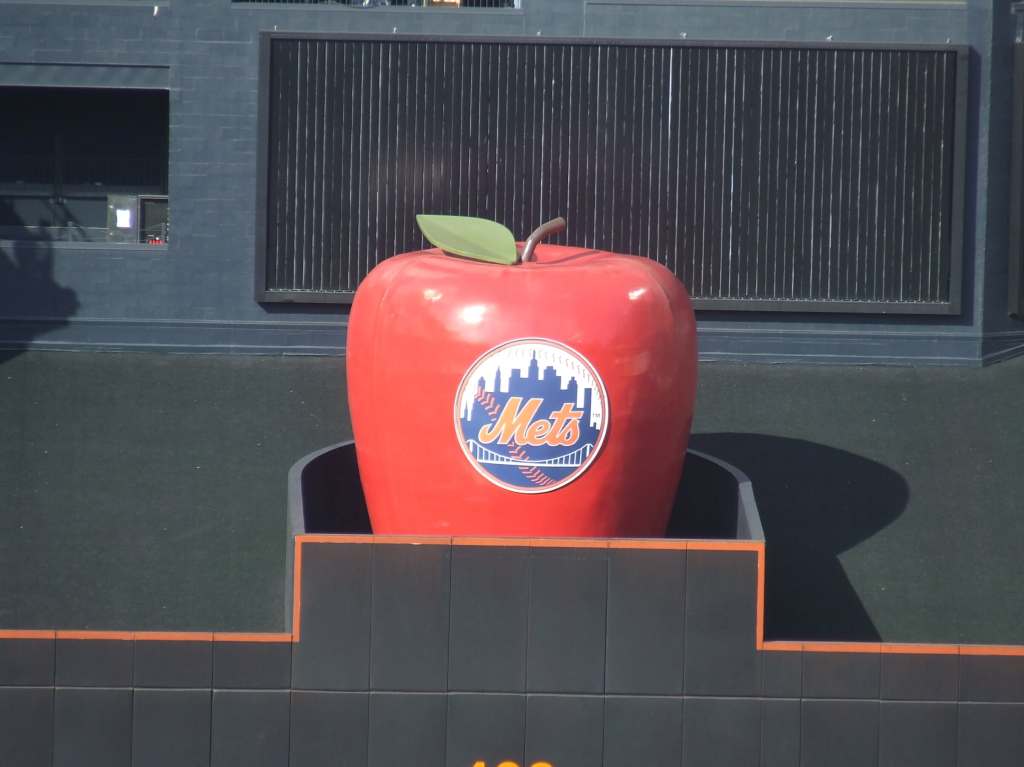
The Big Apple made the trip from Shea Stadium to Citi Field, perched in the batter’s eye in centerfield. (Photo credit: Jeff Hayes)

Unbeknownst to me, the first pitch that afternoon was going to be thrown by a member of Howard Stern’s SiriusXM crew. Gary “Baba Booey” Dell’Abate was representing an autism awareness group, and graciously agreed to throw the first pitch before the start of the 110 PM contest. Dell’Abate confidently strode to the mound, toed the pitching rubber, and delivered the pitch. Unfortunately, the toss was VERY wild, hitting the home plate umpire, who was a few feet to the left of the plate. At first, I believed that Gary had intentionally thrown the ball that way, for comedic effect. Based on the reaction of the umpire, as well as the players on the field, it quickly become evident that the pitch was no joke. Dell’Abate appeared to shrug off the bad throw, waving to fans as he departed the playing field.

Thinking that the poor first pitch would be confined to Citi Field, Gary would later be horrified to discover that the pitch would become fodder for mainstream media. Any Howard Stern fan would tell you that Dell’Abate would receive the worst of the teasing from his compatriots, and that pitch is still celebrated on the show, more than a decade later.

Howard Stern producer Gary Dell’Abate delivering the infamous first pitch at Citi Field on May 9th 2009. Note starting pitcher John Maine standing behind the mound. (Photo credit: Jeff Hayes)

While the ballpark was something of a disappointment (at least compared to Nationals Park in DC and Citizen Bank Park in Philadelphia), it was a breath of fresh air for Mets fans, and hopefully a harbinger of good things to come. However, almost immediately I found myself missing Shea Stadium, as Citi Field lacked anything with which I could easily connect. The stadium felt almost sterile at times, and we found ourselves less drawn to this place as we were to its predecessor.

At first, we managed to attend a handful of games at Citi Field each year. As time passed, with little in the way of attraction to the ballpark, our visits became less frequent. Getting to Shea Stadium/Citi Field from NJ was never an easy task. Driving was far more trouble than it was worth, and taking the train to Manhattan, then catching the Number 7 subway to the ballpark often required three plus hours to complete (each way). Thus, a visit to Citi Field was a significant investment in time and energy, and eventually we would make the trek once a year (preferring to see the Mets in Philadelphia, which was closer and arguably offered a better baseball experience within the confines of Citizen Bank Park).

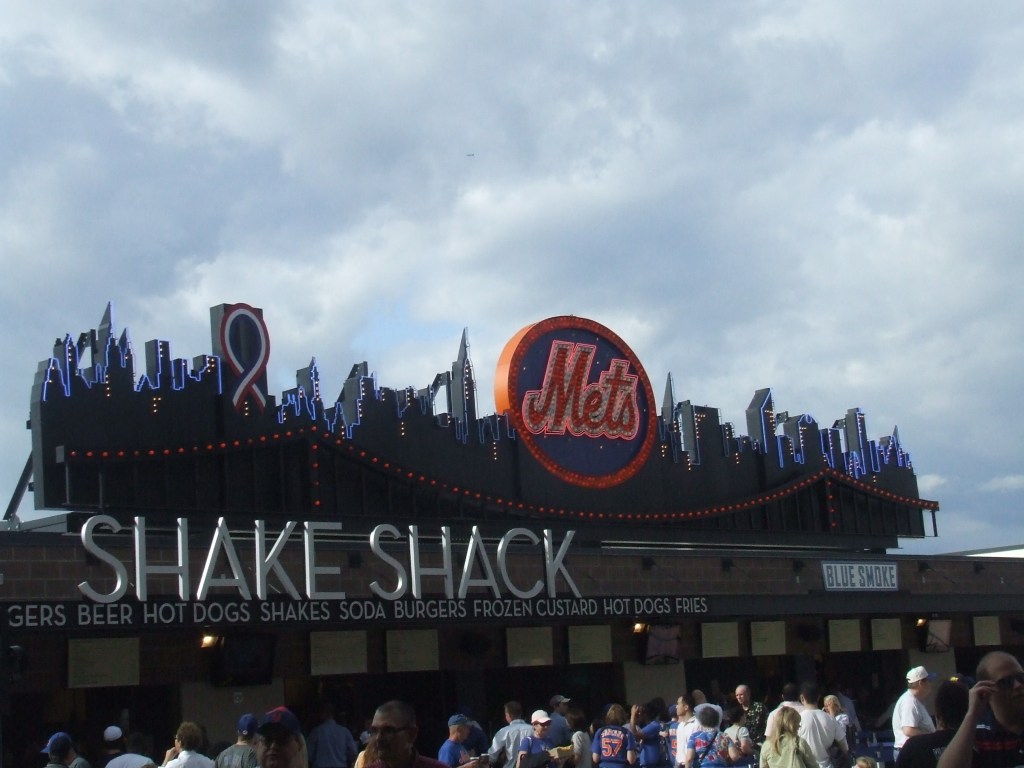
The skyline from the scoreboard at Shea Stadium also made the trip to Citi Field, mounted above the Shake Shack. Great food is available at the Shack, but wait times are often prohibitive. (Photo credit: Jeff Hayes)

Our most recent visit to Citi Field was Sunday, August 16th 2015, to see the Mets host the Pittsburgh Pirates. As can happen during the summer, the game was marred by weather delays, as storms developed over the ballpark itself (providing an alarmingly close look at the lightning!), requiring us to take shelter several times during the game. We DID have tickets to Game 5 of the 2015 National League Championship Series against the Chicago Cubs, but quite unexpectedly the Mets swept the Cubs, and the game didn’t happen. Since then, we decided that the time and effort to see the Mets at home was not worth it, and have not been back.

Panorama view of Citi Field at twilight. This may be my favorite picture of Citi Field from my brother’s collection. (Photo credit: Jeff Hayes)

Cleveland OH/Pittsburgh PA, Saturday May 20, 2000

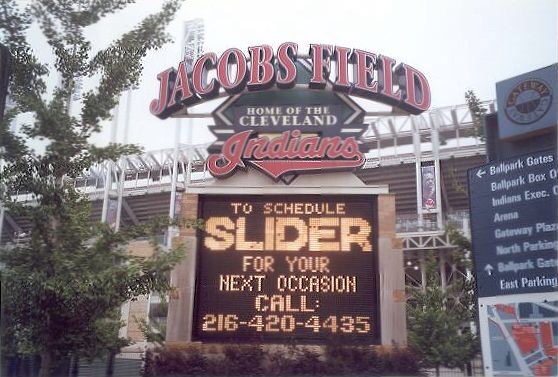
Welcome to Jacobs Field!

Our only baseball trip of 2000 took us to western PA and northeast OH in late May. Since the trip by car was in excess of five hours from central NJ, we drove out to northeast OH on Friday, May 19th, staying just outside of Cleveland for the night.

Saturday, May 20th dawned cloudy and chilly, much cooler than one might expect in late May across northeast OH. With a few hours before the 105 PM contest between the visiting New York Yankees and the hometown Indians, we decided to visit the Rock and Roll Hall of Fame, located adjacent to the southern shore of Lake Erie. Uncharacteristically, we visited the Hall without a camera, so we don’t have a visual record of our visit.

To my delight, the crowd at the Hall was thin, perhaps due to the weather and the relative early hour (as the doors opened at 1000 AM). As a result, we were treated to nearly unobstructed views of the myriad exhibits. Though we moved fairly quickly through the artifacts, we were able to appreciate the history of rock and roll (as well as pop music). Not surprisingly, the Beatles exhibit was the largest in the Hall, and our favorite band, Led Zeppelin, was well represented.

Not wanting to miss an opportunity to explore Jacobs Field, we left the Rock and Roll Hall of Fame after about 90 minutes. Even with the limited time spent there, we were impressed by the museum, and plan to return in the future for a better look. If you are a rock and roll fan, and plan to be in the vicinity of the Hall, leave yourself some time for a visit: you won’t be disappointed.

1. Jacobs Field

Venturing back out in the cool and breezy conditions, we completed the short drive from the Rock and Roll Hall of Fame to Jacobs Field. Had the weather been better, we might have walked the distance, but the cool and damp air ruled that out. We were able to secure parking just across the street from the ballpark in a private lot at a reasonable price.

We performed our typical tour around the outside of the park, but the weather curtailed our walk. Ducking inside the stadium at the home plate entrance, we were greeted by a nearly empty park. Once inside, we had access to the entire seated area, exploring while taking pictures. Unfortunately, the low overcast made the stadium appear drab, but the images capture the conditions on the cool and cloudy early afternoon perfectly.

Jacobs Field from the upper deck behind home plate.

Since both teams were playing well, tickets for the Saturday matinee were scarce, and our seats were located in the last row of the upper deck on the first base side of the field. Just before game time, temperatures hovered in the 40s, and the persistent breeze off the lake made it feel even colder. Despite an announced crowd of 42,000+, the unseasonably cool weather held the actual attendance far below that number.

Starting for the visiting New York Yankees was veteran right hander David Cone. Thus far in 2000, Cone was struggling (with an ERA over 5.50), though he was less than a season from his perfect game in 1999. On the mound for the Indians was left hander Chuck Finley, who was in his first campaign for the Tribe. Each team featured a potent offense, but the combination of good starting pitching and cool weather raised the specter on a low scoring contest.

Indians starter Chuck Finley featured on the cover of the scorecard/magazine.

New York scratched out a single run in the first inning against Finley, then tacked on another run in the fourth inning (with Yankee right fielder Paul O’Neill driving in the run with a single), giving the visitors a 2-0 lead. Meanwhile, David Cone kept the Cleveland bats at bay through the first six innings. Each pitcher worked deliberately, slowing their approaches with runners on base. In spite of the lack of scoring, the pace of the game was glacial, punctuated by the cold and damp conditions.

During the slow play, we were able to get a better feel for Jacobs Field. Dreary weather made the six year old stadium seem drab, with little contrast between the field and the slate gray overcast that seemingly encased it. Because of the conditions, Jacobs Field did not shine, and the lack of fans made the ballpark seem larger than it appeared on TV. Clearly we were not seeing the park at its best. Though the crowd was sparse, one of the more memorable parts of our visit was the persistent drumming in the left field stands. With a typical crowd, the drumming may not have been as noticeable, but with little else happening in the largely empty stadium, it echoed almost to the point of distraction.

The view from our seats. Note that the tops of the buildings were obscured by low clouds.

Cleveland broke through against David Cone in the bottom of the seventh inning, as Richie Sexson led off the frame with a solo home run. Scoring another run in the seventh, the Indians tied the game, while simultaneously knocking the Yankees starter out of the game. Each bullpen then kept the game tied heading into the bottom of the ninth inning. Yankees Jeff Nelson surrendered four walks during the frame, forcing in the winning run with two outs to give the Indians a 3-2 victory.

Despite the low scoring affair, the nine inning contest took three hours and 38 minutes to complete, which seemed even longer in the cold and wind. We filed out Jacobs Field quickly, as we planned to attend a game at Three Rivers Stadium in Pittsburg that evening. Disappointed that we didn’t get to experience the ballpark in better weather, we would have to return in the future to get a better feel for the stadium and environs.

My scorecard for the game

2. Three Rivers Stadium, Pittsburgh PA

Google Maps depiction of the route from Cleveland to Pittsburgh.

Spending more time at Jacobs Field than expected, we were left with about two and one-half hours to get to Three Rivers Stadium in Pittsburgh. Though it would be tight, we were optimistic that, with light traffic, we would arrive before the first pitch at 710 PM. However, events would conspire to make arriving on time impossible. A bit more than an hour into the trip, we encountered thunderstorms that hampered our progress. As we got closer to Pittsburgh, traffic slowed to a crawl.

Finally, we reached the parking lot next to the ballpark, located on the north shore of the Allegheny River (north of downtown Pittsburgh). Arriving well after the first pitch, we parked in a dark area under an overpass of Interstate 385. While there were plenty of fans in the area, it seemed fairly remote, and I had an uneasy feeling about leaving the car there.

Because we arrived in the second inning, we had no time to wander and explore as we normally would at a new stadium. Instead, we rushed to our seats to enjoy the game. As we travelled from Cleveland to Pittsburgh, we went from early spring weather to early summer weather, as very warm and humid conditions greeting us at Three Rivers Stadium. While there were storms in the area, they managed to avoid us during the game.

Unfortunately, we did not take pictures at the stadium, as we left the camera in the car in our haste. Three Rivers Stadium was a typical multipurpose stadium, nearly identical to Veterans Stadium in Philadelphia. This season would be the last for the Pirates at this ballpark, and its condition seemed to reflect that fact. However, it was a pleasant place to see a Saturday night ballgame.

Pittsburgh hosted the St Louis Cardinals, who scored early and often. St Louis scored six runs in the first four innings, the scored 13 runs in the last three frames, on the way to a 19-4 drubbing of the hometown Pirates. With the game out of hand for the Pirates, they sent catcher Keith Osik to the mound to pitch the top of the ninth inning. As might have been expected, Osik fared poorly, surrendering five runs on five hits. This outing marked Osik’s second MLB pitching performance. In 1999, he also pitched an inning during a blow out, and his performance then was only slight better than this night.

Even with the high scoring, the game took less than three hours, a stark contrast to the affair in Cleveland. Fortunately, my car was still there following the game, and because of the late game finish, we stayed at nearby a nearby hotel, driving home Sunday morning.