Petco Park San Diego, CA Friday June 9th 2006

Petco Park, San Diego CA (Photo credit: Jeff Hayes)

Following a day off from the baseball part of our trip, we visited Petco Park in San Diego on a Friday evening to see the hometown Padres take on the Florida Marlins. Staying in a hotel near San Diego, we were less than 10 minutes from the stadium.

Petco Park, located in the East Village section of San Diego, is adjacent to the historic Gaslamp District, which is a lively section of the city replete with bars and restaurants. Though there is no onsite parking at Petco Park, there are many parking garages with a 10 minute walk of the stadium. After finding suitable parking north of the ballpark, we wandered around the Gaslamp District, waiting for the ballpark gates to open.
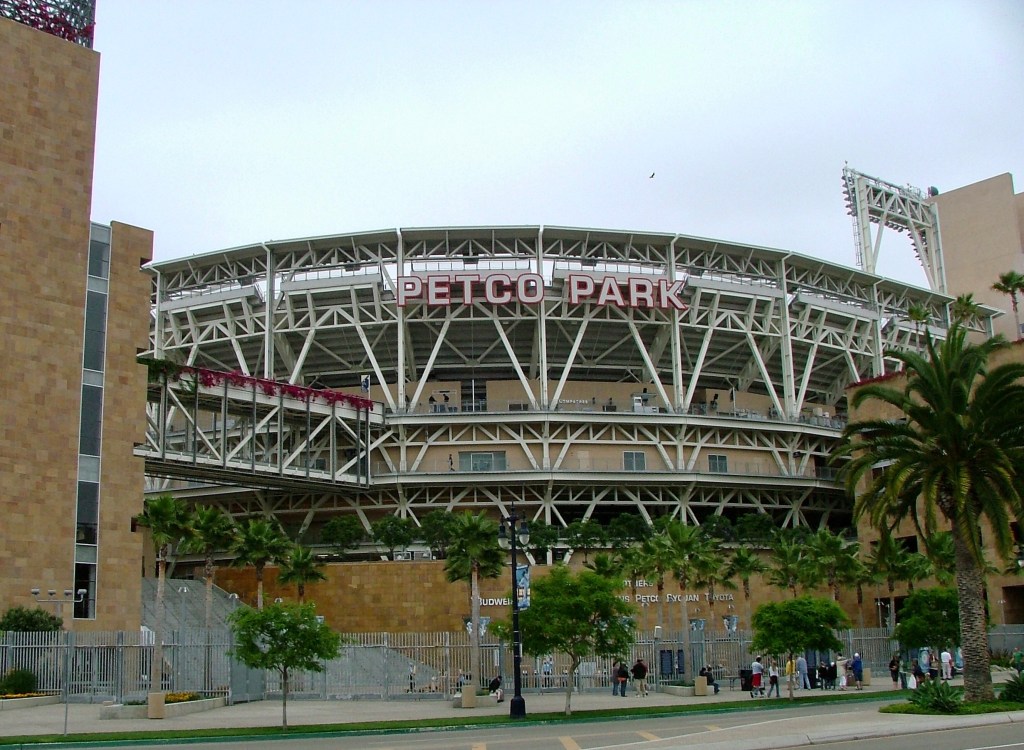
Petco Park, from near the home plate entrance. (Photo credit: Jeff Hayes)

Unfortunately, the “June gloom” was still in place, and slate gray skies greeted us as we approached the centerfield entrance of Petco Park. Passing through security to enter the gate, we were stopped after my brother’s camera bag was searched. We were informed that my brother couldn’t bring his camera into the park, since it was stadium policy to prevent people from using “professional camera equipment”.

In all of our travels, this was something we’d never heard at a ballpark. When we protested, the security agent checked with his supervisor, who stated my brother’s camera was allowed in the ballpark. In the following years, MLB has clamped down on the size of lenses allowed in stadiums.

We entered the ballpark through the centerfield gate, passing through the grass field known as the “park in the park”. (Photo credit: Jeff Hayes)

Beside the local environment, the most noticeable attribute of Petco Park was the large outfield. In 2006, the stadium was still in its original configuration, with some of the deepest power alleys in the game. The combination of the large outfield and cool conditions resulted in Petco Park seeing the lowest number of home runs in baseball. With the cloudy and cool conditions this evening, we expected a low scoring game in this large park.

Wandering through the park, perhaps the most noticeable sight was the construction cranes behind the centerfield fence. Like many of the “newer’ MLB stadiums, Petco Park was built amidst an urban setting. A quick walk around the ballpark suggested that the area immediately adjacent to the park was in the process of rejuvenation, with the stadium serving as the centerpiece.
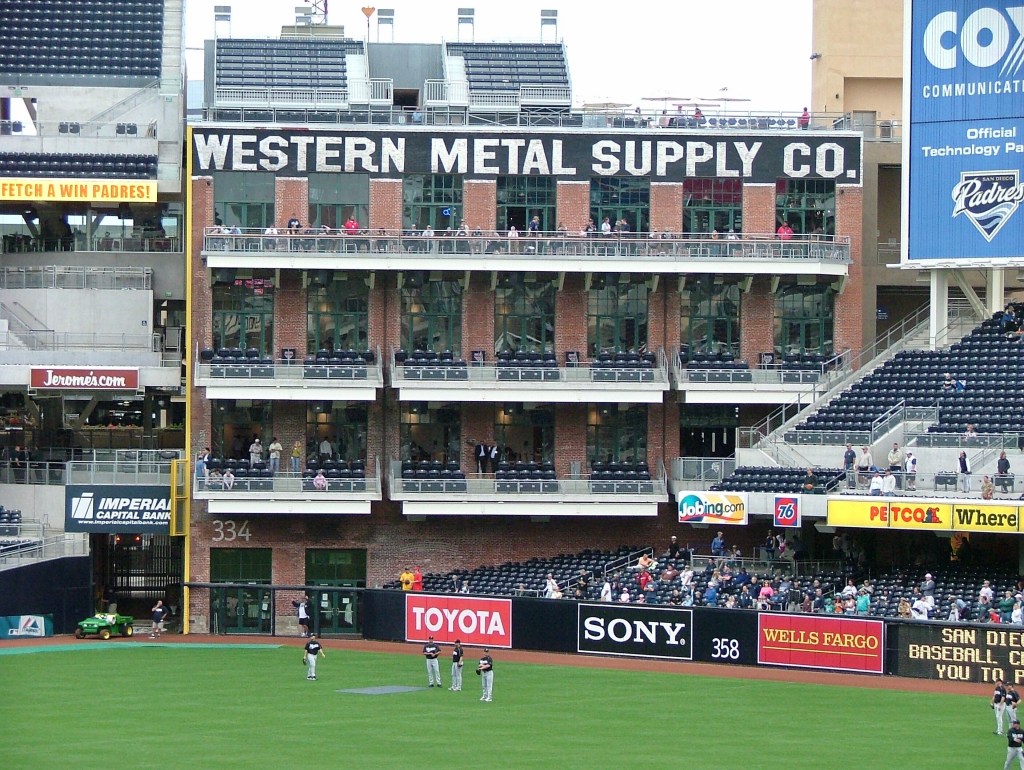
The Western Metal Supply Co. building serves as a cornerstone of Petco Park. (Photo credit: Jeff Hayes)

One of the features that caught my attention seeing Petco Park on TV was the Western Metal Supply Co. building located in the left field corner. The four story building was constructed in the 1880s, and remained in the McKenzie family for more than 80 years. When the building became a victim of bankruptcy, rather than tearing it down, it became a centerpiece of Petco Park, around which the ballpark was built. Within the building is the Padres Hall of Fame Bar and Grill, as well the Rail, which contained balcony seats with a great view of the action.

Following our tour of the park, we visited the concession stands on the lower level to get a baseball dinner, then headed for our seats. Sitting in the lower level down the left field line astride of third base, we gained a better a sense of how large Petco Park was. The three deck stadium has a capacity of 42,000+, including the seats in centerfield. On this cloudy and cool night, there were considerably fewer fans in the seats by the time the first pitch was thrown at 706 pm PDT.
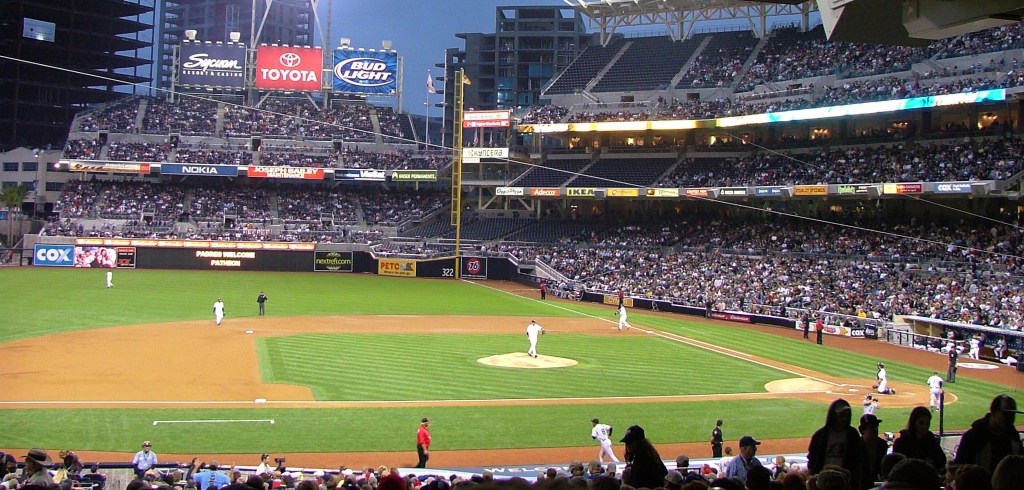
The view from our seats. (Photo credit: Jeff Hayes)

Not to promulgate a stereotype, but the crowd did start to increase after the first pitch. By the time the ballpark lights started to have an effect, most sections of the ballpark were nearly filled, ready for Friday night baseball. Taking the mound for the hometown Padres was Chris Young. The six foot 10 inch right hander has quietly enjoying the best start of his MLB career. For the visiting Marlins, the start went to 23 year old rookie Ricky Nolasco. Thus far in 2006, Nolasco had become one of the more reliable Marlins starter, sporting a respectable 3.32 ERA.
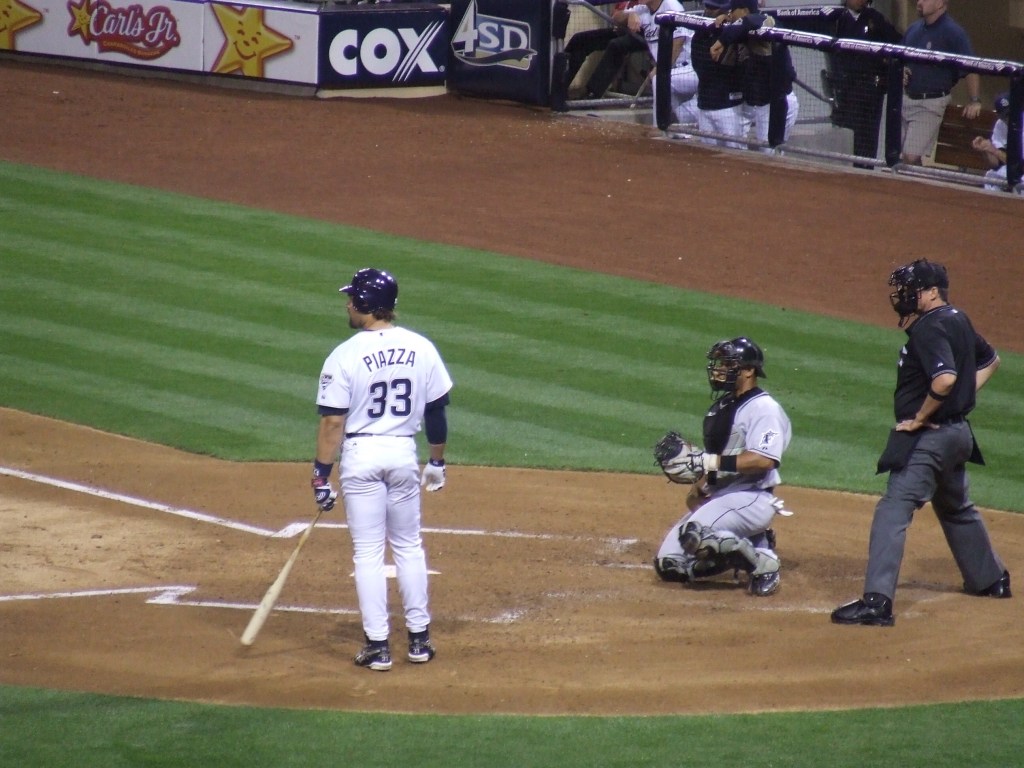
Mike Piazza at the plate for the Padres. (Photo credit: Jeff Hayes)

In the lineup for the Padres was a former Mets (and future Hall of Fame) Mike Piazza. Piazza, playing his last game with the Mets in 2005, elected to pursue free agency and signed with the Padres for the 2006 season. Honestly, the site of Mike Piazza in a Padre uniform was a bit jarring, after providing so many special moments with the Mets (including a dramatic home run in the first game after 9/11). Catching and batting cleanup, Piazza was the linchpin for a fairly potent Padres lineup.

The combination of good starting pitching, cool conditions and a big ballpark conspired to keep the game scoreless early. The Marlins broke through as 1B Mike Jacobson homered in the third inning, but the Padres responded with three runs in the fifth inning, including a home run by CF Mike Cameron. Outside of these blemishes, both starters delivered quality starts, with Padres starter Chris Young striking out 12 Marlins.
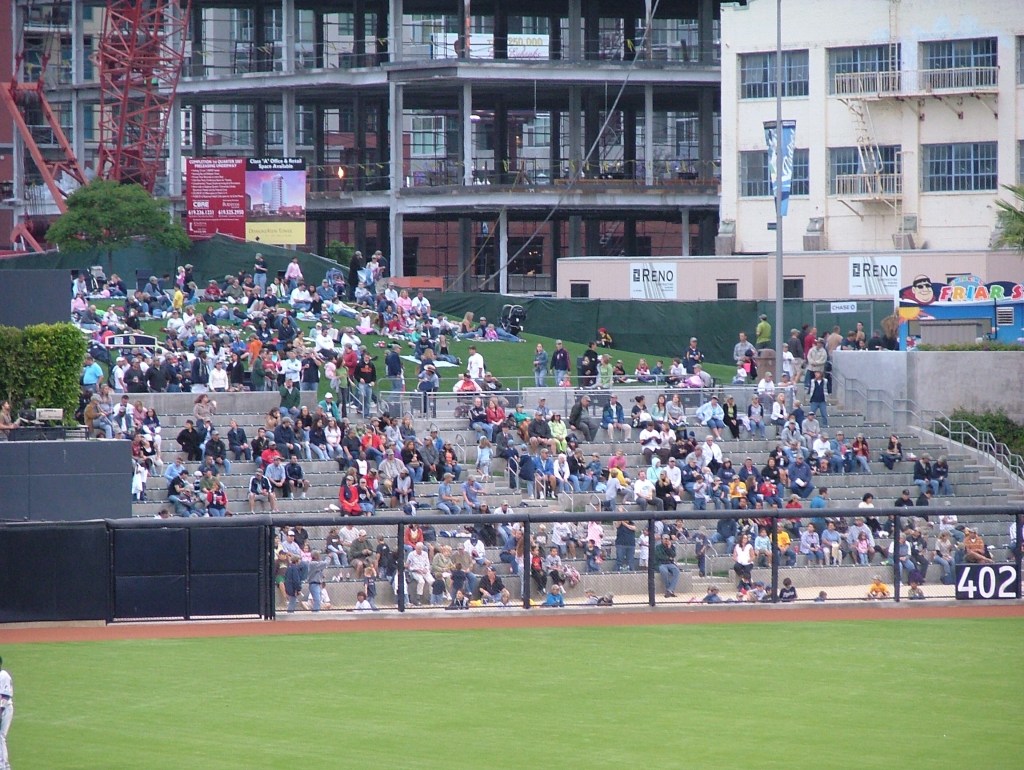
Fans filling in the centerfield bleachers and the “park in the park”. (Photo credit: Jeff Hayes)

Despite the close contest, fans started leaving after the seventh inning stretch. Perhaps the cool conditions had something to do with it, but the stereotypical West Coast baseball fan arrives late and leaves early, right? In any event, the game became a battle of the bullpens. The Marlins tacked on a run in the ninth against Padres closer (and future Hall of Fame) Trevor Hoffman, but the Padres held on for a 3-2 victory.
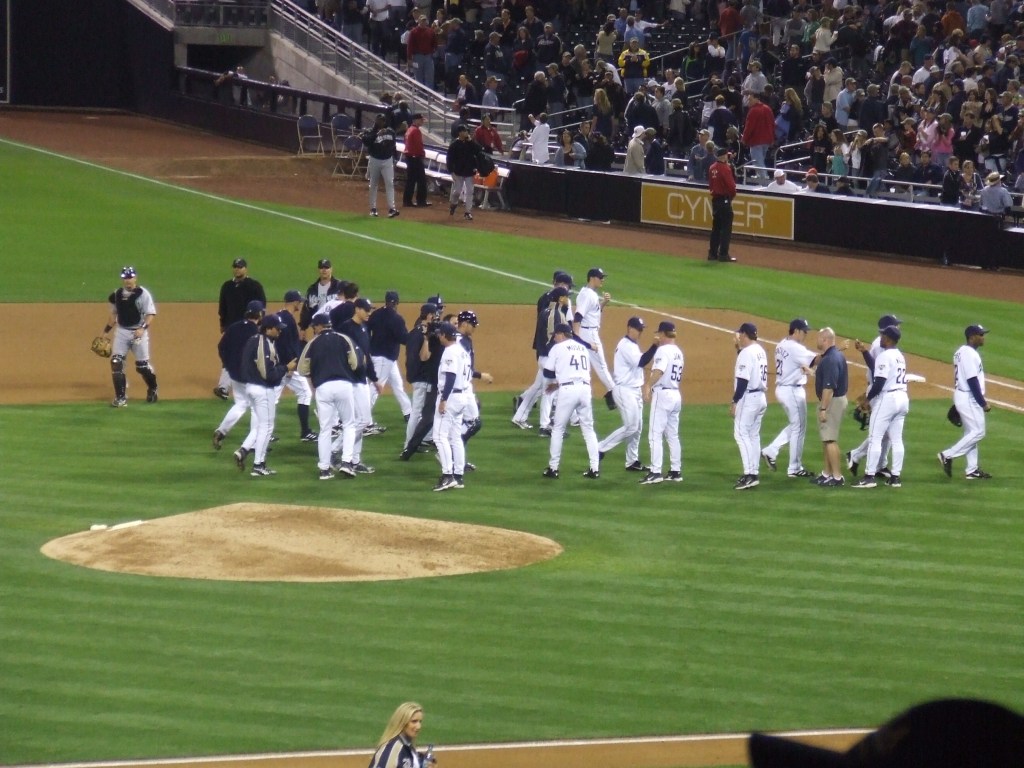
The Padres celebrating their 3-2 victory over the Marlins. (Photo credit: Jeff Hayes)

Before exiting the nearly empty stadium, I paused for a moment to take one last look at Petco Park. Despite its size, there was a certain charm to the place, and I came to enjoy it more as the game wore on. Though Dodger Stadium is certainly more iconic, seeing a game here was almost as enjoyable. During our next Southern California trip, we will make sure to stop back to see the ballpark, hopefully with better weather conditions.
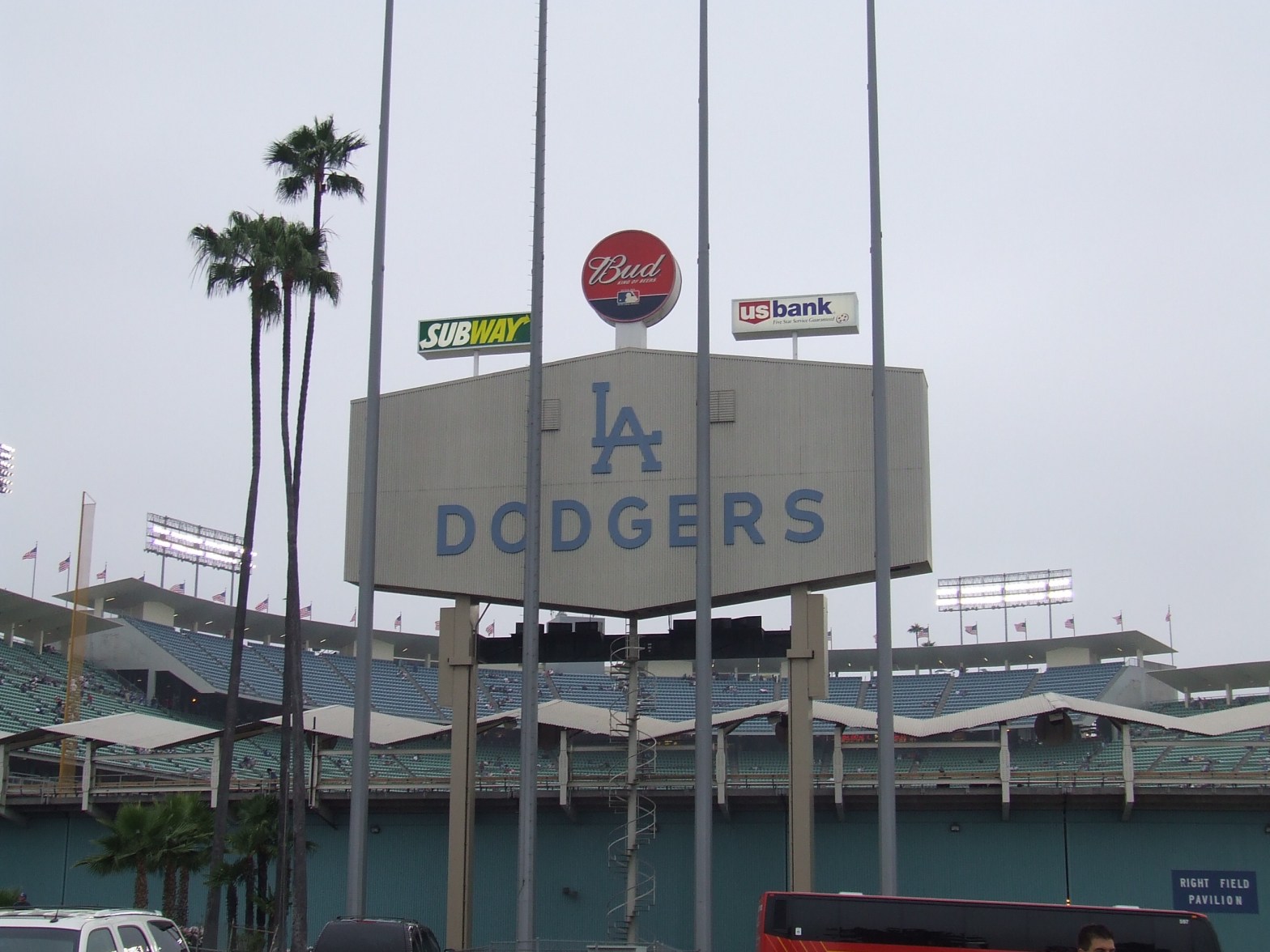
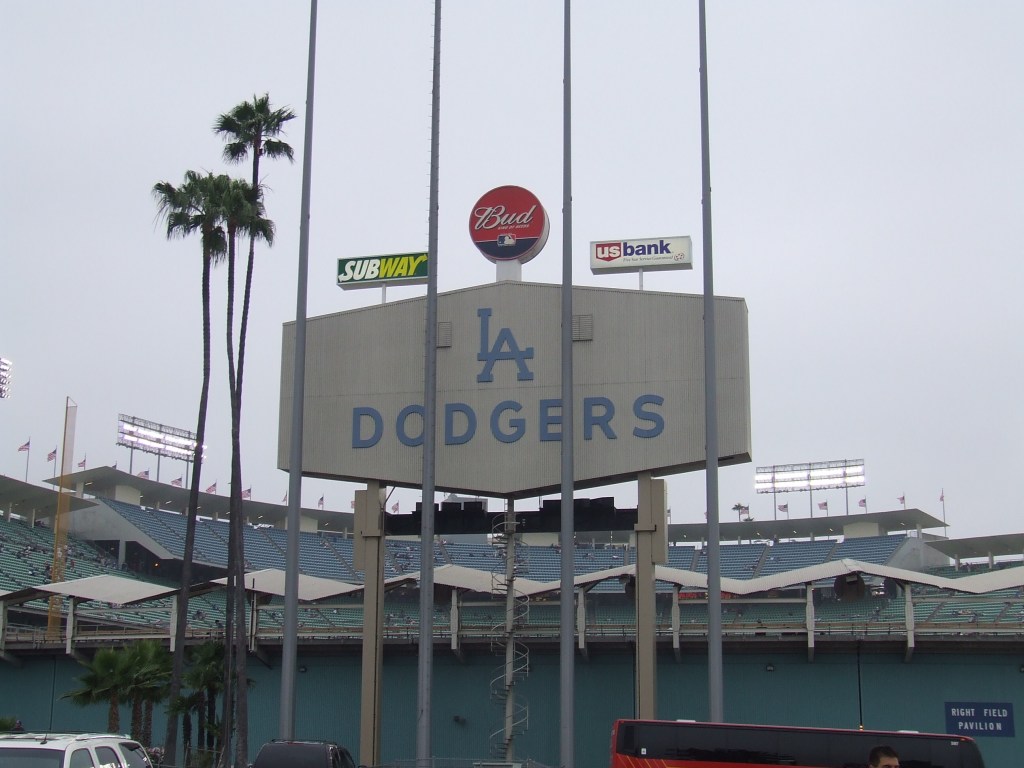
Dodger Stadium, Los Angeles CA, Wednesday June 7th 2006

Dodger Stadium, Los Angeles CA. (Photo credit: Jeff Hayes)

Our first baseball trip of 2006 took us to Southern California to see games in Los Angeles, San Diego and Anaheim. The baseball foray was included in a longer trip covering portions of Southern California and nearby Mexico. When traveling to Northern California a few years before, I chose to go in September, when the weather is at its best. Unfortunately, I did not give the trip to Southern California the same amount of thought when we decided to go in early June.

Unbeknownst to me at the time, low clouds and fog often cover coastal sections of Southern California during June, when ocean temperatures are still fairly cool. Known as “June gloom” by the locals, the low clouds can cover the sun for days at a time, resulting in dreary conditions. My timing for a trip to Southern California almost couldn’t have been worse, but we were determined to enjoy the trip, regardless of the weather.


Headquartered in San Diego for the week, I drove up to Los Angeles during a Wednesday afternoon. Leaving the hotel in San Diego hours before the first pitch (scheduled for 700 pm), I made good time traveling Interstate 5 north until I approached LA. Apparently I caught the beginning of the evening commute, and sat in traffic for almost an hour. The delay reminded me of traffic in NJ or Long Island NY, but at least there was some movement. Despite the delay, I arrived early enough to explore Dodger Stadium.

Dodger Stadium

Wearing my black Mets jersey, I was working my way through the massive onsite parking outside the stadium when I encountered a group of Dodgers fans just outside the park. To my great surprise, the group slowly encircled me, taunting me for wearing the Mets jersey. Being from NJ, I was well acquainted with abuse by hometown fans, but it was shocking that it was happening in LA, where I assumed fans were relatively mellow.

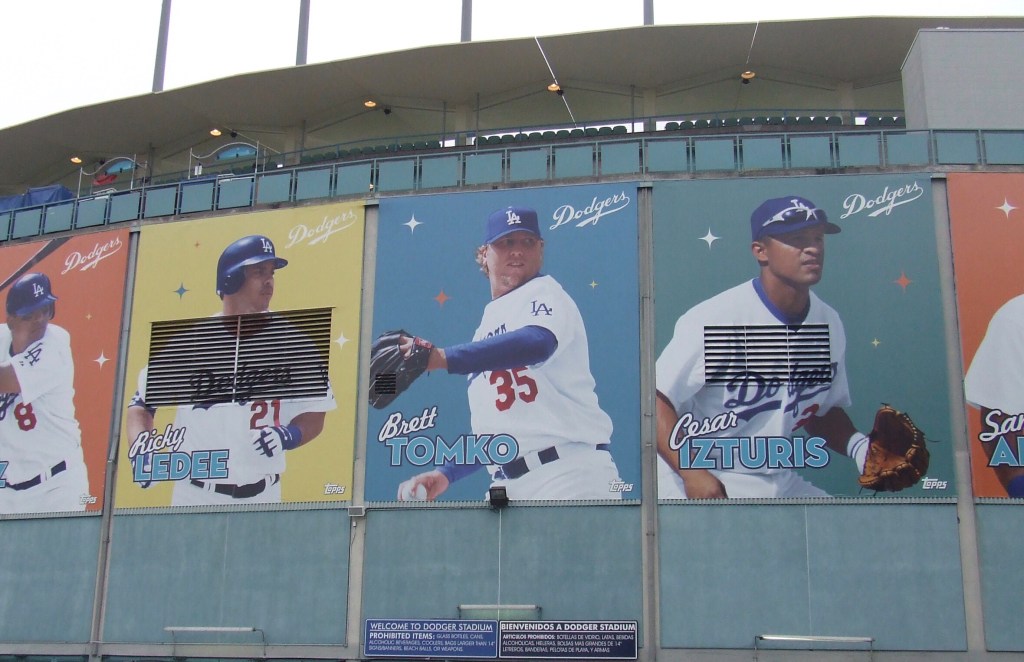
Rising stars for the Dodgers adorn the wall outside of Dodger Stadium. (Photo credit: Jeff Hayes)

The incident ended quickly with no violence, and I went about my way explore the outside of the park. At no time did I feel threatened, as I believed that the fans were generally harmless. However, based on what happened to the Giants fan not long after my incident made me reflect on the encounter. Perhaps I was in more peril than I thought.

The unpleasantness behind me, I met my brother (who was staying nearby) and we wandered around the outside of Dodger Stadium. Third on the list of oldest active ballparks in MLB, this is a baseball shrine, with a long storied history. On this night, however, with low clouds and smog providing a dank environment, Dodger Stadium felt a bit less regal, almost washed out. Still, we were in the presence of a baseball cathedral, and we weren’t going to let immoderate conditions to ruin it for us.

The smog nearly obscured the view of downtown LA, a mere three miles from Dodger Stadium. (Photo credit: Jeff Hayes)

Emerging from the tunnel from the concourse behind home plate, the smog and low clouds were clearly evident. In fact, the haze and smog were so bad that the nearby San Gabriel Mountains to the north of the park were not visible this evening. Apparently, the “June gloom” was insistent on making its presence known.

Once inside, we wandered throughout the ballpark taking pictures. To my great dismay, the clouds and smog were wreaking havoc with the cameras, forcing us to go manual with the settings. As a result, we didn’t take nearly as many useful pictures as I had hoped. Regardless, we could feel the presence generated by the place. Since I was young, watching Mets games at Dodger Stadium late at night on the East Coast, I dreamed about seeing a game at the venerable ballpark, and many years later, here we were.

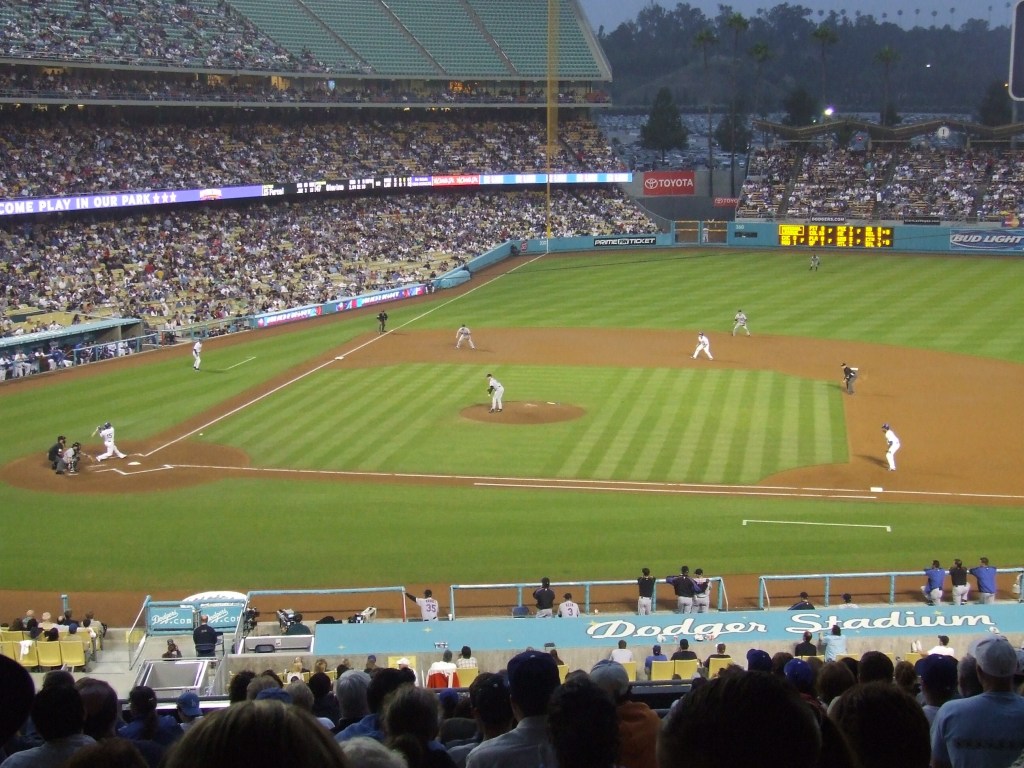
The view from our seats. (Photo credit: Jeff Hayes)

After grabbing a baseball dinner at the concession stand (complete with fabled Dodger Dogs), we headed for our seats. Sitting near the top of the lower level, we had an excellent view of the playing field and the stadium. Still having a hard time believing we were actually there, we settled in for the first pitch.

Starting for the visiting Mets was veteran Tom Glavine. In his fourth year as a Met, Glavine was in the midst of his best season in New York, sporting a 9-2 record. On the hill for the Dodgers was Odalis Perez, a journeyman left hander who was struggling through a rocky start to his 2006 season. Perez’s task was even more difficult, facing a potent Mets offense that featured several All Stars.

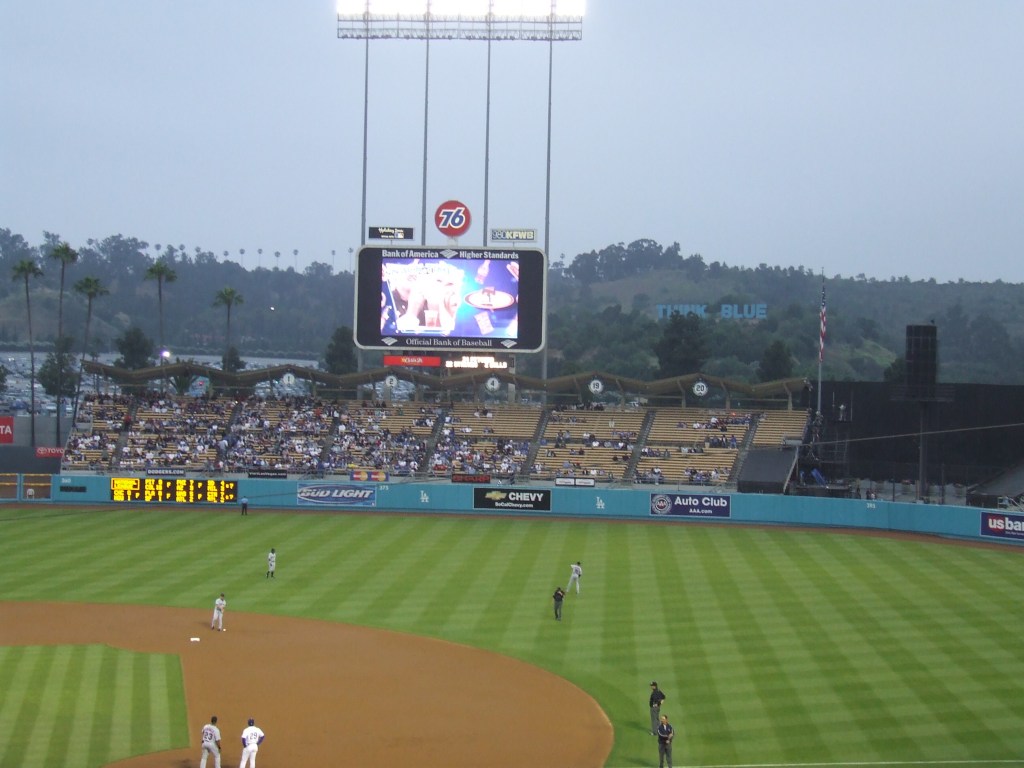
The cloudy and cool weather held down attendance, certainly less than the announced crowd of 44,000. (Photo credit: Jeff Hayes)

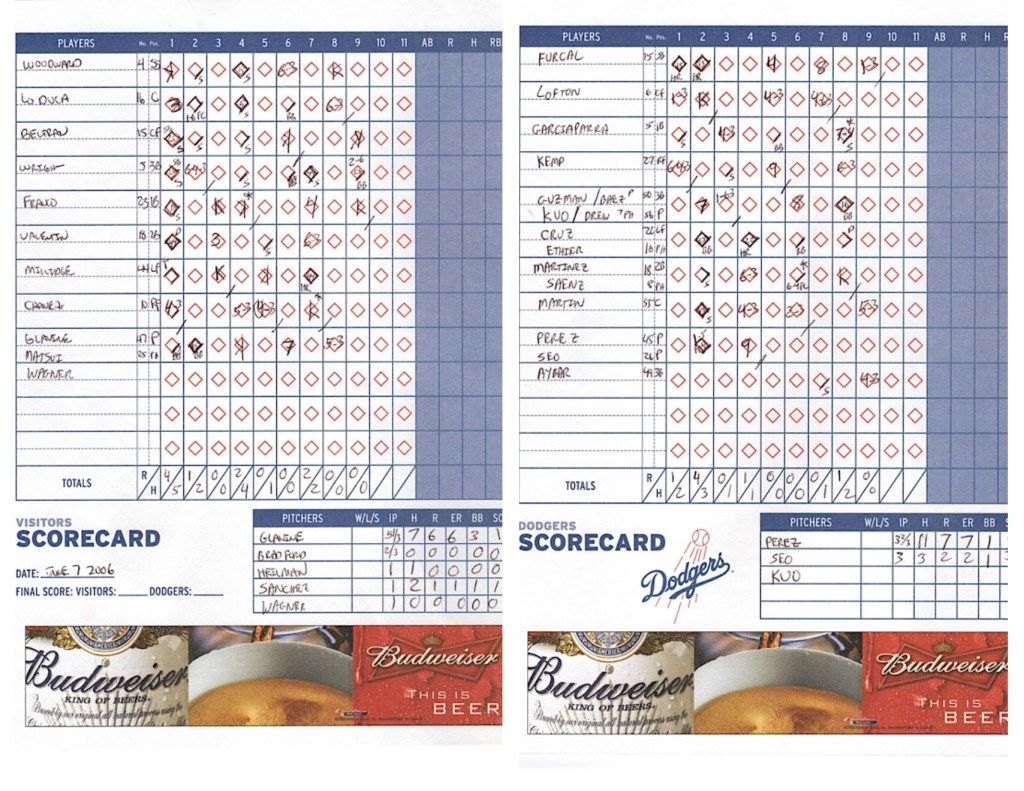
Unfortunately for the Dodgers starter, the Mets scored four runs in the first inning, followed by a run in the second. However, the Dodgers offense jumped on Tom Glavine for a run in the first and four more in the second inning, effectively neutralizing the Mets advantage. The cool conditions did not totally stifle the offenses, with a total of three home runs hit in the game.

Two more runs for the Mets in the fourth inning ended Oadlis Perez’s night, after yielding seven runs on 11 hits in just three and two thirds of an inning. Glavine’ s night wasn’t much better, ending in the sixth inning after surrendering six runs in five and one-third innings. The game then became a battle of the bullpens.

Dodger Stadium at night. Note the effect of the smog, as the light showed just how thick it was this evening. (Photo credit: Jeff Hayes)

The Mets scratched out a couple of more runs in the seventh inning, and the Dodgers responded with a run of their own in the eight. A quartet of Mets relievers held on for a 9-7 victory, as Tom Glavine earned his 10th win, despite the rocky performance. As expected, the partisan crowd filed out early, leaving a nearly deserted stadium by the time the last out was recorded.

A nearly empty Dodger Stadium shortly after the game ended. (Photo credit: Jeff Hayes)

Though I was able to fulfill a baseball dream by seeing a game at the historic Dodger Stadium, I couldn’t help but feel as though the experience was diminished to some degree by the cloudy and cool conditions. It was my own fault; my research failed to account for the apparently well known “June gloom”. Hopefully I will return when the weather is better to enjoy Dodger Stadium in all its glory.

My scorecard from the game.

Toronto, Ontario Saturday, June 24th 2006

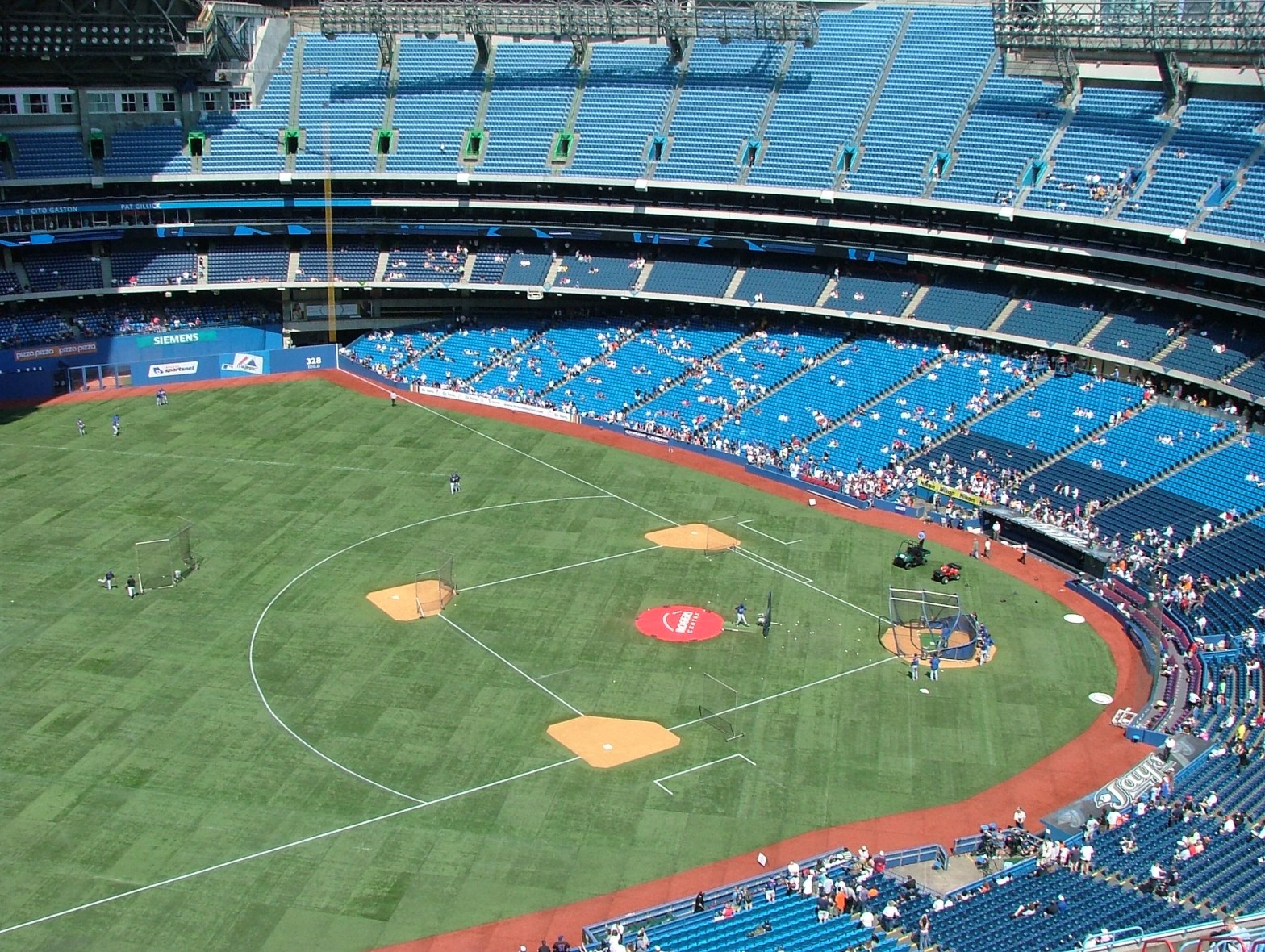
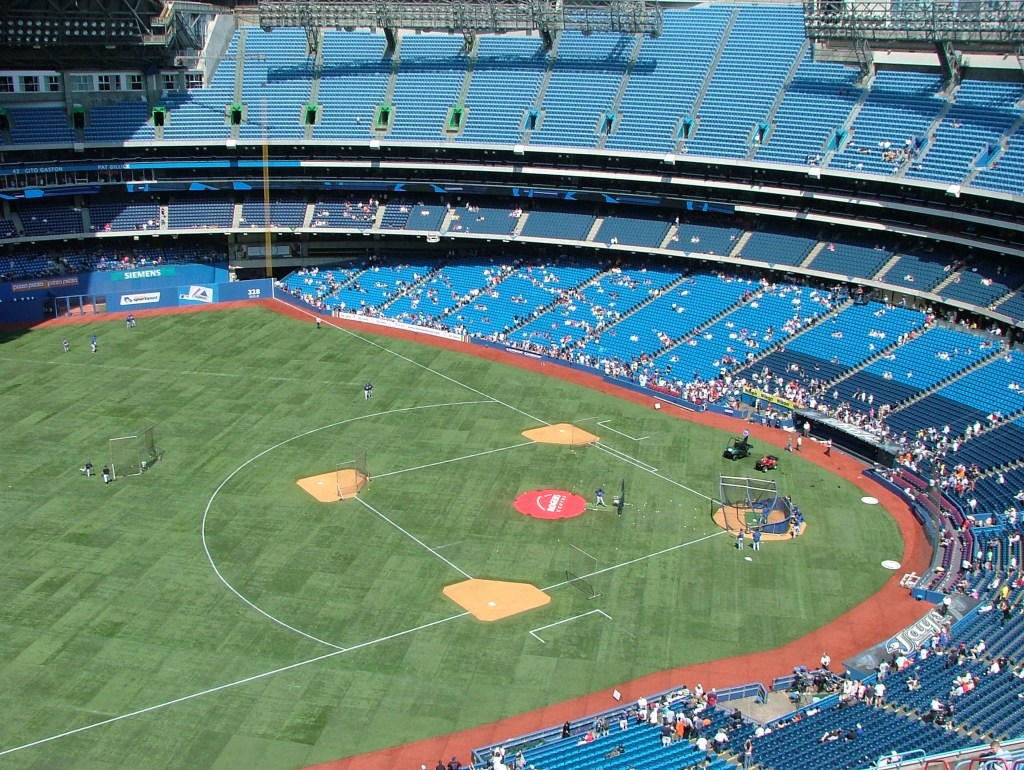
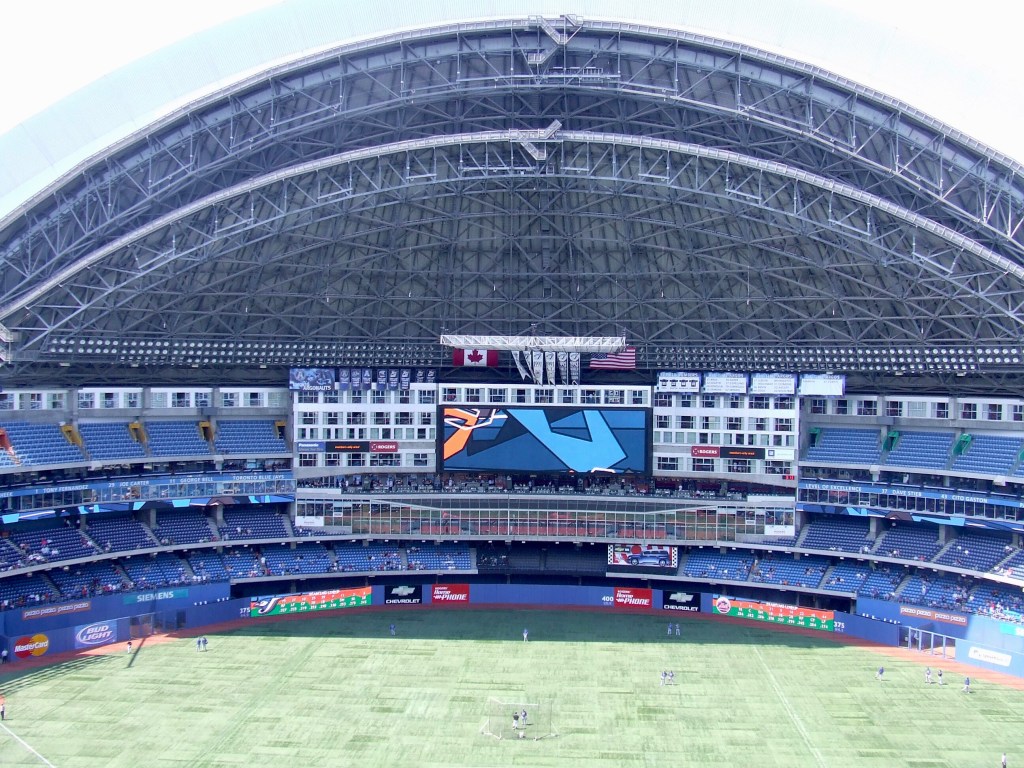
Rogers Centre from the upper deck with the roof open. (Photo credit: Jeff Hayes)

Following a long and at times frustrating day traveling to Toronto, we decided to relax in the morning by exploring the city. Relieved that my car was still in the parking lot of arguably the worst hotel in which I’ve stayed, we went in search of breakfast. Across the street was a Tim Horton’s restaurant.

Living in Maine for a time, I was vaguely familiar with the Toronto-based chain, but I didn’t know much about it. To my great surprise, Tim Horton’s offered a wide variety of breakfast options, at a very reasonable price. Buoyed by our luck finding a good breakfast just steps away from the hotel, we were ready to start the day.


1. Toronto

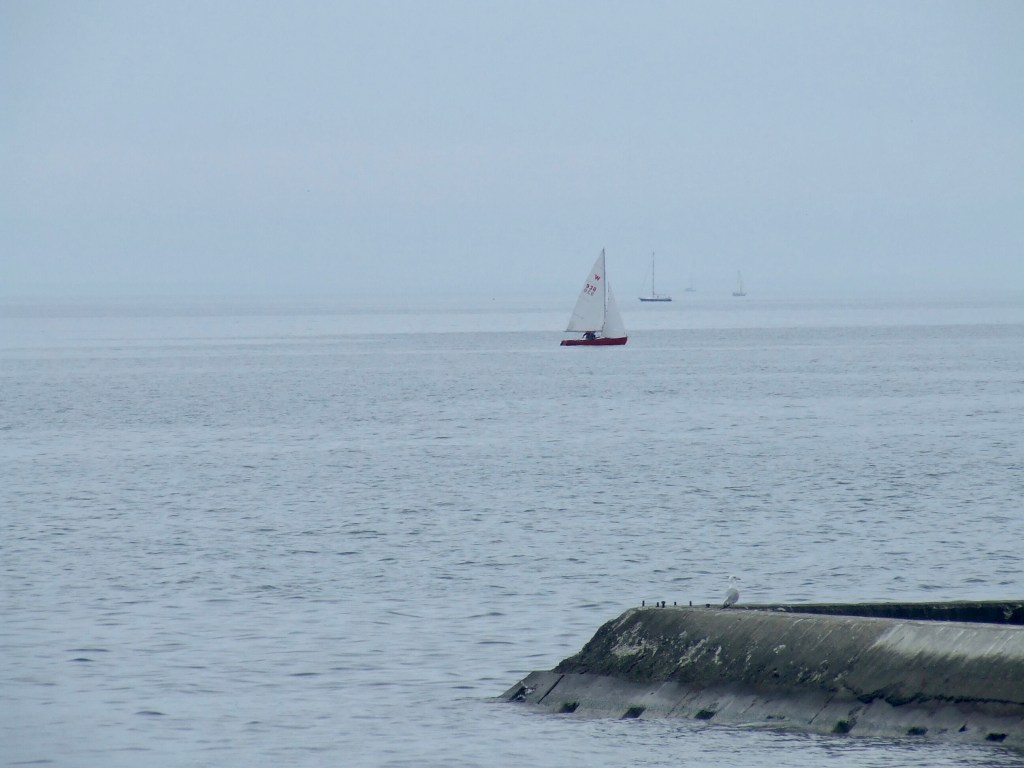
Sailboats on Lake Ontario at Toronto on a hazy and humid morning in late June.

We decided to explore downtown Toronto and nearby Lake Ontario during this hazy and humid morning. Our first stop was the Waterfront Trail on the west side of Toronto. This was my first glance at Lake Ontario, and the hazy sky conditions, at times, make it difficult to determine where the sky ended and the lake began. Temperatures rising through into the 80s and higher than expected humidity made it feel more like the US Mid Atlantic than Ontario.

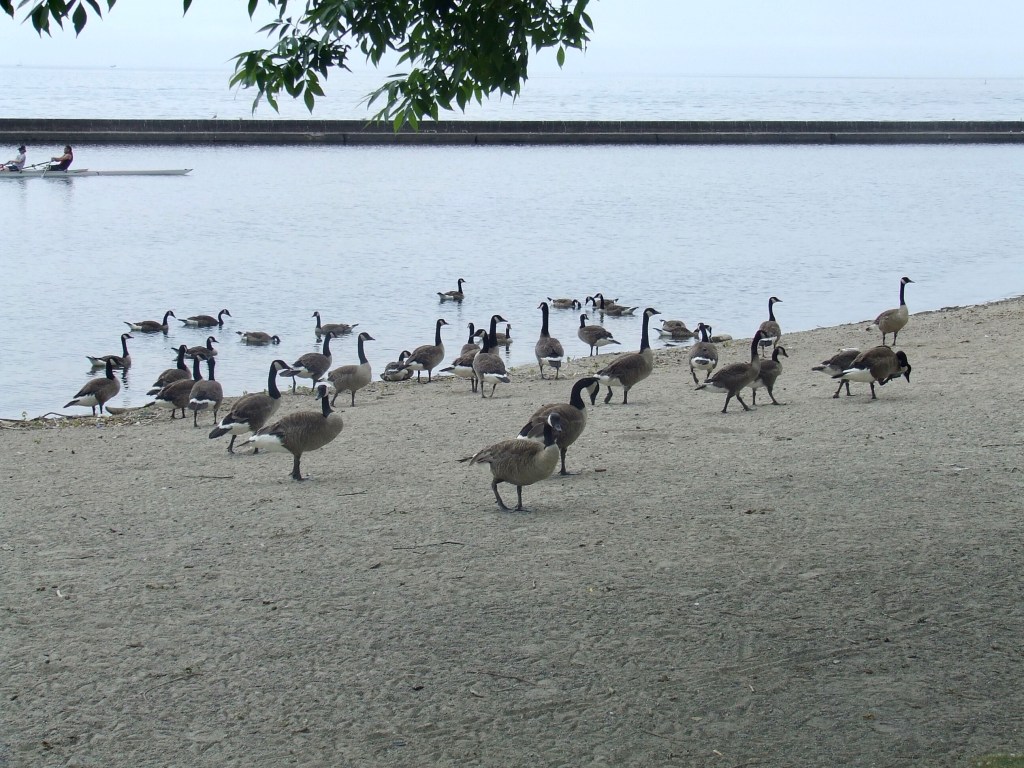
Lake Ontario, like the other Great Lakes I’ve visited, is so large that the opposing shore is not visible, making it seem more like the ocean. Walking along the shore, we encountered a flock of Canadian geese exiting the water and coming ashore just ahead of us. While on land, the geese are typical quiet, and as the geese passed among us as we walked by, it was almost as though they were ghosts crossing a landscape.

A flock of geese making an amphibious landing on the shore of Lake Ontario.

Haze and humidity obscured the skyline of Toronto from across the lake, almost leaving the CN Tower in a silhouette. Not surprisingly, the summer weather meant the waterfront was teeming with people, in and out of the still relatively cool water. Wandering along the waterfront, we spent a considerable amount of time enjoying the beautiful vistas the lakefront afforded. With noon approaching, we headed back toward the city in search of lunch.

The CN Tower from the Waterfront Trail.

Since the start time of the game was 407 pm, we parked near Rogers Centre and walked through downtown Toronto to find a place to eat. Wanting something light for lunch, we stopped at what appeared to be a makeshift deli in the basement of an office building. Being from the Northeast US, we are accustomed to fast service for lunch. To our great surprise, a single man handling the lunch rush at the deli reminded us of that type of service, pushing out sandwiches like he was from New York.

Following lunch, we wandered about downtown Toronto until the gates at the Rogers Centre opened. We decided to forgo a visit to the CN Tower, since the line for the elevator was long, and the visibility from the observation deck would likely have been limited in the hazy conditions. During our walk, the sun broke through the clouds, which allowed us to take a few pictures. With the gates opening soon, we cut short our tour of Toronto and headed toward the Rogers Centre for the game.

The skyline of Toronto from near the Rogers Centre.

2. Rogers Centre

Sunshine allowed the roof of Rogers Centre to be open for the afternoon contest. Unlike many domed stadiums, the stadium appeared to be just as big as it was with the roof closed. Arriving just as the gates opened, we had much more time to explore. One of the most noticeable attributes of the stadium was the sheen created by the increasing sunshine reflecting off the field turf. In fact, at times it seemed almost blinding.

The sheen created by sunshine on Rogers Centre caused a glare that was almost blinding at times. (Photo credit: Jeff Hayes)

As we wandered through the ballpark, we got a true sense of the enormity of the structure. The roof towered over the center field fence, easily making Rogers Centre the largest domed stadium we’d seen, even with the roof fully retracted. Being one of the earliest “new styled” MLB parks, there were amenities that were unique when the stadium opened in 1989. Perhaps the most famous was the Renaissance Hotel Toronto Downtown (now known as the Toronto Marriott City Centre Hotel), located in centerfield, with 70 of the rooms providing a view of the field.

Rogers Centre also featured a Hard Rock Cafe (which closed after the 2009 season) . We did not partake in what the Cafe had to offer, as there was too much else to see, but the Hard Rock Cafe was a popular destination for fans, based on the line to enter. There were many places to eat and drink, which was also something new when the Rogers Centre opened. It was obvious that the stadium was constructed to offer baseball fans myriad diversions while at the park, a model that was followed for many of the “newer” parks.

A close up view of the massive retractable roof at Rogers Centre. (Photo credit: Jeff Hayes)

Following a quick tour of the upper deck, we headed back toward the main concession stand to grab a baseball lunch before finding our seats. Located in the lower level down the left field line beyond third base, the view from our seats was not nearly as good as the night before, but we didn’t have rude and obnoxious neighbors with which to contend. By the first pitch, we went from sunshine to shade, which is always a welcome change in the summer.

The view from our seats. (Photo credit: Jeff Hayes)

For this afternoon’s matchup, the Mets sent ageless Orlando Hernandez (dubbed “El Duque”) to the mound. Hernandez, recently acquired from the Arizona Diamondbacks, would become the workhorse of the Mets 2006 starting rotation, an innings eater that the staff sorely needed. Hernandez was opposed by the ace of the hometown Blue Jays’ staff, right hander Roy Halladay. Halladay was off to a 9-2 start, earning him an All Star berth, presenting the loaded Mets lineup with a formidable challenge.

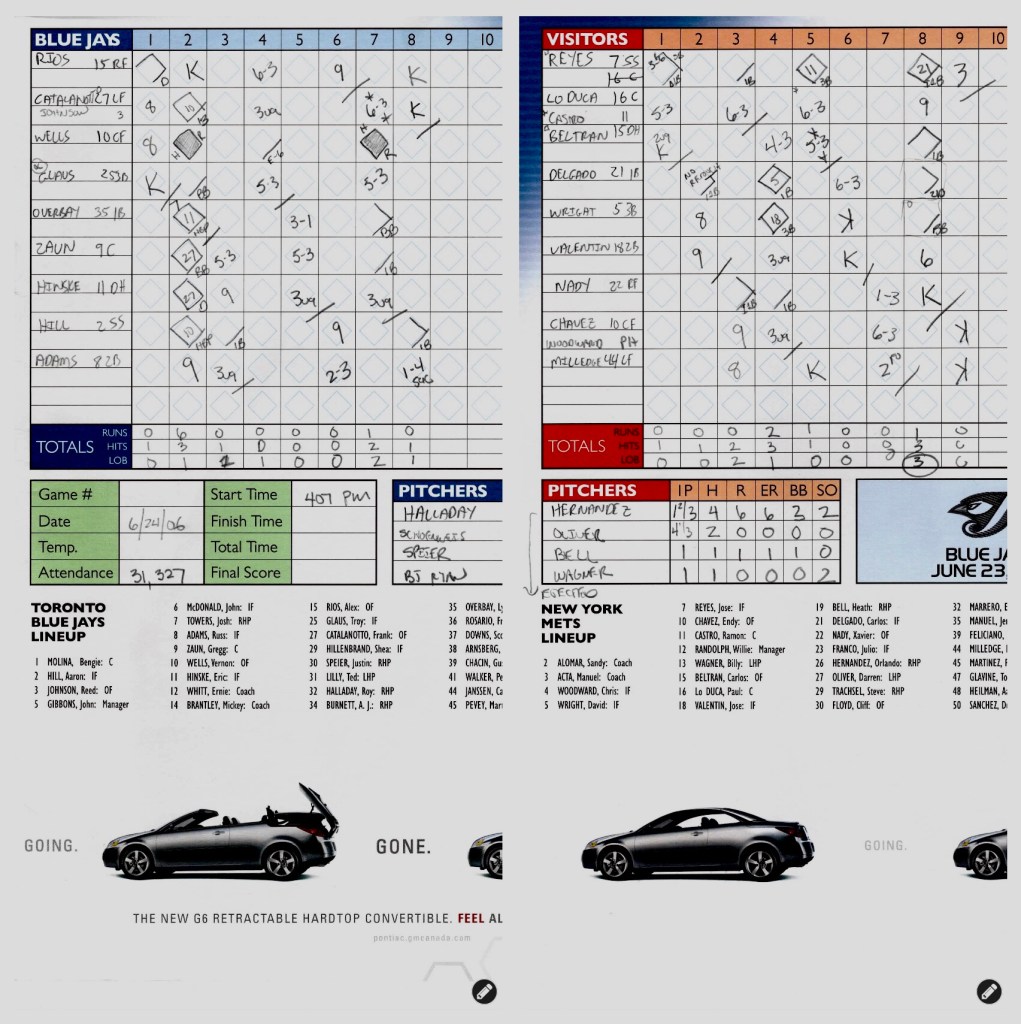
The later start in the afternoon (with the first pitched scheduled at 407 pm) would provide problems with shadows for the first few innings, which might suggest a slow start for the offenses. That theory was disproved almost immediately, as the Jays pounced on El Duque for six runs in the second inning, capped by a three home run off the bat of center fielder Vernon Wells

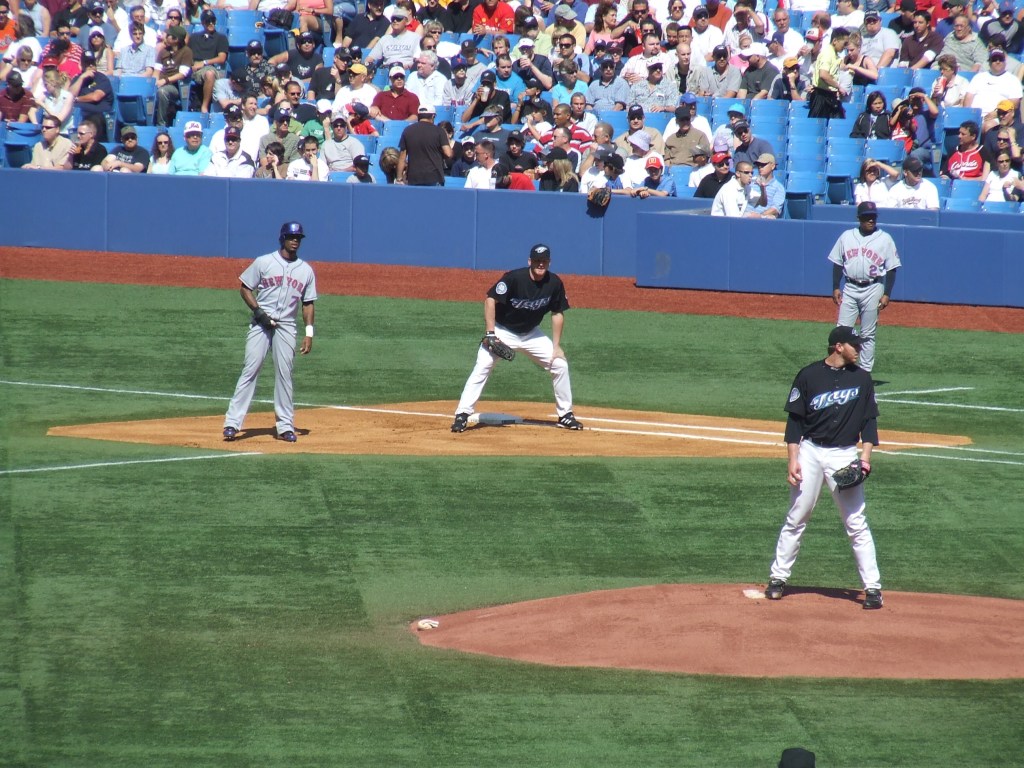
Orlando Hernandez and his unconventional windup. (Photo credit: Jeff Hayes)

In the wake of the home run, El Duque started running his mouth to the home plate umpire, questioning some of the ball and strike calls. That got him tossed from the game, after Hernandez surrendered six runs on four hits in just one and two-thirds of an inning. While Darren Oliver was taking his warmup pitches in relief of El Duque, Mets manager Willie Randolph continued the argument with the home plate umpire, only to be tossed from the game as well.

Roy Hallady toeing the rubber for the Blue Jays against the New York Mets at Rogers Centre. (Photo credit: Jeff Hayes)

Meanwhile, Halladay held the vaunted Mets offense in check, surrendering runs in the fourth and fifth innings, featuring an RBI triple by third baseman David Wright, who would make his first All Star appearance in 2006. While he didn’t have his best command, Halladay showed why he was a premiere pitcher by keeping the Mets off balance. Halladay exited after seven innings, with a workmanlike performance, allowing four runs on 10 hits.

Mets third baseman David Wright driving in the Mets first run with a triple in the fourth inning. (Photo credit: Jeff Hayes)

The Mets bullpen cobbled together an impressive performance after the departure of starter Orland Hernandez, allowing just a single run in six and one-third innings of relief. Though the Mets would take on an additional run in the eight inning, it was not enough to overcome the deficit, allowing the Jays to take the second game of the three game set 7-4.

My scorecard from the game.

As the 31,000+ fans quietly departed Rogers Centre, I reflected on the stadium. A marvel of engineering when it opened in the late 1980s, its cavernous size seemed to project a general lack of charm or intimacy, something I had noted the previous night. However, I truly understand the magic a stadium can hold for a team’s fans, having seen more than 100 games at the now defunct Shea Stadium. Having referred to that ballpark as a “toilet”, it was OUR toilet, and while I didn’t see the “magic” at Rogers Centre, I can imagine Blue Jays fans feeling quite differently.

As we pulled out of the parking lot and headed back toward NJ, I took what will likely be my last view of Rogers Centre in person. While Toronto does possess some draw for me, the stadium did not, and it is unlikely I will return there any time soon,

The view of Rogers Centre is Toronto, Ontario. (Photo credit: Jeff Hayes)