Chicago, Saturday May 3rd 2003

1. New Jersey to Chicago

Our first baseball trip of 2003 took us to Chicago to see the Cubs and the White Sox. Originally we scheduled a trip to see the Cubs in September of 2001, but circumstances made that impossible. Since we decided to make this a weekend trip, we flew from New Jersey to O’Hare Airport in Chicago on Saturday morning, May 3rd. Luckily, Newark-Liberty Airport in Newark, NJ was not busy, allowing us to breeze through security.

For the flight, we chose Midwest Airlines (now defunct). A Milwaukee based airline, they offered flights to many locations in the Midwest, and I was first introduced to the carrier through work in the late 1990s. Each plane had leather seats, and offered fewer seats than most mid sized airlines. In addition, they offered free chocolate chip cookies. Though it sounds trite, these cookies were actually very good. Though the fares were a bit higher than most airlines flying to Chicago, the roomier plane with leather seats was well worth the extra money.

After arriving at O’Hare Airport and picking up our rental car, we headed toward Chicago. Originally, we planned to see the White Sox on Saturday night, and the Cubs at Wrigley Field on Sunday afternoon. However, we arrived in Chicago much earlier than expected, and we realized we could catch the Saturday afternoon game at Wrigley.


2. Wrigley Field

Iconic hand operated scoreboard at Wrigley Field. (Photo credit: Jeff Hayes)

Making our way to the North Side, we arrived at the park shortly before game time. Parking proved to be a challenge, as it often is with urban ballparks, and we ended up parking in the lot of a local business for an exorbitant amount. Not having tickets for the game, we went in search of scalpers, who were very easy to find. We secured two seats behind first base for more than face value. As is typical when we visit a new ballpark, we quickly toured the outside of the stadium. Arriving just before game time, our tour was truncated, and after we entered the venerable ballpark, we went in search of our seats.

Once we found our seats, it was immediately clear we had been swindled by the scalper. Our seats were terrible, in the lower level down the right field line with a limited view of home plate. Of course, not knowing the ballpark well, we foolishly took the scalper at his word that the seats were good. We laughed it off, being so gullible. Just being at Wrigley Field, a baseball palace, was enough to make us forget our faux pax, and we were determined to enjoy the experience regardless of our view.

The view from our seats. (Photo credit: Jeff Hayes)

Not surprisingly, Wrigley Field was filled to capacity. In addition to packed bleachers, we could see what seemed like hundreds of people crammed onto rooftops of neighboring buildings. Seeing the people on the rooftops on TV doesn’t give you a true idea of how many fans actually ring the ballpark. Beyond the left field, we could see the iconic Budweiser roof, located off West Waveland Avenue. But perhaps my favorite part of Wrigley Field was the hand operated scoreboard. A throwback to a bygone era, the scoreboard defined Wrigley Field for me, and I finally got to see it for myself.

We couldn’t have asked for better day weather wise, with crystal clear skies and temperatures in the 50s. Having seen Wrigley Field on TV many, many times, I could scarcely believe we were here. Dubbed the “friendly confines” by Cubs great Ernie Banks, the cozy ballpark teemed with history. Possibly the most famous of the features of Wrigley, the ivy on the outfield wall, was conspicuously absent. Being early May, it was too soon for the ivy to bloom, so instead we were treated to brown walls devoid of flora.
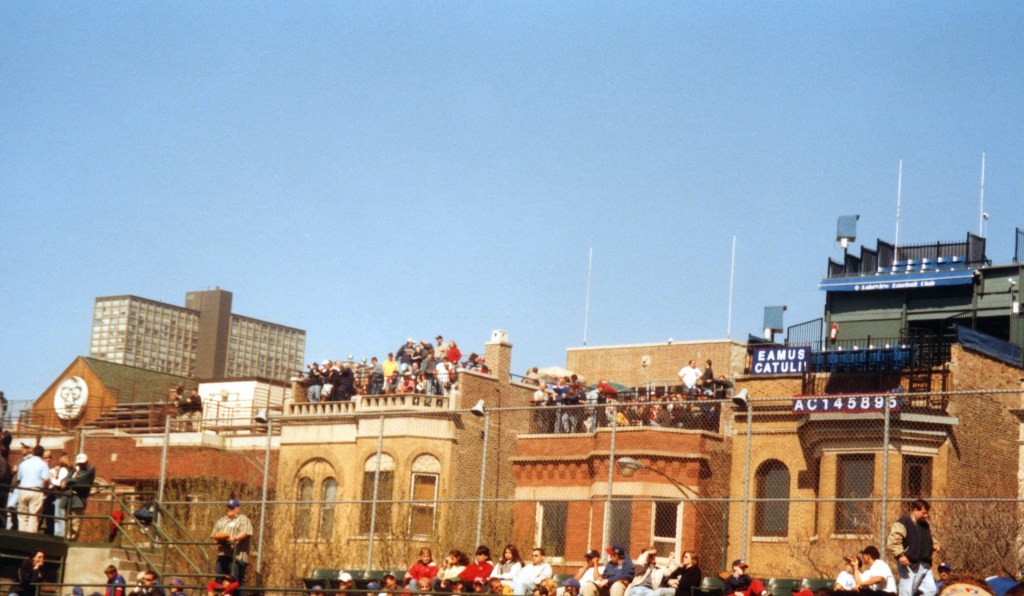
View of buildings adjacent to the right field wall. Note how many people are watching from the rooftops.

For the matinee, the hometown Cubs hosted the Colorado Rockies, with the first pitch slated for 120 pm CDT. Starting for the Rockies was journeyman left hander Darren Oliver, who was in his first season with the team. Taking the mound for Chicago was right hander Carlos Zambrano, the 23 year old who was beginning to show signs of becoming a Cy Young caliber starter for the Cubs. Good starting pitching, paired with a decent breeze coming in from Lake Michigan suggested a low scoring affair.

The Cubs struck first in the bottom of the second inning, stringing together hits and walks to plate three runs. Colorado responded with three runs of their own in the top of the third, and it seemed as though we would see an offensive display in Wrigley this afternoon. Chicago reclaimed the lead into the bottom of the fourth inning, with Cubs starter Carlos Zambrano hitting a solo home run to lead off the inning. While it is rare for pitchers to hit home runs, Zambrano was a good hitting pitcher, blasting 24 home runs over his career.
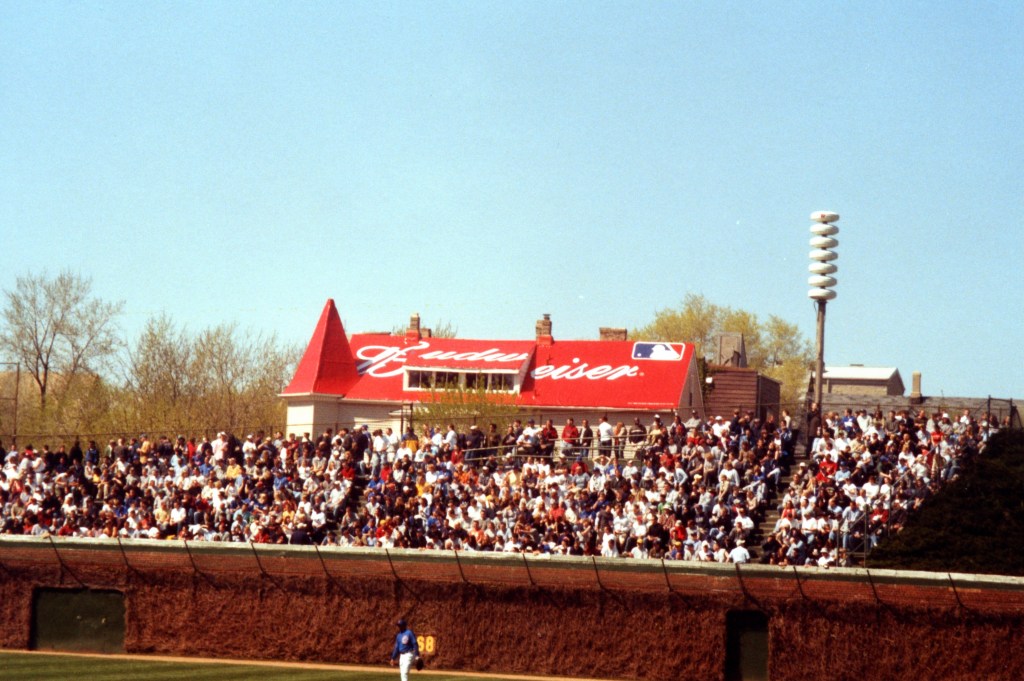
The famous Budweiser roof across the street from Wrigley. Note that the famed ivy had not yet started growing.

While there was a game at the ballpark that afternoon, Wrigley Field was the star of the show. Wall to wall sunshine and pleasantly cool temperatures made our visit to this baseball palace even more enjoyable, but the environment was indescribable. In between innings, I found myself admiring all that the ballpark had to offer, immediately understanding why Wrigley Park was considered a baseball mecca. Our seats were not ideal for taking pictures of the action, but from our location, we were able to enjoy the scene.

The Rockies scored three more runs in the top of the eight inning, taking a 6-4 lead that the bullpen held for the victory. Despite our seats, we thoroughly enjoyed our surprise visit, and would get a much better look at Wrigley Field the next afternoon. Following the end of the game, we inched out way out of the parking space, and headed toward our hotel. Our stay there was brief, just long enough to check in and drop off our bags, because we were headed toward US Cellular Field for a night game between the visiting Seattle Mariners and the home town White Sox.
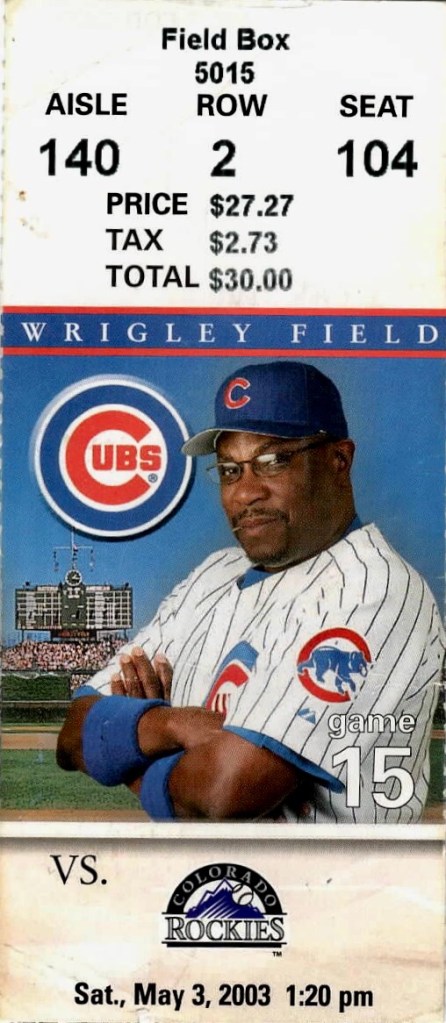
A VERY expensive ticket for the afternoon game at Wrigley Field. (Photo credit: Jeff Hayes)

3. US Cellular Field

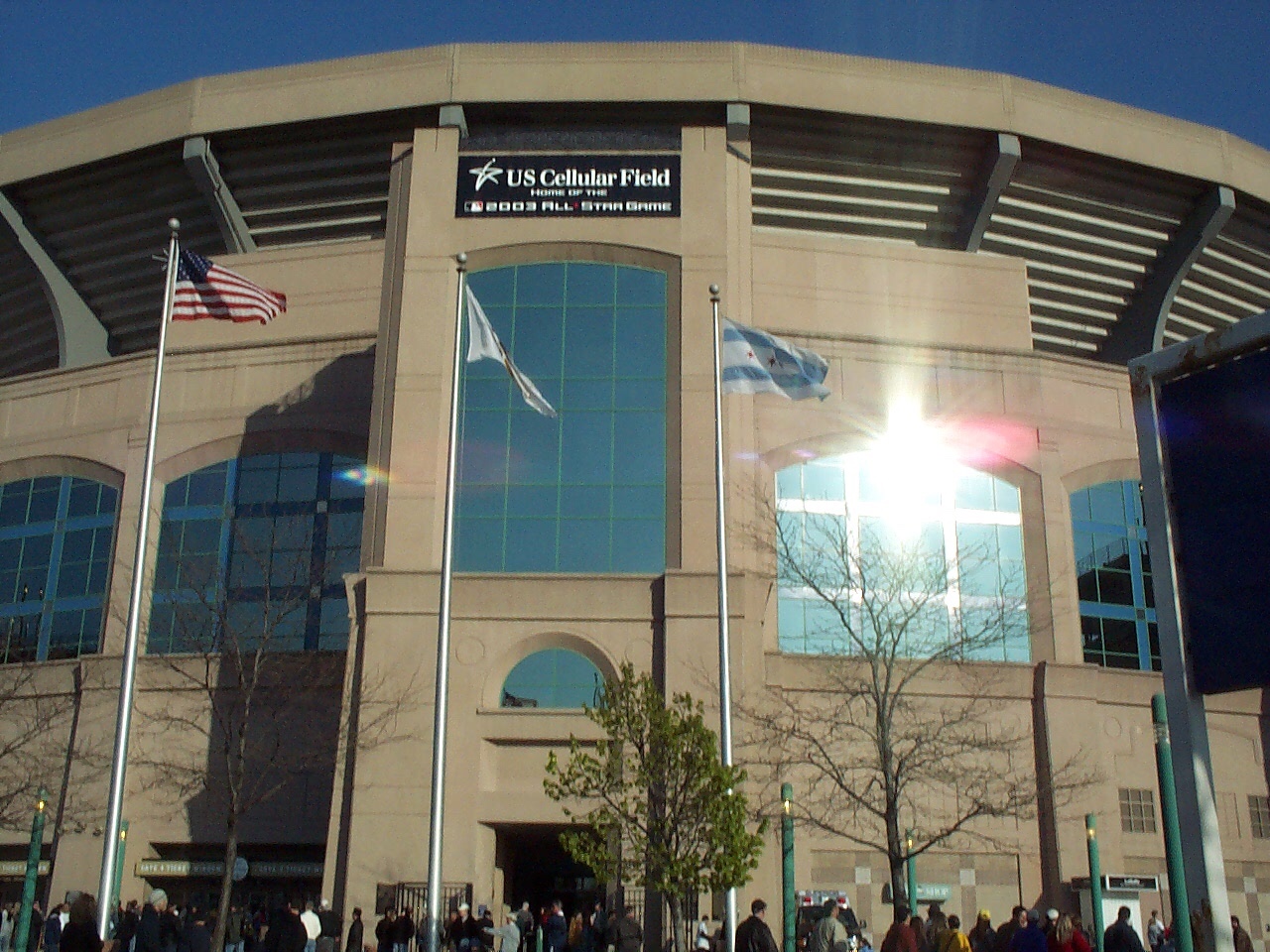
Outside of US Cellular Field in Chicago, IL. (Photo credit: Jeff Hayes)

We arrived in the South Side of Chicago about an hour before the first pitch of the game scheduled for 605 pm. As we approached US Cellular Field (now known as Guaranteed Rate Field), it was clear that we were in a neighborhood very different than the one in which Wrigley Field is located. Parking around the ballpark was plentiful, with lots surrounding the stadium. Pulling into Lot B (across West 35th Street from the field), we asked the attendant the cost of parking. After telling us, he asked if our car was a rental, to which I said yes. As we pulled away he added “I hope it’s still here when you get back”. Not exactly what a visitor wants to hear, but we did our best not to let it affect our experience.

With little surrounding US Cellular Field but parking lots and I-94, we did not explore the outside of the park like we did for other stadiums we have visited. Entering through the home plate gate, I could not help but notice how much the outside of the ballpark reminded me of the main Yankee Stadium entrance.
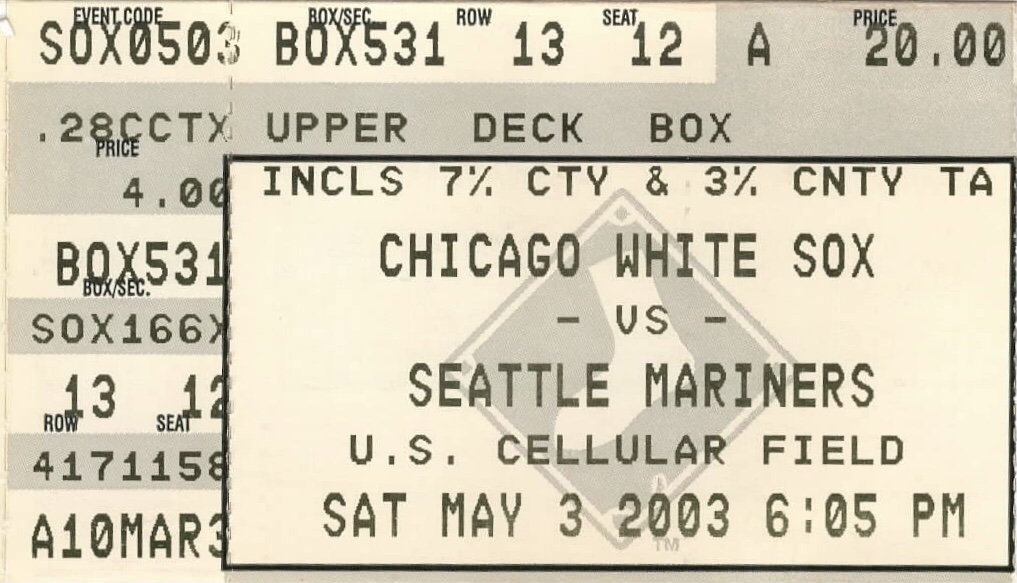
A ticket to the game. (Photo credit: Jeff Hayes)

US Cellular Field, which opened in 1991, was a replacement for Comiskey Park , the home of the White Sox from 1910 through 1990. Located across West 35th Street from US Cellular Field, Comiskey Park was razed in order to provide additional parking for the new ballpark. Opening a year before Camden Yards in Baltimore (the stadium that is generally acknowledged as the first of the “new” MLB parks), US Cellular Field had the feeling of a ballpark built in the 1970s or 1980s, generally symmetrical with three decks and bleachers almost completely ringing the outfield.

Following a quick tour of the inside of US Cellular Field, we went in search of a baseball dinner. Armed with drinks and snacks, we headed toward our seats. Surprisingly, despite the cool weather, the game was well attended, and the best seats we could procure were in the upper deck, directly behind home plate. Typically, we seek out seats in the lower level on either the first or third base side. However, when these seats are unavailable (as they were this night), we prefer to be closer to home plate when relegated to the upper deck. A long climb was rewarded with a great view of the ballpark as game time approached.

The view from our seats. (Photo credit: Jeff Hayes)

Though the sun was shining at the start of the game, a chill descended upon US Cellular Field, and it was evident that we were in for a cool early May evening in the South Side. Starting for the visiting Seattle Mariners was right hander Freddy Garcia. The talented 26 year old was already an emerging star, yet listed as the fourth starter on a loaded Mariners rotation. On the mound for the hometown Sox was left hander Josh Stewart, who was in the first season of a brief two year MLB career. A seeming pitching mismatch favored the Mariners, who were just two season removed from a single season record of 116 wins in 2001.

The video board in centerfield at US Cellular Field. Below the scoreboard is the Fan Deck, constructed to allow fans to congregate during the game. Other teams would adapt this approach as the way fans watched the game changed. (Photo credit: Jeff Hayes)

We didn’t need to wait long for the fireworks to begin, as the Mariners pummeled Sox starter Josh Stewart for six runs in the first two innings, punctuated by two home runs in top of the first inning. Seattle tacked on four more runs in the top of the fourth inning, chasing Stewart from the game. Meanwhile, Freddy Garcia was cruising for the Mariners, putting the game out of reach fairly early.

With my attention straying from the game, I began to feel the chill more intently, as temperatures dropped into the 40s with the advent of night. Not surprisingly, the White Sox fans began to abandon what appeared to be a losing cause, steadily exiting as the home town fell further behind. As the announced crowd of 25,00+ thinned out, we noticed just how large US Cellular Field was. Unlike MLB that would follow, the stadium seemed to lack a sense of charm or intimacy, feeling more like a monument to the past. Having said that, US Cellular Field was a comfortable place to see a game, and an upgrade to where the White Sox used to call home.
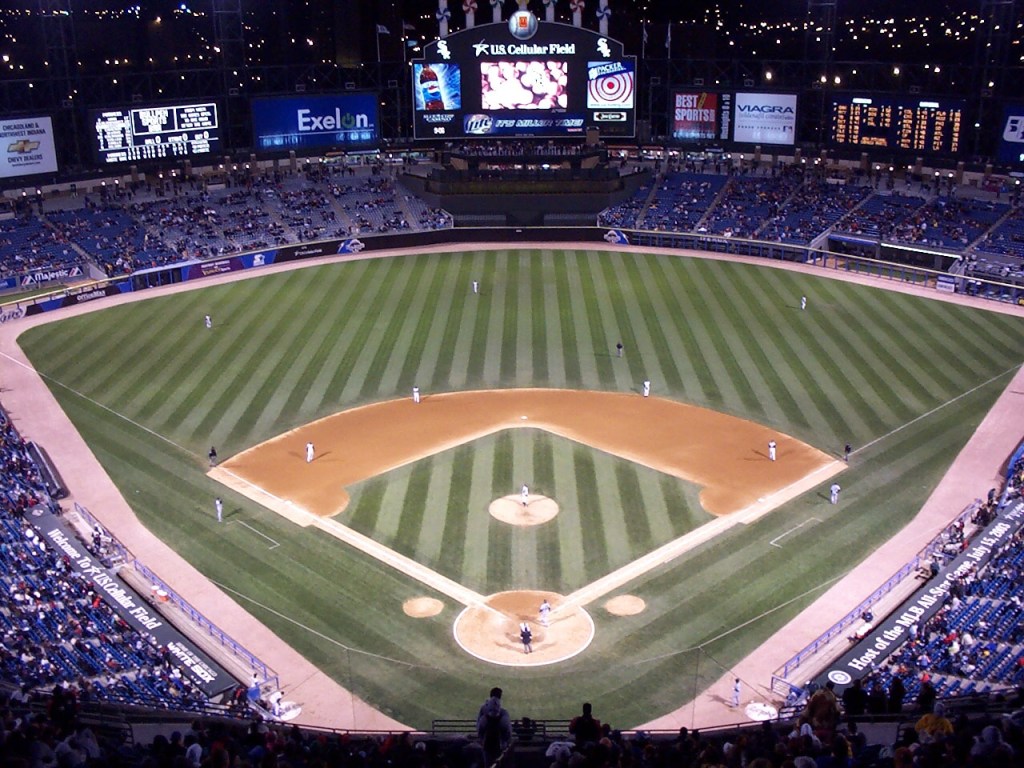
US Cellular Field at night. (Photo credit: Jeff Hayes)

The Mariners tacked on two runs late in the game, as Freddy Garcia and a cadre of Seattle relievers held the Sox in check for 12-2 victory. Cold temperatures made the three hour 15 minute game seem even longer, and by the time the last out was recorded, I was ready to leave. Overall, US Cellular Field was a good place to see a ballgame, but generic enough not to be too memorable. While I was glad we took in a game here while in Chicago, there wasn’t enough of an attraction to being me back anytime soon.

My scorecard from the game.

Angel Stadium of Anaheim, Saturday June 10th 2006

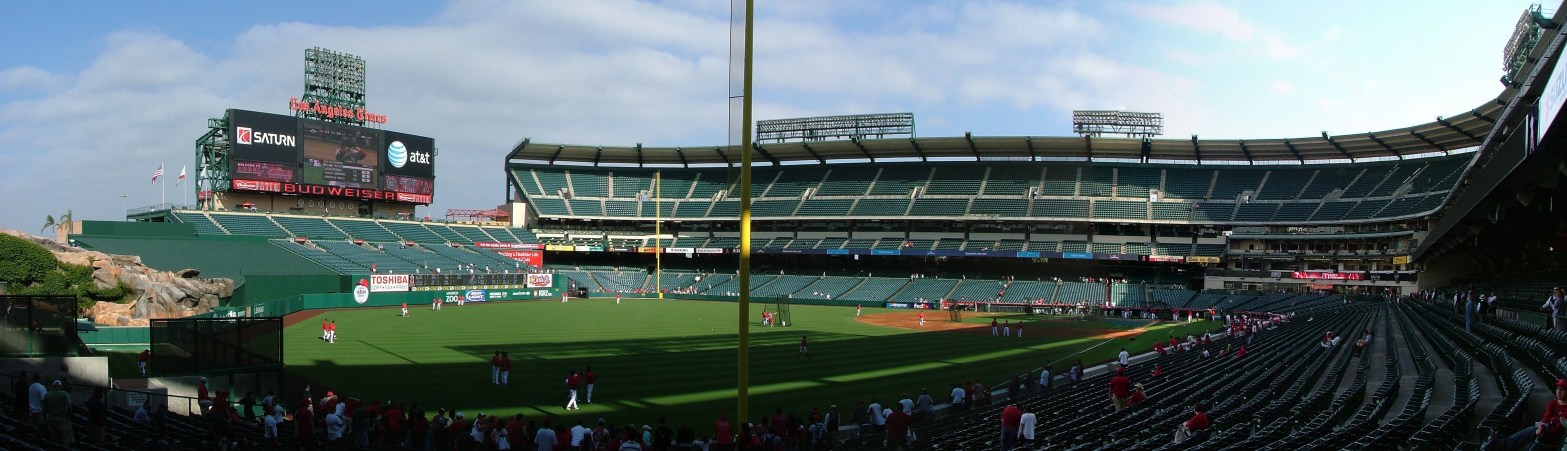
Angel Stadium, Anaheim CA. (Photo credit: Jeff Hayes)

Finally, the sun made an appearance in Southern California, as the low clouds and fog receded just offshore. Following a morning of exploring San Diego, I traveled up Interstate 5 to Anaheim to catch an evening game between the Seattle Mariners and Anaheim Angels at Angel Stadium of Anaheim. The 90 minute trip was swift and uneventful, helped along by the fact it was Saturday.

Shortly after arriving at the stadium, I met up with my brother, who stayed just a block away from the park. Angel Stadium, located near the Santa Ana River, is a mere four miles from Disneyland. Had I know that at the time, I might have built in time to see the iconic amusement park before heading to the stadium. My brother stated that his hotel was boisterous, with a din caused by kids excited to visit Disneyland.

The exterior of Angel Stadium of Anaheim, complete with a pair of batting helmets framing the gate behind home plate. (Photo credit: Jeff Hayes)

Parking was plentiful at Angel Stadium, as the field was almost completely surrounded by parking lots. By MLB standards, parking was relatively cheap ($10.00), and arriving almost two hours before the first pitch, we had our choices of spots. Since there was not much to see immediately adjacent to the ballpark, we encircled the stadium before entering through the gate behind home plate.

Angel Stadium has undergone several configuration changes since it first opened in 1966. Originally constructed with an open outfield, the stadium was completely enclosed in 1980, when the NFL’S Los Angeles Rams relocated to Anaheim. The enclosure increased the stadium’s capacity from 43,000 to over 63,000, where it remained through 1997. Following the departure of the Rams, the stadium was renovated, removing the enclosure, and restoring the view of the mountains in centerfield.

Following the demolition of the enclosure in the outfield, the “Rock Pile” replaced it in left centerfield. (Photo credit: Jeff Hayes)

Replacing the enclosure in the outfield was perhaps the stadium’s most interesting feature, the “Rock Pile”. Also known as the California Spectacular, the rock formation was adorned with real trees, fake boulders and a geyser which spouts water that cascades down the rocks. This feature is always prominently displayed during national broadcasts from Angel Field.

The “Rock Pile” was accessible via the concourse that encircled the stadium, and not surprisingly, was a popular destination. Our tour of the stadium revealed it to be a former multi purpose stadium reborn into a baseball park following the renovations in the late 1990s. A large scoreboard in right centerfield was augmented by a smaller scoreboard in left centerfield, giving Angel Stadium a more modern look.

The view from our seats. (Photo credit: Jeff Hayes)

Following our trip around the stadium, we visited one of the many concession stands on the lower level to obtain our baseball dinner. Despite the Angels being a sub .500 team, the ticket demand was so high that we were only able to secure upper deck seats behind home plate. The climb was worth it; the view of the ballpark from our perch could not have been better.

The starting pitching matchup feature two journeyman right handers. Gil Meche, taking the ball for the visiting Seattle Mariners, and John Lackey, toeing the rubber for the hometown Angels, were both in the middle of mediocre seasons. Clearing skies, light winds and mild temperatures set the stage for a pleasant evening, with Lackey delivering the first pitch at 707 pm PDT.

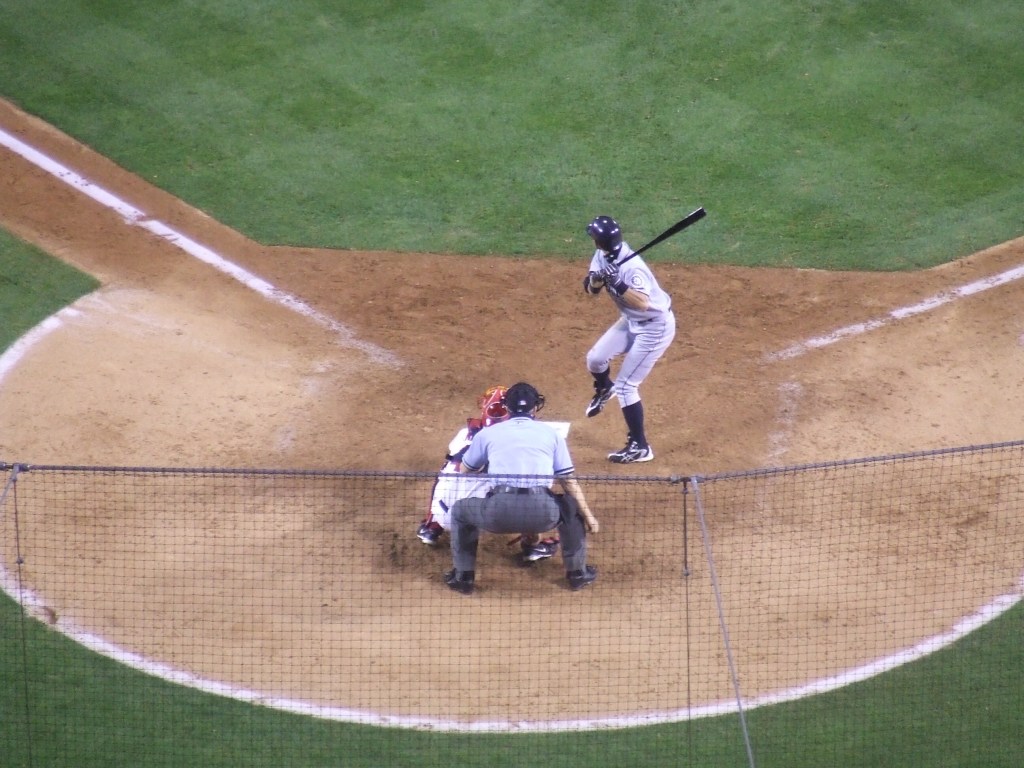
Ichiro Suzuki leading off for the visiting Seattle Mariners. (Photo credit: Jeff Hayes)

Leading off for the Seattle Mariners was right fielder Ichiro Suzuki. Ichiro was off to yet another great start, leading the American League in hitting at .369. In his sixth season with the Mariners, Ichiro was rapidly becoming the best hitter of his era, and a major draw while on the road. He did not disappoint this night, collecting three hits and scoring three runs. However, Ichiro grounded out to start the game, with the teams going scoreless early in the contest.

The Angels started the scoring the bottom of the second inning, with two runs via consecutive RBI singles off Mariners starter Gil Meche. The Mariners countered with three runs in the third inning. The score remained 3-2 going into the top of the fifth inning. Angels starter John Lackey intentionally walked Raul Ibanez to load the bases for Mariners 1B Richie Sexon. Sexon, a power hitter with a low batting average, deposited the next pitch over the centerfield fence for a grand slam. That home run ended Lackey’s night, and gave the Mariners an 8-2 lead.

Angel Stadium at night. (Photo credit: Jeff Hayes)

Much to my surprise, despite the makings of blow out, the Angels fans stayed for the bulk of the game (so much for the stereotypical Southern California fan leaving early). The nearly full stadium generated a feel I would expect in ballparks across the Midwest or the Northeast. In addition, clear skies, light winds and temperatures in the 60s provided an enjoyable backdrop for a very pleasant baseball experience at Angel Park.

The Mariners tacked on four more runs in the seventh inning, including back-to-back home runs by Ichiro Suzuki and Adrian Beltre, essentially putting the game out of reach for the hometown Angels. The Angels did respond with runs in the seventh and eighth innings, but not nearly enough to put a dent in the Mariners lead. Angels star (and future Hall of Famer) Vladimir Guerrero was quiet in this contest, managing a double in four at-bats.

Angels RF Vladimir Guerrero batting at Angel Stadium. (Photo credit: Jeff Hayes)

Overall, my impression of Angel Stadium of Anaheim was very good, better than I expected. Good weather and a large crowd made this possibility my favorite Southern California game. At some point, I’d like to visit the area again, and would consider a return to Angel Stadium an essential part of that trip.

Seattle, WA Sunday September 30th, 2007

Google Earth View of T-Mobile Park (previously known as Safeco Park) in Seattle, WA

Getting a late start after returning from Vancouver in the early morning hours, we were greeted by thick clouds and a chilly rain. Weather more typical of the Pacific Northwest in the fall made the sunshine and warmer temperatures of Friday seem like a distant memory. Since conditions were not conducive for exploring Seattle further, we stayed close to the hotel before heading out to Safeco Field and the final game of the 2007 season.

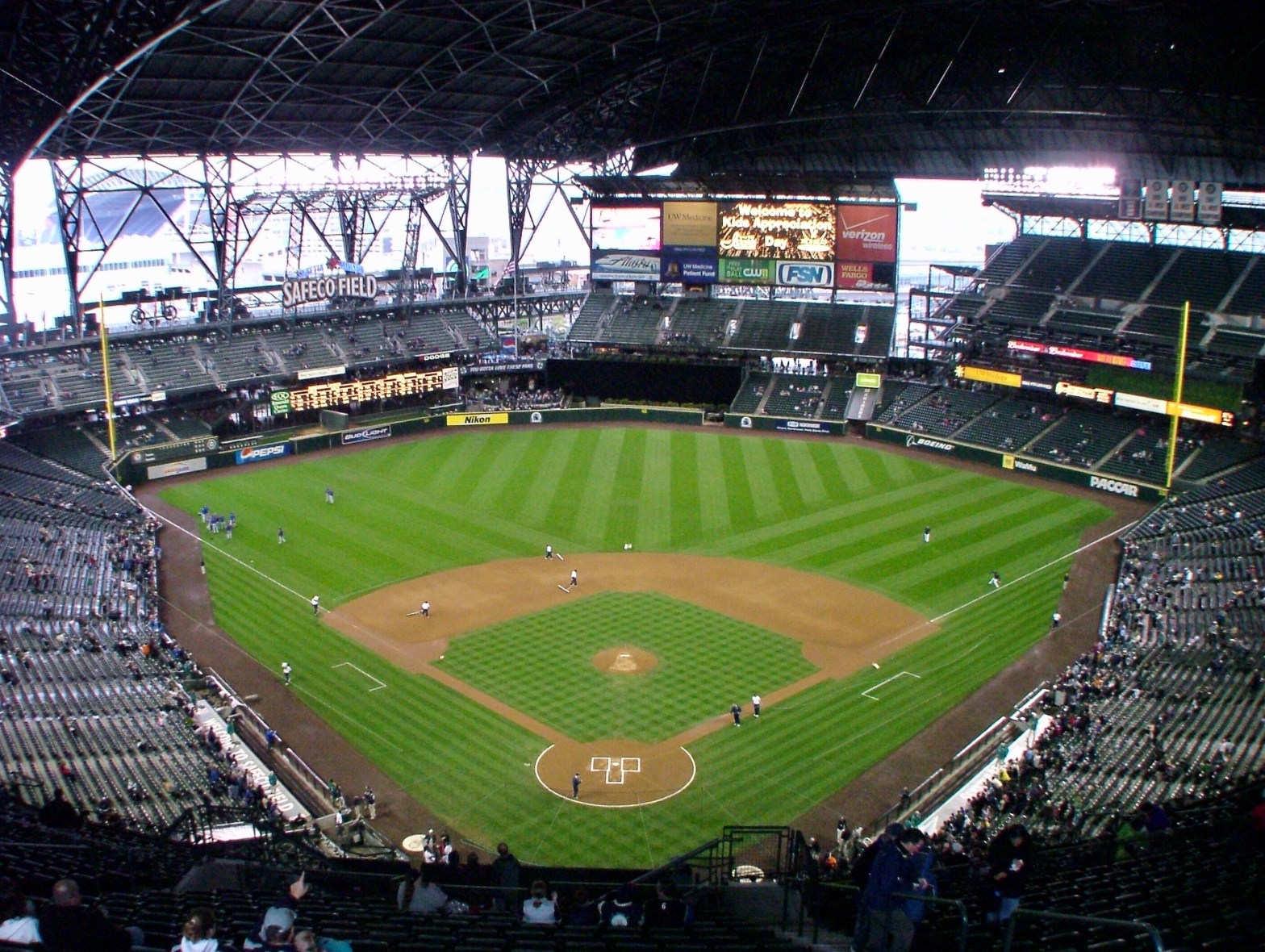
The short drive to the stadium revealed just how cool and raw the day had become, and we spent as little time outside as possible before entering the stadium. Of course, the roof was closed at Safeco, and like most domed stadium, the ballpark looked and felt much bigger than with the roof open. Wandering through the concourse sheltered from the rain, we discovered more fans than I would have expected, considering that the Mariners reached the end of another season without a playoff berth.

Safeco Field from the upper deck behind home plate, looking much larger with the roof closed. (Photo credit: Jeff Hayes)

Starting for the hometown Mariners was 21 year old Felix Hernandez, who was completing his second full MLB season in 2007. Already dubbed King Felix, he showed flashes of the Cy Young Award winner he would become just three seasons later. Opposing the Mariners budding superstar was the Rangers left hander AJ Murray, finishing up an abbreviated rookie season. Slated for a 110 pm start, there was a brief pre game ceremony capping off Fan Appreciation weekend.

Our seats for the game. (Photo credit: Jeff Hayes)

The Rangers touched up Hernandez for a run in the top of the first inning, but the Mariner responded with two runs in the second and one in the third to take a 3-1 lead. With King Felix dealing, it seemed as though he would make that lead stand up. With both pitchers throwing well, the game was fast paced (for baseball). The Rangers scratched out a run in the top of the fifth inning, but that would be the end of the scoring for the visiting Rangers for the 2007 campaign.

“King” Felix Hernandez delivering a pitch against the Texas Rangers at Safeco Field. (Photo credit: Jeff Hayes)

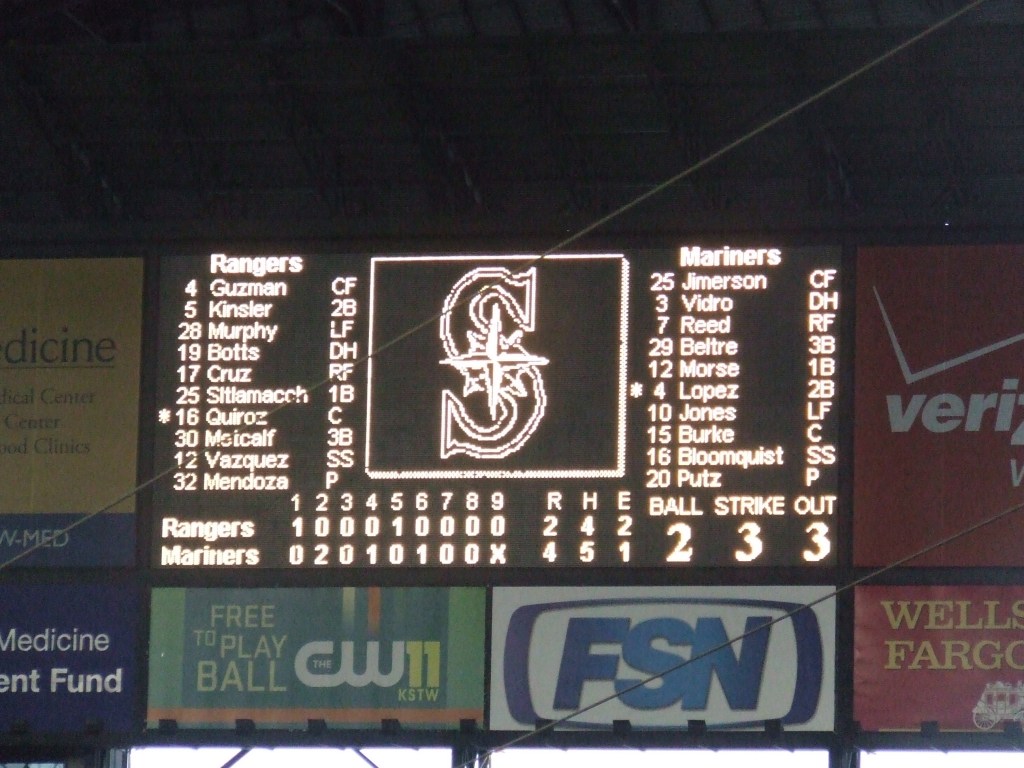
Meanwhile, King Felix continued to mow down the Rangers lineup, taking his start into the ninth inning. One out away from a complete game victory, Hernandez was lifted from the game for the Mariners closer, JJ Putz. By recording the final out, Putz earner his 40th save of the season as the Mariners took the season finale 4-2.

The final score for the final game of the 2007 season at Safeco Field. (Photo credit: Jeff Hayes)

Due primarily to the crisp pitching performance, and to a lesser degree that it was the ultimate getaway day, the time of the game was just under two hours. The Mariners came out for a curtain call, thanking the fans for their support throughout the season. Filing out of Safeco Field into the dreary late September afternoon, I took one last look at the ballpark. Wishing the weather had been more cooperative, I nonetheless found the ballpark to be a great place to see a game, nestled in an interesting and eclectic city I’d always wanted to see. Hopefully during my next visit I’ll be able to see more of Seattle, as well as some of the natural wonders the area has to offer.

Goodbye, Safeco. Hope to see again soon! (Photo credit: Jeff Hayes)