Cleveland OH/Pittsburgh PA, Saturday May 20, 2000

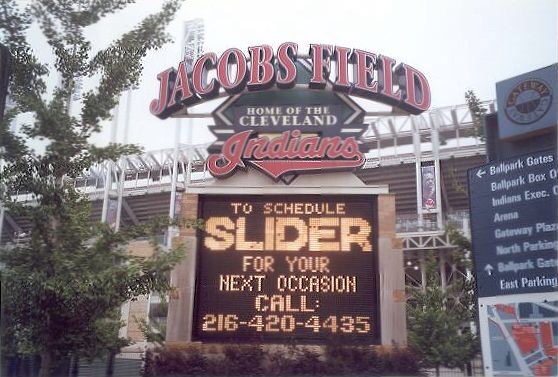
Welcome to Jacobs Field!

Our only baseball trip of 2000 took us to western PA and northeast OH in late May. Since the trip by car was in excess of five hours from central NJ, we drove out to northeast OH on Friday, May 19th, staying just outside of Cleveland for the night.

Saturday, May 20th dawned cloudy and chilly, much cooler than one might expect in late May across northeast OH. With a few hours before the 105 PM contest between the visiting New York Yankees and the hometown Indians, we decided to visit the Rock and Roll Hall of Fame, located adjacent to the southern shore of Lake Erie. Uncharacteristically, we visited the Hall without a camera, so we don’t have a visual record of our visit.

To my delight, the crowd at the Hall was thin, perhaps due to the weather and the relative early hour (as the doors opened at 1000 AM). As a result, we were treated to nearly unobstructed views of the myriad exhibits. Though we moved fairly quickly through the artifacts, we were able to appreciate the history of rock and roll (as well as pop music). Not surprisingly, the Beatles exhibit was the largest in the Hall, and our favorite band, Led Zeppelin, was well represented.

Not wanting to miss an opportunity to explore Jacobs Field, we left the Rock and Roll Hall of Fame after about 90 minutes. Even with the limited time spent there, we were impressed by the museum, and plan to return in the future for a better look. If you are a rock and roll fan, and plan to be in the vicinity of the Hall, leave yourself some time for a visit: you won’t be disappointed.

1. Jacobs Field

Venturing back out in the cool and breezy conditions, we completed the short drive from the Rock and Roll Hall of Fame to Jacobs Field. Had the weather been better, we might have walked the distance, but the cool and damp air ruled that out. We were able to secure parking just across the street from the ballpark in a private lot at a reasonable price.

We performed our typical tour around the outside of the park, but the weather curtailed our walk. Ducking inside the stadium at the home plate entrance, we were greeted by a nearly empty park. Once inside, we had access to the entire seated area, exploring while taking pictures. Unfortunately, the low overcast made the stadium appear drab, but the images capture the conditions on the cool and cloudy early afternoon perfectly.

Jacobs Field from the upper deck behind home plate.

Since both teams were playing well, tickets for the Saturday matinee were scarce, and our seats were located in the last row of the upper deck on the first base side of the field. Just before game time, temperatures hovered in the 40s, and the persistent breeze off the lake made it feel even colder. Despite an announced crowd of 42,000+, the unseasonably cool weather held the actual attendance far below that number.

Starting for the visiting New York Yankees was veteran right hander David Cone. Thus far in 2000, Cone was struggling (with an ERA over 5.50), though he was less than a season from his perfect game in 1999. On the mound for the Indians was left hander Chuck Finley, who was in his first campaign for the Tribe. Each team featured a potent offense, but the combination of good starting pitching and cool weather raised the specter on a low scoring contest.

Indians starter Chuck Finley featured on the cover of the scorecard/magazine.

New York scratched out a single run in the first inning against Finley, then tacked on another run in the fourth inning (with Yankee right fielder Paul O’Neill driving in the run with a single), giving the visitors a 2-0 lead. Meanwhile, David Cone kept the Cleveland bats at bay through the first six innings. Each pitcher worked deliberately, slowing their approaches with runners on base. In spite of the lack of scoring, the pace of the game was glacial, punctuated by the cold and damp conditions.

During the slow play, we were able to get a better feel for Jacobs Field. Dreary weather made the six year old stadium seem drab, with little contrast between the field and the slate gray overcast that seemingly encased it. Because of the conditions, Jacobs Field did not shine, and the lack of fans made the ballpark seem larger than it appeared on TV. Clearly we were not seeing the park at its best. Though the crowd was sparse, one of the more memorable parts of our visit was the persistent drumming in the left field stands. With a typical crowd, the drumming may not have been as noticeable, but with little else happening in the largely empty stadium, it echoed almost to the point of distraction.

The view from our seats. Note that the tops of the buildings were obscured by low clouds.

Cleveland broke through against David Cone in the bottom of the seventh inning, as Richie Sexson led off the frame with a solo home run. Scoring another run in the seventh, the Indians tied the game, while simultaneously knocking the Yankees starter out of the game. Each bullpen then kept the game tied heading into the bottom of the ninth inning. Yankees Jeff Nelson surrendered four walks during the frame, forcing in the winning run with two outs to give the Indians a 3-2 victory.

Despite the low scoring affair, the nine inning contest took three hours and 38 minutes to complete, which seemed even longer in the cold and wind. We filed out Jacobs Field quickly, as we planned to attend a game at Three Rivers Stadium in Pittsburg that evening. Disappointed that we didn’t get to experience the ballpark in better weather, we would have to return in the future to get a better feel for the stadium and environs.

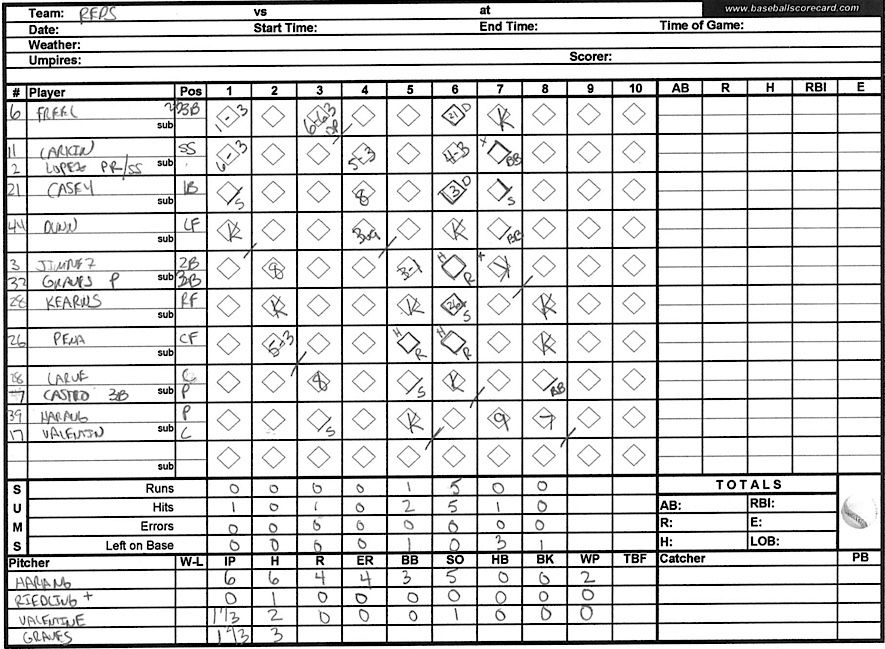
My scorecard for the game

2. Three Rivers Stadium, Pittsburgh PA

Google Maps depiction of the route from Cleveland to Pittsburgh.

Spending more time at Jacobs Field than expected, we were left with about two and one-half hours to get to Three Rivers Stadium in Pittsburgh. Though it would be tight, we were optimistic that, with light traffic, we would arrive before the first pitch at 710 PM. However, events would conspire to make arriving on time impossible. A bit more than an hour into the trip, we encountered thunderstorms that hampered our progress. As we got closer to Pittsburgh, traffic slowed to a crawl.

Finally, we reached the parking lot next to the ballpark, located on the north shore of the Allegheny River (north of downtown Pittsburgh). Arriving well after the first pitch, we parked in a dark area under an overpass of Interstate 385. While there were plenty of fans in the area, it seemed fairly remote, and I had an uneasy feeling about leaving the car there.

Because we arrived in the second inning, we had no time to wander and explore as we normally would at a new stadium. Instead, we rushed to our seats to enjoy the game. As we travelled from Cleveland to Pittsburgh, we went from early spring weather to early summer weather, as very warm and humid conditions greeting us at Three Rivers Stadium. While there were storms in the area, they managed to avoid us during the game.

Unfortunately, we did not take pictures at the stadium, as we left the camera in the car in our haste. Three Rivers Stadium was a typical multipurpose stadium, nearly identical to Veterans Stadium in Philadelphia. This season would be the last for the Pirates at this ballpark, and its condition seemed to reflect that fact. However, it was a pleasant place to see a Saturday night ballgame.

Pittsburgh hosted the St Louis Cardinals, who scored early and often. St Louis scored six runs in the first four innings, the scored 13 runs in the last three frames, on the way to a 19-4 drubbing of the hometown Pirates. With the game out of hand for the Pirates, they sent catcher Keith Osik to the mound to pitch the top of the ninth inning. As might have been expected, Osik fared poorly, surrendering five runs on five hits. This outing marked Osik’s second MLB pitching performance. In 1999, he also pitched an inning during a blow out, and his performance then was only slight better than this night.

Even with the high scoring, the game took less than three hours, a stark contrast to the affair in Cleveland. Fortunately, my car was still there following the game, and because of the late game finish, we stayed at nearby a nearby hotel, driving home Sunday morning.

Cincinnati Ohio, Saturday September 18th, 2004

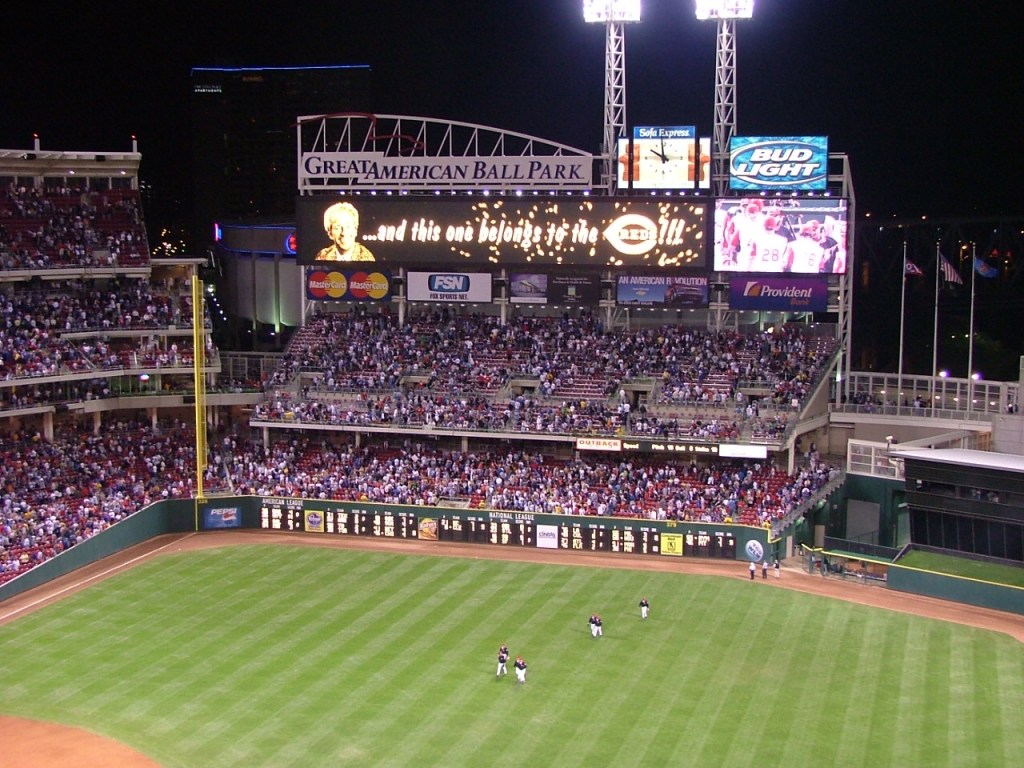
The Great American Ballpark from the right field line. (Photo credit: Jeff Hayes)

1. New Jersey to Cincinnati

Our second baseball trip of 2004 took us to Cincinnati, Ohio to see the Great American Ballpark, the new home of the Reds. From central New Jersey, the drive to Cincinnati was deemed to too long for a two day visit, so we decided to fly. The flight was just two hours, so flying out of the Newark-Liberty Airport in the early afternoon brought us to Cincinnati a couple of hours before the first pitch, scheduled for 710 pm EDT.

After landing at the airport, we picked up our rental car and headed to the hotel to drop off our bags. Since the Cincinnati airport is actually in Covington, Kentucky, we stayed at a hotel near by, rather than in Cincinnati itself. Following a 15 minute drive, which took us across the Ohio River from Kentucky into Ohio, we arrived at the ballpark. Great American Ballpark is located along the banks of the Ohio River, part of a larger complex which includes Paul Brown Stadium (home of the NFL’s Bengals) and the Heritage Bank Center. Not surprisingly, parking was ample throughout the complex, and after securing parking, we walked up the stadium.

2. Great American Ballpark

The view from our seats. (Photo credit: Jeff Hayes)

Having arrived about an hour or so before game time, we skipped out normal walk around the outside of the stadium and entered the ballpark (as we would have a better opportunity to explore the area the next afternoon). Soon after walking into the stadium from the centerfield gate, we discovered the best feature of the new ballpark (which opened just the year before): the view of the Ohio River.

Located adjacent to the river, the park was constructed to take full advantage of the spectacular view of the river, as well as the structures across the river in Covington and Newport. Since the game time was about 30 minutes before sunset, the encroaching darkness diminished the view to some degree, but we would get a much better look during the afternoon contest the next day.

The opponent for the hometown Reds this evening was the Chicago Cubs. With the St Louis Cardinals running away with the NL Central in 2004, the Cubs were still in contention for the wild card spot, but the Reds were limping toward the end of a disappointing campaign. Starting for the visiting Cubs was future Fall of Famer Greg Maddux. The three-time Cy Young award winner was not quite the pitcher he was just a few years earlier, but was still effective and an important part of the Cubs rotation as they pushed for a playoff spot.

Future Hall of Famer Greg Maddux delivering a pitch at the Great American Ballpark. (Photo credit: Jeff Hayes)

Aaron Harang took the ball for the hometown Reds. For the 6 foot 7 inch right hander, 2004 was his first full year in the Reds rotation. With both pitchers having mediocre seasons (especially Maddux), we were prepared for an offensive display from both teams.

Clear skies, light winds and comfortable temperatures greeted us as afternoon faded into evening. After picking up a baseball dinner, we went in search of our seats. Though the Reds had been out of playoff contention for some time, there was a sizable crowd for the Saturday evening contest. Consequently, our seats for the game were located down the right field line in the middle deck. Further from the action that I would have liked, but the great weather made up for the distance.

Great American Ballpark at night. (Photo credit: Jeff Hayes)

Despite my expectations of an offensively dominated contest, starting pitching dominated the first half of the game, which each team scoring just a single run in the first five innings. However, as often happens in MLB games, both pitchers struggled as they made their way through the lineup for the third time. The Cubs scored three runs in the top half of the sixth inning, including a home run by LF Moises Alou. Not to be outdone, the Red erupted on Greg Maddux in the bottom half of the inning, with C Willy Mo Pena hitting his second home run of the game, giving the Reds a 6-4 lead.

Sammy Sosa batting fifth for the Cubs at the Great American Ballpark. (Photo credit: Jeff Hayes)

A solo home run by the Cubs’ Sammy Sosa in the top of the eighth inning brought Chicago within a run. Not quite the slugger he was in the late 1990s and early 2000s, when he was hitting 60+ home runs a year, Sosa was still a force to be reckoned with, exuding the same enthusiasm for the game as always.

Sosa’s home run ended the scoring, as the Reds bullpen shut down the vaunted Cubs offense to secure a 6-5 Reds victory. Despite the scoring, the game was completed in two hours and 45 minutes. My initial impression of the Great American Ballpark was positive, but we would get a better chance to see the ballpark with the mighty Ohio River as a backdrop during an afternoon contest the next day.

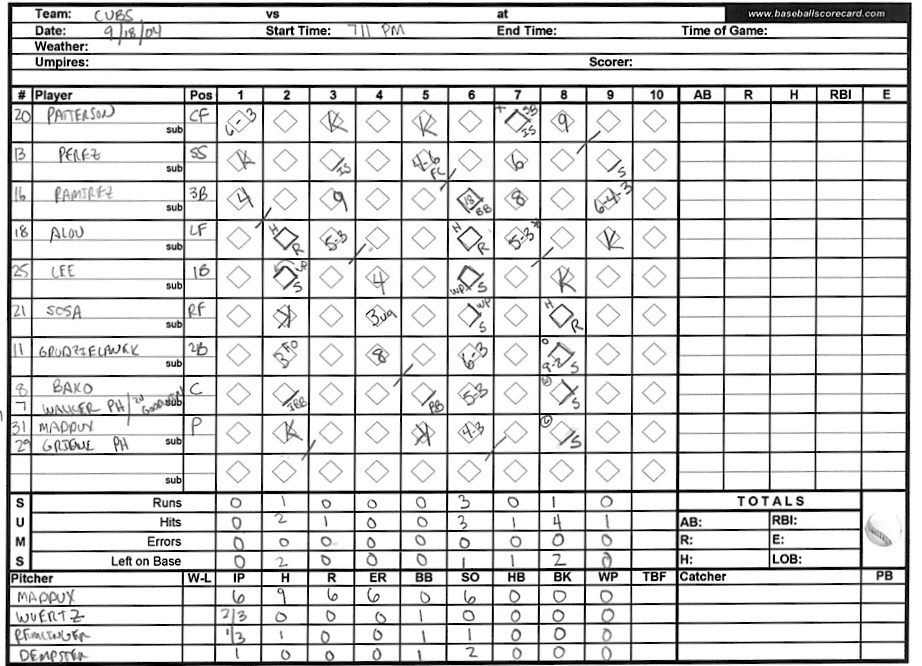
My scorecard for the game.

New Jersey/Canton OH/Detroit MI September 10-11th 2009

Google Maps showing the seven hour plus drive from NJ to Canton OH.

1. New Jersey to Canton, Ohio September 10th 2009

Our lone 2009 MLB trip took us from New Jersey to Detroit, Michigan by way of Canton, Ohio from September 10th through the 13th. The first day of the trip (Thursday, September 10th) was dedicated to the drive from central New Jersey to Ohio. We assumed that we could not expect to get from New Jersey to Detroit, Michigan in one day (though we did exactly that in 1999), so we consciously chose Canton as a destination. Our plan was to stay overnight and visit the Pro Football Hall of Fame Friday morning, September 11th, before heading to Detroit for a game that evening.

The trek itself was rather non-descrip, driving along Interstate 76 for the entirety of the state of Pennsylvania. That route took us from near Philadelphia just after the morning commute across the Susquehanna River in Harrisburg (the state capital), where we could see the nuclear reactor cooling towers of the Three Mile Island facility. Following a short stop for lunch, we got back on the road.

Between Harrisburg and Pittsburgh Pennsylvania, we witnessed the heartland of America. On one side of the interstate, we saw acres and acres of corn, which was mature and ready to be harvested. On the other side, we saw acres and acres of cows standing and laying among the rolling hills. From that slice of Americana, we passed north of Pittsburgh before crossing into Ohio. After about an hour, we reached Canton, checked into our hotel, and ate a quick dinner before settling in after a long day of driving.


2. Pro Football Hall of Fame, Canton Ohio, Friday September 11th 2009

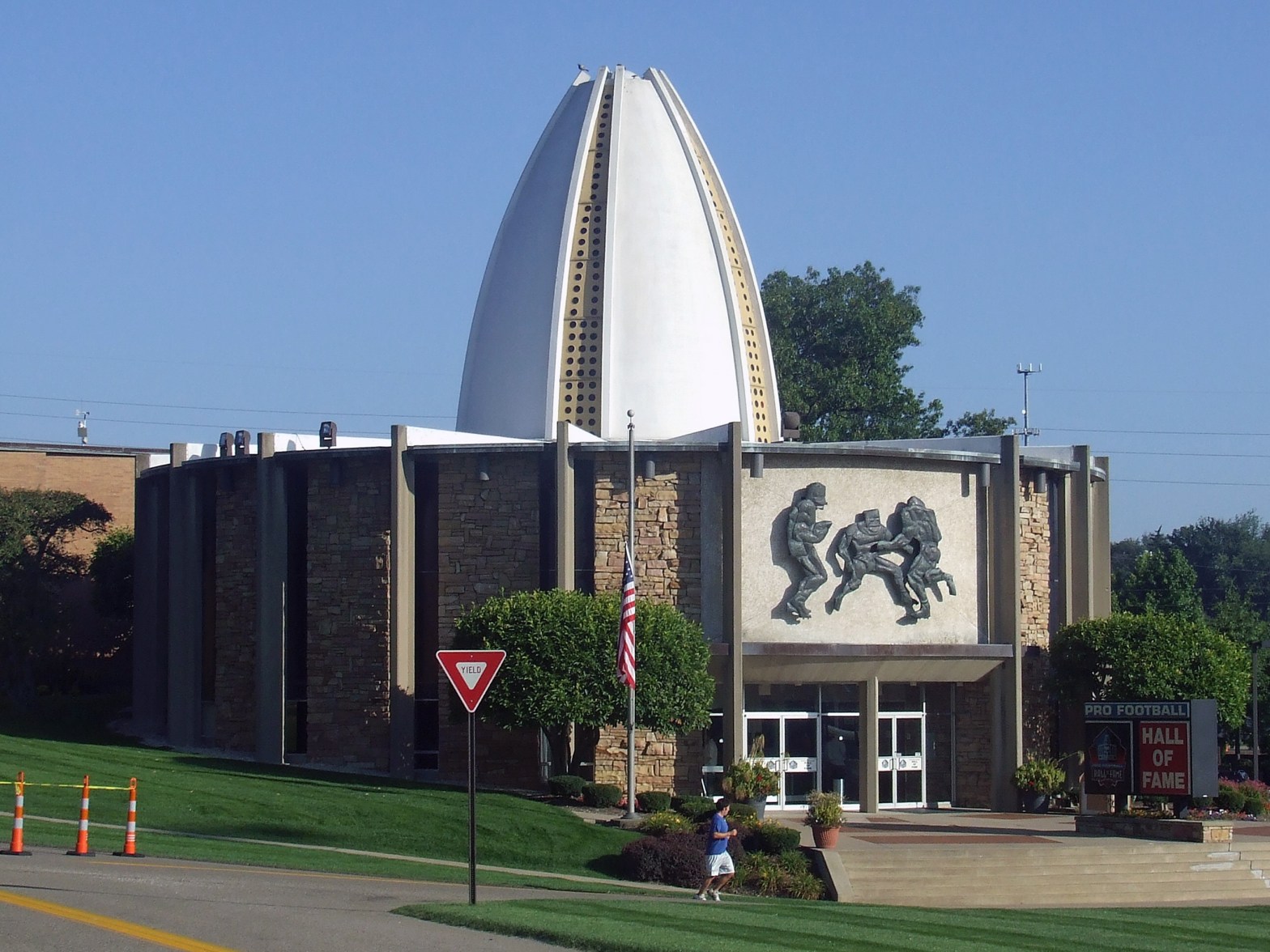
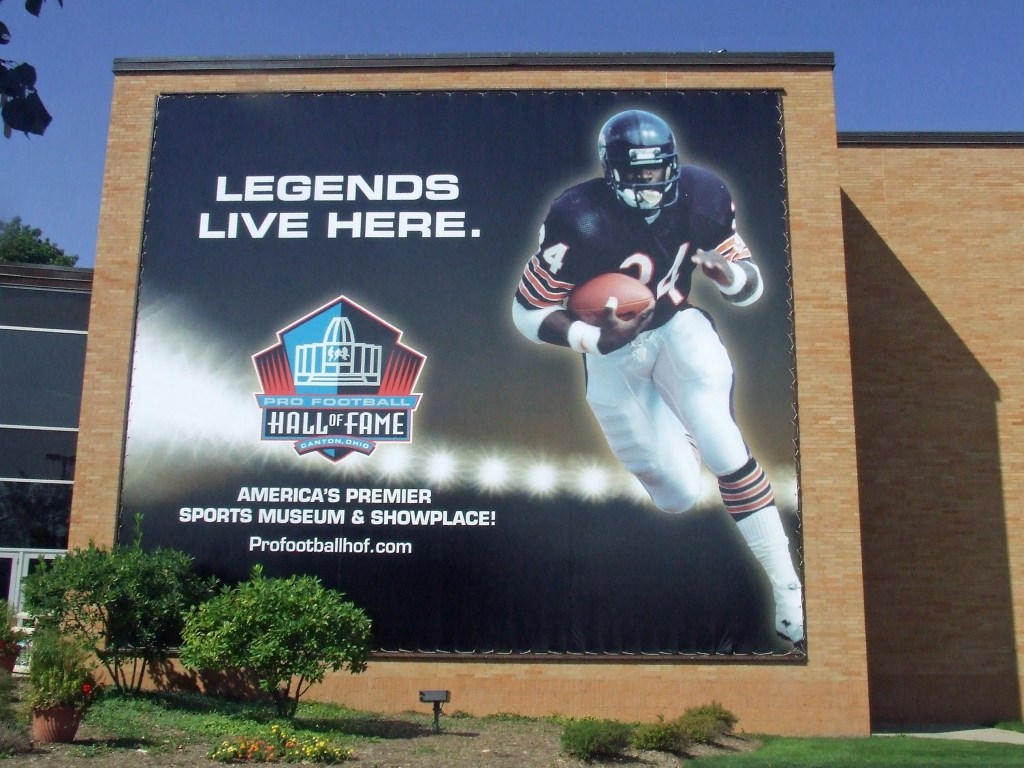
Pro Football Hall of Fame, Canton OH. (Photo credit: Jeff Hayes)

Checking out of our hotel on the cloudless, relatively cool morning in Canton, we headed for the Pro Football Hall of Fame. Arriving about the time the doors opened at the Hall, we were able to secure parking adjacent to the museum, rather than have to parking offsite and catch a shuttle bus. Having gotten there early, we had much of the Hall to ourselves, save a crew filming for a local or national news broadcast.

Our visit began in the Hall of Fame Gallery. Home of the plaques describing the current Hall members, it was reminiscent of the busts at the Baseball Hall of Fame. Since the Pro Football Hall of Fame elects new six entrants each year, there are many more members of the Pro Football Hall. Examining each plaque consumed a considerable amount of time, especially since there were a large number of members from the early days with whom I was not familiar.

The Dallas Cowboys exhibit in the NFL Gallery at the Pro Football Hall of Fame. (Photo credit: Jeff Hayes)

Our next stop was the Hall theatre, which showed a loop of famous games and clips. The loop was interesting, but disappointingly short. Following the main presentation, we wandered into the NFL Gallery. The Gallery contained exhibits for each NFL team, as well as multimedia displays telling the history of the game. For the casual and die hard fans alike, this gallery contained the heart and soul of the game, stepping us through time as the game evolved.

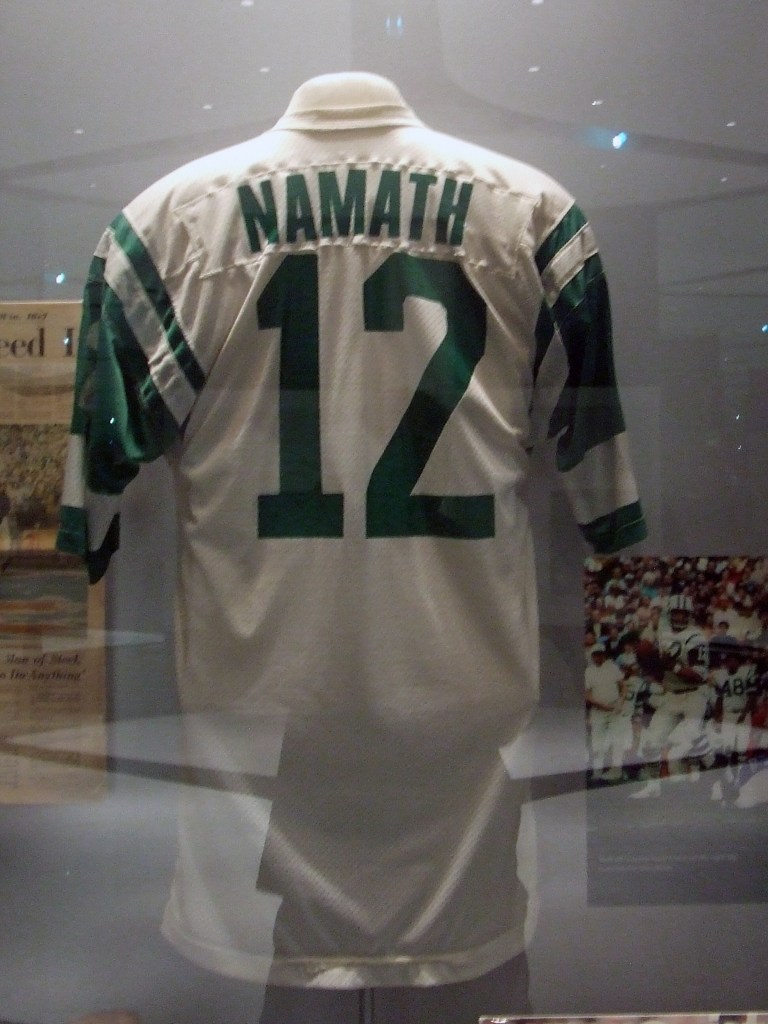
In addition to the history of the NFL, the gallery chronicled the American Football League (AFL). Founded in 1960 as a rival league to the NFL, the AFL featured a more wide open offensive game, a sharp contrast to what the NFL had to offer. Despite a more exciting game, the AFL was widely derided among football fans as inferior to the NFL. However, the AFL signed Joe Namath out of Alabama in 1965. Shocked by the signing, the NFL pursued merger talks with the AFL shortly thereafter.

The signing of Joe Namath in 1965 brought instant credibility to the American Football League. (Photo credit: Jeff Hayes)

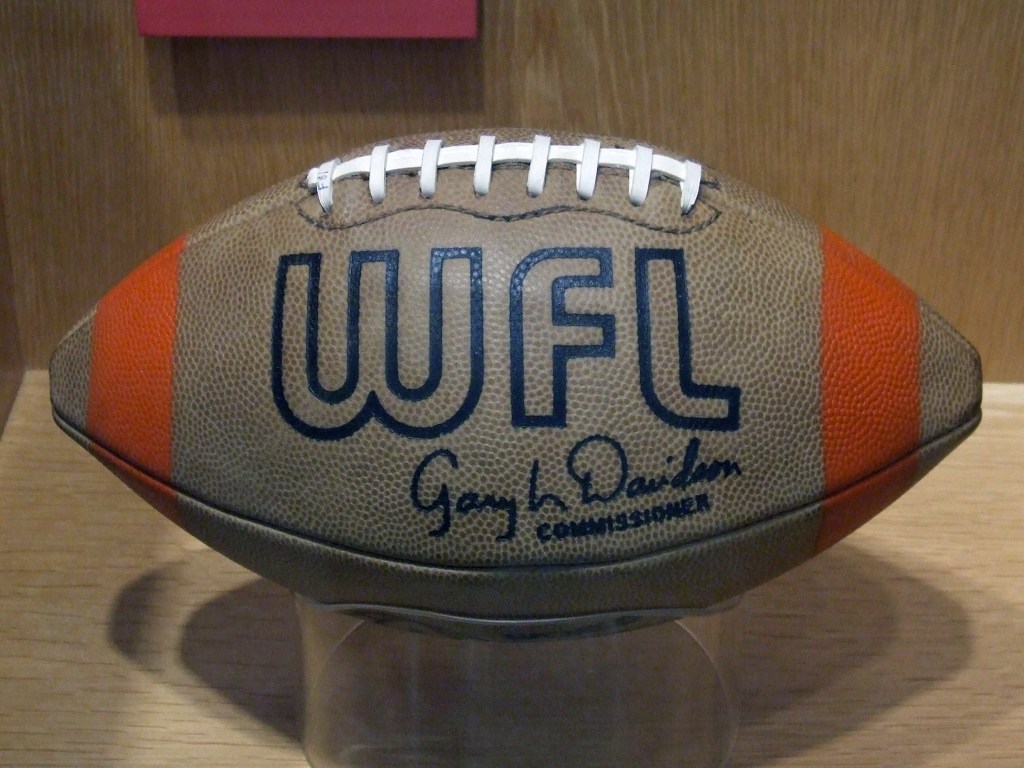
To my surprise, the gallery contained a small exhibit dedicated to the World Football League (WFL). Developed in the mid 1970s as a direct rival to the NFL, it featured a team in Hawaii, and encouraged NFL stars (such as Larry Csonka and Paul Warfield of the Miami Dolphins) to jump to the new league. Featuring key rule differences, the new league enjoyed a fairly successful first season, but the lack of a national TV contract and overzealous spending doomed the WFL before the end of the second season.

An official WFL football, featuring orange stripes, ostensibly for better visiblity during night games. (Photo credit: Jeff Hayes)

Perhaps the most interesting features in the gallery were the wax figures of NFL legends. Life sized versions Jim Brown, Walter Payton and Lynn Swann were among the greats immortalized in the wax museum. Finally, we walked through the Super Bowl gallery, which featured multi media displays of each Super Bowl. Being New York Jets fans, we were attracted to the Super Bowl III exhibit, as the Jets beat the heavily favored Baltimore Colts. That victory legitimized the AFL in the eyes of many NFL fans, and represents the lone Jets Super Bowl appearance.

Walter Payton immortalized in wax at the Pro Football Hall of Fame. (Photo credit: Jeff Hayes)

All told, we spent more than two and one-half hours in the Pro Football Hall of Fame, including the obligatory visit to the Hall store for souvenirs. Though I consider myself a knowledgeable pro football fan, I learned quite a bit about the game, and enjoyed the exhibits greatly. If you are just a casual fan, and you find yourself in the Canton, Ohio area, you owe it to yourself to visit the Hall. You won’t be disappointed.

Goodbye Pro Football Hall of Fame. Hope to see you again soon. (Photo credit: Jeff Hayes)

3. Canton, Ohio to Detroit Michigan/Comerica Park

Comerica Park, Detroit MI. (Photo credit: Jeff Hayes)

Following lunch near the Pro Football Hall of Fame, we hit the road for Detroit, Michigan in order to catch the game that evening against the Toronto Blue Jays. The 210 mile, three and one half our trip took us south of Cleveland, Ohio around the western edge of Lake Erie into the southeast portion of the lower peninsula of Michigan. The trip itself was uneventful, with generally light midday traffic working in our favor.

We reached our hotel south of Detroit off Interstate 75 a couple of hours before the gates opened at the ballpark, allowing us time to relax before the game. Approaching the hotel, our GPS unit informed us that the hotel was a left turn off the interstate, though visually we could see that the hotel was actually to the right of the exit. Back then, the GPS units did not often update their maps, and clearly this unit was out of date.

Arriving at Comerica Park about the time the gates opened, we had little difficulty finding parking. There were five main parking lots around the ballpark (including parking near Ford Field, located across the street), reasonably priced at about $10. Had the main lots been full, there are many parking options within a short walk (generally less than one-half mile) of the stadium, with varying prices.

The Renaissance Center from just outside of Comerica Park. (Photo credit: Jeff Hayes)

Like many newer MLB ballparks, Comerica Park was located downtown. Walking around the park, we glimpsed the colossal Ford Field across the street. The domed stadium (home to the NFL Lions )dominated the skyline in this portion of Detroit, seemingly much larger than Comerica Park. On the other side of the stadium, we could see the Renaissance Center, located on the banks of the Detroit River.

The environment surrounding the ballpark was unexpected. Stories of Detroit has me expecting a war zone, yet downtown Detroit had a distinctive architecture that held a charm that exceeded my expectations. Having caught my interest, we would have to explore downtown Detroit further.

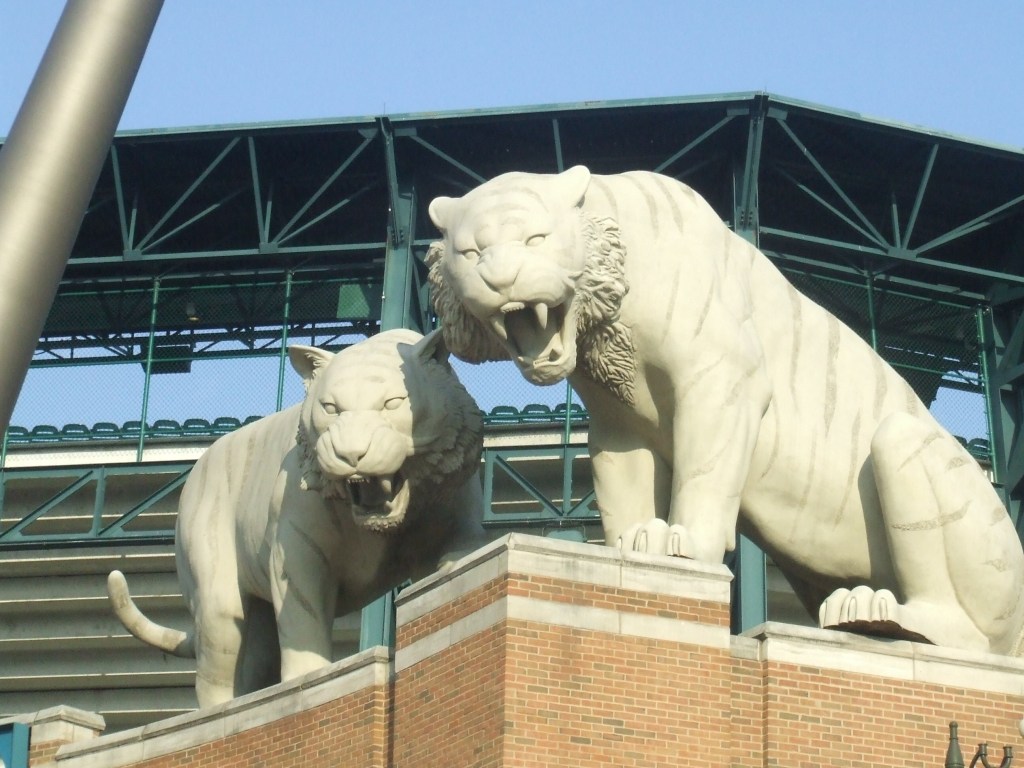
Stone tigers lurking over Comerica Park. (Photo credit: Jeff Hayes)

Since we were not sure that would would arrive in Detroit for the start of the 705 pm game, we did not obtain the best seats possible for the game. Instead, we sat in right center, just to the left of home plate. The view gave us a great view of the stadium, as well as an unobstructed look at home plate.

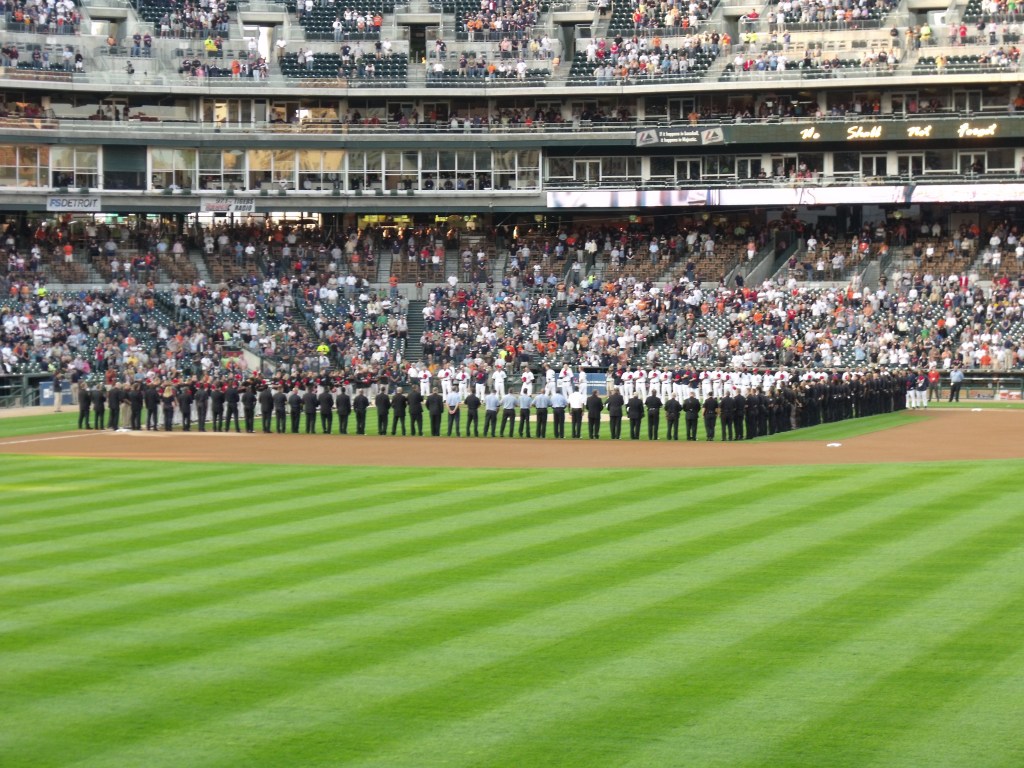
The view from our seats of the 9/11 ceremony prior to the start of the game. (Photo credit: Jeff Hayes)

Being September 11th, the Detroit Tigers held a short but dignified ceremony marking the eighth anniversary of the attacks in 2001. To be honest, I hadn’t given the date much thought (outside of a cursory acknowledgement), so the somber ceremony caught me somewhat by surprise. Following a moment of silence to remember the fallen on that fateful day, the players took the field, with the first pitch thrown at 707 pm.

The Tigers opponent that evening was the Toronto Blue Jays, a regional rival, even though the teams are in different divisions in the American League. The Tigers held a five and one-half game in the AL Central over the Minnesota Twins, while the Blue Jays were mired in fourth place in the AL East, 26.5 games behind the division leading New York Yankees. It was against that backdrop that the Tigers sent left hander Nate Robertson against the Blue Jays starter, left hander Nate Tallet.

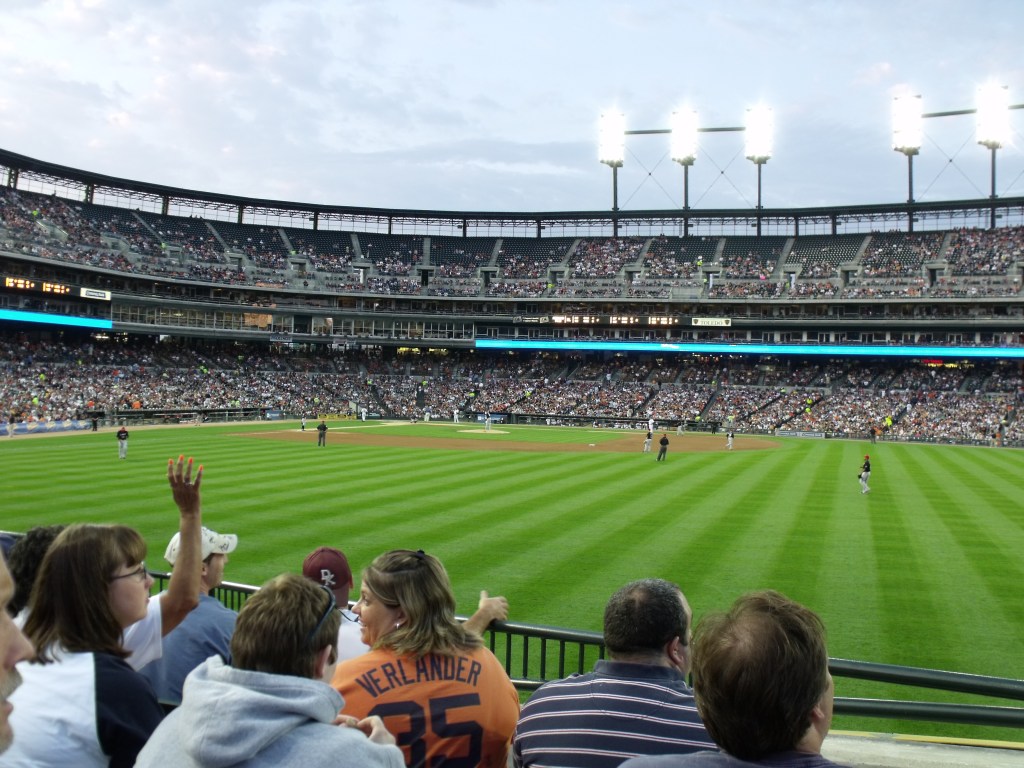
This is how the action looked from our seats. The game was better attended that I expected, perhaps since the teams form a regional rivalry. (Photo credit: Jeff Hayes)

With the game featuring back of the rotation starters struggling through their 2009 campaigns, the circumstances seemed ripe for a slugfest, as both teams had power in their lineups. However, the score was close through the first half of the game, with the teams trading runs through the first five innings.

As the evening blended into evening, the wind died down, leading to comfortably cool conditions for the middle of September. With the Blue Jays protecting a 3-1 lead entering the seventh inning, the teams both scored three times in that frame, which ended the scoring for the contest.

A tiger with laser beams for eyes, prowling just to the left of the main scoreboard at Comerica Park. (Photo credit: Jeff Hayes)

Toward the end of the game, a light breeze off Detroit River brought a light fog to Comerica Park. The fog allowed for an amazing effect on the laser eyes of the bengal tigers perched on the scoreboard. The scattered light from the tiger’s eyes gave it a more menacing appearance. Fortunately, the fog remained light enough not to affect play, as the Blue Jays took the first game of the three game weekend set 6-4.

Following the game, we experienced little difficulty exiting the area before heading back to the hotel to relax after a long day that started with football and ended with baseball.