San Francisco, CA Sunday September 8th 2002

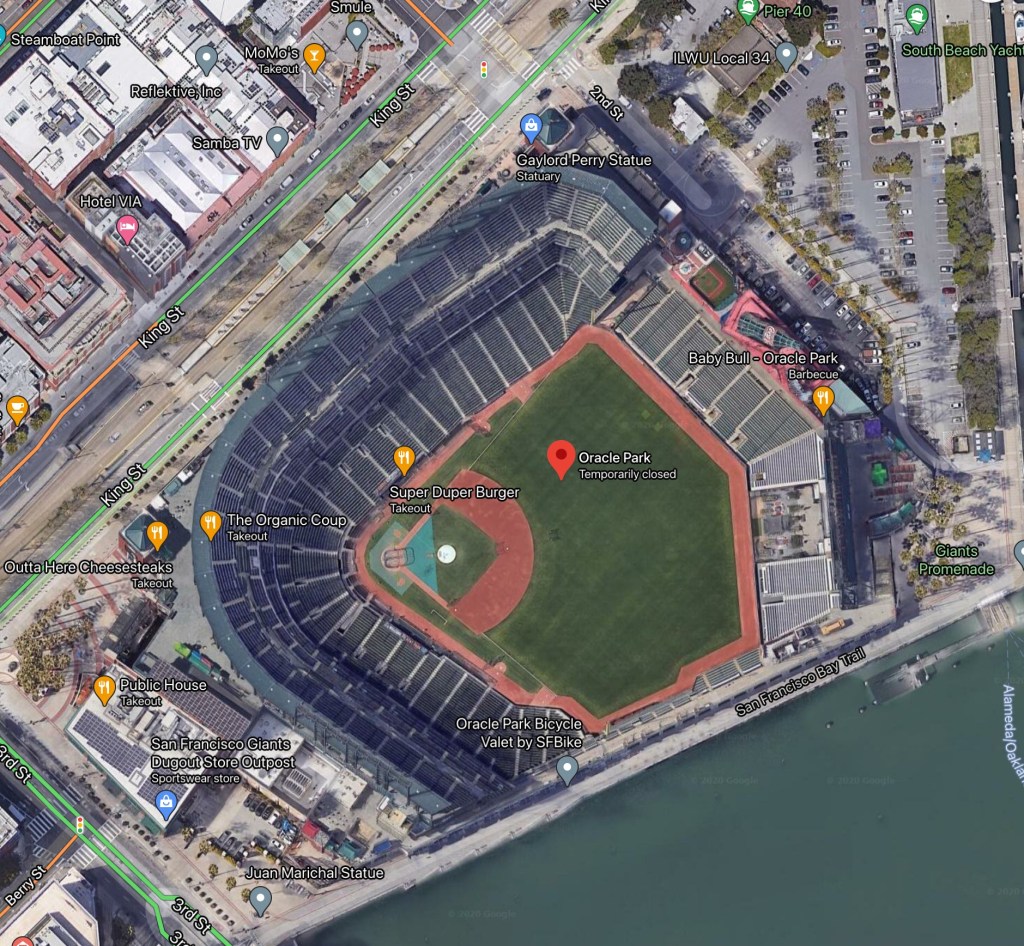
Google Maps image of Pac Bell Park (now known as Oracle Park)

While on vacation in San Francisco, my brother and I took in a Sunday afternoon baseball game at Pac Bell Park (now known as Oracle Park), where the Giants hosted the visiting Arizona Diamondbacks. From our hotel near Union Square, we decided to walk to Pac Bell Park, since the weather was crystal clear with temperatures in the 60s. Our walk took about 25 minutes (covering about one and one-quarter miles), mostly on 3rd Street. For those old enough to remember, we walked a path that was part of the famous car chase in the movie Bullitt (1968).

Though we chose to walk, there was plenty of parking available, almost all of which was across Mission Bay on 3rd Street (about one-quarter of a mile from the ballpark). Upon arriving at Pac Bell Park, we explored the area immediately surrounding it. Our first stop was McCovey Cove, located just beyond the right field wall. Famous for home run balls that plunk into the Cove, it was named for Giants great Willie McCovey, a power hitting left hand batter who would have deposited many baseballs into it, had he played in Pac Bell Park. Though there was nobody in the cove when we passed, it is common for people in kayaks to hang out there, awaiting baseballs to retrieve.
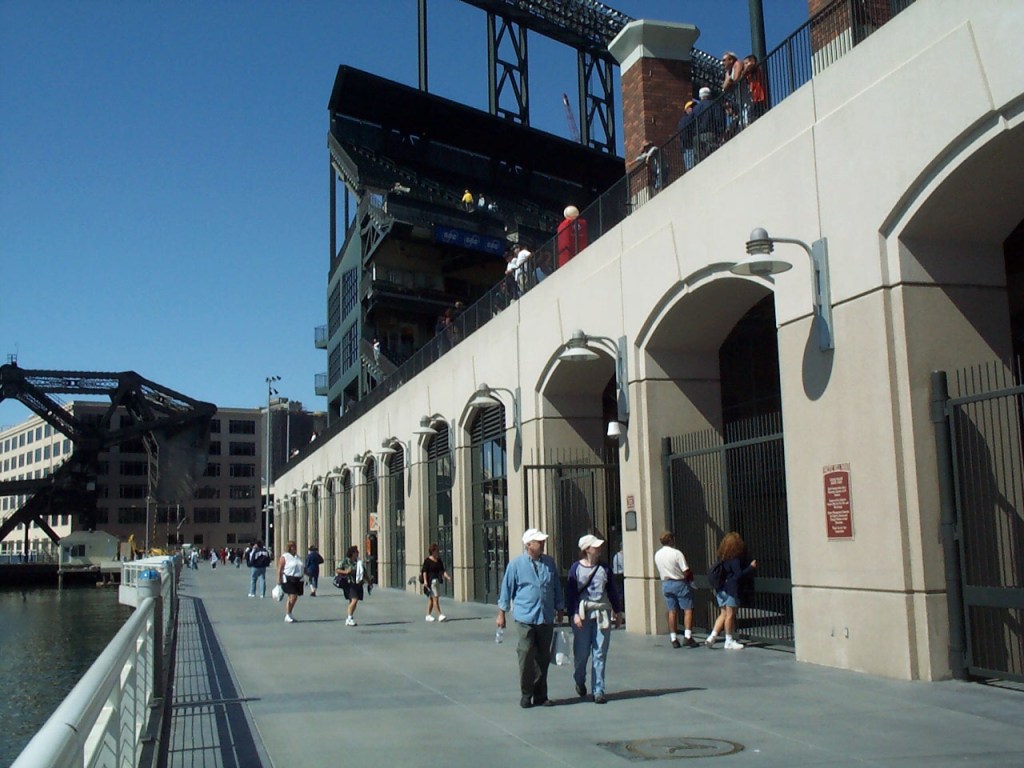
Looking along the walkway adjacent to McCovey Cove. (Photo credit: Jeff Hayes)

Walking past the centerfield wall, we arrived at the South Beach Yacht Club. Massive in size, there were more than 100 yachts moored at the club, though there did not appear to be many sailing before noon. Continuing our exploration, we wandered along Pier 40 before making our way back toward the stadium. While the Mission Bay area had some points of interest within walking distance of the park, we decided to invest our time wandering the inside of Pac Bell Park before game time.
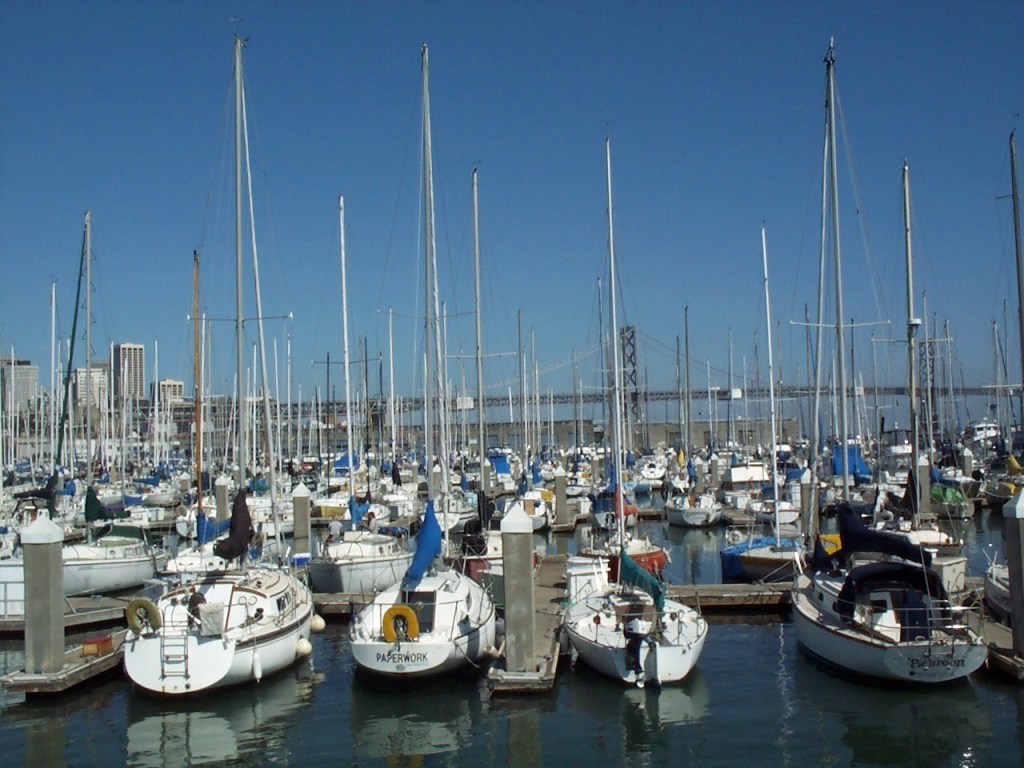
There was a large mix of sailboats and yachts moored in the South Beach Yacht Club. (Photo credit: Jeff Hayes)

Entering the ballpark through the gate behind home plate, we were greeted by a nearly deserted stadium. We arrived about 90 minutes before game time, and while there were a few fans milling around outside the ballpark, there were almost none inside. That left us plenty of time and room to explore. Moving toward centerfield, we encountered something I did not expect. Little Giants Park, a 50 foot by 50 foot replica of Pac Bell Park, was designed for young people to hit whiffle balls and run the bases. Designed for kids 42 inches or shorter, playing in the “ballpark within the ballpark” would have been a dream come true for a much younger me.

Little Giants Park, located beyond the left field wall at Pac Bell Park. (Photo credit: Jeff Hayes)

Just to the left of the Little Giants Park was the iconic Coke Bottle, located beyond the left field wall. With a length of 47 feet, the bottle rises up behind the stands in left field, and is home to two slides, which fans 14 and under use to “slide” into home plate at the base of the bottle. Located next to the Coke Bottle is the Glove. Created as a replica of 1927 four fingered glove used by the New York Giants, it is instantly recognizable as soon as you enter the ballpark. Thirty two feet wide and 26 feet tall, the glove lies about 501 feet from home plate, and a prodigious blast would be required to reach it.

The Fan Deck containing both the Coke Bottle and the Glove, two prominent features in Pac Bell Park. (Photo credit: Jeff Hayes)

Crossing over the walkway located on the right field fence, we were treated to a great view of Mission Bay, and the Navy vessels moored in the Port of San Francisco. As fans filtered into the ballpark, the walkway became quite popular, which caused us to move along. We headed toward the home plate area to get a picture of the stadium from the upper deck. Sunshine reflecting off Mission Bay gave the water a light blue hue behind the centerfield fence.

Working our way back along the right field line, we ducked into the concourse is search of a baseball lunch. While there was quite a variety of cuisine choices available, we opted for more standard fare. With snacks and drinks in hand, we went in search of our seats.
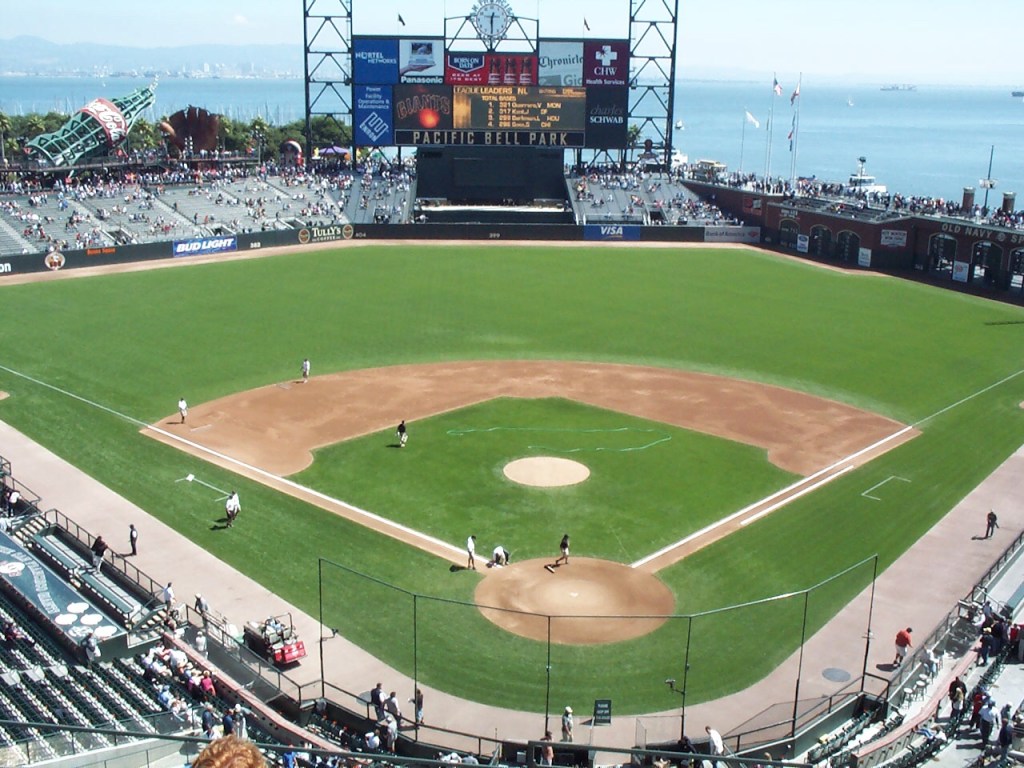
Pac Bell Park from behind home plate. (Photo credit: Jeff Hayes)

Today’s game between the visiting Diamondbacks and the hometown Giants had implications for the playoff race. Arizona was leading the NL West, with the Giants in third place, five and one-half games behind. Even without the added interest in the Sunday matinee, Pac Bell Park routinely sells out, which made obtaining good seats for the game very difficult. We settled for seats down the right field line in the lower level, adjacent to the Diamondbacks bullpen (unlike most new ballparks, the bullpens at Pac Bell were located down the left and field lines).
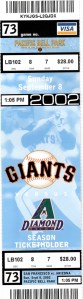
A ticket from the game.

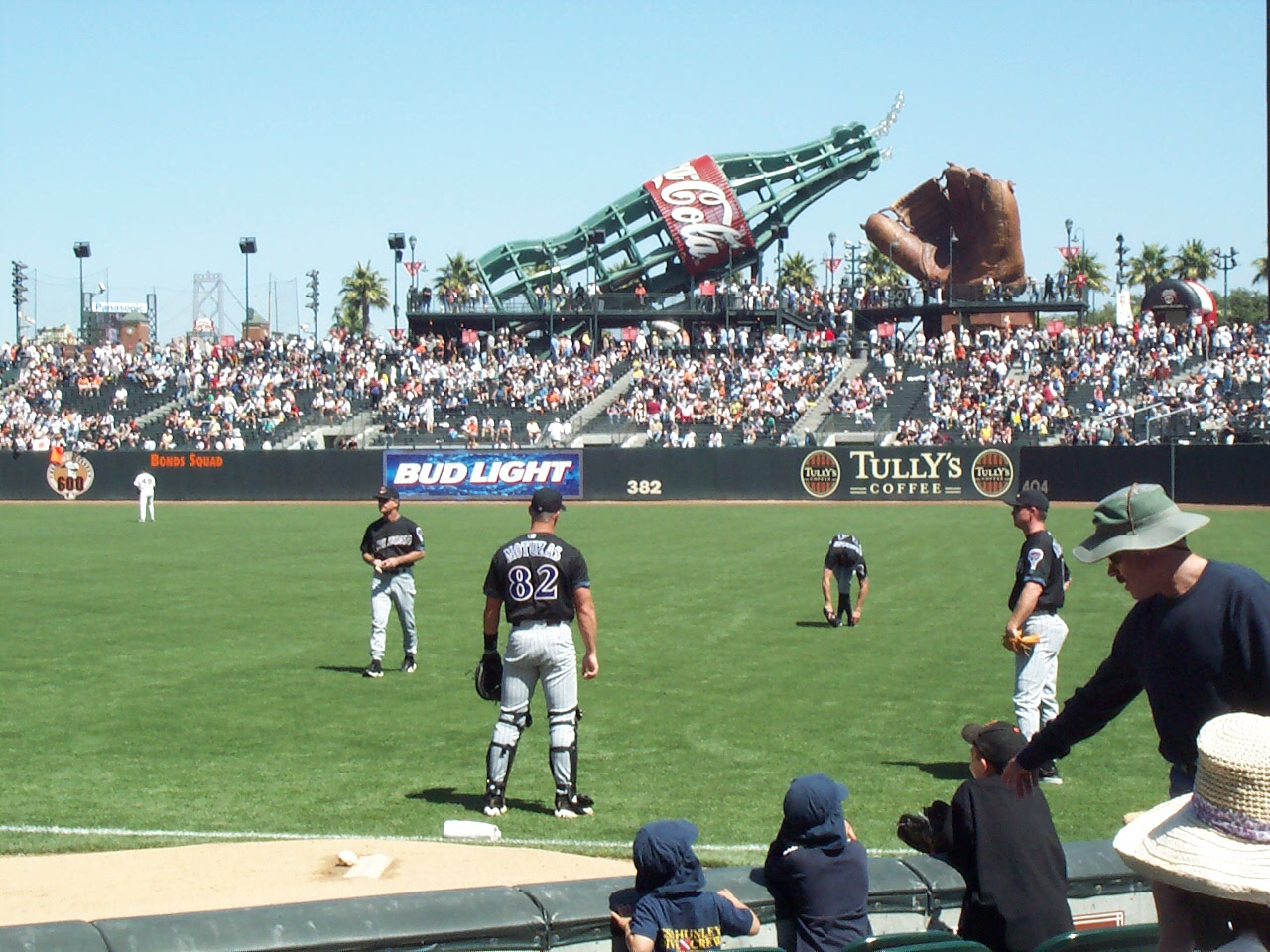
Though not ideal for a good look at the home plate action, our seats did give us a great view of the remainder of the stadium. Pac Bell Park, with three decks of seats from foul line to foul line, as well as bleachers in left and center field, had a capacity of about 41,000, and a full house was expected this afternoon. Open spaces in the outfield (except for the Coke Bottle, Glove and modestly sized video board) made the stadium feel uncluttered, with great sight lines throughout the park.

The view from our seats, with a great look at the Coke Bottle and the Glove. (Photo credit: Jeff Hayes)

Starting for the visiting Diamondbacks was left hander Brian Anderson. Arizona’s fifth starter, Anderson was struggling through the 2002 campaign, which was sandwiched in between good 2001 and 2003 seasons. On the mound for the hometown Giants was right hander Russ Ortiz, the number two starter in a respectable but unspectacular San Francisco rotation. On the surface, this seemed to be a pitching mismatch after favoring the Giants, in what was an important game for both teams.

Arizona scored a run in the top of the first inning, employing “small ball” to take an early lead. The starters traded scoreless frames until the bottom of the fourth inning, when Barry Bonds led off the bottom of the inning with a solo home run. Fittingly, the home run left Pac Bell Park, splashing down in McCovey Cove. Though we didn’t see it firsthand, a replay of the home run on the video board showed fans in kayaks on the Cove frantically scurrying for the ball. Plating another run in the bottom of the inning, the Giants took a 2-1 lead.

A view of the right field fence, McCovey Cover beyond, and the Port of San Francisco in the distance. (Photo credit: Jeff Hayes)

Diamondbacks starter Brian Anderson’s afternoon ended after the Giants scored in the bottom of the fourth inning, and was followed a quartet of relievers that kept the vaunted Giants lineup in check. Meanwhile, Giants starter Russ Ortiz was cruising, allowing only the one run in the first inning. With the action on the field slowing in the middle innings, my attention wandered to the ballpark itself. Opening in 2000, Pac Bell Park was a precursor to the wave of “newer” MLB parks, which were designed to be smaller and more intimate to foster a better fan experience.

Though the ballpark is simpler than the “newer” parks, its simplicity is a large part of its charm. For example, the centerfield scoreboard/video board was unpretentious yet functional, an unobtrusive feature that some stadiums cannot claim. Pace Bell’s asymmetric design, complete with a “see through” section within the right field wall, makes this stadium unique among the MLB offerings. When coupled with the wall to wall sunshine that afternoon, Pac Bell Park grew on me during the game, becoming one of my favorite parks thus far.

Pac Bell Park scoreboard in centerfield. (Photo credit: Jeff Hayes)

Sitting along side the Arizona Diamondbacks, we witnessed six pitchers warm up before entering the game. When Diamondbacks left hander Greg Swindell was warming up in the bottom of the sixth inning, we witnessed something I did NOT expect from San Francisco fans. As Swindell tossed his warm up pitches, Giants fans started peppering him with rude comments concerning his weight. While Swindell was a big guy, he didn’t strike me as someone who was significantly overweight. Still, Giants fans assailed him with insults I would expect to hear in New York or Philadelphia, not San Francisco. This was shocking to me, hearing baseball fans in California as obnoxious as any I’d seen back East.

San Francisco tacked on an insurance run in the bottom of the eighth, and the Giants closer, right hander Robb Nen, shut down the Diamondbacks in the top of the ninth inning to secure a 3-1 victory. Though the game time was a bit more than three hours, the beautiful ballpark and spectacular weather made the time fly by. We were very impressed with Pac Bell Park, to say the least. We would have seen more games during our stay in the area, but the Giants went on the road following the afternoon contest.
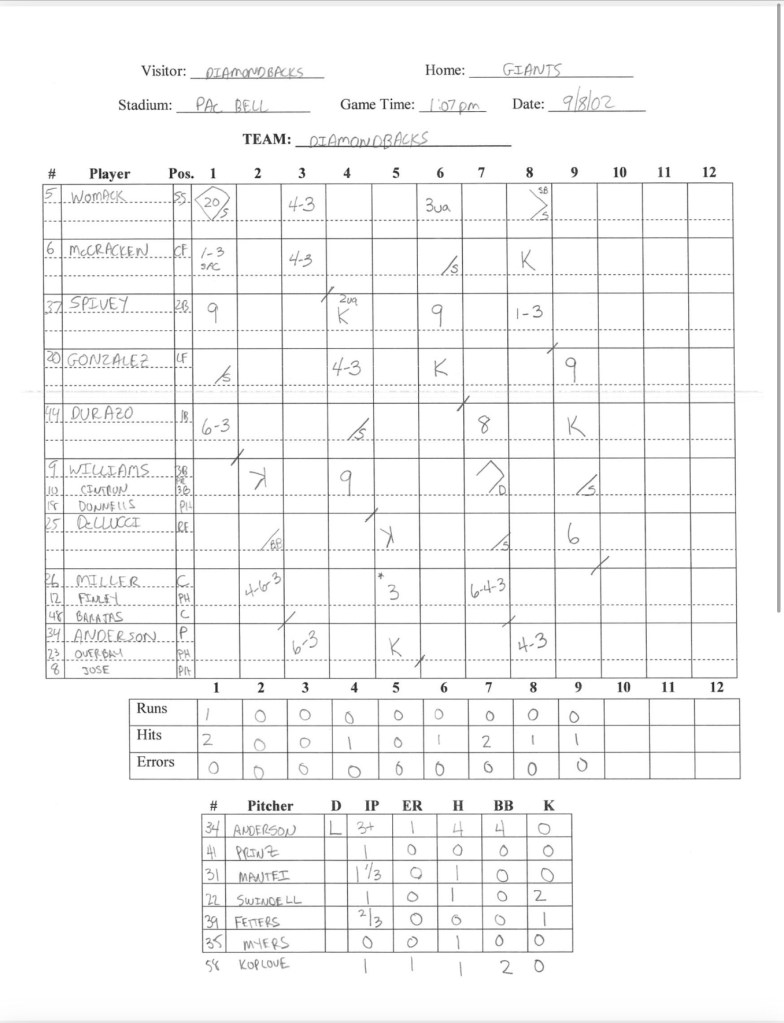
My scorecard from the game.

Wrigley Field, Chicago Sunday May 4th 2003

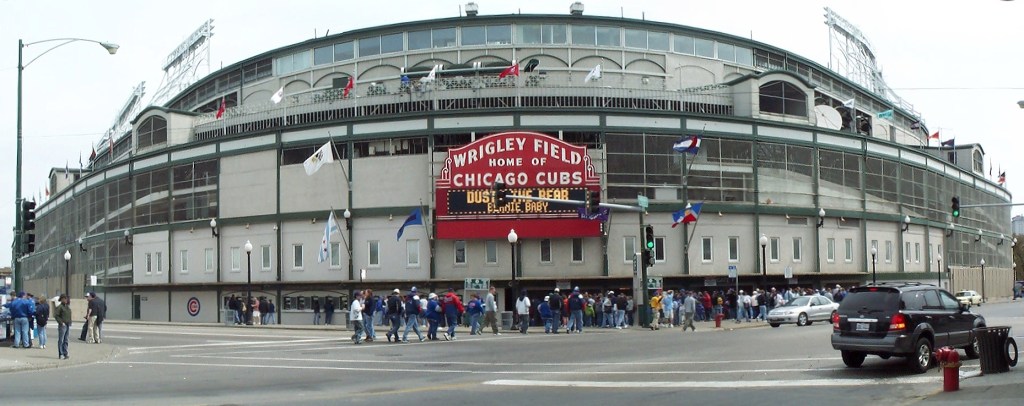
Panorama of the outside of Wrigley Field. (Photo credit: Jeff Hayes)

During our overnight stay in Chicago, low clouds and fog descended from Lake Michigan onto the North Side. We awoke to a steady easterly wind and drizzle, with temperatures in the 40s. Following breakfast near the hotel, we headed out to Wrigley Field. Arriving just as the gates opened, we once again overpaid for parking at a lot near the stadium. Unlike the day before, we left ourselves plenty of time to explore the neighborhood surrounding the vaunted ballpark.

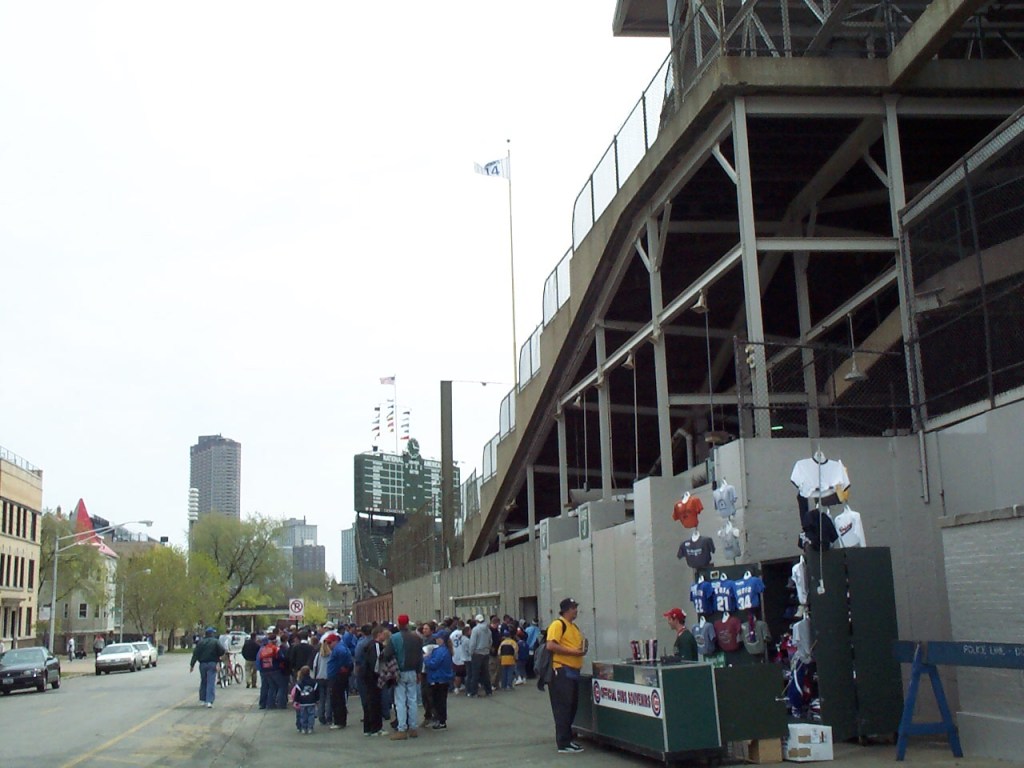
Our first stop was West Waveland Avenue, located behind the left and centerfield walls of Wrigley Field. Over the years, we saw MANY baseball fly out of the ballpark on TV, landing here or further down the road. For most Cubs games, there are hundreds of fans sauntering on the street, waiting for home run balls. Had we more time in Chicago, it might have been a unique fan experience to see a game from this perspective; perhaps some day I will do just that.

The view of West Waveland Avenue behind field at Wrigley Field. Throngs of fans congregate here during games, waiting for the home run balls. (Photo credit: Jeff Hayes)

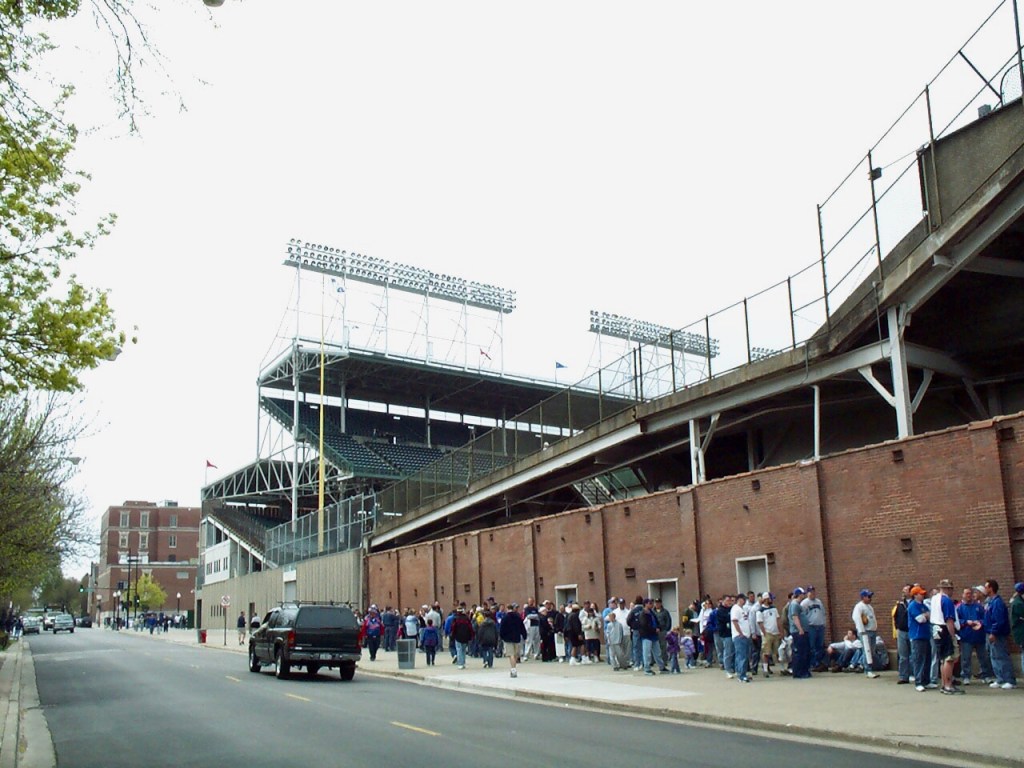
We continued our journey around Wrigley Field, wandering down North Sheffield Avenue past the right field wall. While there were some fans waiting to gain entrance to the stadium, there was not nearly as many people here as there were on West Waveland Avenue. During our walk, we got a first hand look at the buildings surrounding the ballpark, and the seats in place on the rooftops. It was obvious that the streets ringing Wrigley Field were every bit as much of the park as the stadium itself.

North Sheffield Avenue behind right field of Wrigley Field. (Photo credit: Jeff Hayes)

Completing our tour of the exterior of Wrigley Field, my brother got the image of iconic red signage above the home plate entrance featured above. Even with the cold early spring weather, the majesty of the stadium and its environs shone through. Though there were fans milling around outside the ballpark, there were few people inside, allowing us unfettered access to nearly the entire stadium. We visited the left field bleachers, where we had seen many opponents’ home runs balls land, only to be tossed back into the field of play.

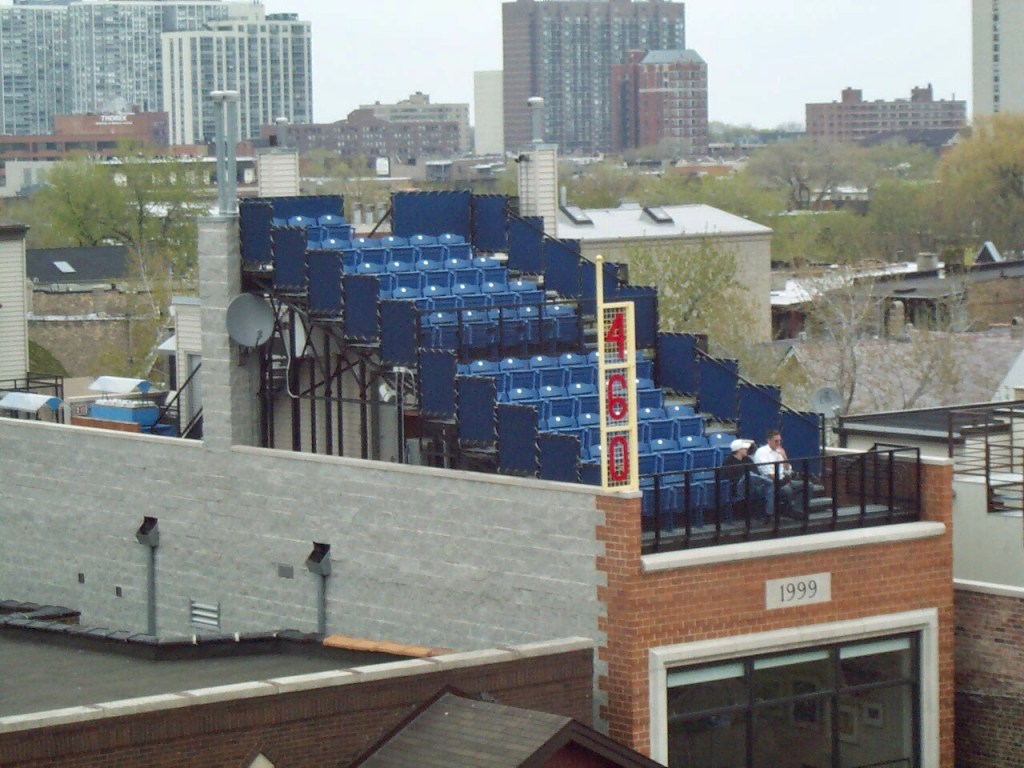
From left field, we got a very good look at some of the seats on the building rooftops along West Waveland Avenue. From modest beginnings, these rooftop seats became quite organized, with some of the rooftops holding as many as ten rows with four or five seats per row. Despite occasional objections by the Cubs management, it doesn’t seem as though these seats were diverting much revenue from the park, considering that Wrigley Field often sells out during the season.

One of the better organized rooftop seatings outside of Wrigley Field, a mere 460 feet from home plate. (Photo credit: Jeff Hayes)

At the end of our tour of the inside of Wrigley Field, we wound up behind home plate, where my brother got his best picture of Wrigley Field. Lake Michigan, the second largest of the Great Lakes (and the only one completely within the US), is a mere five miles from Wrigley Field, and has a large influence on the weather at the ballpark. On this afternoon, wind off the still cold Great Lake funneled clouds and fog across the field, resulting in a cold and damp visit. The image perfectly captures the environment just before game time.

Panoramic view of Wrigley Field on a cloudy and foggy day. (Photo credit: Jeff Hayes)

On this cloudy and cool afternoon, the visiting Colorado Rockies sent the ace of their starting rotation, right hander Jason Jennings, to the hill. Awarded the NL Rookie of the Year in 2002, Jennings won 16 games that year. On the mound for the hometown Cubs was right hander Kerry Wood. Featured on the Cubs’ scorecard for the month of May, the tall Texan was the NL Rookie of the Year in 1998, during which he tied the nine inning single game record with 20 strikeouts. Wood underwent Tommy John surgery the following year, taking the next couple of campaigns to recapture his best stuff.

Given the strength of the starting pitching and the cool and breezy conditions, we expected a low scoring affair. Unlike the previous afternoon, which featured crystal blue skies, Wrigley Field blended into the background of cloud and fog. This environment was not conducive to picture taking, leaving the park looking washed out and drab. Temperatures near 50 degrees at the first pitch felt even colder, reminding me that it was still early spring in the Midwest.

Today’s Cubs starting pitcher on the cover of the Cubs May Scorecard. (Photo credit: Jeff Hayes)

Following our tour of the interior of Wrigley Field, we obtained some snacks and hot chocolate before heading for our seats. Though the weather was far from ideal, the afternoon affair was well attended, and our seats were not much better than the day before. Nestled down the left field line between third base and the left field line, our seats once again did not have a good view of the plate, so we spent much of the game with our heads turned to the right, straining to see the action.

It didn’t take long for the scoring to begin, as the Rockies put up three runs on Kerry Wood in the top of the first inning. Chicago scored two runs of their own in the bottom of the first, and it appeared as though offense might carry the game, despite the inhospitable weather conditions. However, both starters settled down after the early outbursts, keeping the opposition scoreless into the middle innings. Though scoring was an a premium after the first innings, hits wand walks resulted in many baserunners, slowing the pace of the game to a crawl at times. Typically, slow paced games are not a problem for me, but given the cool and wet conditions, I found myself becoming impatient.

The view of our seats, complete with Cubs stater Kerry Wood long tossing before the game. (Photo credit: Jeff Hayes)

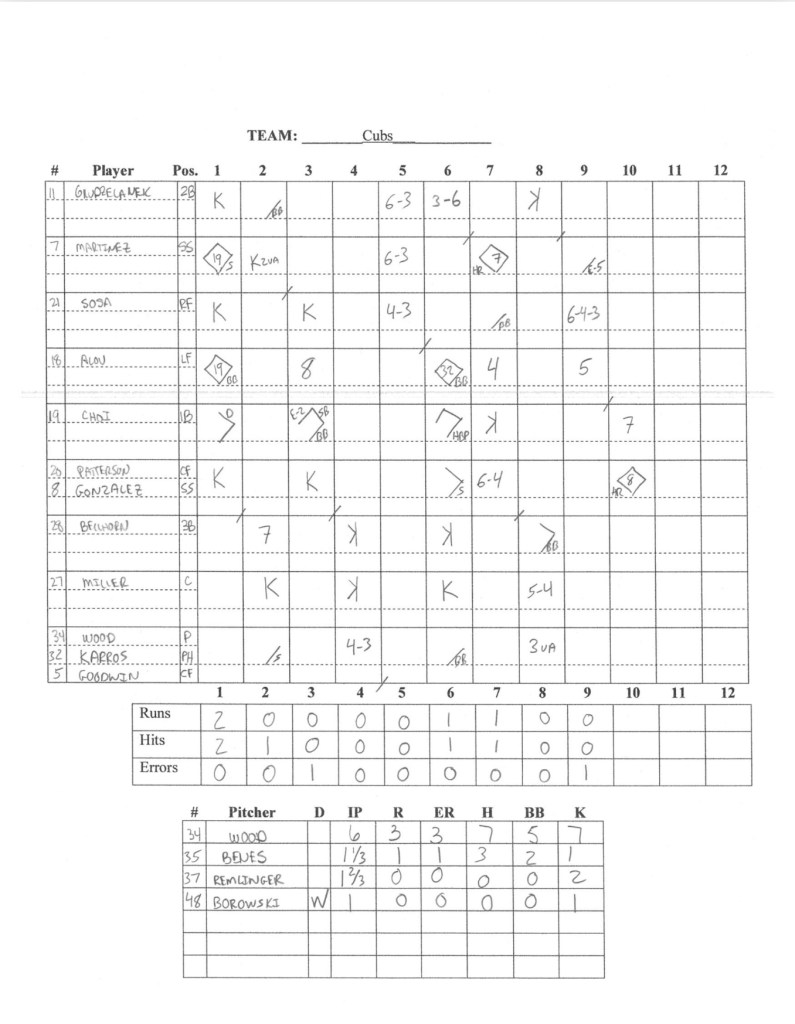
Chicago scored a run in the bottom of the sixth to tie the score, followed by the Rockies taking the lead in the top of the seventh. With the game in the hands of the bullpen, the score remained tied going into extra innings. With one out in the bottom of the tenth inning, Chicago SS Alex Gonzales homered off Rockies reliever Steve Reed to give the Cubs a 5-4 victory. Three hours and 15 minutes in the raw conditions seemed even longer, and by the end of the contest, I was ready to find a warmer and drier place.

Even with the adverse weather conditions, I thoroughly enjoyed our time at Wrigley Field. A proud throwback to a bygone era of baseball, the simple layout and lack of large and obtrusive video boards was a refreshing departure from what MLB parks were becoming. Since our visit some 17 years ago, much has changed at Wrigley Field. Incremental additions at the park, including video boards in left and right fields, has detracted from the charm the stadium once had, making it more like more “modern” MLB parks. The changes make me feel fortunate to have visited when the park was closer to the original configuration, and the changes make me believe that I will not visit again anytime soon.

My scorecard from the game.

Chicago, Saturday May 3rd 2003

1. New Jersey to Chicago

Our first baseball trip of 2003 took us to Chicago to see the Cubs and the White Sox. Originally we scheduled a trip to see the Cubs in September of 2001, but circumstances made that impossible. Since we decided to make this a weekend trip, we flew from New Jersey to O’Hare Airport in Chicago on Saturday morning, May 3rd. Luckily, Newark-Liberty Airport in Newark, NJ was not busy, allowing us to breeze through security.

For the flight, we chose Midwest Airlines (now defunct). A Milwaukee based airline, they offered flights to many locations in the Midwest, and I was first introduced to the carrier through work in the late 1990s. Each plane had leather seats, and offered fewer seats than most mid sized airlines. In addition, they offered free chocolate chip cookies. Though it sounds trite, these cookies were actually very good. Though the fares were a bit higher than most airlines flying to Chicago, the roomier plane with leather seats was well worth the extra money.

After arriving at O’Hare Airport and picking up our rental car, we headed toward Chicago. Originally, we planned to see the White Sox on Saturday night, and the Cubs at Wrigley Field on Sunday afternoon. However, we arrived in Chicago much earlier than expected, and we realized we could catch the Saturday afternoon game at Wrigley.


2. Wrigley Field

Iconic hand operated scoreboard at Wrigley Field. (Photo credit: Jeff Hayes)

Making our way to the North Side, we arrived at the park shortly before game time. Parking proved to be a challenge, as it often is with urban ballparks, and we ended up parking in the lot of a local business for an exorbitant amount. Not having tickets for the game, we went in search of scalpers, who were very easy to find. We secured two seats behind first base for more than face value. As is typical when we visit a new ballpark, we quickly toured the outside of the stadium. Arriving just before game time, our tour was truncated, and after we entered the venerable ballpark, we went in search of our seats.

Once we found our seats, it was immediately clear we had been swindled by the scalper. Our seats were terrible, in the lower level down the right field line with a limited view of home plate. Of course, not knowing the ballpark well, we foolishly took the scalper at his word that the seats were good. We laughed it off, being so gullible. Just being at Wrigley Field, a baseball palace, was enough to make us forget our faux pax, and we were determined to enjoy the experience regardless of our view.

The view from our seats. (Photo credit: Jeff Hayes)

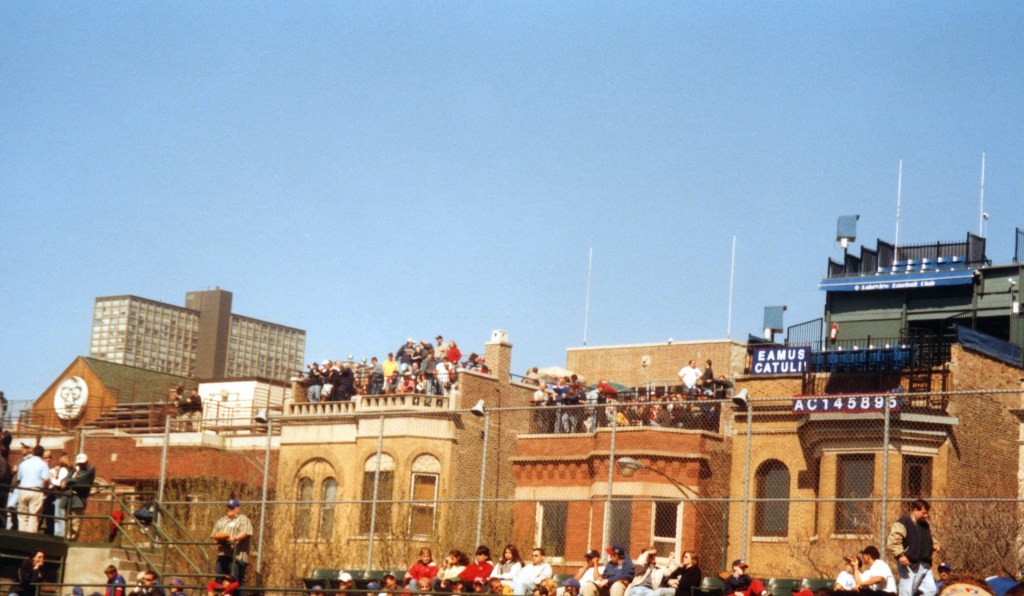
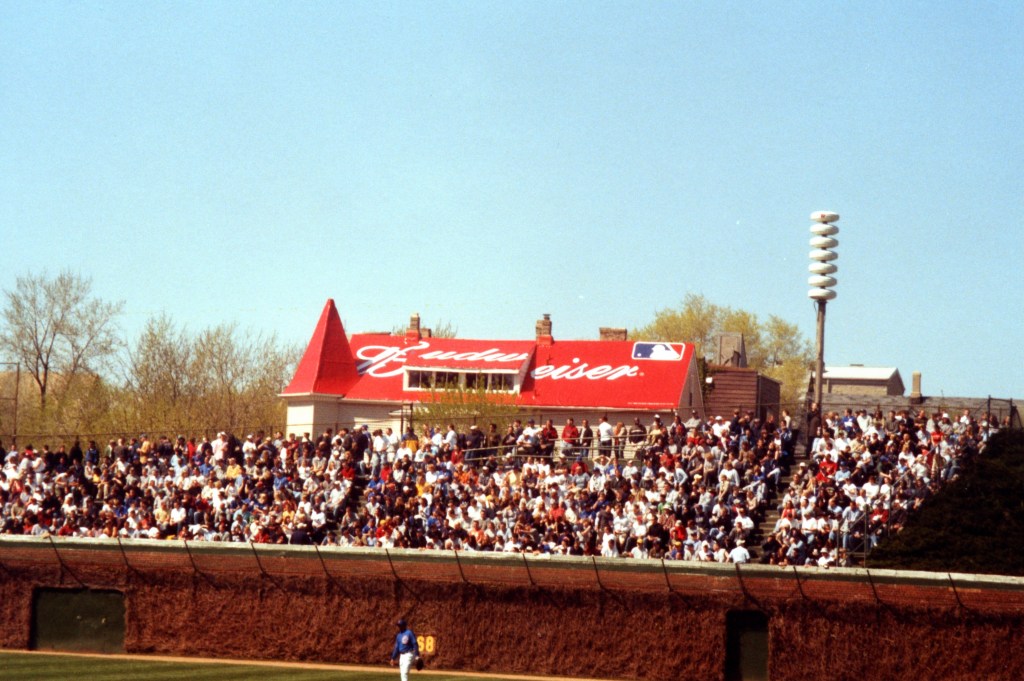
Not surprisingly, Wrigley Field was filled to capacity. In addition to packed bleachers, we could see what seemed like hundreds of people crammed onto rooftops of neighboring buildings. Seeing the people on the rooftops on TV doesn’t give you a true idea of how many fans actually ring the ballpark. Beyond the left field, we could see the iconic Budweiser roof, located off West Waveland Avenue. But perhaps my favorite part of Wrigley Field was the hand operated scoreboard. A throwback to a bygone era, the scoreboard defined Wrigley Field for me, and I finally got to see it for myself.

We couldn’t have asked for better day weather wise, with crystal clear skies and temperatures in the 50s. Having seen Wrigley Field on TV many, many times, I could scarcely believe we were here. Dubbed the “friendly confines” by Cubs great Ernie Banks, the cozy ballpark teemed with history. Possibly the most famous of the features of Wrigley, the ivy on the outfield wall, was conspicuously absent. Being early May, it was too soon for the ivy to bloom, so instead we were treated to brown walls devoid of flora.

View of buildings adjacent to the right field wall. Note how many people are watching from the rooftops.

For the matinee, the hometown Cubs hosted the Colorado Rockies, with the first pitch slated for 120 pm CDT. Starting for the Rockies was journeyman left hander Darren Oliver, who was in his first season with the team. Taking the mound for Chicago was right hander Carlos Zambrano, the 23 year old who was beginning to show signs of becoming a Cy Young caliber starter for the Cubs. Good starting pitching, paired with a decent breeze coming in from Lake Michigan suggested a low scoring affair.

The Cubs struck first in the bottom of the second inning, stringing together hits and walks to plate three runs. Colorado responded with three runs of their own in the top of the third, and it seemed as though we would see an offensive display in Wrigley this afternoon. Chicago reclaimed the lead into the bottom of the fourth inning, with Cubs starter Carlos Zambrano hitting a solo home run to lead off the inning. While it is rare for pitchers to hit home runs, Zambrano was a good hitting pitcher, blasting 24 home runs over his career.

The famous Budweiser roof across the street from Wrigley. Note that the famed ivy had not yet started growing.

While there was a game at the ballpark that afternoon, Wrigley Field was the star of the show. Wall to wall sunshine and pleasantly cool temperatures made our visit to this baseball palace even more enjoyable, but the environment was indescribable. In between innings, I found myself admiring all that the ballpark had to offer, immediately understanding why Wrigley Park was considered a baseball mecca. Our seats were not ideal for taking pictures of the action, but from our location, we were able to enjoy the scene.

The Rockies scored three more runs in the top of the eight inning, taking a 6-4 lead that the bullpen held for the victory. Despite our seats, we thoroughly enjoyed our surprise visit, and would get a much better look at Wrigley Field the next afternoon. Following the end of the game, we inched out way out of the parking space, and headed toward our hotel. Our stay there was brief, just long enough to check in and drop off our bags, because we were headed toward US Cellular Field for a night game between the visiting Seattle Mariners and the home town White Sox.

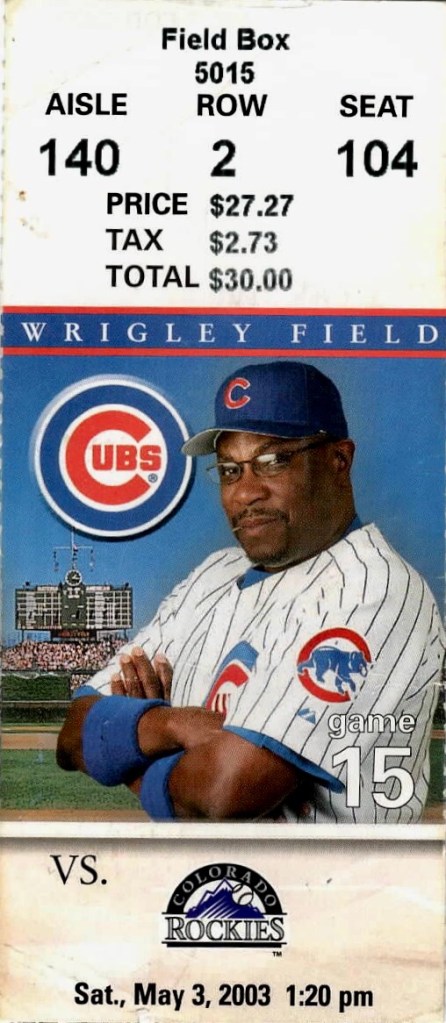
A VERY expensive ticket for the afternoon game at Wrigley Field. (Photo credit: Jeff Hayes)

3. US Cellular Field

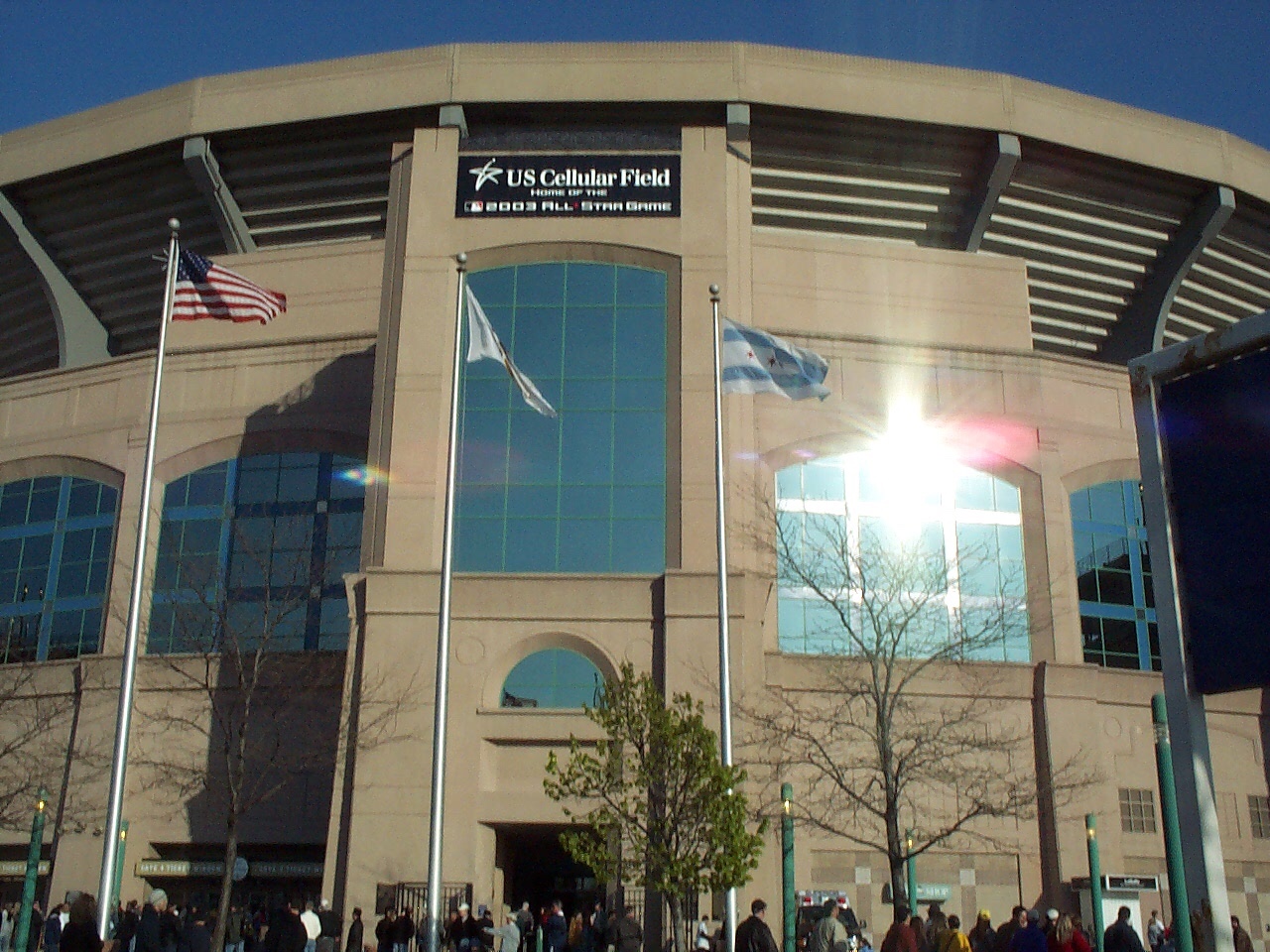
Outside of US Cellular Field in Chicago, IL. (Photo credit: Jeff Hayes)

We arrived in the South Side of Chicago about an hour before the first pitch of the game scheduled for 605 pm. As we approached US Cellular Field (now known as Guaranteed Rate Field), it was clear that we were in a neighborhood very different than the one in which Wrigley Field is located. Parking around the ballpark was plentiful, with lots surrounding the stadium. Pulling into Lot B (across West 35th Street from the field), we asked the attendant the cost of parking. After telling us, he asked if our car was a rental, to which I said yes. As we pulled away he added “I hope it’s still here when you get back”. Not exactly what a visitor wants to hear, but we did our best not to let it affect our experience.

With little surrounding US Cellular Field but parking lots and I-94, we did not explore the outside of the park like we did for other stadiums we have visited. Entering through the home plate gate, I could not help but notice how much the outside of the ballpark reminded me of the main Yankee Stadium entrance.

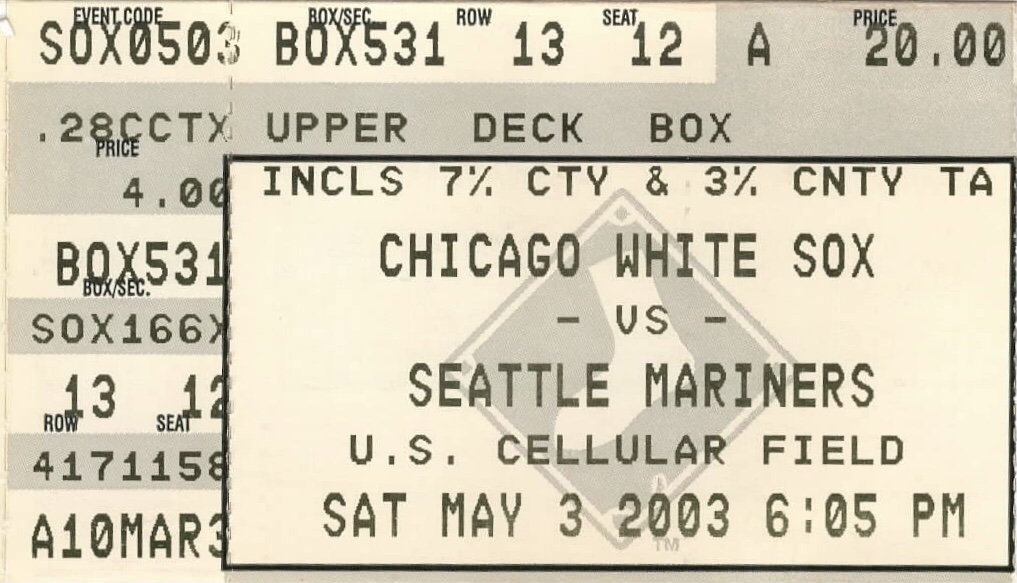
A ticket to the game. (Photo credit: Jeff Hayes)

US Cellular Field, which opened in 1991, was a replacement for Comiskey Park , the home of the White Sox from 1910 through 1990. Located across West 35th Street from US Cellular Field, Comiskey Park was razed in order to provide additional parking for the new ballpark. Opening a year before Camden Yards in Baltimore (the stadium that is generally acknowledged as the first of the “new” MLB parks), US Cellular Field had the feeling of a ballpark built in the 1970s or 1980s, generally symmetrical with three decks and bleachers almost completely ringing the outfield.

Following a quick tour of the inside of US Cellular Field, we went in search of a baseball dinner. Armed with drinks and snacks, we headed toward our seats. Surprisingly, despite the cool weather, the game was well attended, and the best seats we could procure were in the upper deck, directly behind home plate. Typically, we seek out seats in the lower level on either the first or third base side. However, when these seats are unavailable (as they were this night), we prefer to be closer to home plate when relegated to the upper deck. A long climb was rewarded with a great view of the ballpark as game time approached.

The view from our seats. (Photo credit: Jeff Hayes)

Though the sun was shining at the start of the game, a chill descended upon US Cellular Field, and it was evident that we were in for a cool early May evening in the South Side. Starting for the visiting Seattle Mariners was right hander Freddy Garcia. The talented 26 year old was already an emerging star, yet listed as the fourth starter on a loaded Mariners rotation. On the mound for the hometown Sox was left hander Josh Stewart, who was in the first season of a brief two year MLB career. A seeming pitching mismatch favored the Mariners, who were just two season removed from a single season record of 116 wins in 2001.

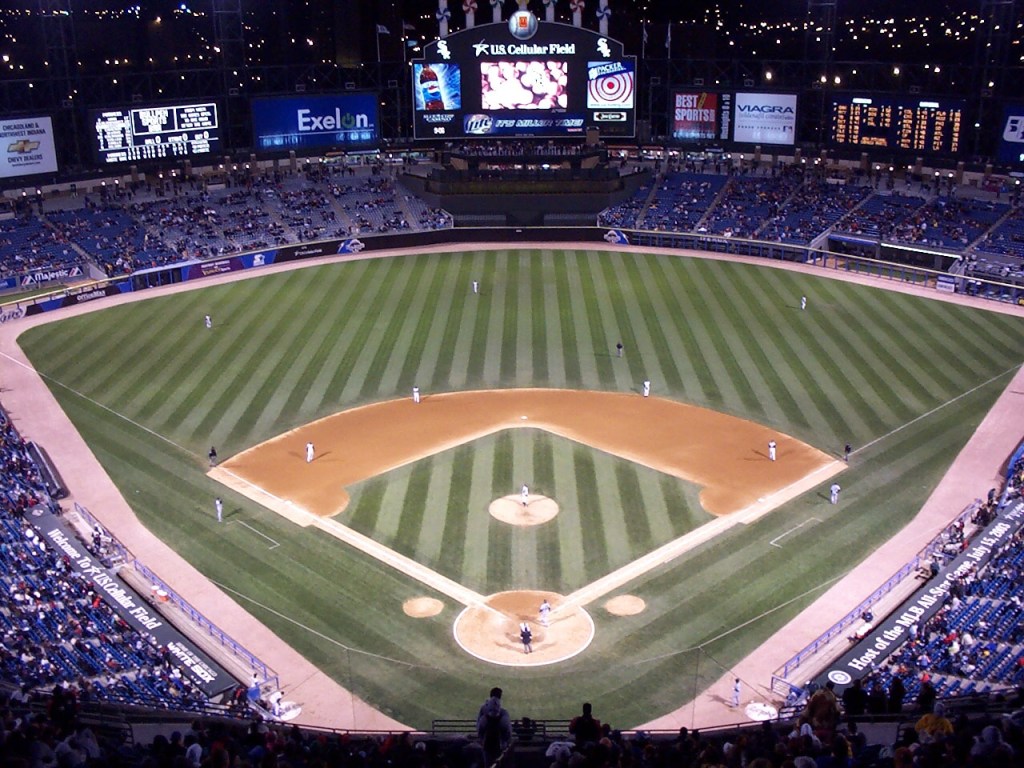
The video board in centerfield at US Cellular Field. Below the scoreboard is the Fan Deck, constructed to allow fans to congregate during the game. Other teams would adapt this approach as the way fans watched the game changed. (Photo credit: Jeff Hayes)

We didn’t need to wait long for the fireworks to begin, as the Mariners pummeled Sox starter Josh Stewart for six runs in the first two innings, punctuated by two home runs in top of the first inning. Seattle tacked on four more runs in the top of the fourth inning, chasing Stewart from the game. Meanwhile, Freddy Garcia was cruising for the Mariners, putting the game out of reach fairly early.

With my attention straying from the game, I began to feel the chill more intently, as temperatures dropped into the 40s with the advent of night. Not surprisingly, the White Sox fans began to abandon what appeared to be a losing cause, steadily exiting as the home town fell further behind. As the announced crowd of 25,00+ thinned out, we noticed just how large US Cellular Field was. Unlike MLB that would follow, the stadium seemed to lack a sense of charm or intimacy, feeling more like a monument to the past. Having said that, US Cellular Field was a comfortable place to see a game, and an upgrade to where the White Sox used to call home.

US Cellular Field at night. (Photo credit: Jeff Hayes)

The Mariners tacked on two runs late in the game, as Freddy Garcia and a cadre of Seattle relievers held the Sox in check for 12-2 victory. Cold temperatures made the three hour 15 minute game seem even longer, and by the time the last out was recorded, I was ready to leave. Overall, US Cellular Field was a good place to see a ballgame, but generic enough not to be too memorable. While I was glad we took in a game here while in Chicago, there wasn’t enough of an attraction to being me back anytime soon.

My scorecard from the game.