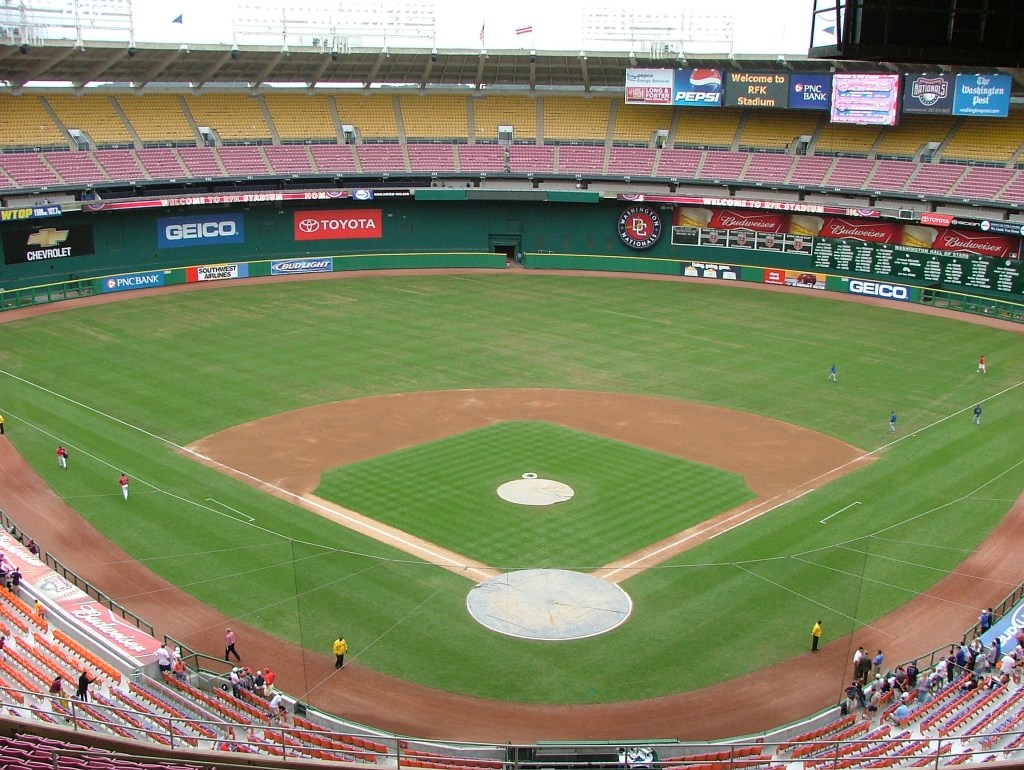
Washington DC, Sunday September 25 2005

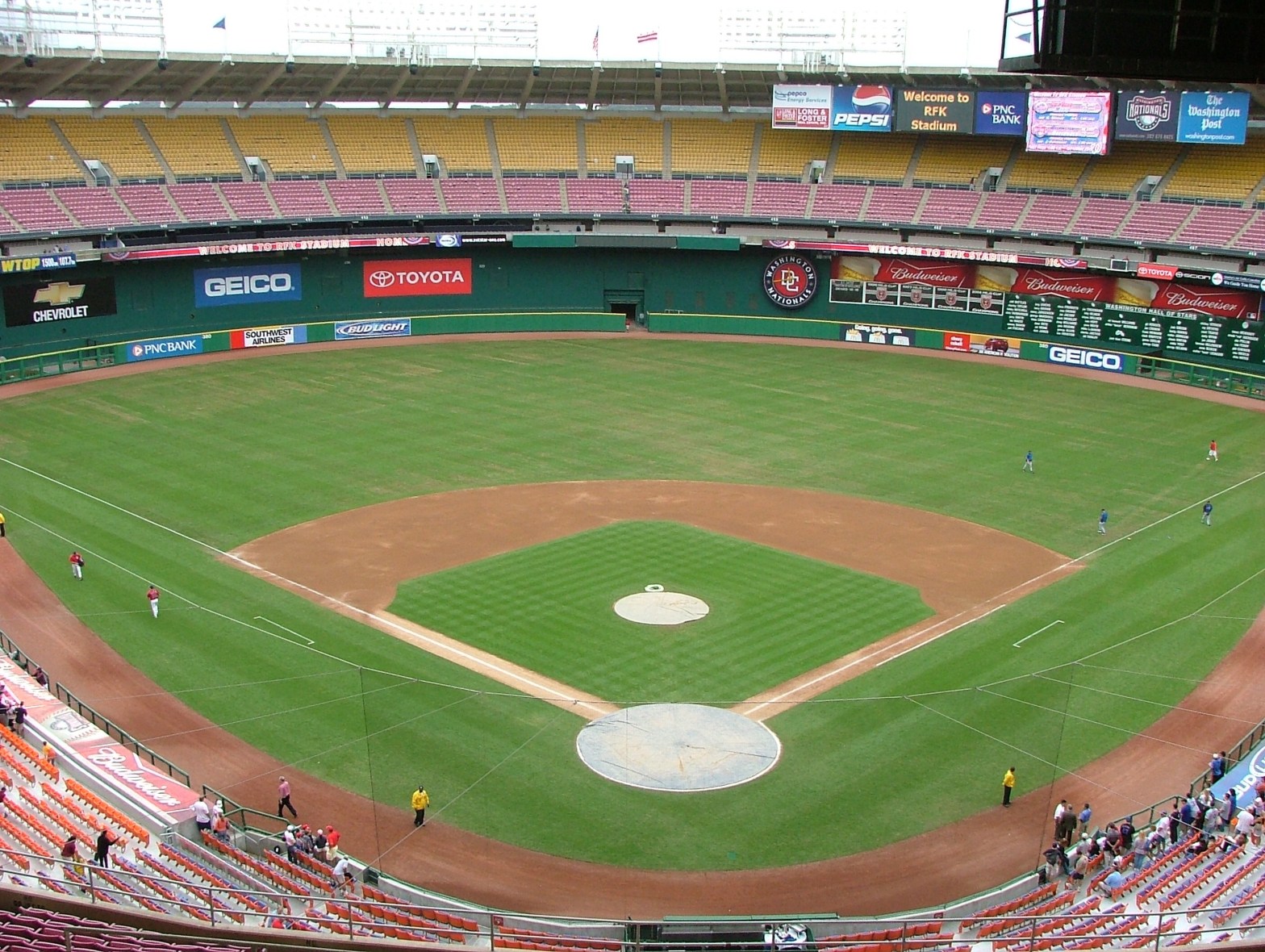
Robert F. Kennedy Stadium, Washington DC. (Photo credit: Jeff Hayes)

We added one more baseball trip to the end of the 2005 season. For years, the Montreal Expos, a team owned by MLB, threatened to leave the Canadian city. The franchise never recovered from the baseball strike in 1994, when they were arguably the best team in the game. Since that time, attendance dwindled, and their home park, Olympic Stadium, had fallen into disrepair (which we saw for ourselves in 2001).

Finally, the franchise moved to Washington, DC, for the 2005 season. At the time, DC did not have a baseball only stadium ready for the newly renamed Nationals (ground won’t be broken on Nationals Park until 2006). In the interim, the Nationals were slated to play their home games at Robert F. Kennedy Stadium (informally known as RFK). Once the home of the MLB Washington Senators and the NFL Washington Redskins, RFK was the home of the local MLS franchise, but hadn’t hosted NFL or MLB games for some time.
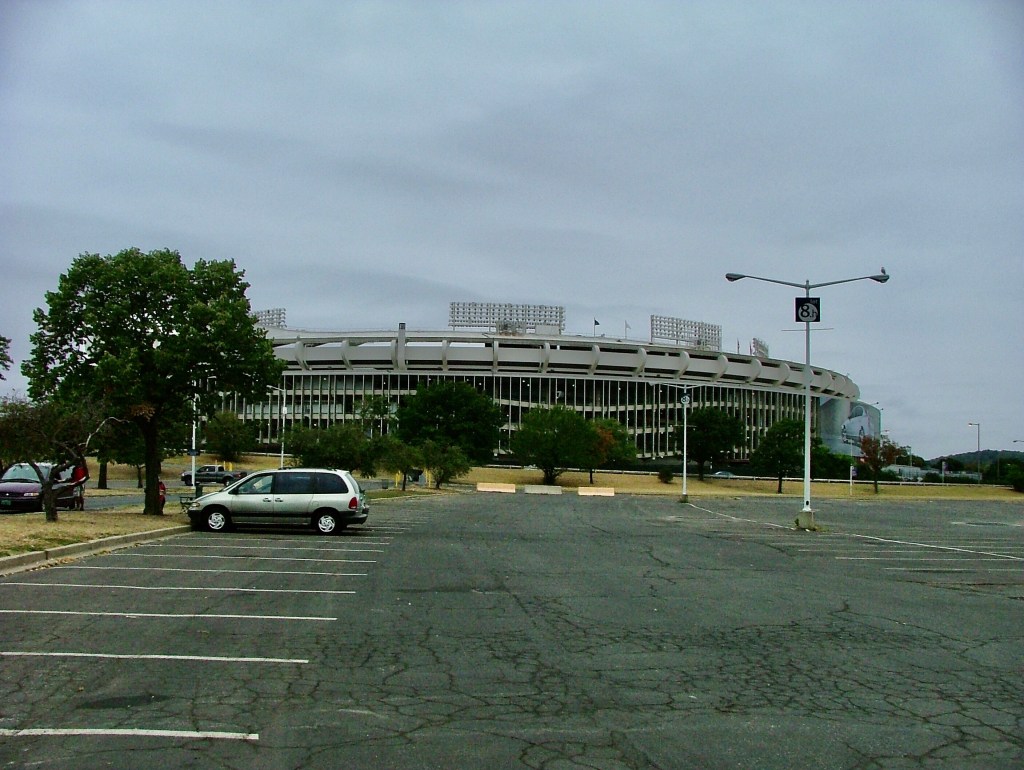
RFK Stadium from the parking lot. (Photo credit: Jeff Hayes)

As result, it had also fallen into a degree of disrepair. Still, MLB was keen to move the franchise, and the Nationals would play their games at RFK. Since the ballpark was only about a four hour drive from central NJ, we decided to make the visit a day trip. The drive was uneventful, outside of the traffic that one encounters in the DC area. Arriving at the ballpark about the time the games opened, we quickly became aware that RFK Stadium was not in one of the finer neighborhoods of DC, so we did not wander far from the ballpark.

Parking as ample, and arriving well before the first pitch, we had our choice of spots. A quick walk around the ballpark showed an aging multi purpose stadium that was enjoying something of a renaissance with the return of MLB action. It was clear that the park had seen better days, and from the perspective of the rebranded franchise, it was a just a place to play until their own park debuted in 2008.
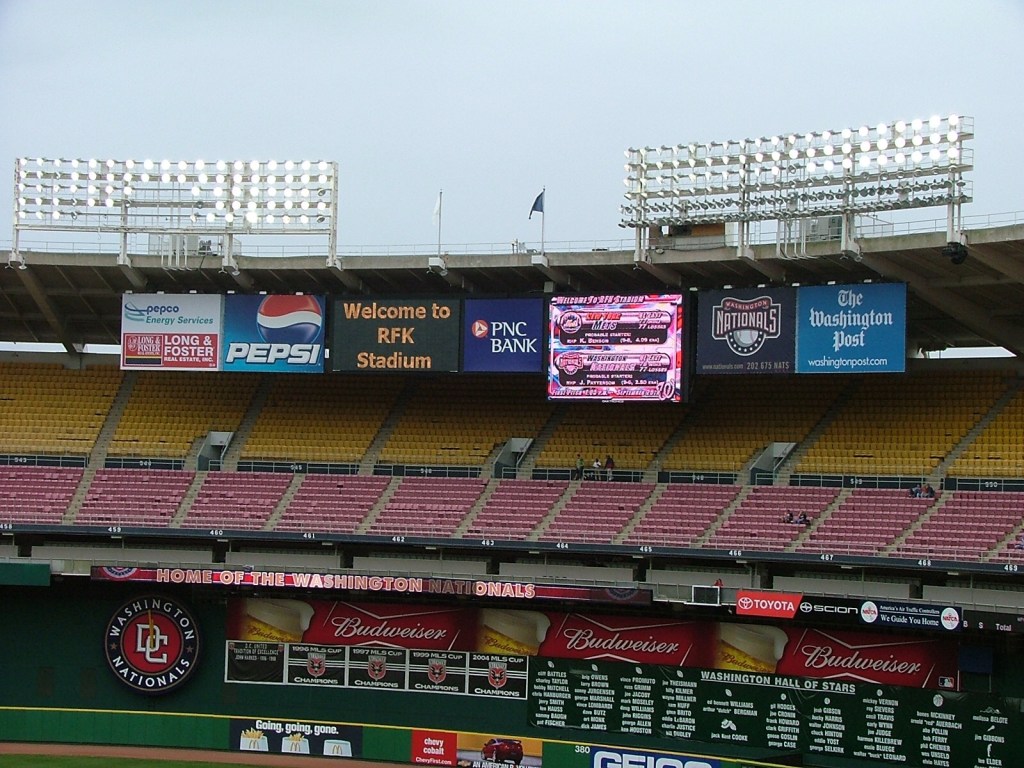
Welcome to RFK Stadium. (Photo credit: Jeff Hayes)

Once inside, we got an idea of how long it had been since the stadium had been used extensively. Walking through the home plate gate, there were coaxial and Internet cables literally stapled to the concrete walls. Since the Nationals were only temporary tenants, it was clear that little in the way of infrastructure changes were forthcoming. Walking around RFK on the lower concourse, we were reminded of other multi purpose stadiums constructed during the same time frame (such as Veteran’s Stadium in Philadelphia or Three Rivers Stadium in Pittsburgh).

Despite that, RFK seemed to have more in the way of character than the other coliseums from that time period. Unlike the other stadiums of that period, RFK seemed cozier (with a seating capacity just shy of 46,000), and sported a grass field. Like most stadiums from the 1960s, RFK was enclosed, giving it a retro feel when compared to the “newer” MLB ballparks.
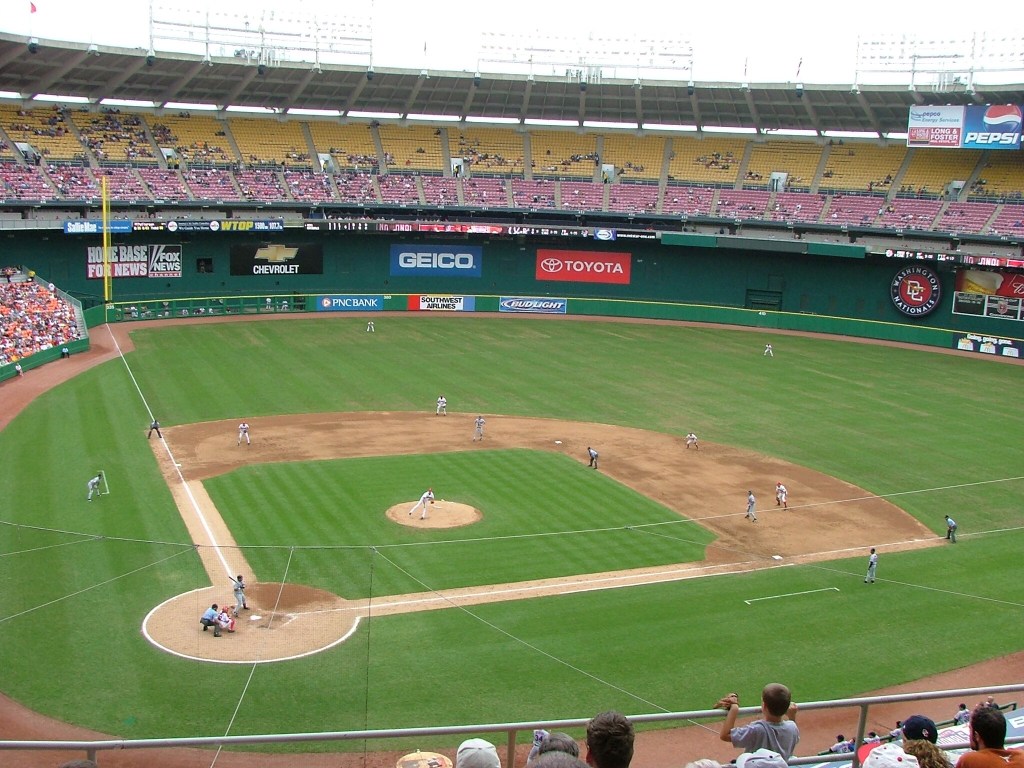
The view from our seats. (Photo credits: Jeff Hayes)

Though there were not as many amenities as other ballparks, we managed to find a baseball lunch at one of the many concession stands and headed off to find our seats. Sunshine began to filter through the thick clouds (which prompted stadium officials to turn on the lights), and temperatures rebounded into the 70s, setting the stage for comfortable conditions for watching a ball game at the aging RFK Stadium.

With the season winding toward the end, and both the Mets and Nationals out of playoff contention, my attention turned to the Mets catcher Mike Piazza. Once among the most feared hitters in the game, age and nagging injuries resulted in a subpar campaign for the slugger. In the last year of his contract, it was unlikely that the Mets would try to resign him, so this game marked the last time we would see Piazza in a Met uniform in person.

Mike Piazza in one of his final at bats as a New York Met. (Photo credit: Jeff Hayes)

Despite having nothing to play for in this game, most of the regulars were in the lineup for both teams. Starting for the Mets was right hander Kris Benson, who was completing an unspectacular 2006 campaign, his last in a Met uniform. For the hometown Nationals, the starter was right hander John Patterson, completing his season with a respectable 3.13 ERA.

Our seats, in the middle deck to the right of home plate, gave us a great view of the stadium. Soaking in the environment, RFK seemed like an anachronism, with earth tones colors reminiscent of the 1960s. Noticeably absent from the park was a large screen video board. Built long before such technology existed, the ballpark seemed almost naked without it. Reminding me of my younger days as a baseball, I found that I didn’t miss it.

RFK’s version of a large screen video board. (Photo credit: Jeff Hayes)

Even with the clouds and threat of rain, there was a good crowd on hand for the Sunday matinee, with an announced attendance of over 29,000. It was obvious early that neither starting pitcher had his best stuff, as the Nationals and Mets traded runs through the first four innings. The scoring included a long solo home run to left field in the second inning by Mike Piazza, flashing some of the power from his heyday.

Piazza followed up his home run in the second inning with another solo home run in the fourth inning. It was almost as though he sensed the end was coming, and was rising to the occasion with a vintage Piazza power display. The teams traded runs throughout the middle innings, slowing the pace of the game to a crawl at times, as the teams made seven pitching changes.

One of the many mound visits that slowed the pace of the game. (Photo credit: Jeff Hayes)

During the down time, I took an opportunity to further examine the stadium. The outfield grass showed signs of wear, a victim of the hot and often dry DC summers, obviously neglected as the season reached its end. Though it was a relic, it reminded me of the ball games played in the “cookie cutter” ballparks I watched on TV as a kid, so there was a familiar vibe within RFK.

Hoping we would see a third home run from Mike Piazza, we were instead treated to a massive home run to deep right field by the young Mets first baseman Mike Jacobson in the eight inning. Initially, we thought the ball might clear the roof and completely exit the ballpark. Instead, it bounced off the roof and careened back onto the field. The home run gave the Mets a 6-5 lead, which the bullpen protected for a victory for New York.

Filing out of RFK following the game, I reflected on our visit. Though it was fun seeing a game in a throwback ballpark with its roots in the 1960s, there was little reason to return. Our next baseball visit to DC would be to see the new ballpark, which was more than two and one-half years in the future.
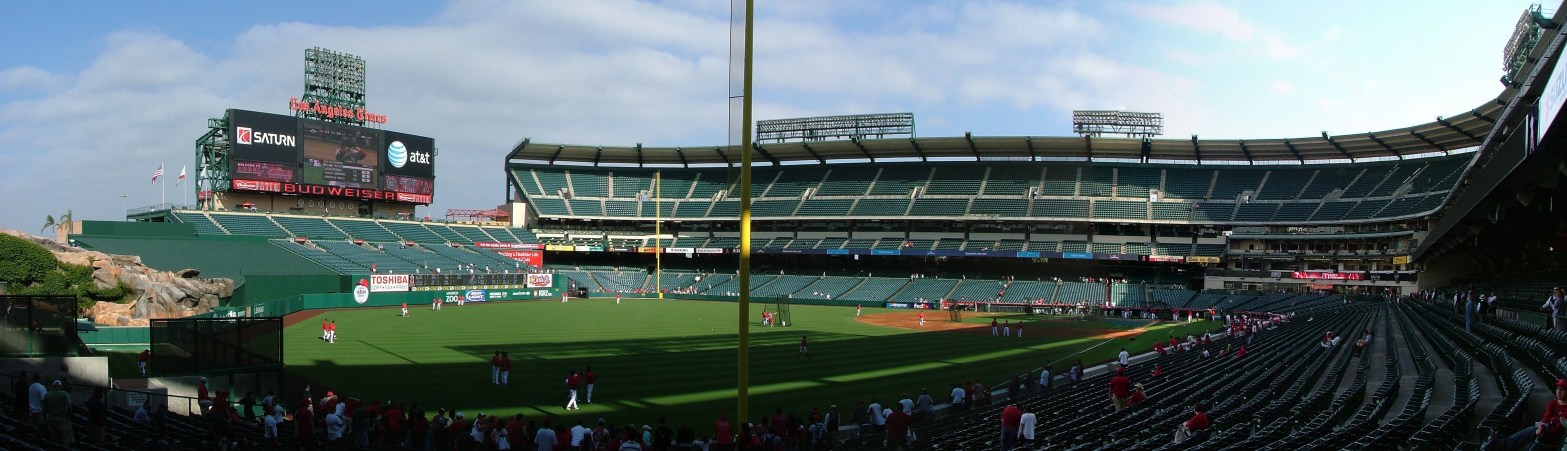
Angel Stadium of Anaheim, Saturday June 10th 2006

Angel Stadium, Anaheim CA. (Photo credit: Jeff Hayes)

Finally, the sun made an appearance in Southern California, as the low clouds and fog receded just offshore. Following a morning of exploring San Diego, I traveled up Interstate 5 to Anaheim to catch an evening game between the Seattle Mariners and Anaheim Angels at Angel Stadium of Anaheim. The 90 minute trip was swift and uneventful, helped along by the fact it was Saturday.

Shortly after arriving at the stadium, I met up with my brother, who stayed just a block away from the park. Angel Stadium, located near the Santa Ana River, is a mere four miles from Disneyland. Had I know that at the time, I might have built in time to see the iconic amusement park before heading to the stadium. My brother stated that his hotel was boisterous, with a din caused by kids excited to visit Disneyland.

The exterior of Angel Stadium of Anaheim, complete with a pair of batting helmets framing the gate behind home plate. (Photo credit: Jeff Hayes)

Parking was plentiful at Angel Stadium, as the field was almost completely surrounded by parking lots. By MLB standards, parking was relatively cheap ($10.00), and arriving almost two hours before the first pitch, we had our choices of spots. Since there was not much to see immediately adjacent to the ballpark, we encircled the stadium before entering through the gate behind home plate.

Angel Stadium has undergone several configuration changes since it first opened in 1966. Originally constructed with an open outfield, the stadium was completely enclosed in 1980, when the NFL’S Los Angeles Rams relocated to Anaheim. The enclosure increased the stadium’s capacity from 43,000 to over 63,000, where it remained through 1997. Following the departure of the Rams, the stadium was renovated, removing the enclosure, and restoring the view of the mountains in centerfield.

Following the demolition of the enclosure in the outfield, the “Rock Pile” replaced it in left centerfield. (Photo credit: Jeff Hayes)

Replacing the enclosure in the outfield was perhaps the stadium’s most interesting feature, the “Rock Pile”. Also known as the California Spectacular, the rock formation was adorned with real trees, fake boulders and a geyser which spouts water that cascades down the rocks. This feature is always prominently displayed during national broadcasts from Angel Field.

The “Rock Pile” was accessible via the concourse that encircled the stadium, and not surprisingly, was a popular destination. Our tour of the stadium revealed it to be a former multi purpose stadium reborn into a baseball park following the renovations in the late 1990s. A large scoreboard in right centerfield was augmented by a smaller scoreboard in left centerfield, giving Angel Stadium a more modern look.

The view from our seats. (Photo credit: Jeff Hayes)

Following our trip around the stadium, we visited one of the many concession stands on the lower level to obtain our baseball dinner. Despite the Angels being a sub .500 team, the ticket demand was so high that we were only able to secure upper deck seats behind home plate. The climb was worth it; the view of the ballpark from our perch could not have been better.

The starting pitching matchup feature two journeyman right handers. Gil Meche, taking the ball for the visiting Seattle Mariners, and John Lackey, toeing the rubber for the hometown Angels, were both in the middle of mediocre seasons. Clearing skies, light winds and mild temperatures set the stage for a pleasant evening, with Lackey delivering the first pitch at 707 pm PDT.

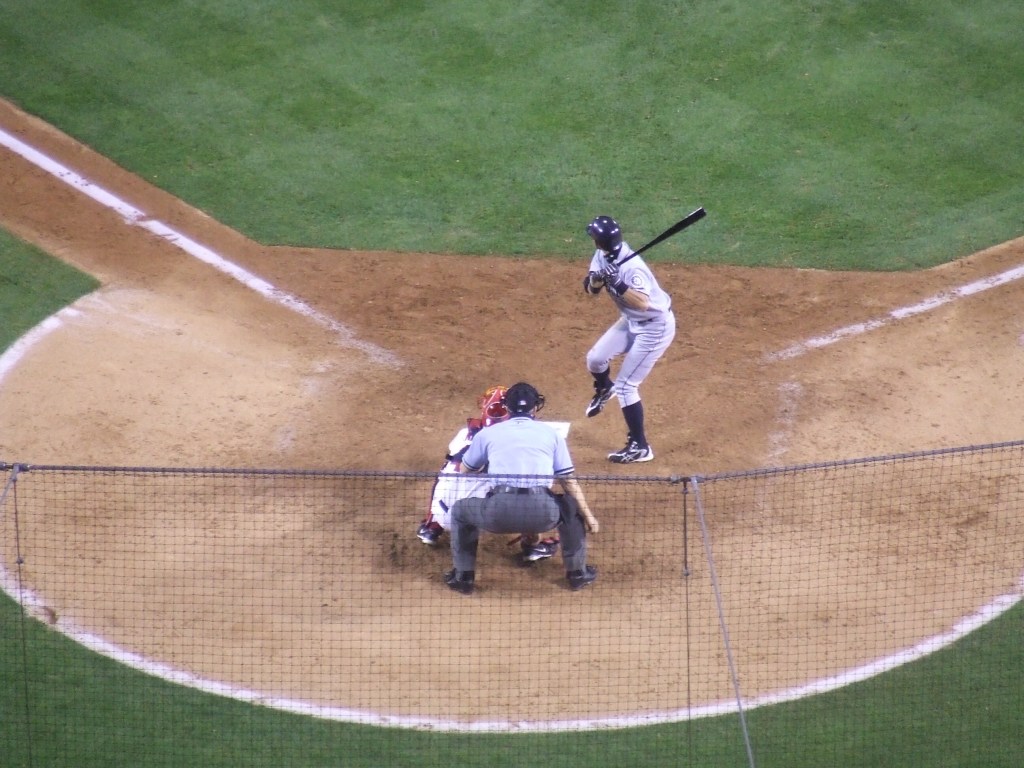
Ichiro Suzuki leading off for the visiting Seattle Mariners. (Photo credit: Jeff Hayes)

Leading off for the Seattle Mariners was right fielder Ichiro Suzuki. Ichiro was off to yet another great start, leading the American League in hitting at .369. In his sixth season with the Mariners, Ichiro was rapidly becoming the best hitter of his era, and a major draw while on the road. He did not disappoint this night, collecting three hits and scoring three runs. However, Ichiro grounded out to start the game, with the teams going scoreless early in the contest.

The Angels started the scoring the bottom of the second inning, with two runs via consecutive RBI singles off Mariners starter Gil Meche. The Mariners countered with three runs in the third inning. The score remained 3-2 going into the top of the fifth inning. Angels starter John Lackey intentionally walked Raul Ibanez to load the bases for Mariners 1B Richie Sexon. Sexon, a power hitter with a low batting average, deposited the next pitch over the centerfield fence for a grand slam. That home run ended Lackey’s night, and gave the Mariners an 8-2 lead.

Angel Stadium at night. (Photo credit: Jeff Hayes)

Much to my surprise, despite the makings of blow out, the Angels fans stayed for the bulk of the game (so much for the stereotypical Southern California fan leaving early). The nearly full stadium generated a feel I would expect in ballparks across the Midwest or the Northeast. In addition, clear skies, light winds and temperatures in the 60s provided an enjoyable backdrop for a very pleasant baseball experience at Angel Park.

The Mariners tacked on four more runs in the seventh inning, including back-to-back home runs by Ichiro Suzuki and Adrian Beltre, essentially putting the game out of reach for the hometown Angels. The Angels did respond with runs in the seventh and eighth innings, but not nearly enough to put a dent in the Mariners lead. Angels star (and future Hall of Famer) Vladimir Guerrero was quiet in this contest, managing a double in four at-bats.

Angels RF Vladimir Guerrero batting at Angel Stadium. (Photo credit: Jeff Hayes)

Overall, my impression of Angel Stadium of Anaheim was very good, better than I expected. Good weather and a large crowd made this possibility my favorite Southern California game. At some point, I’d like to visit the area again, and would consider a return to Angel Stadium an essential part of that trip.

Petco Park San Diego, CA Friday June 9th 2006

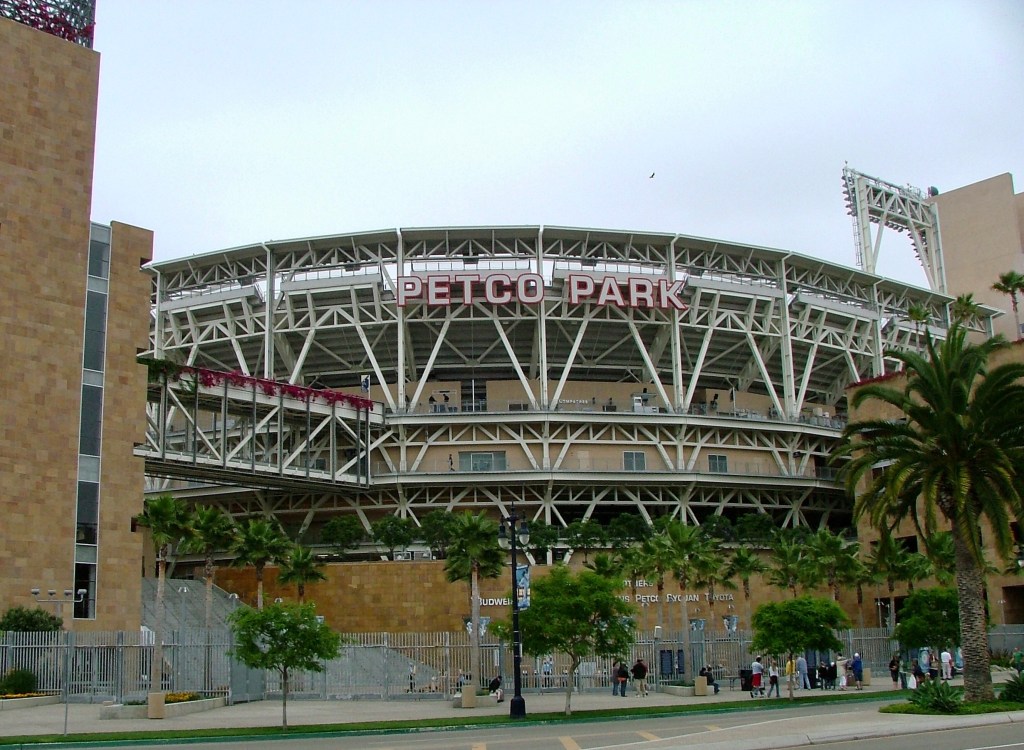
Petco Park, San Diego CA (Photo credit: Jeff Hayes)

Following a day off from the baseball part of our trip, we visited Petco Park in San Diego on a Friday evening to see the hometown Padres take on the Florida Marlins. Staying in a hotel near San Diego, we were less than 10 minutes from the stadium.

Petco Park, located in the East Village section of San Diego, is adjacent to the historic Gaslamp District, which is a lively section of the city replete with bars and restaurants. Though there is no onsite parking at Petco Park, there are many parking garages with a 10 minute walk of the stadium. After finding suitable parking north of the ballpark, we wandered around the Gaslamp District, waiting for the ballpark gates to open.

Petco Park, from near the home plate entrance. (Photo credit: Jeff Hayes)

Unfortunately, the “June gloom” was still in place, and slate gray skies greeted us as we approached the centerfield entrance of Petco Park. Passing through security to enter the gate, we were stopped after my brother’s camera bag was searched. We were informed that my brother couldn’t bring his camera into the park, since it was stadium policy to prevent people from using “professional camera equipment”.

In all of our travels, this was something we’d never heard at a ballpark. When we protested, the security agent checked with his supervisor, who stated my brother’s camera was allowed in the ballpark. In the following years, MLB has clamped down on the size of lenses allowed in stadiums.

We entered the ballpark through the centerfield gate, passing through the grass field known as the “park in the park”. (Photo credit: Jeff Hayes)

Beside the local environment, the most noticeable attribute of Petco Park was the large outfield. In 2006, the stadium was still in its original configuration, with some of the deepest power alleys in the game. The combination of the large outfield and cool conditions resulted in Petco Park seeing the lowest number of home runs in baseball. With the cloudy and cool conditions this evening, we expected a low scoring game in this large park.

Wandering through the park, perhaps the most noticeable sight was the construction cranes behind the centerfield fence. Like many of the “newer’ MLB stadiums, Petco Park was built amidst an urban setting. A quick walk around the ballpark suggested that the area immediately adjacent to the park was in the process of rejuvenation, with the stadium serving as the centerpiece.

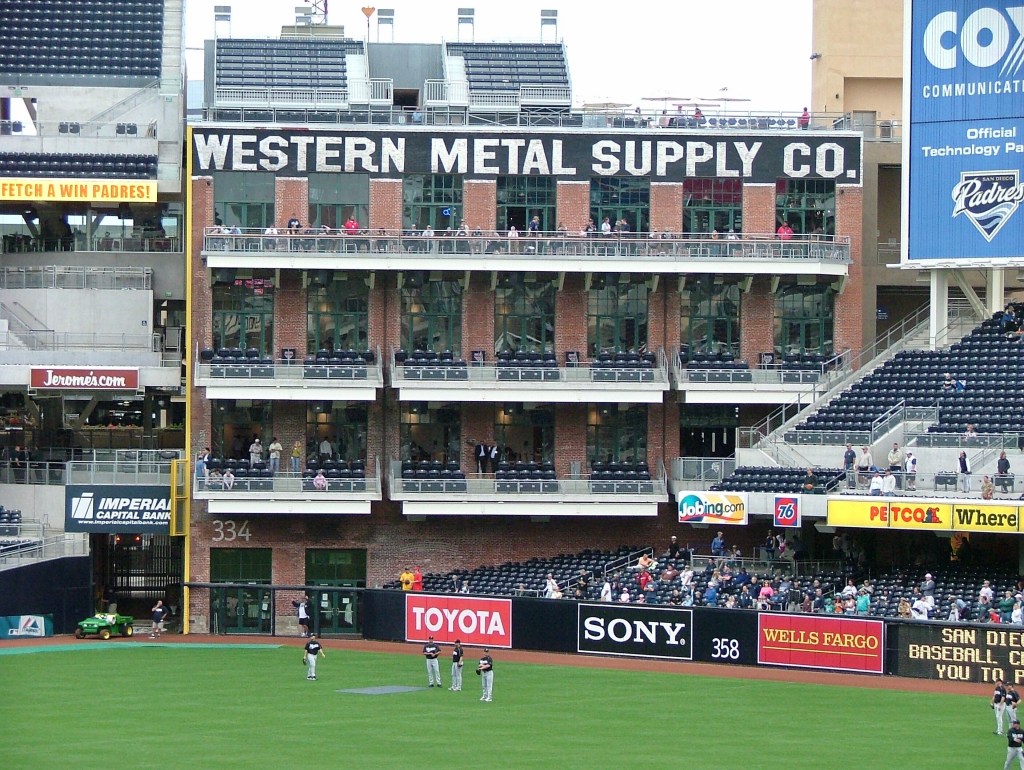
The Western Metal Supply Co. building serves as a cornerstone of Petco Park. (Photo credit: Jeff Hayes)

One of the features that caught my attention seeing Petco Park on TV was the Western Metal Supply Co. building located in the left field corner. The four story building was constructed in the 1880s, and remained in the McKenzie family for more than 80 years. When the building became a victim of bankruptcy, rather than tearing it down, it became a centerpiece of Petco Park, around which the ballpark was built. Within the building is the Padres Hall of Fame Bar and Grill, as well the Rail, which contained balcony seats with a great view of the action.

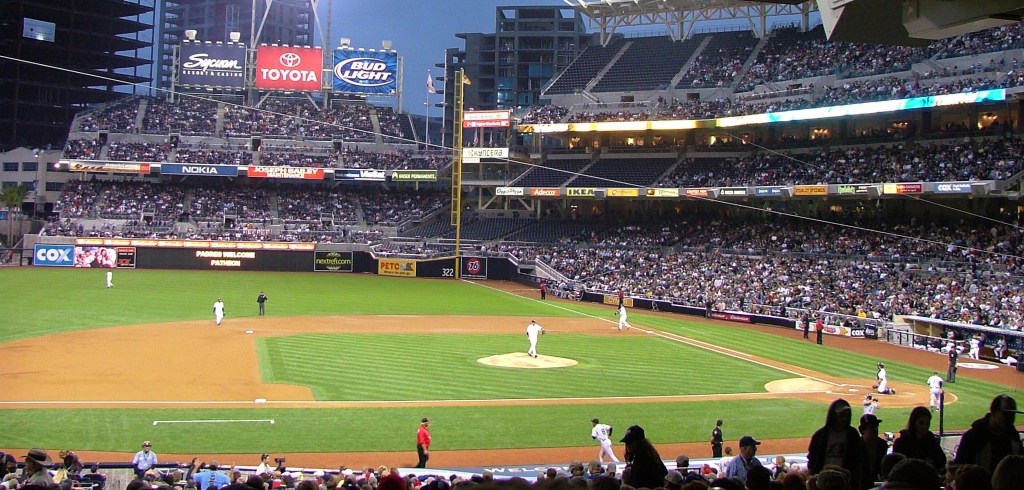
Following our tour of the park, we visited the concession stands on the lower level to get a baseball dinner, then headed for our seats. Sitting in the lower level down the left field line astride of third base, we gained a better a sense of how large Petco Park was. The three deck stadium has a capacity of 42,000+, including the seats in centerfield. On this cloudy and cool night, there were considerably fewer fans in the seats by the time the first pitch was thrown at 706 pm PDT.

The view from our seats. (Photo credit: Jeff Hayes)

Not to promulgate a stereotype, but the crowd did start to increase after the first pitch. By the time the ballpark lights started to have an effect, most sections of the ballpark were nearly filled, ready for Friday night baseball. Taking the mound for the hometown Padres was Chris Young. The six foot 10 inch right hander has quietly enjoying the best start of his MLB career. For the visiting Marlins, the start went to 23 year old rookie Ricky Nolasco. Thus far in 2006, Nolasco had become one of the more reliable Marlins starter, sporting a respectable 3.32 ERA.

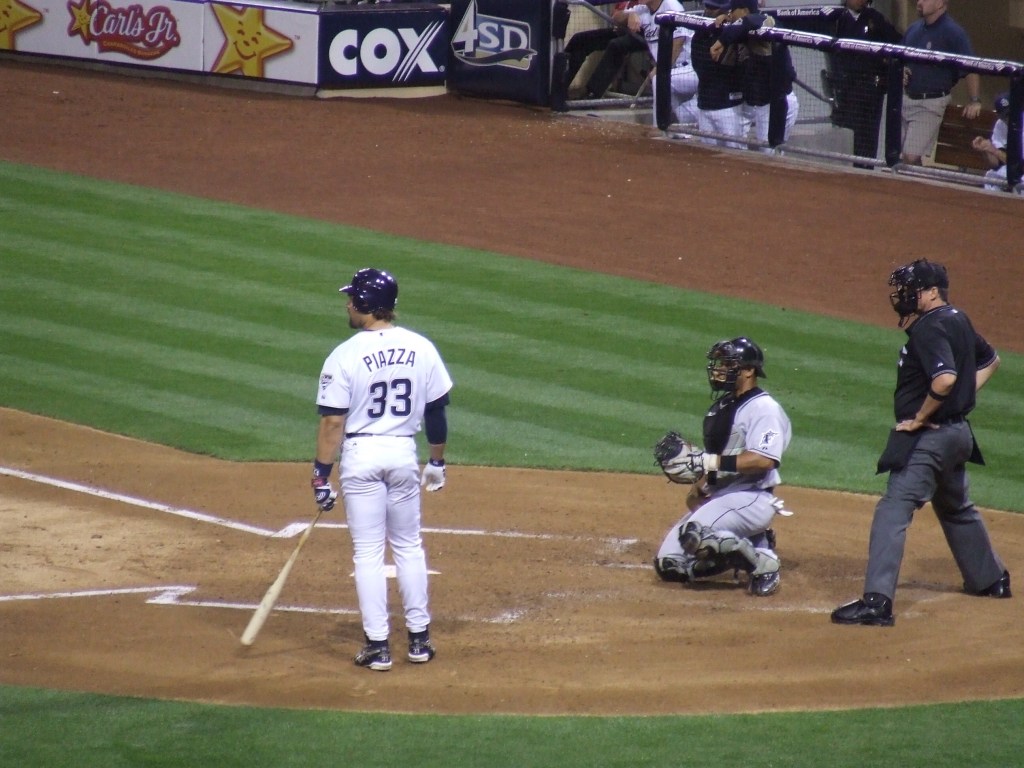
Mike Piazza at the plate for the Padres. (Photo credit: Jeff Hayes)

In the lineup for the Padres was a former Mets (and future Hall of Fame) Mike Piazza. Piazza, playing his last game with the Mets in 2005, elected to pursue free agency and signed with the Padres for the 2006 season. Honestly, the site of Mike Piazza in a Padre uniform was a bit jarring, after providing so many special moments with the Mets (including a dramatic home run in the first game after 9/11). Catching and batting cleanup, Piazza was the linchpin for a fairly potent Padres lineup.

The combination of good starting pitching, cool conditions and a big ballpark conspired to keep the game scoreless early. The Marlins broke through as 1B Mike Jacobson homered in the third inning, but the Padres responded with three runs in the fifth inning, including a home run by CF Mike Cameron. Outside of these blemishes, both starters delivered quality starts, with Padres starter Chris Young striking out 12 Marlins.

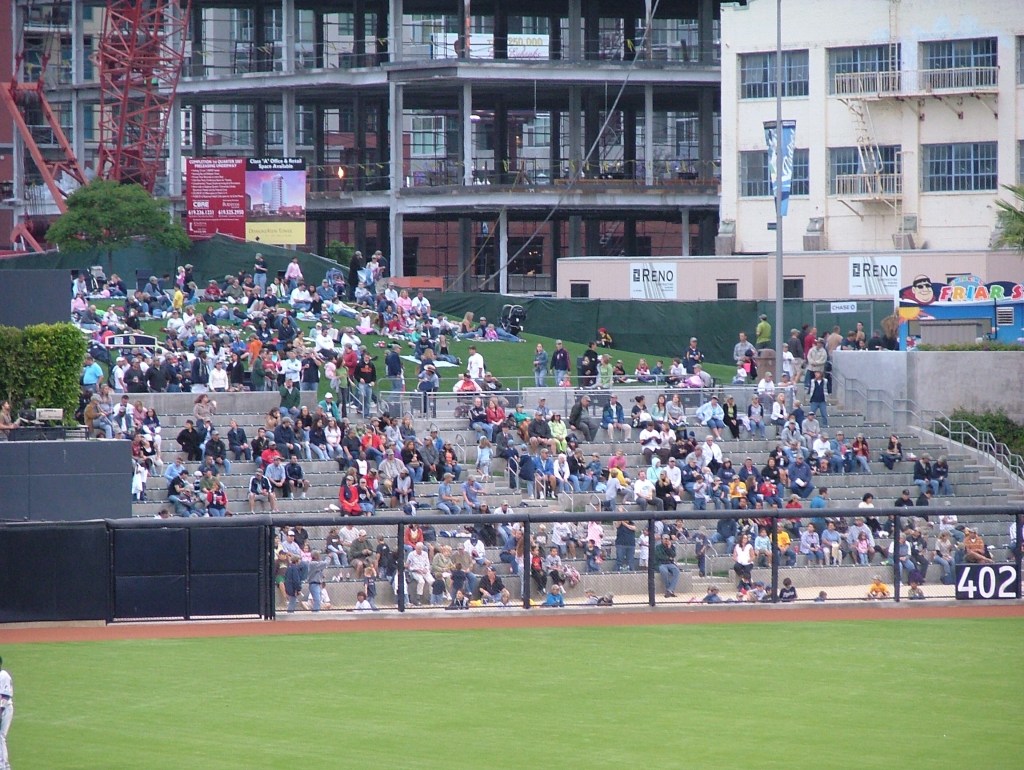
Fans filling in the centerfield bleachers and the “park in the park”. (Photo credit: Jeff Hayes)

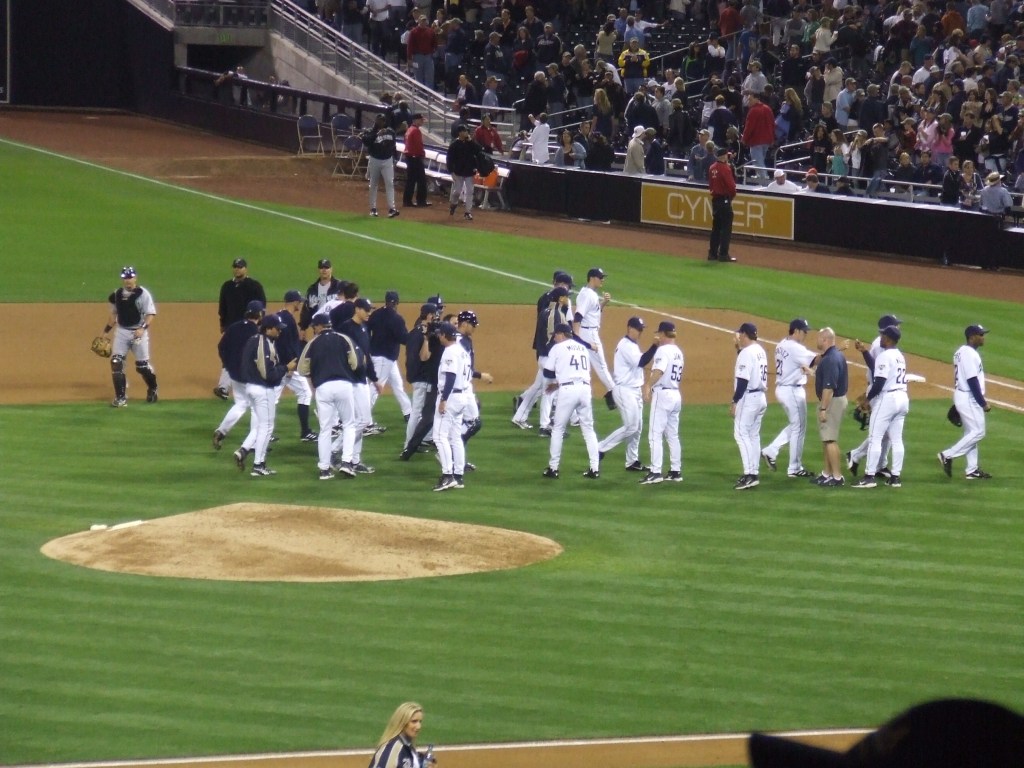
Despite the close contest, fans started leaving after the seventh inning stretch. Perhaps the cool conditions had something to do with it, but the stereotypical West Coast baseball fan arrives late and leaves early, right? In any event, the game became a battle of the bullpens. The Marlins tacked on a run in the ninth against Padres closer (and future Hall of Fame) Trevor Hoffman, but the Padres held on for a 3-2 victory.

The Padres celebrating their 3-2 victory over the Marlins. (Photo credit: Jeff Hayes)

Before exiting the nearly empty stadium, I paused for a moment to take one last look at Petco Park. Despite its size, there was a certain charm to the place, and I came to enjoy it more as the game wore on. Though Dodger Stadium is certainly more iconic, seeing a game here was almost as enjoyable. During our next Southern California trip, we will make sure to stop back to see the ballpark, hopefully with better weather conditions.