Whitaker Bank Park, Lexington Kentucky June 26th 2021

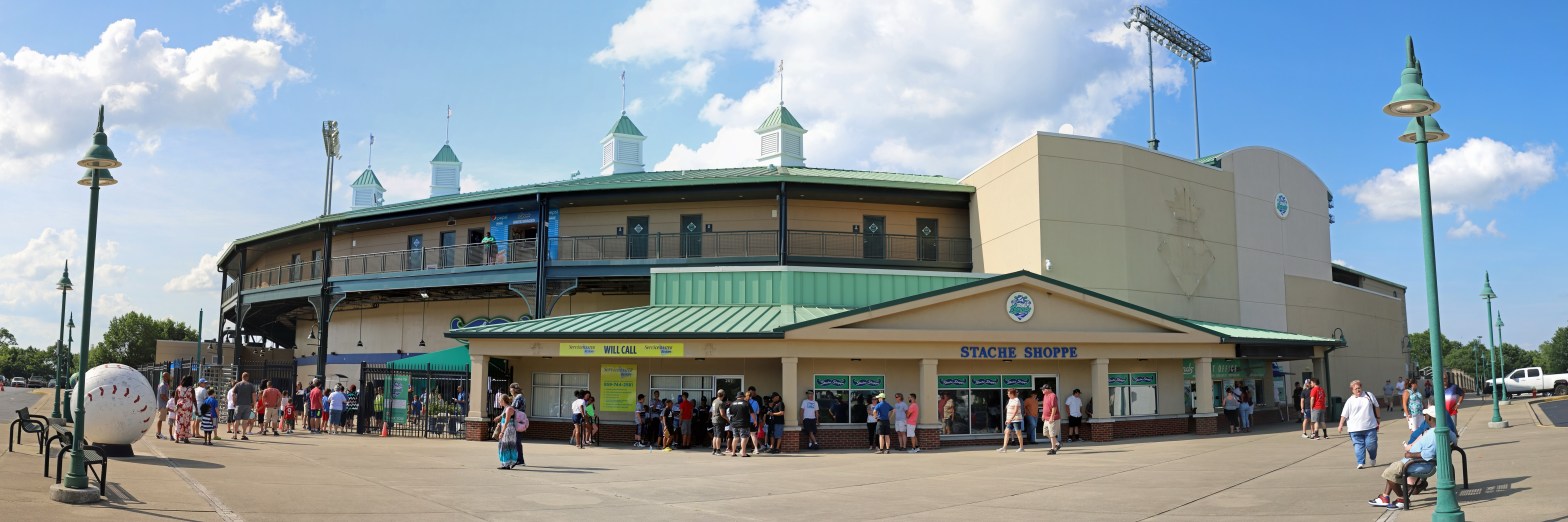
A composite image of Whitaker Bank Park, home of the Lexington Legends. (Photo credit: Jeff Hayes)

Following a day of exploring Louisville (including Churchill Downs and the Louisville Slugger Museum), we drove east on Interstate 64 for an hour to attend a baseball game in Lexington. As part of the restructuring of the minor leagues, Lexington lost their South Atlantic league affiliation. Left without a baseball team, the Atlantic League of Professional Baseball (ALPB) announced that they would add Lexington as a member for the 2021 baseball season. Since we have an affinity for the ALPB (as each of us had ALPB franchises close to us), we decided to visit this park, as well as Louisville Slugger Field as part of our first baseball trip since the onset of the pandemic.

About 70 miles from Louisville (where we were headquartered for the Kentucky visit), the trip took about an hour and was unremarkable as traffic was generally light. Upon arrival, we found onsite parking that was very close to the park, though at $6, a bit higher than we usually see at minor league or ALPB parks. Per our usual method of operation, we toured the outside of the park. Debuting in 2001, Whitaker Bank Park had the appearance of a modular ballpark, equipped with some add-ons (including the Stache Shop near the main gate).

This message appears on the outside wall of Whitaker Bank Park, along the first base side. “Pass the Baton” is good advice, in sports and in life. (Photo credit: Jeff Hayes)

There were reminders that we were not far from the home of the Kentucky Derby. Steeples similar to those at Churchill Downs adorned the top of the stadium, and murals of race horses graced the outside wall behind third base. Perhaps the most interesting was artwork on the outside wall behind first base. It took me a moment to read the lettering, but the message was crystal clear. Being hot and humid, we did not spend much more time viewing the outside of ballpark, entering through the main gate behind home plate.

A composite image showing Whitaker Bank Park from behind home plate. (Photo credit: Jeff Hayes)

My first impression of the inside of Whitaker Bank Park was that it had a wide open feel, with a small videoboard adjacent to bleachers in left field, and a larger scoreboard/videoboard in right centerfield. In between the two, next to the batter’s eye in centerfield, stands a small white transmission tower, complete with a dome on top. Research concerning the dome indicated that it once was part of a Doppler radar weather, but I have not been able to substantiate that claim. Nonetheless, I enjoyed the wide open feel of the ballpark, and in this case, I believe that less is more.

Walking along the main concourse toward right field, we encountered the Budweiser Stables down the first base line. Beer and food can be ordered here while fans watch the game. On this evening, the Budweiser Stables was hosting a private party, so we did not explore this area much. Next to the right field foul pole we found the Pepsi Party Deck. Covered by a canvas roof, the Pepsi Party Deck contained a large number of benches for fans to view the game while eating and drinking. As was the case with the Budweiser Stables, the Pepsi Party Deck was closed for a private event. However, a kind security person allowed me to take some pictures from the deck before politely asking me to leave.
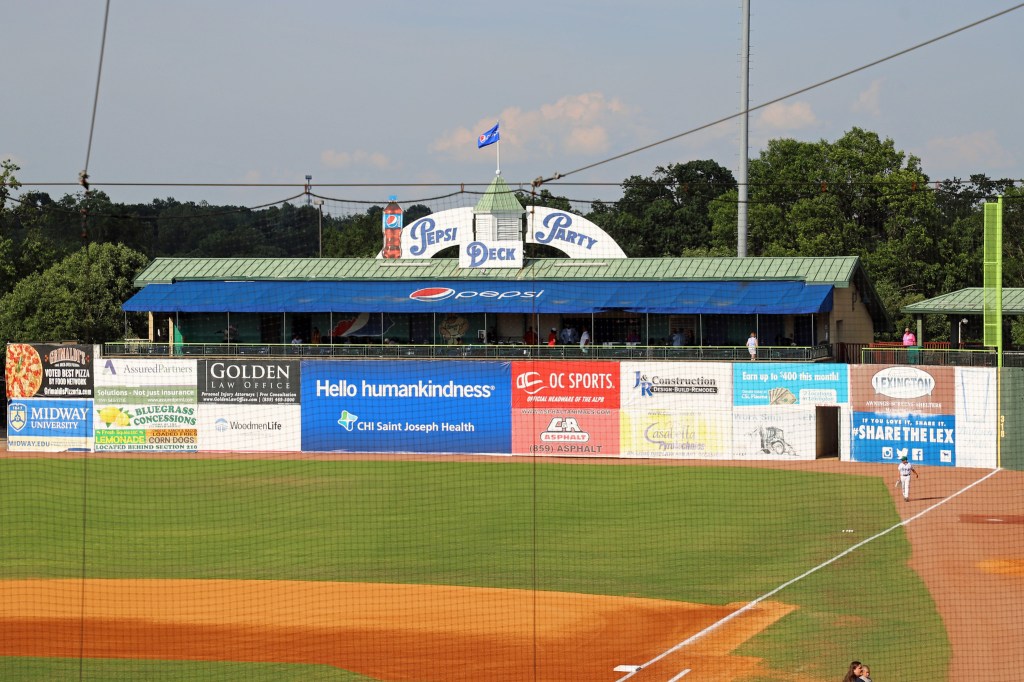
The Pepsi Party Deck in right field at Whitaker Bank Park. (Photo credit: Jeff Hayes)

Backtracking on the concourse behind home plate into left field, we found picnic benches covered from the hot late June sun by a canvas roof. A small kids zone adjacent to the left foul pole was empty, as it was likely too hot to play directly in the sun. Finally, we briefly explored the rather large bleacher section in left field, which was comprised of aluminum seating. As we headed back toward our seats, we were better able to visualize the seating area. Two decks of seats stretch from mid right filed behind home plate to mid left field. The lower deck, which is much smaller, encompasses the first few rows closest to the field, while the upper deck contained the bulk of the seating. Above the upper deck, private boxes extended along the length of the seating area. All told, Whitaker Bank Park can accommodate just under 7,000 fans, but it was clear fairly early that the crowd size this evening would be nowhere near that number.

Our seats for the game were situated in the lower portion of the upper deck, directly behind first base. These seats were chosen for their proximity to the action around first base, and eventually this section filled to about half of its capacity. After locating our seats, we headed up to the concession stands for a baseball dinner. The line at the concession stand was surprisingly long, and it took about 10 minutes to order and receive our food. Prices at the concession stand were much higher than I expected, and higher than we have seen in other minor league and ALPB parks we have visited. Food and drinks in hand, we settled in for the game.

The view from our seats for the game. (Photo credit: Jeff Hayes)

Before the first pitch, we were treated to a mashup of the National Anthem and the Black National Anthem, as part of the I Was Here project. When the Black National Anthem portions of the mashup were sung, I noticed some of the crowd near me being less than respectful, and I did my best not to let this affect my experience of the performance. On this evening, the home Lexington Legends played host to the High Point Rockers. As a nod to the Negro Leagues, Lexington donned uniforms with the name Hustlers emblazoned on the jersey. While there were a few familiar names in the lineups, no name was bigger than Brandon Phillips. Playing second base for the Hustlers, Phillips had recently become a part owner of the Hustlers/Legends. Phillips seemed to be enjoying the experience, as he seemed almost joyful in his approach the game that night.

Hustlers second baseman and part owner of the team, Brandon Phillips. (Photo credit: Jeff Hayes)

Being an ALPB game, there were some important rules differences from the MLB and minor leagues. First, balls and strikes were called by the Automated Ball-Strike System (ABS), with the output from the system relayed to the home plate umpire, who then makes the call to the players and fans. More than a few players, thinking they had walked, started off for first base, only to be called out. The second rule change was the continued use of larger bases (18 inches), in hopes of reducing inquires on the base paths. Finally, when a starting pitcher is removed from the game, that team loses its DH from the lineup. Dubbed the Double Hook, the rule is intended to inject some strategy back into the game, perhaps encouraging managers to stick with starting pitchers longer. Each of these “experiments” were at the behest of MLB, with which the ALPB has a developmental agreement. It is possible some or all of these rules could someday become part of the MLB game.

Lexington struck first with four runs in the first two innings, but the Hustlers starter lasted only two innings. High Point responded with two runs of their own in the bottom of the second, and the score was 4-3 going into the bottom of the sixth inning. Lexington scored fours runs as the Rockers committed two costly errors. Though the sun has been in my eyes for much of the game, it became nearly blinding at about this time, and continued that way until sunset (around 905 pm EDT) finally provided some relief. Though fans around me (including my brother, who as seated next to me) were affected, my sun angle seemed to be the worst, making watching the game virtually impossible.

Mercifully, the setting sun put an end to the nearly blinding light I experienced for a good portion of the game. (Photo credit: Jeff Hayes)

Being near first base, we were treated to the enthusiasm of Hustlers’ first base coach Ben Revere. Playing for a handful of MLB teams during the 2010s, Revere was animated much of the night, assuming a batting stance while timing pitchers, as well as chatting up Hustlers and Rockers players alike. Watching Revere and his unabashed zeal was almost as much fun to watch as the game itself.

My brother’s picture of a close play at the plate. (Photo credit: Jeff Hayes)

Typically when my brother and I go to games, we keep mostly to ourselves, engaged in conversation about the game. On occasion, nearby fans have mistaken us for scouts, as they follow our banter, my brother taking pictures and me keeping score (which seemingly only old fans still do). On this night, fans around us openly engaged us, sensing our passion for the game. A woman in front of us told us her husband was the first base umpire, while a fan behind us, apparently friends with some of the players, told us about the unfamiliar players we were seeing. Finally, an amateur photographer approached my brother, and they engaged in discourse about taking pictures at the ballgame. Perhaps it was the area that influenced the interactions, as we are unaccustomed to talking to fans near us, other than to comment briefly on what is happening on the field.

The main scoreboard/videoboard at Whitaker Bank Park, as day dissolves into evening. (Photo credit: Jeff Hayes)

Lexington tacked on two more runs in the bottom of the seventh inning, and the Hustlers bullpen held the Rockers’ offense in check on the way to a 10-3 victory. The action on the field, as well as the interaction with fellow fans kept us busy, and we enjoyed the experience at Whitaker Bank Park. We exited during the post game fireworks, as many of the fans stayed to watch the show. This allowed us to navigate the parking lot quickly, and we made the trip back to Louisville in less than an hour. The ballpark was more or less what I expected, though the rather paltry crowd for a Saturday night game worried me that the Legends may not draw well enough for the franchise to survive in Lexington. Living so far away, it is unlikely we will return.

PeoplesBank Park, York PA June 13th 2021

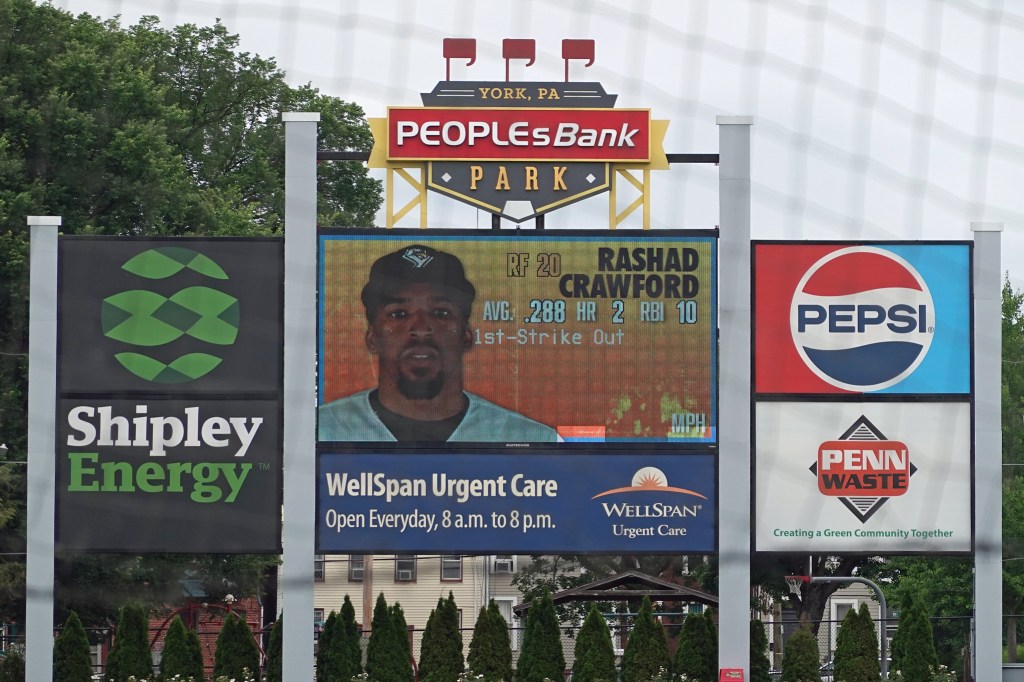
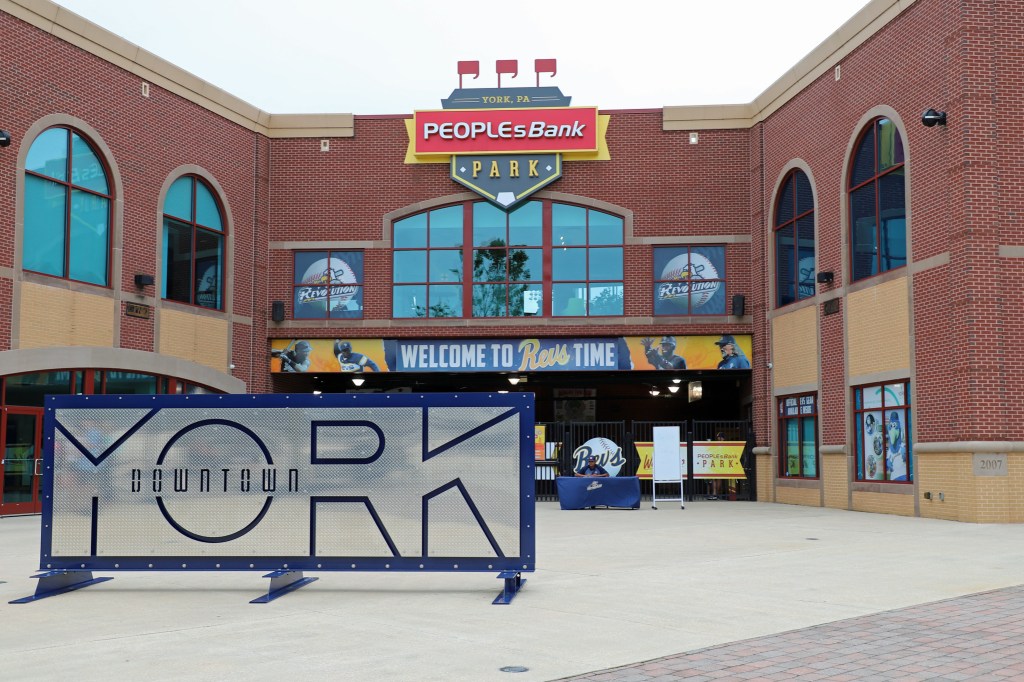
Welcome to PeoplesBank Park in York PA!

On a cloudy Sunday afternoon, with the threat of thunderstorms looming in the distance, my brother and I set out for PeoplesBank Park in York, PA, the home of the Atlantic League’s (ALPB) York Revolution. About 45 minutes from home for me, the ride was relatively simple, as traffic was generally light during the early afternoon. Parking at PeoplesBank Park is spread across the general area of the stadium, with the most popular lot across the Codorus Creek from the park at the Smalls Athletic Field (using Google Maps with this location should make finding parking fairly simple). At $4.00, parking was a bargain, with the walk from the lot to the stadium taking less than 10 minutes. For those fans with mobility issues, there is a parking lot next to the field, but you may want to check on availability.

My brother and I had been here once before, as we headed home following a trip to eastern OH/western PA to see ballparks out that way. Just ahead of some deteriorating weather, we walked around the outside of the ballpark, which did not afford much of a sense of the place. Leaving just as the rain began, we left without knowing much more than we did before we arrived. Since the ballpark was within range of both of us, we planned to visit PeoplesBank Park in 2020, but the pandemic resulted in the cancellation of the Atlantic League season. Our first proper visit to York would have to wait…until today

The view of PeoplesBank Park from the Smalls Athletic Field across the Codorus Creek in York PA. (Photo credit: Jeff Hayes)

PeoplesBank Park is located on the edge of a neighborhood in York, and we saw row houses somewhat reminiscent of those found in Philadelphia. We found the architecture similar to what we saw in Harrisburg as well, so it seems to be a common theme across southeast and central PA. In fact, I would have been interested in walking through the neighborhood to get a better feel for the area, but we did not leave sufficient time for a side trip. Perhaps if time permits in a subsequent trip, we will investigate this portion of York more thoroughly.

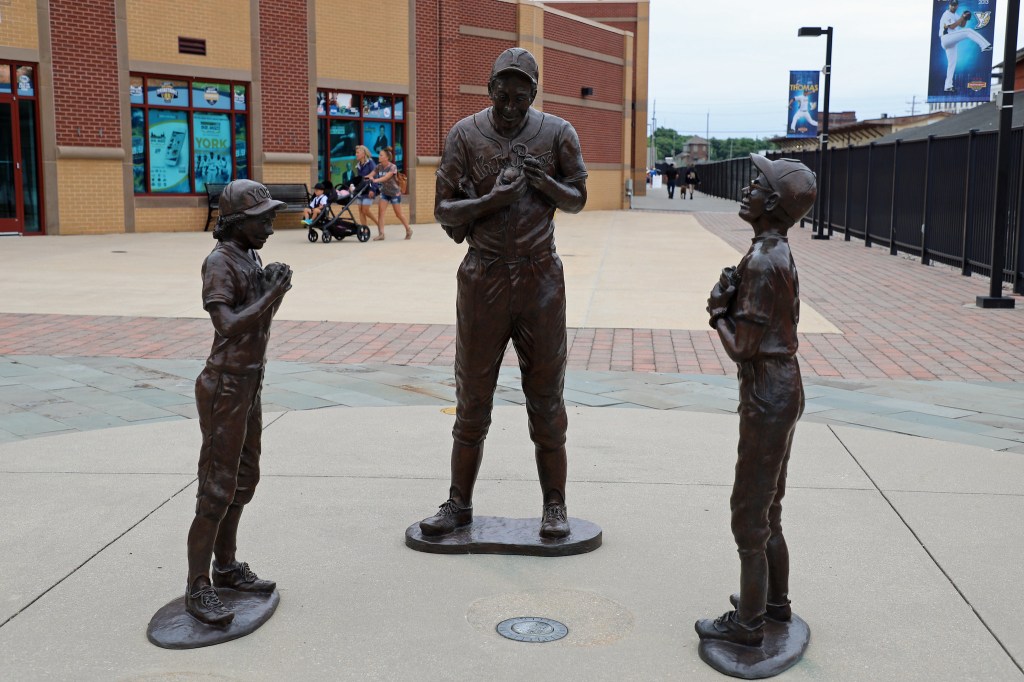
Though we were briefly here less than two years before, my memory of the event is fuzzy at best, so it was as if we were seeing the ballpark for the first time. PeoplesBank Park features Brooks Robinson Plaza, located to the right of the main entrance to the ballpark. A statue of Robinson graces the plaza, along with a plaque outlining information about the Hall of Famer’s storied career. Opening in 2007, PeoplesBank Park was constructed to resemble Orioles Park at Camden Yards, the favorite MLB team in this portion of PA. Without much to see on the outside of the park, we entered the stadium through the home plate gate.

A statue of Brooks Robinson and young fans in Brooks Robinson Plaza at PeoplesBank Park. (Photo credit: Jeff Hayes)

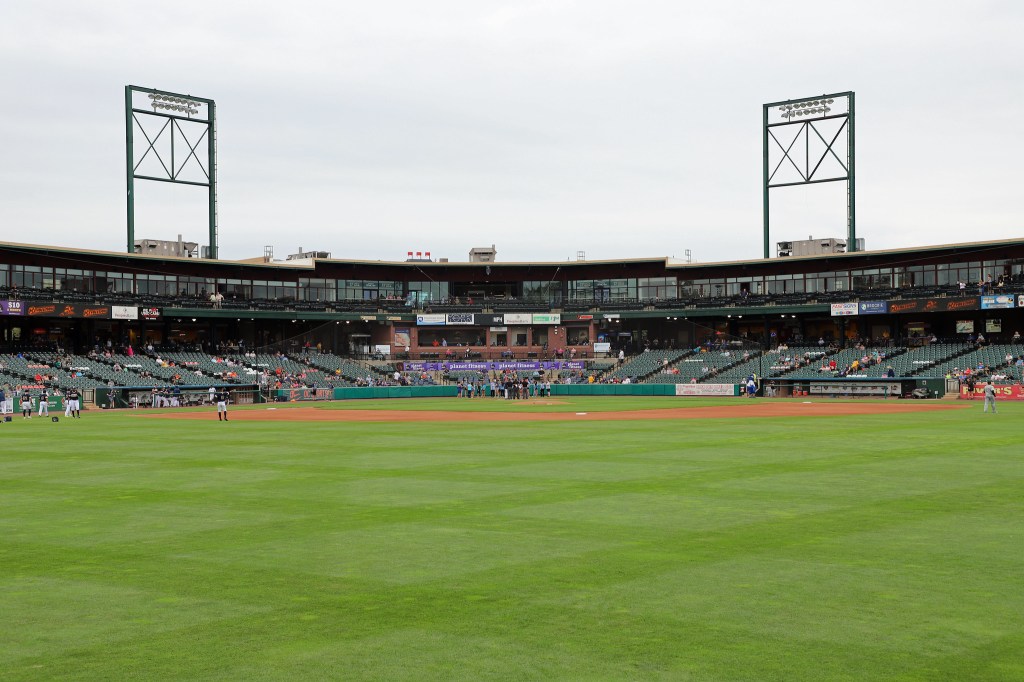
Upon entering the stadium, we quickly walked around the lower concourse, which encircled the ballpark. Not knowing what to expect, I was immediately impressed with the park, which seemed colorful and vibrant, even on this cloudy Sunday afternoon. With only minutes before the first pitch, we quickly walked from right field to left field before finding our seats along the third base side. Though I did see why others thought PeoplesBank Park looked liked Camden Yards (especially the picnic area in right field), another ballpark came to mind: Regency Furniture Stadium, located in Waldorf, MD. Also home to an Atlantic League franchise (the Southern Maryland Blue Crabs), there was more than just a passing resemblance to that ballpark, which we would discover during the game.

PeoplesBank Park from the centerfield concourse. (Photo credit: Jeff Hayes)

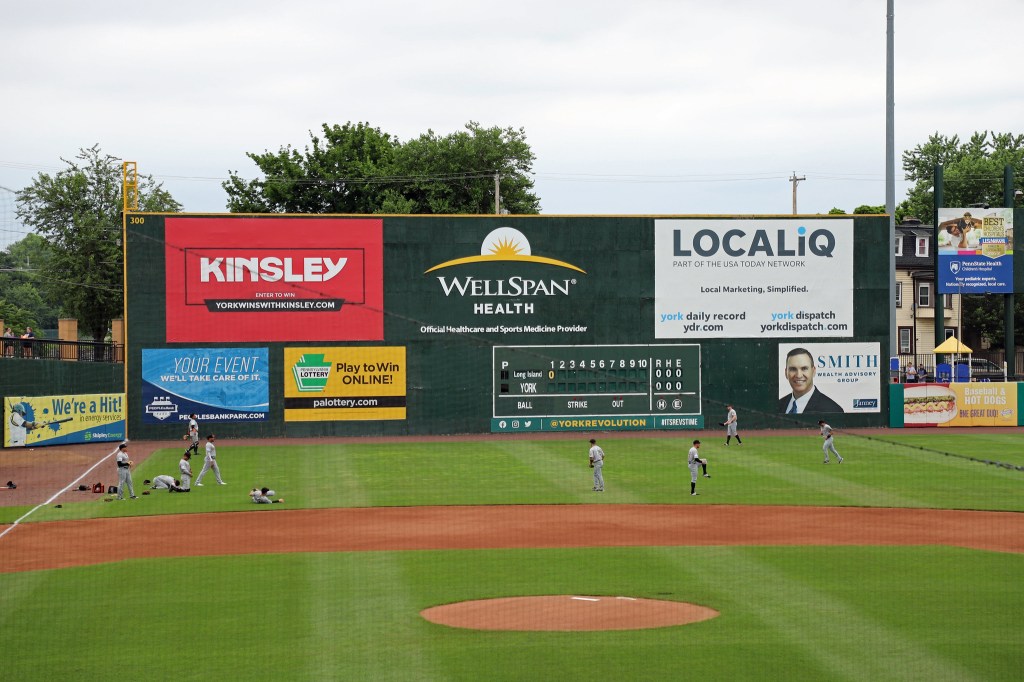
Perhaps the most prominent feature in PeoplesBank Park is the wall in left field. Known as Arch Nemesis, the forest green wall stands 37 feet 8 inches tall (six inches taller than the Green Monster in Fenway Park), making it the highest wall in professional baseball. Creation of the highest wall in baseball was apparently in response to the short distance from home down the left field (a mere 300 feet), due to the presence of train tracks just beyond the wall. We saw the wall in “action”, as the ballpark held a couple of balls that may have left other ballparks with shorter fences. There is also a manually operated scoreboard at the base of the Arch Nemesis, which bares some resemblance to the one in Fenway.

The Arch Nemesis, located in left field at PeoplesBank Park in York PA. Note the hand operated scoreboard at the base, like the one at Fenway Park in Boston MA. (Photo credit: Jeff Hayes)

We reached our seats in the lower level behind the dugout just as the first pitch was thrown. Minutes later, to our surprise, a beautiful sight appeared. A bald eagle passed nearly overhead, and it seemed as though the entire crowd noticed its passage. Based on the murmuring in the crowd, I got the impression that the eagle had been there before, and PeoplesBank Park could be on its normal route through the area. Quick reactions by my brother allowed him to capture the moment perfectly with his camera. Unfortunately, the eagle did not pass by again during the game.

This was not the first time we were graced by the presence of a bald eagle. While exploring Lock #1 on the Mississippi River in St Cloud MN on an overcast and cold late September afternoon, a bald eagle passed overhead, flying south along the river. That time, we were caught completely off guard by the eagle’s passage, and neither of us managed to snap a picture before it disappeared into the distance.

A bald eagle passing overhead on a cloudy Sunday afternoon at PeoplesBank Park in York PA. (Photo credit: Jeff Hayes)

Following the excitement of our unexpected visitor, we turned our attention back to the game. For this Sunday matinee, the York Revolution were hosting the Long Island Ducks for the finale of their series. There is a strong tie between the Ducks franchise and the New York Mets. Ducks manager Wally Backman was the starting second baseman for the the 1986 World Championship team, and the Ducks starting left fielder, L.J. Mazzilli, is the son of perennial Mets fan favorite Lee Mazzilli. Coming into the action this afternoon, the Ducks held a three game lead over the Revolution in the North Division of the ALPBA.

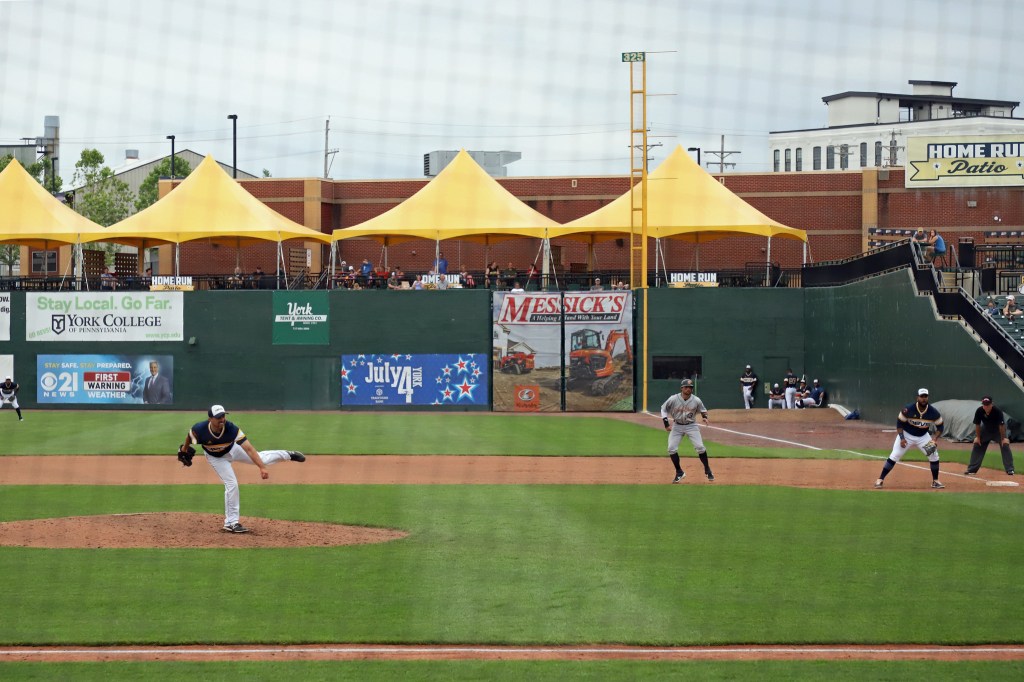
Settling into the game, I began to take a better look at PeoplesBank Park. As mentioned earlier, I felt as though it had more than a passing resemblance to Regency Furniture Stadium, and the more I examined my surroundings, the more I saw the similarities. Like the ballpark in Waldorf, MD, the bullpens were located in foul territory just behind the bases. Seating for the respective bullpens is near the railing, with line drive foul balls putting the relievers in a precarious spot. On this day, most relievers were either in the dugout or further down the line, a testament of the danger these players face sitting in prime line drive areas.

Most of the chairs in the Revolution bullpen area were empty, as line drive foul balls off the bats of right handed hitters puts the pitchers in danger. (Photo credit: Jeff Hayes)

In addition, the main seating area was structured similarly to Regency Furniture Park, with seats on the left and right field lines angled such that they faced the pitcher’s mound. When the seating in left and right field along the rail is considered, PeoplesBank Park hold about 7,500 fans, which is large for an ALPB stadium.

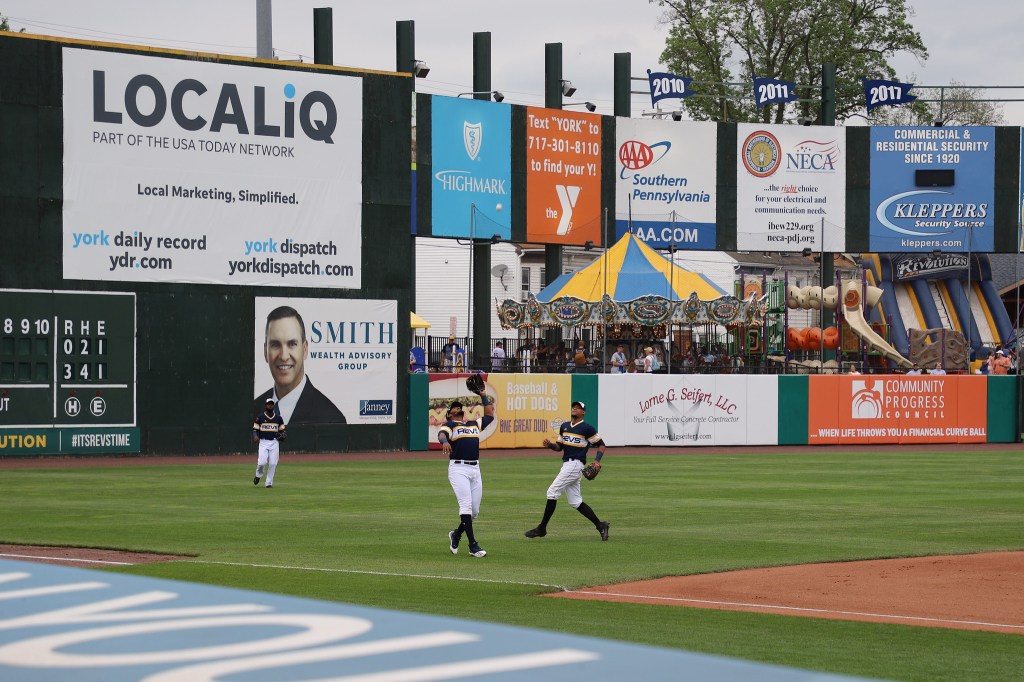
In addition to the hand operated scoreboard, there is a more modern scoreboard, located in centerfield, just behind the picnic area. Modest in size and resolution, this scoreboard was mainly informational, with occasional video replays presented. During the game, I noticed to auxiliary video boards near centerfield (that seemed to play mainly advertisements). Finally, sandwiched between the Arch Nemesis and the centerfield score board was a tightly packed kids zone. Complete with a carousel and several slides, these facilities offered something else for the kids to do while the adults enjoyed baseball.

The kids zone at PeoplesBank Park, nestled between the Arch Nemesis and the centerfield picnic area. (Photo credit: Jeff Hayes)

Though I did not exactly know what to expect as we drove toward York, PeoplesBank Park far exceeded my expectations. The more I saw of the park, the more I liked it. Placed along Arch Street (on the edge of a neighborhood), the ballpark has an urban feel to it, providing the stadium with an appealing backdrop. Not long after the first pitch, I felt as though PeoplesBank Park was possibly my favorite ALPB ballpark (sorry Southern Maryland Blue Crabs).

During our brief tour of the ballpark, we did notice places to eat, especially on the concourse in right field. Given our time constraints, we did not examine any of the cuisine at PeoplesBank Park, instead choosing standard baseball fare (sodas, hot dogs and pretzels) at the nearby concession stand. Considering that my palette is relatively unsophisticated (and I do not drink alcohol at ball games), it is likely that I would be unable to render an intelligent review of food and drink at the park. For that, you are on your own.

The view from our seats. (Photo credit: Jeff Hayes)

Following a quiet top of the first, the Revolution scored three runs in the bottom of the frame. After that outburst, the game did not see any more scoring until the top of the sixth inning. However, due to the 16 walks issued by both teams (as well as a number of deep counts), the pace of play slowed to a crawl at times. This is not atypical for an ALPB game, as the rosters mainly consist of ex MLB/MiLB players, as well as those that went undrafted. For comparison, the level of play in the ALPB is roughly similar to that seen at the Double A level in affiliated baseball, though players (with the notable exception of pitchers) are typically more polished in the ALPB, due to the experience level of the players.

It is not unusual for ALPB rosters to have familiar names on it, which helps with attendance in most cities, but many of these players are past their best days. Some hang onto the notion of being picked up by an affiliated team (which happens fairly often, given there is a player development deal in place between MLB and the ALPB), while others play baseball for as long as they can before hanging up their spikes for good. The ALPB also brings baseball to underserved areas, in places where there are no MLB or MiLB teams close by.

A view of the scoreboard/video board in centerfield. (Photo credit: Jeff Hayes)

Though the crowd was not particularly large (as often happens for Sunday afternoon games), the fans were vocal, especially those close to us. That enthusiasm was also evident on the field, as the Revolution third baseman pretended to swat at the York shortstop who got too close on an infield popup. Though the sample size is admittedly small, there seems to be a good repertoire between the fans and the team, and that is refreshing. All too often when teams play badly, so called fans seem to turn on them, but that does not seem to be the case here.

Revolution shortstop and third baseman converging on a popup. Feeling the shortstop got too close, the third baseman playfully swatted at him after making the catch. (Photo credit: Jeff Hayes)

In the top of the sixth inning, the Ducks scored two runs, drawing within a run of the Revolution. However, York tacked on another run in the bottom of the seventh inning, and a trio of Revolution relievers held off Long Island for a 4-2 victory. Unlike most crowds, many Revolution fans stayed until the last pitch. Thankfully, the threat of thunderstorms held off, providing a cloudy but dry experience at PeoplesBank Park. As we filed out of the park, I was still surprised how much I enjoyed the place. Obviously, a great deal of thought went into the design of the stadium, and the place still looks great years after first opening its gates. Being just 45 minutes away, I plan to visit this beautiful ballpark as often as it feasible.

Walking back to the parking lot after the game, I once again enjoyed the surroundings. Being relatively new to the area, I found this part of York fascinating, and could spend time here simply exploring. The entire visit was enjoyable, and PeoplesBank Park is worth a visit if you are within range during the ALPB season.

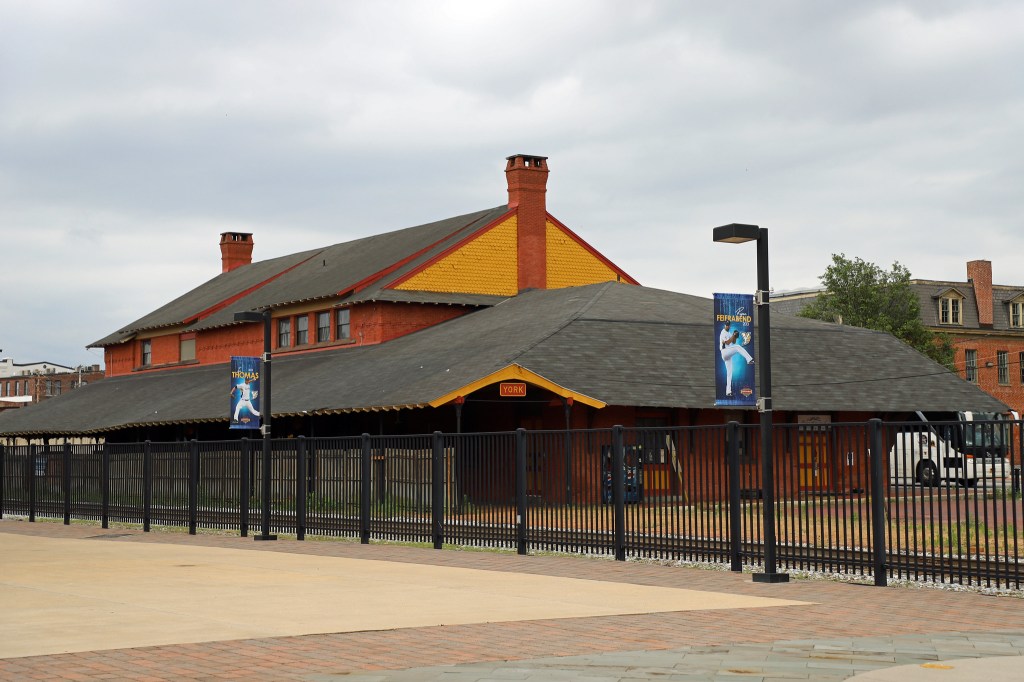
The York Train Station, just outside PeoplesBank Park. (Photo credit: Jeff Hayes)

Campbell’s Field, Camden NJ

Main entrance to Campbell’s Field in Camden NJ. (Photo credit: Jeff Hayes)
  • First visit: Tuesday, July 26th 2011
  • Final visit: Sunday, August 3rd, 2014

During a brief return to NJ in the early 2010s, I became aware of the Atlantic League of Professional Baseball‘s (ALPB) franchise in Camden NJ. Dubbed the Riversharks, the team played its home games at Campbell’s Field, located near the Delaware River. Campbell’s Field was the northern extent of the Camden Waterfront, a revitalization project which includes the Adventure Aquarium and the BB&T Pavilion, an outdoor amphitheater. Opening in 2001, not only was Campbell’s Field home of the Riversharks, it also hosted baseball for Rutgers University, St. Joseph’s University, and Temple University. The field served as the home of the Riversharks between 2001 and 2015.

Living less than 20 miles away, the trip to the ballpark was relatively simple, taking state roads to the Waterfront. Parking was also simple, as there was generally many available spots in the main lot adjacent to the stadium. Driving through Camden, it was clear that the city was still in the process of recovery, with reclamation projects in progress. Not that many years before, people actively avoided Camden, as it had a reputation for violence, and that reputation kept the city from rebounding. With the opening of the Camden Waterfront, positive changes occurred, and by the time we visited Campbell’s Field, it was a much more pleasant environment.

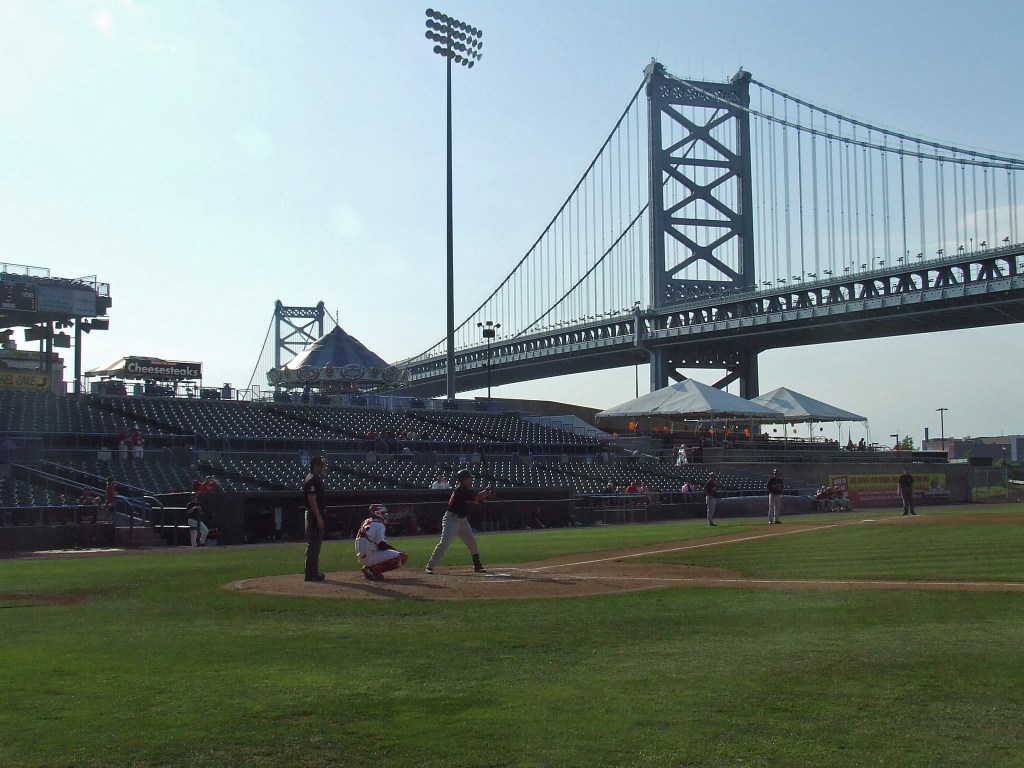
The view from behind home plate at Campbell’s Field in Camden, with the Ben Franklin Bridge dominating the skyline. (Photo credit: Jeff Hayes)

Being an independent league, ALPB rosters often include ex-MLB players, minor leaguers out of options with their MLB club, and young players not drafted into the MLB pipeline. It is not unusual for teams to have a few notable ex-MLB players, and being able to seem them in a much more intimate setting can be a boost for the ALPB team’s attendance. Due to the mix of experienced players and young talent, the level of play at Campbell’s Field was good, rivaling the level of play in AA, and the pitching tends to be perhaps just a bit better. Pay in the ALPB is not great, so players in the league have motivation to perform well, as ex-MLBers play for one more shot at The Show, and younger players try to get noticed by MLB organization.

Walking up to Campbell’s Field, the view is dominated by the Ben Franklin Bridge, which connects Camden to Philadelphia, PA. Regardless of what we might find inside, the magnificent view of the suspension bridge superimposed on the ballpark was worth the trip itself. Entering the ballpark required climbing a not inconsequential set of concrete stairs (as shown in the first picture), which would pose an issue for those with mobility issues. Stairs climbed, we were deposited on the upper concourse. Almost all of the concession stands were located on the upper concourse, as well as a small team store. Unlike most ballparks we have visited, there were not any specialty cuisine locations available, but the “essentials” for a baseball dinner were available. Strolling along the upper concourse toward right field, there was not much to see, outside of the gorgeous view of the bridge. Doubling back to the left field line, there was Picnic Pavilion, a picnic area toward the foul pole. Just above the Picnic Pavilion was the Kid’s Zone, a place designed for younger fans.

A view of Campbell’s Field from the lower level seats behind first base. Note the bullpen in the foul territory down the left field line. Finley, the Riversharks mascot, is located at the end of the first base dugout. Brief glimpse of the Philadelphia skyline to the right of the luxury boxes are available in left field. (Photo credit: Jeff Hayes)

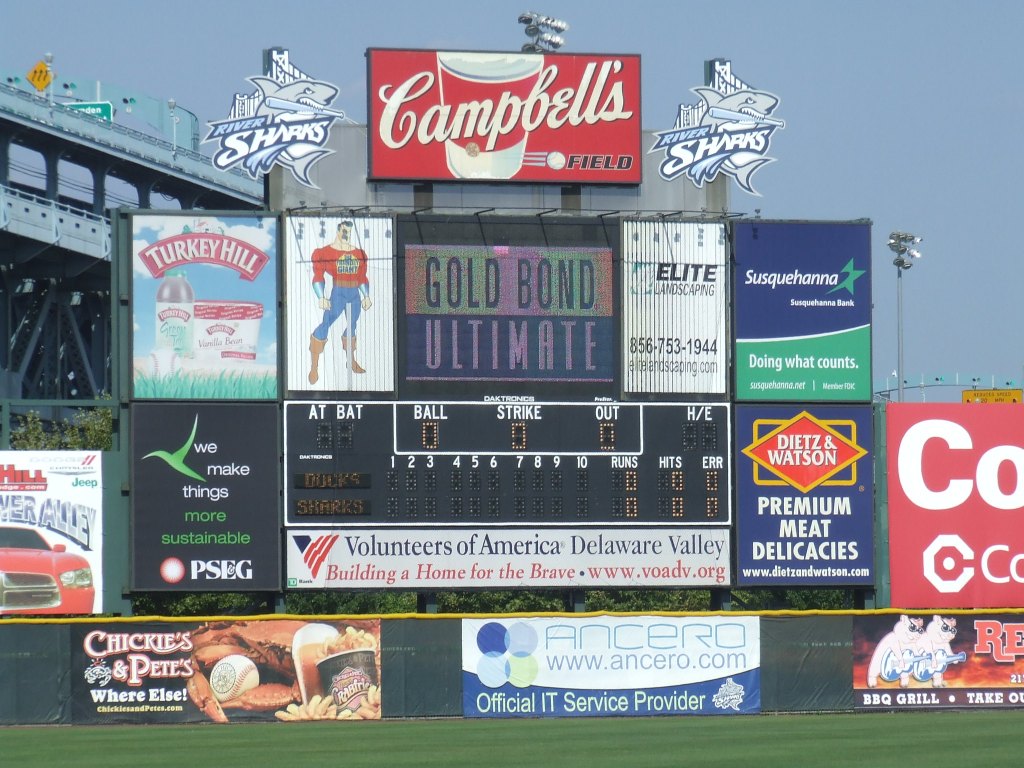
During our tour, we discovered that Campbell’s Field had two levels of seating. Separated by a lower concourse, the lower level seats extended from mid left field behind home plate to mid right field. The upper level seating mirrored the lower level in coverage, and luxury boxes stood atop the ballpark near home plate. All told, the park held 6,700 fans, though the seating area did not appear to be big enough to accommodate that many fans. Like most minor league/independent league ballparks, advertisement boards extended from foul line to foul line just above the outfield wall. A small and seemingly dated combination scoreboard/videoboard was placed just behind the right centerfield wall. My overall impression was that Campbell’s Field was a functional but unimpressive modular ballpark, lacking many of the amenities seen in parks built during the same era.

Campbell’s Field’s scoreboard/videoboard in right centerfield. (Photo credit: Jeff Hayes)

Of course, the star of the stadium was the view of the bridge, which seemingly towers above the park as it stretches from just beyond left field (where one of the concrete supports sits) out past right centerfield. Even during game action, I found myself transfixed by the view, and the effect was amplified at night when the bridge was lit. From most of the park, it was not that easy to see the Philadelphia skyline, but seats in right field afforded the best view. Even pictures don’t do the view justice, as the superstructure announces its presence with authority. To be honest, the remainder of the park pales in comparison, and in 2004, Baseball America named Campbell’s Field the Ballpark of the Year. Based on the view alone, I can understand why the honor was bestowed.

Apparently, the view at Campbell’s Field was not enough to entice fans to the ballpark. During each of our visits, attendance was disappointing. For a doubleheader in July of 2011, there were fewer than 750 fans in the park, making it look nearly deserted. Granted, the first game of the doubleheader started at 510 pm, which is just about the time most people in the area leave work, but the weather was warm and dry for July. Attendance statistics indicated that Camden drew about 3,200 fans per game, but we never saw anything close to that in the park. Having the Phillies just a few miles away might have had an influence on attendance, and perhaps the location had a deleterious effect on getting fans to the game (as the reputation of Camden seems to be slow to fade).

The view from our seats for the first game of a doubleheader before a nearly deserted ballpark. (Photo credit: Jeff Hayes)

Even though Campbell’s Field was fairly close to my home in 2011/2012, we did not go to the ballpark very often. Competition from other baseball options meant that Camden was typically a last choice, especially when all other teams were out of town. Plummeting ticket sales meant that Camden would have difficulty holding onto its place in the ALPB. Sadly, Camden eventually lost its franchise, as the team folded after the 2015 season. Replacing the Riversharks in the ALPB was the New Britain Bees, which only lasted a couple of seasons before folding themselves. Between 2015-2018, all three colleges that called Campbell’s Field home found other accommodations, meaning that the stadium no longer had full time residents. With the prospect of attracting new teams looking unlikely, the ballpark was demolished late in 2018.

Aside from the amazing backdrop, Campbell’s Field held no charm for me. It was, after all, a modular stadium in a location that many felt was difficult to reach, or didn’t feel comfortable visiting. While I do not miss the park, I mourn the loss of baseball in an area that could have used it as another attraction to help a city on the rise.

Goodbye, Campbell’s Field. (Photo credit: Jeff Hayes)