Louisville Slugger Field, Louisville Kentucky – June 27th 2021

Entrance to Louisville Slugger Field, complete with a statue of Pee Wee Reese. (Photo credit: Jeff Hayes)

After exploring downtown Louisville on a warm and humid morning, we headed to the second ballpark on our first baseball trip of 2021. Arriving well before the gates opened at Louisville Slugger Field, we parked next to the stadium in a public parking lot adjacent to the right field wall. Since parking (a rather hefty $8) was presumably for the day, we left the car in the lot and wandered around nearby Louisville. Gates at the ballpark opened about an hour before game time (scheduled for 100 pm), and we returned just as fans were entering.

As is typical for a new ballpark, we walked around the outside of Louisville Slugger Field (home of the Louisville Bats, the Triple A affiliate of the Cincinnati Reds). Though the ballpark opened in 2000, the brick face on all sides of the stadium gave it a retro field, and it fit in well with the surrounding buildings. Located in front of the ballpark is a statue of Pee Wee Reese. Raised in Louisville from the age of eight, the Hall of Fame shortstop played his entire MLB career with the Brooklyn/Los Angeles Dodgers, where he won a world championship in 1955. Reese returned to Louisville after his playing career ended, and later in his life, he worked for the owners of the Louisville Slugger company. Louisville honored its “native” son with a symbol that greets fans as they enter the ballpark.

Louisville’s own Pee Wee Reese gracing the main entrance of Louisville Slugger Field. (Photo credit: Jeff Hayes)

Following our tour of the outside of the park, we entered through the side entrance (nearest the main parking lot). Greeted by smiling and helpful ticket attendants, we were reminded we were in Kentucky, where the hospitality was almost disarming to a couple of life long residents of the Northeast. Once inside, we were impressed with the inner concourse of Louisville Slugger Field. Reminiscent of Truist Park in Atlanta, the inner concourse had the look and feel of an MLB park, a feature not expected in a minor league stadium. In addition, a portion of the inner concourse was air conditioned, which was a welcome respite from the building northern Kentucky heat and humidity.

Walking along the concourse (which encircles the playing field), we wandered past the right field foul pole, where ongoing construction indicated additional seating in the right field corner, as well as a picnic area. While passing center field (and the batter’s eye), we found a grass covered seating berm stretched across left center field, in front of one of the two videoboards in the ballpark. We did not see anyone seated on the berm (it was probably too hot in the direct sunlight for that), but there were a few people milling around seats above the berm. Just beyond the berm was a left center entrance gate, for those fans entering from East Witherspoon Street.

A very MLB like inner concourse at Louisville Slugger Field, featuring banners of former players hanging from the rafters. (Photo credit: Jeff Hayes)

From the concourse in left field, we were treated to some outstanding views of Louisville’s Main Street, as well as the Ohio River and southernmost Indiana to the north. As we would discover later, this part of Louisville Slugger Field afforded the best view of both the city and the river. Interstates between the ballpark and the river would obscure the Ohio River, but the gold colored bridges were visible. From the remainder of the stadium, only the tallest buildings in Louisville were visible over the forest green aluminum roof.

Seating in the lower level of the park extended from left field behind home plate to the right field foul pole, offering more than 10,000 green seats. There is a second level in Louisville Slugger Field, but unlike the vast majority of the ballparks we have visited in the US, we were not granted access (because we did not possess tickets stating our seats were located there). While we have become accustomed to exclusivity in MLB parks, this was one of the first examples of it we have seen in a minor league (MiLB) stadium. Hopefully the exclusivity seen here does not become more widespread in the future. Including the second level and private suites, the ballpark can accommodate over 13,000 fans, which makes it possibly the largest MiLB stadium we have visited (with regard to capacity).

The view of downtown Louisville from right centerfield concourse at Louisville Slugger Field. (Photo credit: Jeff Hayes)

To my mild surprise, there were plenty of seats available for the early afternoon contest. We have found that Sunday afternoon games are generally more lightly attended than Saturday night games, but the assembled crowd seemed smaller than might be expected. Perhaps the heat (with temperatures at game time near 90 degrees, with moderate humidity) or the small threat of thunderstorms kept the attendance light, but we were able to secure great seats just two rows behind the first base dugout. Unlike most ballparks, the home team occupied the third base dugout, placing us close to the visiting team, the Indianapolis Indians (the Triple A affiliate of the Pittsburgh Pirates).

Unfortunately, our seats put us in direct sunshine, though intermittent clouds helped take the edge off the heat at times. After finding our seats, we sought out a baseball lunch at the concession stands scattered across the inner concourse. There were several places to eat within Louisville Slugger Field, but we were content with standard fare, along with plenty of cold drinks to combat the heat and humidity. Surprisingly, the cost of the concessions was much higher than I expected, at least when compared to ballparks in other portions of the US. These prices would become significant, as we attempted to keep well hydrated during the game. During the first pitch ceremony, three siblings threw out first pitches to the catcher, who turned out to be their father returning from active duty.

A composite image of Louisville Slugger Field from centerfield. (Photo credit: Jeff Hayes)

Our seats provided great sight lines for the entire park. Two moderately sized videoboards located in left center and right centerfield provided all of the essential information for serious baseball fans, and played videos and replays as well. The left videoboard displayed the hitter’s information, while the right videoboard showed the pitcher’s stats, as well as the score. Auxiliary scoreboards located above the second deck beyond the dugouts kept fans informed on the count, the inning and the score. As a dedicated baseball fan, I appreciated the multiple sources of data.

Crisp starting pitching from both sides kept the game moving, and only 41 minutes had elapsed by the end of the third inning. Clouds that had been building since late morning started to produce showers and thunderstorms, most of which bypassed Louisville Slugger Field. However, we did not escape unscathed, as mainly light rain showers (lasting about 20 minutes) did affect the ballpark, though it did not require a stoppage of play. Despite the rain, conditions did not cool off much, and by the middle innings, I began to feel the effects of the heat. In fact, many of the fans in the seats around us eventually sought refuge from the sun by heading to seats out of the sun, or into the cooler inner concourse.

A view from behind home plate on the lower level showing the videoboards in left center and right centerfield. (Photo credit: Jeff Hayes)

We quickly discovered that Louisville Slugger Field was very close to the flight path of nearby Muhammed Ali Louisville Airport. Though planes did not pass directly overhead, we did see planes every couple of minutes come very close as they took off from the airport. Being veterans of the air traffic out of LaGuardia Airport over Shea Stadium in New York, we were hardly phased by the nearly constant planes passing by, but I did find myself catching a glimpse of the aircraft as they climbed out to wherever they were going.
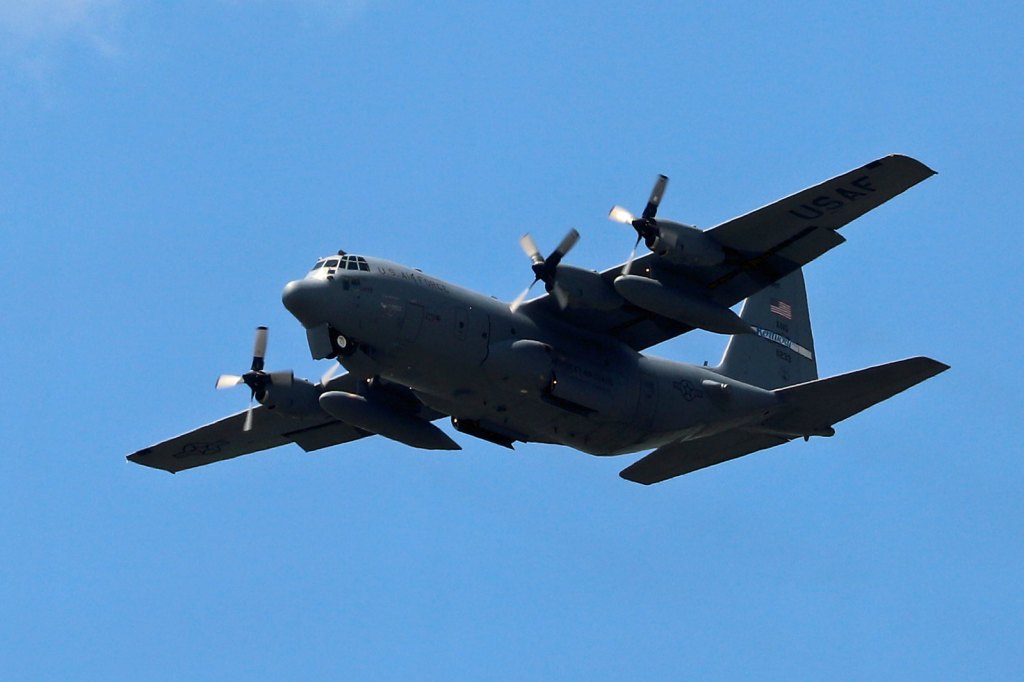
An Air Force aircraft passing near Louisville Slugger Field after taking off from the nearby airport. (Photo credit: Jeff Hayes)

In the bottom of the seventh inning of a scoreless game, we saw something of a rarity. Indians lefthander Braeden Ogle took too long to deliver a pitch, and the home plate umpire awarded the batter a ball. In the minor leagues (as well as the Atlantic League), pitchers are required to deliver a pitch to the plate within 15 seconds (20 seconds with runners on base), in an attempt to speed up the pace of play. Failure to do so can result in a ball being awarded to the hitter. Despite the presence of pitch clocks in most ballparks, this rule is rarely enforced, but I saw delighted that it was in this instance.

Indianapolis Indians pitcher being checked for illegal substances before the top of the inning. (Photo credit: Jeff Hayes)

A home run in the top of the eight inning gave the visiting Indians a 1-0 lead, and it appeared as though the Indianapolis bullpen would make the single run stand up going into the bottom of the ninth. The Louisville Bats, which had been largely dormant for much of the game, came to life in the bottom of that frame. The Bats used three singles and a walk to plate two runs to secure a 2-1 victory. Even with the heat and threat of rain, most of the Louisville faithful remained to celebrate the hard fought win.

After the game, kids were invited to run the bases (which is not unusual for weekend games). In a surprise to us, all fans were permitted on the field for a game of catch. Nearly three hours in the heat and and humidity of northern Kentucky essentially wiped me out, and I was not up for a game of catch. With a long drive awaiting us, we did something that would normally be unconscionable; we did not partake in the opportunity to walk on a professional baseball field.

Louisville Bats celebrating after a walk off single in the bottom of the ninth. (Photo credit: Jeff Hayes)

Louisville Slugger Field is a fine example of a Triple A ballpark, complete with all the amenities fans could need. The concourse area looks as though it was modeled after a MLB park, and ongoing construction indicated that the ownership was dedicated to improving the fan experience. Only limited access to the second deck, and the seemingly high concession prices, detracted from a great baseball atmosphere, and we were treated to an outstanding game as well. While I would recommend visiting the ballpark if you are in the vicinity during baseball season, being so far away, I am not sure we will return.

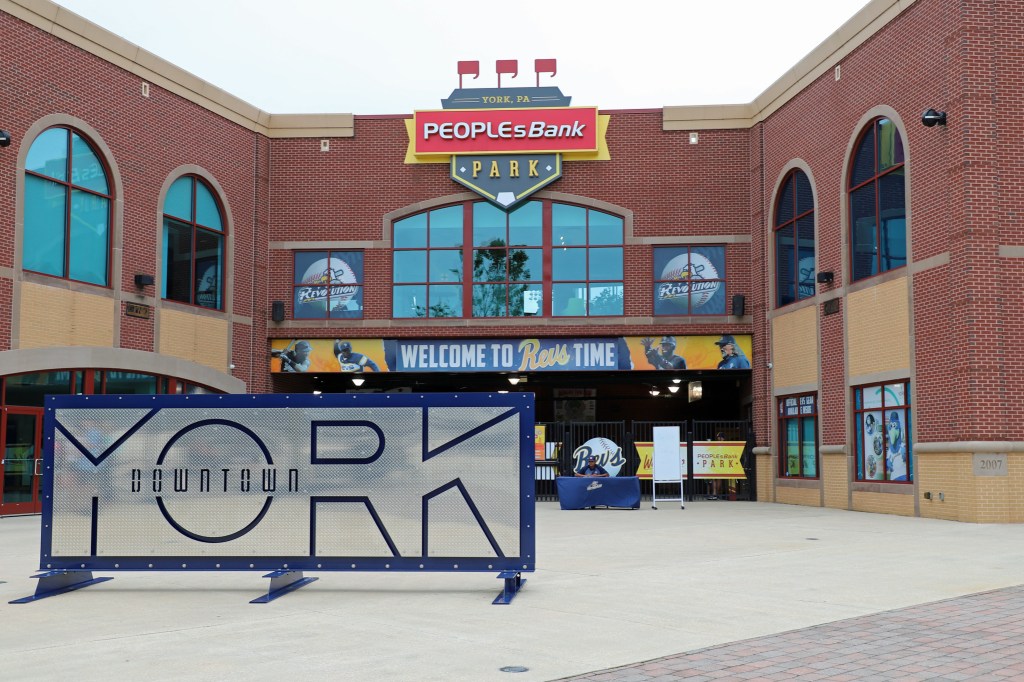
PeoplesBank Park, York PA June 13th 2021

Welcome to PeoplesBank Park in York PA!

On a cloudy Sunday afternoon, with the threat of thunderstorms looming in the distance, my brother and I set out for PeoplesBank Park in York, PA, the home of the Atlantic League’s (ALPB) York Revolution. About 45 minutes from home for me, the ride was relatively simple, as traffic was generally light during the early afternoon. Parking at PeoplesBank Park is spread across the general area of the stadium, with the most popular lot across the Codorus Creek from the park at the Smalls Athletic Field (using Google Maps with this location should make finding parking fairly simple). At $4.00, parking was a bargain, with the walk from the lot to the stadium taking less than 10 minutes. For those fans with mobility issues, there is a parking lot next to the field, but you may want to check on availability.

My brother and I had been here once before, as we headed home following a trip to eastern OH/western PA to see ballparks out that way. Just ahead of some deteriorating weather, we walked around the outside of the ballpark, which did not afford much of a sense of the place. Leaving just as the rain began, we left without knowing much more than we did before we arrived. Since the ballpark was within range of both of us, we planned to visit PeoplesBank Park in 2020, but the pandemic resulted in the cancellation of the Atlantic League season. Our first proper visit to York would have to wait…until today

The view of PeoplesBank Park from the Smalls Athletic Field across the Codorus Creek in York PA. (Photo credit: Jeff Hayes)

PeoplesBank Park is located on the edge of a neighborhood in York, and we saw row houses somewhat reminiscent of those found in Philadelphia. We found the architecture similar to what we saw in Harrisburg as well, so it seems to be a common theme across southeast and central PA. In fact, I would have been interested in walking through the neighborhood to get a better feel for the area, but we did not leave sufficient time for a side trip. Perhaps if time permits in a subsequent trip, we will investigate this portion of York more thoroughly.

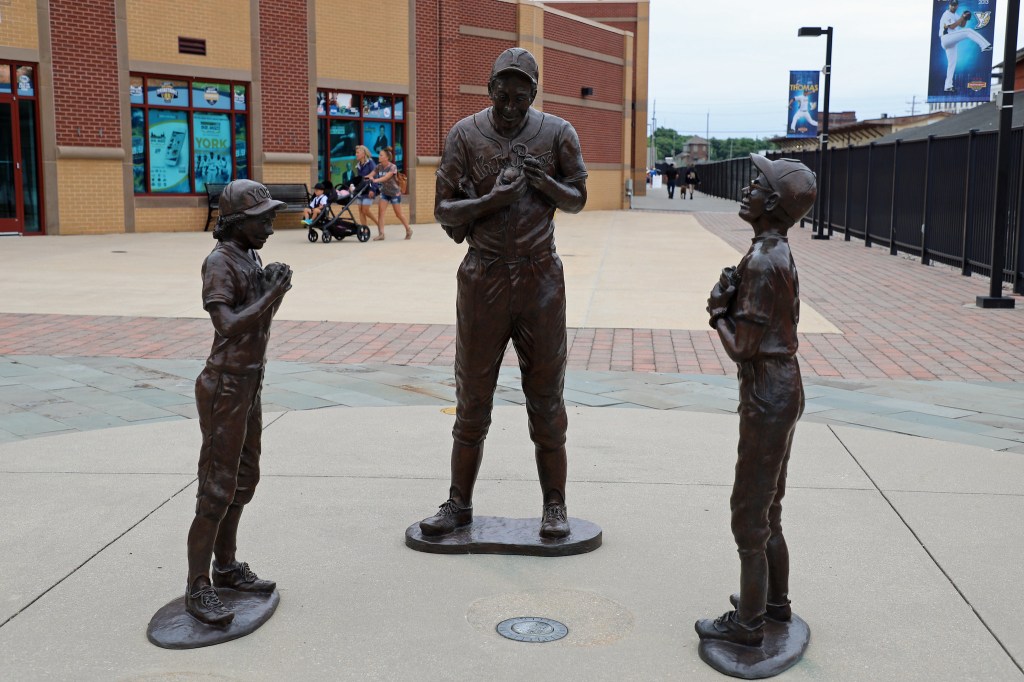
Though we were briefly here less than two years before, my memory of the event is fuzzy at best, so it was as if we were seeing the ballpark for the first time. PeoplesBank Park features Brooks Robinson Plaza, located to the right of the main entrance to the ballpark. A statue of Robinson graces the plaza, along with a plaque outlining information about the Hall of Famer’s storied career. Opening in 2007, PeoplesBank Park was constructed to resemble Orioles Park at Camden Yards, the favorite MLB team in this portion of PA. Without much to see on the outside of the park, we entered the stadium through the home plate gate.

A statue of Brooks Robinson and young fans in Brooks Robinson Plaza at PeoplesBank Park. (Photo credit: Jeff Hayes)

Upon entering the stadium, we quickly walked around the lower concourse, which encircled the ballpark. Not knowing what to expect, I was immediately impressed with the park, which seemed colorful and vibrant, even on this cloudy Sunday afternoon. With only minutes before the first pitch, we quickly walked from right field to left field before finding our seats along the third base side. Though I did see why others thought PeoplesBank Park looked liked Camden Yards (especially the picnic area in right field), another ballpark came to mind: Regency Furniture Stadium, located in Waldorf, MD. Also home to an Atlantic League franchise (the Southern Maryland Blue Crabs), there was more than just a passing resemblance to that ballpark, which we would discover during the game.

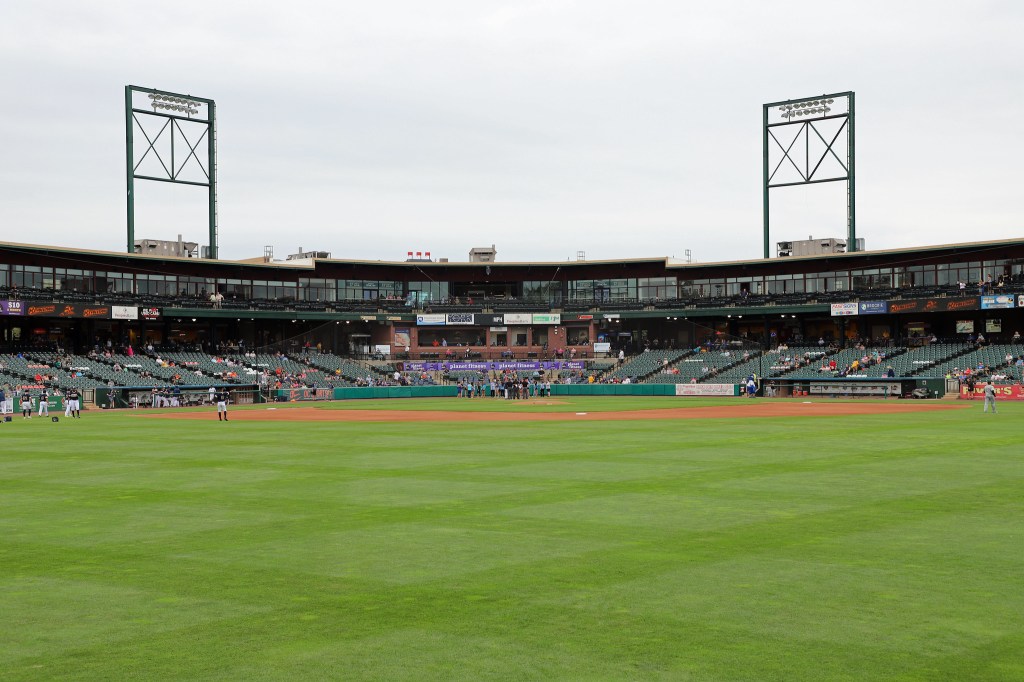
PeoplesBank Park from the centerfield concourse. (Photo credit: Jeff Hayes)

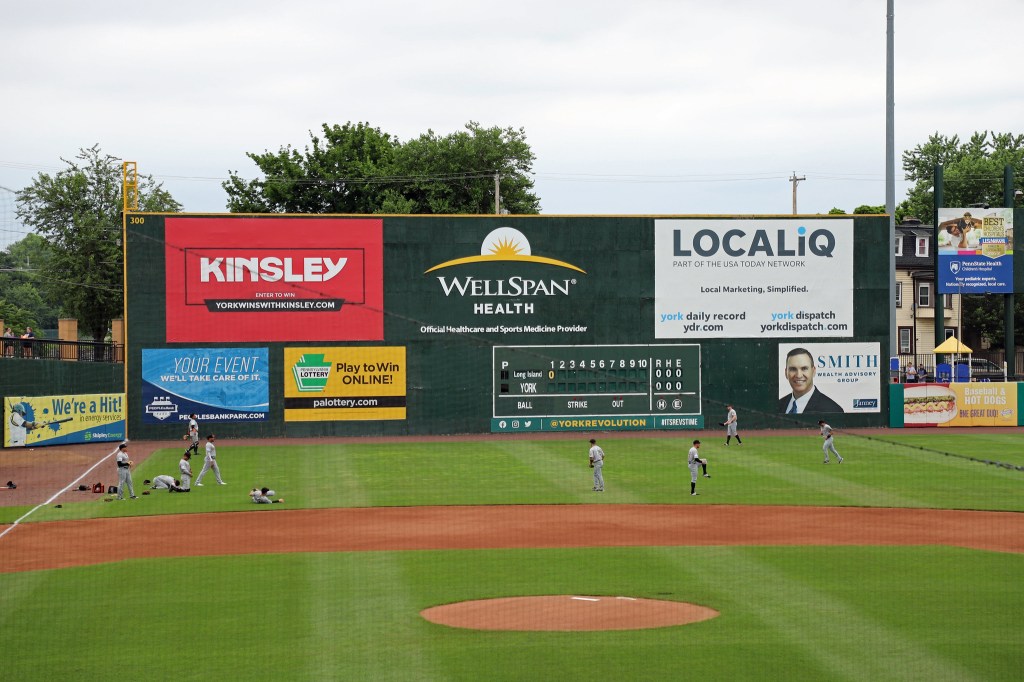
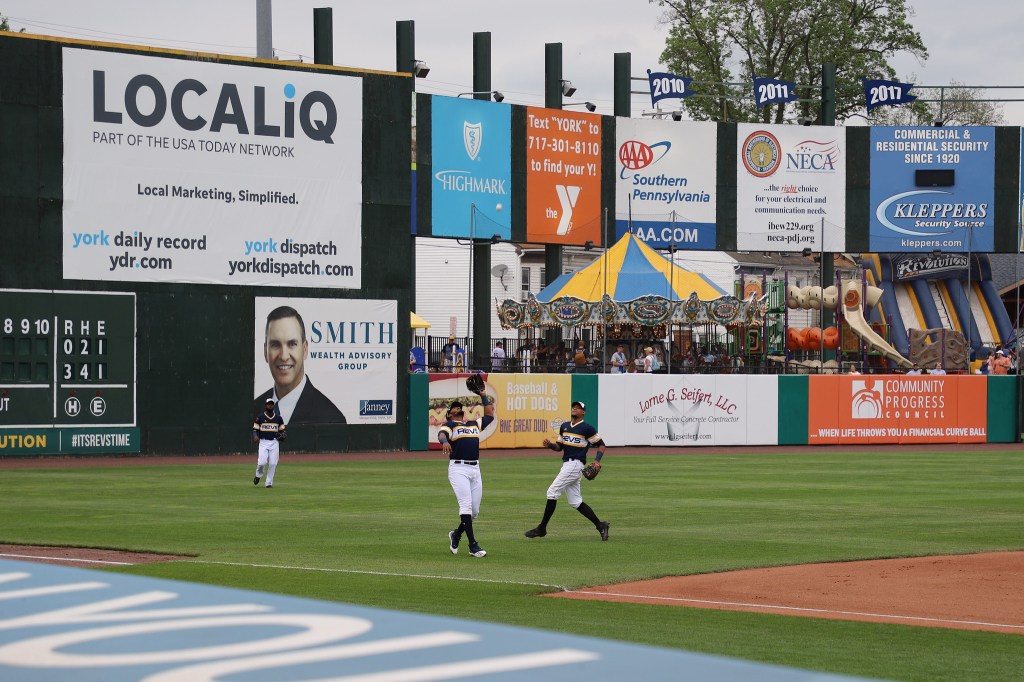
Perhaps the most prominent feature in PeoplesBank Park is the wall in left field. Known as Arch Nemesis, the forest green wall stands 37 feet 8 inches tall (six inches taller than the Green Monster in Fenway Park), making it the highest wall in professional baseball. Creation of the highest wall in baseball was apparently in response to the short distance from home down the left field (a mere 300 feet), due to the presence of train tracks just beyond the wall. We saw the wall in “action”, as the ballpark held a couple of balls that may have left other ballparks with shorter fences. There is also a manually operated scoreboard at the base of the Arch Nemesis, which bares some resemblance to the one in Fenway.

The Arch Nemesis, located in left field at PeoplesBank Park in York PA. Note the hand operated scoreboard at the base, like the one at Fenway Park in Boston MA. (Photo credit: Jeff Hayes)

We reached our seats in the lower level behind the dugout just as the first pitch was thrown. Minutes later, to our surprise, a beautiful sight appeared. A bald eagle passed nearly overhead, and it seemed as though the entire crowd noticed its passage. Based on the murmuring in the crowd, I got the impression that the eagle had been there before, and PeoplesBank Park could be on its normal route through the area. Quick reactions by my brother allowed him to capture the moment perfectly with his camera. Unfortunately, the eagle did not pass by again during the game.

This was not the first time we were graced by the presence of a bald eagle. While exploring Lock #1 on the Mississippi River in St Cloud MN on an overcast and cold late September afternoon, a bald eagle passed overhead, flying south along the river. That time, we were caught completely off guard by the eagle’s passage, and neither of us managed to snap a picture before it disappeared into the distance.

A bald eagle passing overhead on a cloudy Sunday afternoon at PeoplesBank Park in York PA. (Photo credit: Jeff Hayes)

Following the excitement of our unexpected visitor, we turned our attention back to the game. For this Sunday matinee, the York Revolution were hosting the Long Island Ducks for the finale of their series. There is a strong tie between the Ducks franchise and the New York Mets. Ducks manager Wally Backman was the starting second baseman for the the 1986 World Championship team, and the Ducks starting left fielder, L.J. Mazzilli, is the son of perennial Mets fan favorite Lee Mazzilli. Coming into the action this afternoon, the Ducks held a three game lead over the Revolution in the North Division of the ALPBA.

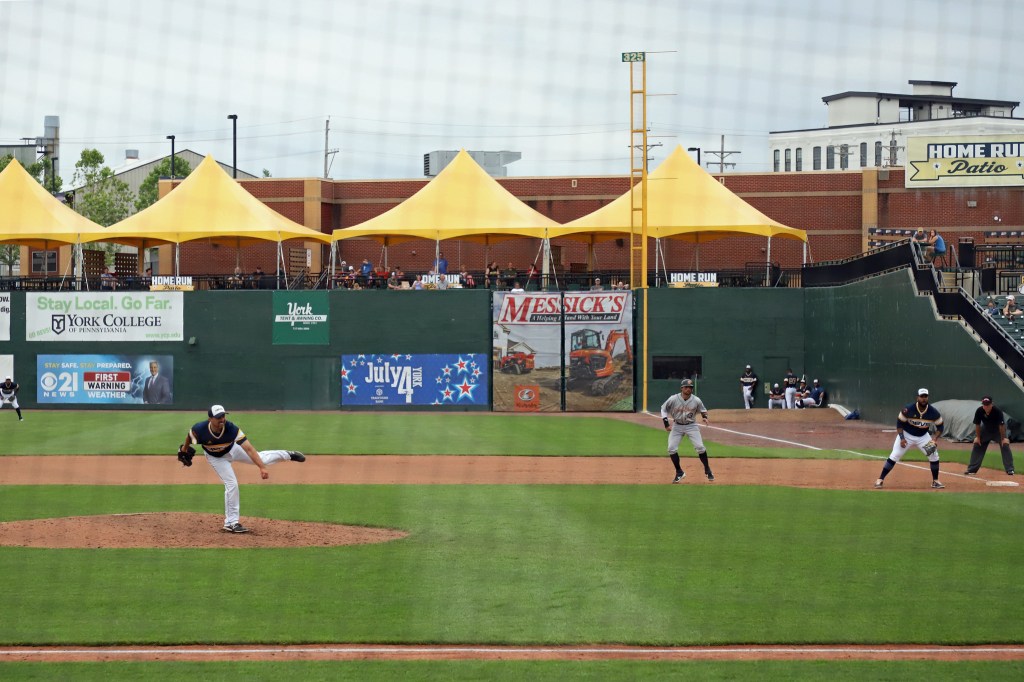
Settling into the game, I began to take a better look at PeoplesBank Park. As mentioned earlier, I felt as though it had more than a passing resemblance to Regency Furniture Stadium, and the more I examined my surroundings, the more I saw the similarities. Like the ballpark in Waldorf, MD, the bullpens were located in foul territory just behind the bases. Seating for the respective bullpens is near the railing, with line drive foul balls putting the relievers in a precarious spot. On this day, most relievers were either in the dugout or further down the line, a testament of the danger these players face sitting in prime line drive areas.

Most of the chairs in the Revolution bullpen area were empty, as line drive foul balls off the bats of right handed hitters puts the pitchers in danger. (Photo credit: Jeff Hayes)

In addition, the main seating area was structured similarly to Regency Furniture Park, with seats on the left and right field lines angled such that they faced the pitcher’s mound. When the seating in left and right field along the rail is considered, PeoplesBank Park hold about 7,500 fans, which is large for an ALPB stadium.

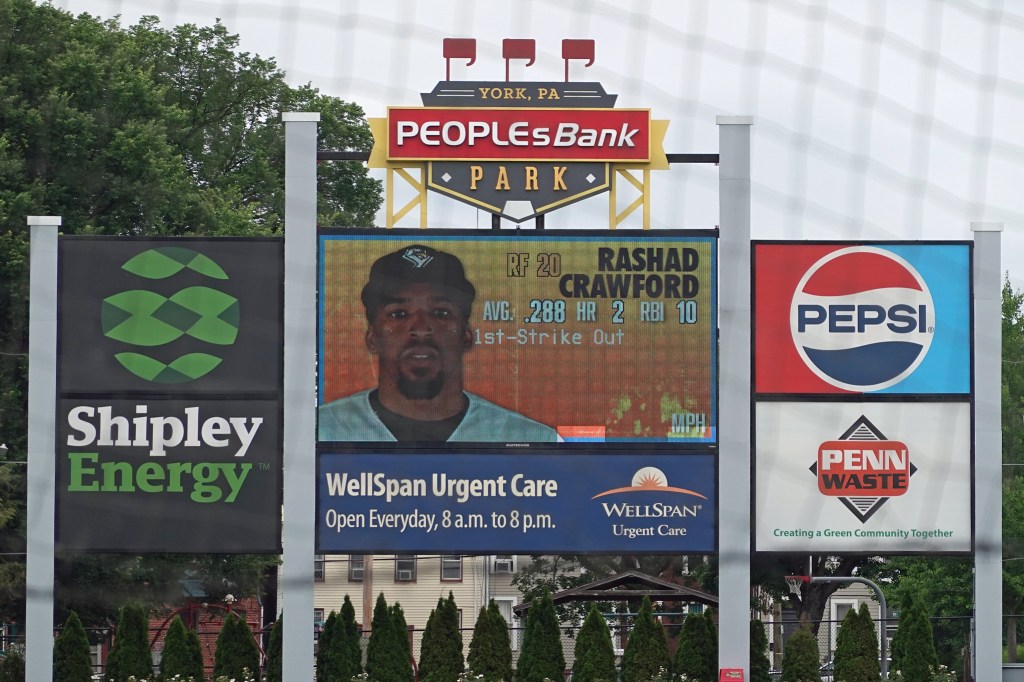
In addition to the hand operated scoreboard, there is a more modern scoreboard, located in centerfield, just behind the picnic area. Modest in size and resolution, this scoreboard was mainly informational, with occasional video replays presented. During the game, I noticed to auxiliary video boards near centerfield (that seemed to play mainly advertisements). Finally, sandwiched between the Arch Nemesis and the centerfield score board was a tightly packed kids zone. Complete with a carousel and several slides, these facilities offered something else for the kids to do while the adults enjoyed baseball.

The kids zone at PeoplesBank Park, nestled between the Arch Nemesis and the centerfield picnic area. (Photo credit: Jeff Hayes)

Though I did not exactly know what to expect as we drove toward York, PeoplesBank Park far exceeded my expectations. The more I saw of the park, the more I liked it. Placed along Arch Street (on the edge of a neighborhood), the ballpark has an urban feel to it, providing the stadium with an appealing backdrop. Not long after the first pitch, I felt as though PeoplesBank Park was possibly my favorite ALPB ballpark (sorry Southern Maryland Blue Crabs).

During our brief tour of the ballpark, we did notice places to eat, especially on the concourse in right field. Given our time constraints, we did not examine any of the cuisine at PeoplesBank Park, instead choosing standard baseball fare (sodas, hot dogs and pretzels) at the nearby concession stand. Considering that my palette is relatively unsophisticated (and I do not drink alcohol at ball games), it is likely that I would be unable to render an intelligent review of food and drink at the park. For that, you are on your own.

The view from our seats. (Photo credit: Jeff Hayes)

Following a quiet top of the first, the Revolution scored three runs in the bottom of the frame. After that outburst, the game did not see any more scoring until the top of the sixth inning. However, due to the 16 walks issued by both teams (as well as a number of deep counts), the pace of play slowed to a crawl at times. This is not atypical for an ALPB game, as the rosters mainly consist of ex MLB/MiLB players, as well as those that went undrafted. For comparison, the level of play in the ALPB is roughly similar to that seen at the Double A level in affiliated baseball, though players (with the notable exception of pitchers) are typically more polished in the ALPB, due to the experience level of the players.

It is not unusual for ALPB rosters to have familiar names on it, which helps with attendance in most cities, but many of these players are past their best days. Some hang onto the notion of being picked up by an affiliated team (which happens fairly often, given there is a player development deal in place between MLB and the ALPB), while others play baseball for as long as they can before hanging up their spikes for good. The ALPB also brings baseball to underserved areas, in places where there are no MLB or MiLB teams close by.

A view of the scoreboard/video board in centerfield. (Photo credit: Jeff Hayes)

Though the crowd was not particularly large (as often happens for Sunday afternoon games), the fans were vocal, especially those close to us. That enthusiasm was also evident on the field, as the Revolution third baseman pretended to swat at the York shortstop who got too close on an infield popup. Though the sample size is admittedly small, there seems to be a good repertoire between the fans and the team, and that is refreshing. All too often when teams play badly, so called fans seem to turn on them, but that does not seem to be the case here.

Revolution shortstop and third baseman converging on a popup. Feeling the shortstop got too close, the third baseman playfully swatted at him after making the catch. (Photo credit: Jeff Hayes)

In the top of the sixth inning, the Ducks scored two runs, drawing within a run of the Revolution. However, York tacked on another run in the bottom of the seventh inning, and a trio of Revolution relievers held off Long Island for a 4-2 victory. Unlike most crowds, many Revolution fans stayed until the last pitch. Thankfully, the threat of thunderstorms held off, providing a cloudy but dry experience at PeoplesBank Park. As we filed out of the park, I was still surprised how much I enjoyed the place. Obviously, a great deal of thought went into the design of the stadium, and the place still looks great years after first opening its gates. Being just 45 minutes away, I plan to visit this beautiful ballpark as often as it feasible.

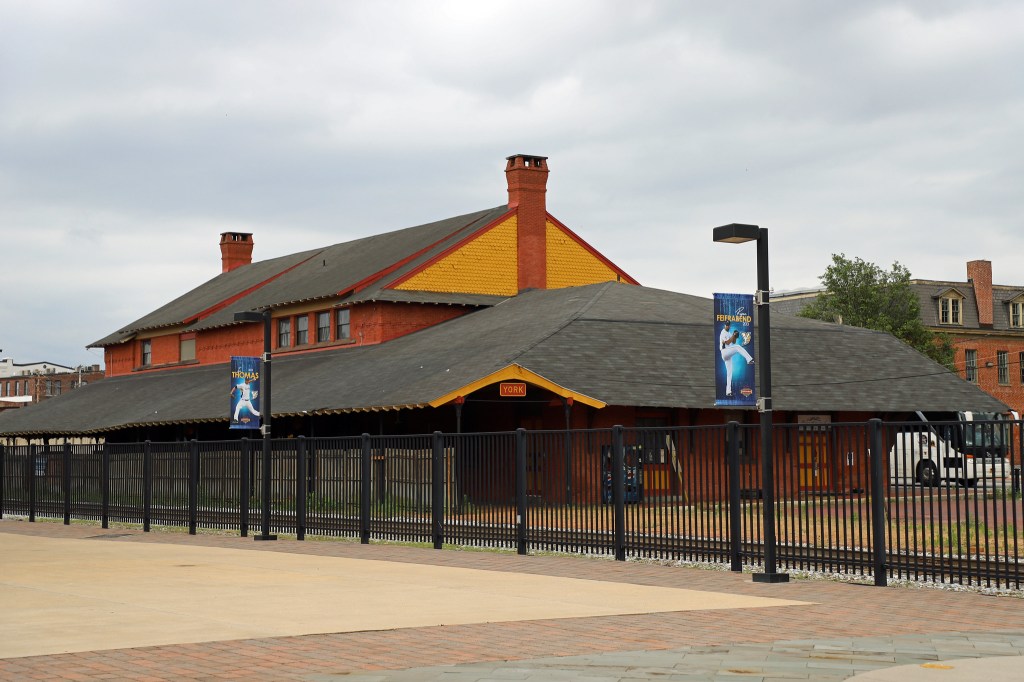
Walking back to the parking lot after the game, I once again enjoyed the surroundings. Being relatively new to the area, I found this part of York fascinating, and could spend time here simply exploring. The entire visit was enjoyable, and PeoplesBank Park is worth a visit if you are within range during the ALPB season.

The York Train Station, just outside PeoplesBank Park. (Photo credit: Jeff Hayes)

First National Bank (FNB) Field – Harrisburg PA

FNB Field in Harrisburg PA. (Photo credit: Jeff Hayes)

Yet another move placed me near Harrisburg, PA this spring, and I am once again in a hot spot for baseball. Just 11 miles away is First National Bank (FNB) Field, the home of the Harrisburg Senators, the Double A affiliate of the Washington Nationals. My brother and I visited FNB Field once before, on our way back from a baseball trip that took us to eastern OH and western PA during August of 2019. There was no baseball that day (as the Senators were out of town), but we were able to wander through portions of the park. Of course, we could not get the true essence of the ballpark that day, but we vowed to come back here at some point in the future.

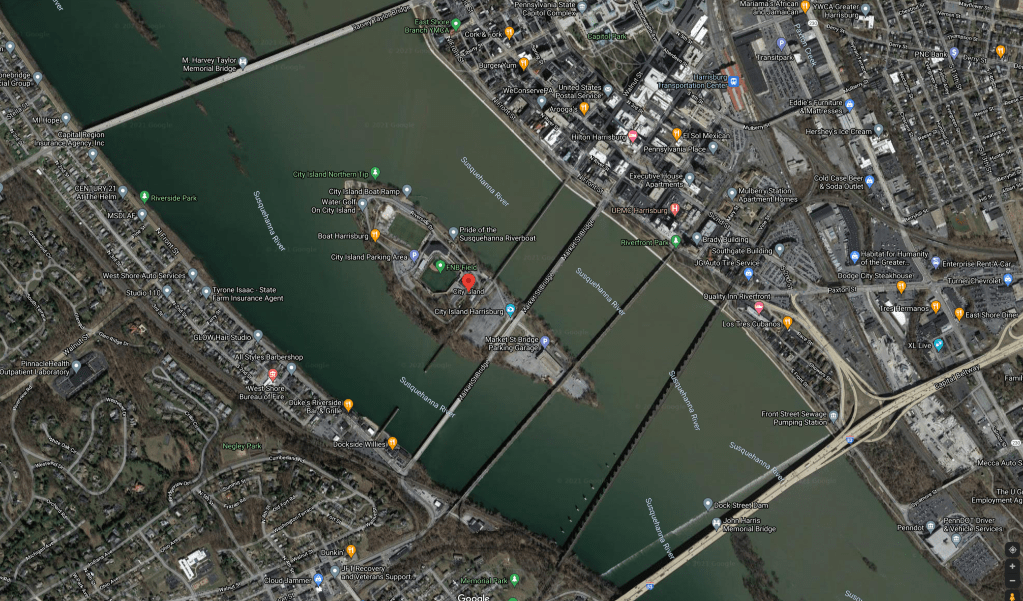
Fast forward nearly two years, and we did indeed return. Perhaps the most interesting aspect of FNB Field is that it is located on an island in the Susquehanna River. Known as City Island, the mile long island is home to the ballpark, as well as other attractions. We approached City Island from Harrisburg, taking the Market Street Bridge to the main parking lot adjacent to the ballpark. Concerned about the availability of parking on an island, we arrived well before the first pitch. Despite my trepidations, there was plenty of parking available in the main lot, as well as a lot just over the bridge.

Google Maps image showing the location of FNB Field on City Island in the middle of the Susquehanna River.

A short walk from the parking lot to FNB Field ensued, which involved climbing stairs and an uphill walk before reaching the gate. The trek could present some issues for those fans with mobility issues, but free rides from the parking lot to the gate are available via bicycles equipped with a rider seat. Though I did not see anyone take advantage of this service, I imagine it would be helpful for those in need. Per our usual approach, we walked outside the stadium taking pictures. About halfway across the outside of the park, we entered through a gate behind first base. Pleasant staff members working at the gate welcomed us warmly as we presented our mobile tickets, reminding me we were in neither the New York City Metro area nor Maryland/DC.

Once inside the park, we wandered taking pictures. Our visit occurred during the pandemic, and masks were worn by most fans. Because of the continuing pandemic, I was concerned that our movements within the ballpark would be restricted to limit exposure. However, we were able to encircle the playing field, as the main concourse wraps around the park. The layout of the outfield and the seating along the concourse vaguely reminded me of Regency Furniture Stadium in Waldorf, MD (home of the Atlantic League’s Southern Maryland Blue Crabs).

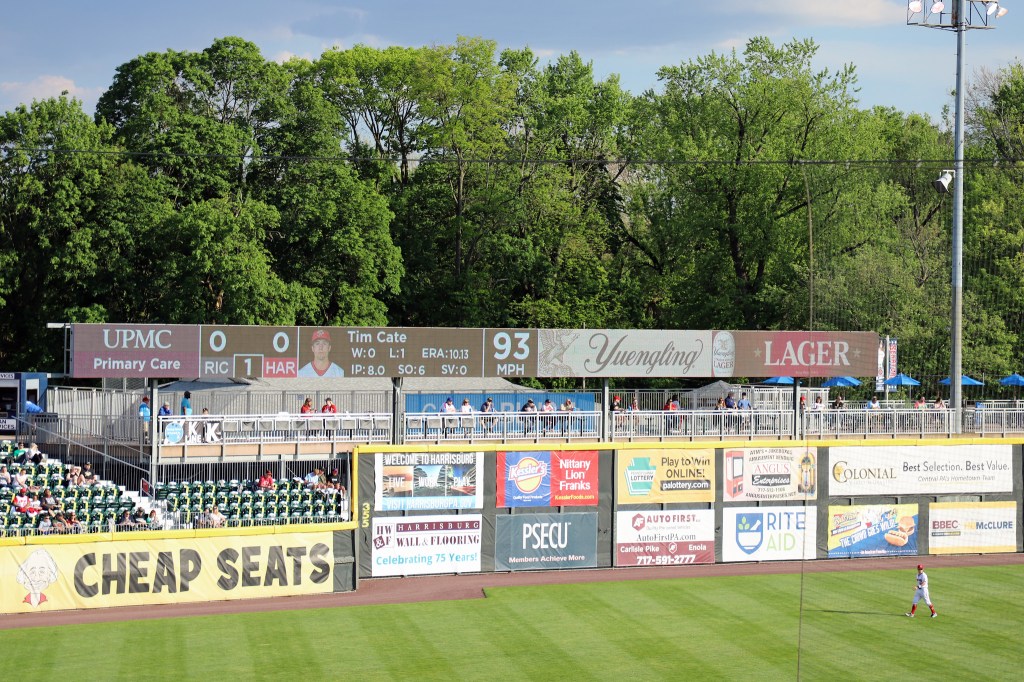
The view of the outfield in left center field. Note the seats above the wall. (Photo credit: Jeff Hayes)

As we walked from the right field line to the left field line, I was surprised to discover than FNB Field held more than 6,000 fans. Even with a sizable seating area behind home plate. at first glance, I would have thought the maximum capacity was closer to 5,000, which would have been on the smaller side for a Double A team. However, when the bleacher seating along the first base side, and the “Cheap Seats” in the left field corner are considered, the ballpark holds about the average number of fans for Double A ballparks.

Located on the concourse near the left field foul pole was the Senators Team Store. Seemingly smaller than most team stores, it contained most of the standard fare fans would expect, and had much more of an Expos presence than Nationals Park (the Montreal Expos moved to DC following the 2004 season). After browsing in the team store, we headed down the left field course to our seats

The main seating area of FNB Field from the right centerfield concourse. (Photo credit: Jeff Hayes)

Seating in FNB Field was arranged in pods to limit interaction among fans. Unlike the pods we occupied the week before in Arm&Hammer Park in Trenton NJ, seating here was not as restrictive. Being closer to fans, we wore our masks, removing them only to eat and drink. Sitting in section 201 (near third base), we had a great view of the entire park. Our vantage point afforded us a view of the hills to the north and northwest of the stadium, reminding me of our visit to FirstEnergy Stadium in Reading, PA. In addition to a standard videoboard/scoreboard in right centerfield, there was a supplemental horizontal videoboard in the left centerfield. This board contained information on the inning/score, the pitcher’s statistics, as well as the pitch speed. For avid baseball fans like us, the additional treasure trove of data was quite welcome.

The weather could not have been better, as remaining clouds melted away with the setting sun. Clear skies and pleasantly warm temperatures for mid May set the stage for a perfect evening for baseball. Though the crowd was necessarily small for the contest, that did not stop those in attendance from showing their affection for the Senators. Because of the pandemic, there was no minor league season in 2020, and the pent up frustrations of the faithful resulted in an almost raucous crowd.

The view from our seats. (Photo credit: Jeff Hayes)

Though there are a number of places to eat, we grabbed a standard baseball dinner at the concession stand on the concourse level behind the main seating area. Servers were friendly, prices were reasonable, and the service was relatively quick. After some of the BAD experiences we have had at other parks (especially MLB parks), cheerful faces were a welcome change of pace. Perhaps as I get a number of visits under my belt, I can comment further on the cuisine offered at FNB Field.

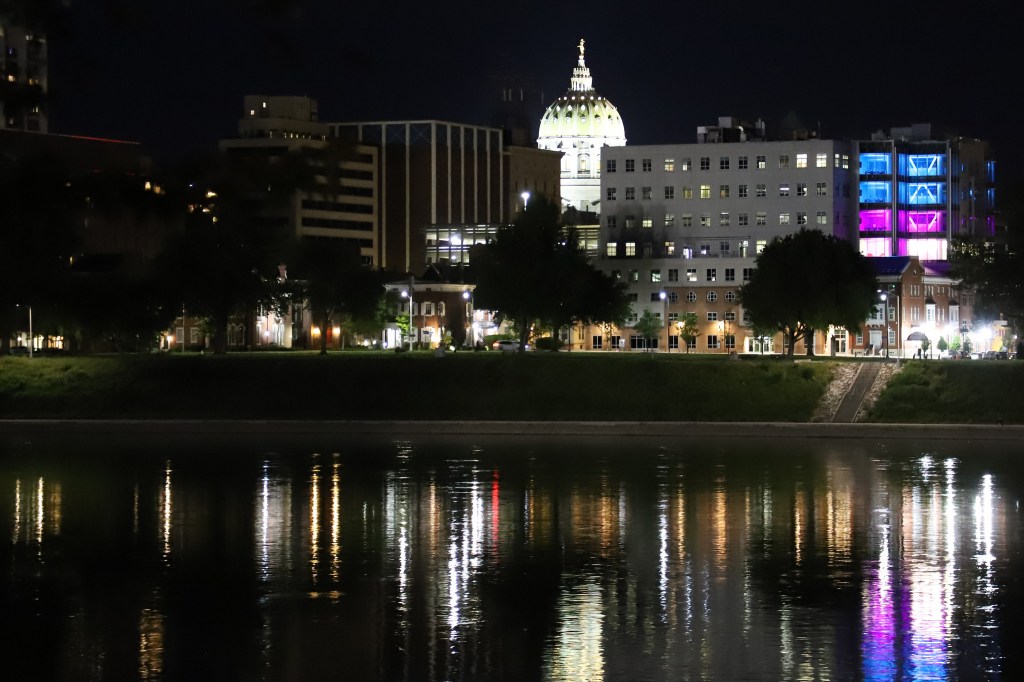
As evening blended into night, the view of the hills to the north and northwest disappeared, but the feel of the stadium unchanged. Unlike many Saturday night minor league games, the crowd did not leave early, as the game remained relatively tight until the end. Even with a small crowd, I became concerned that exiting an island from one parking area could take a considerable amounts of time. Reversing our course from the stadium to the parking lot, we took some time to admire the view of Harrisburg across the Susquehanna River. It was worth the detour; Harrisburg alit was quite a sight, especially since it was our first visit. If you have the time after a Senators night game, make sure to take in the skyline.

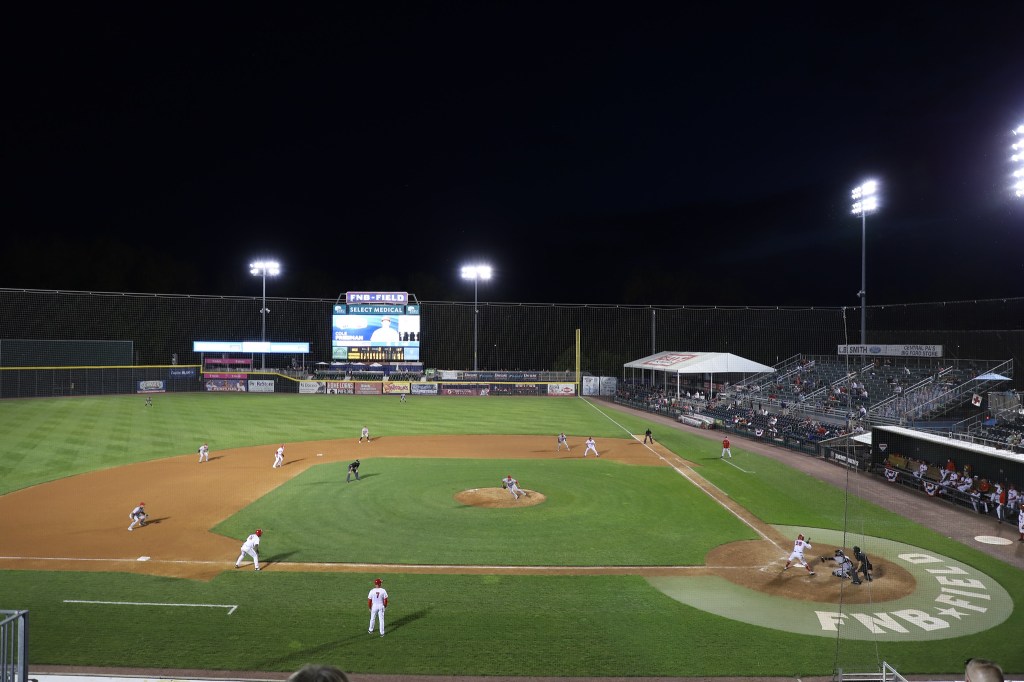
FNB Field at night. (Photo credit: Jeff Hayes)

As expected, exiting the parking lot was a slow process, as several lines that developed in the lot bottlenecked at the confluence of the lines near the turn onto the bridge. Having been in parking lots that were slow to clear in the past, we knew that patience was key, and eventually we managed to get out of the lot, heading back toward the east side of Harrisburg. FNB Field is an excellent minor league facility, providing a great fan experience among the passionate faithful. Since this facility is my new “home” ballpark, I was very pleased to find such a great stadium so nearby.

Harrisburg at night from the banks of the Susquehanna River just outside of FNB Field. (Photo credit: Jeff Hayes)